How to Solve Uneven Grinding of Lithium Manganate in Ball Mills
Introduction
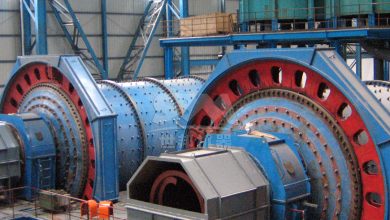
The production of high-performance lithium-ion batteries is critically dependent on the quality of the cathode materials, with lithium manganate (LiMn2O4) being a prominent choice for its cost-effectiveness, safety, and environmental friendliness. A key determinant of its electrochemical performance is the particle size distribution (PSD) and morphology achieved during the grinding process. Traditional ball mills, while widely used, often struggle with achieving consistent, uniform grinding of lithium manganate, leading to uneven particle sizes, agglomeration, and compromised battery performance. This article delves into the root causes of uneven grinding in ball mills and presents advanced, reliable solutions to overcome these challenges.
The Criticality of Uniform Particle Size in Lithium Manganate
Uniform particle size in cathode active materials is non-negotiable for several reasons. A narrow PSD ensures consistent tap density, leading to uniform electrode coating and optimal energy density. It promotes homogeneous electrolyte wetting and uniform current distribution during charge/discharge cycles, which directly impacts rate capability and cycle life. For lithium manganate, specifically, uneven particles can exacerbate manganese dissolution and Jahn-Teller distortion at the particle surface, accelerating capacity fade. Therefore, moving beyond the limitations of conventional ball milling is essential for next-generation battery manufacturing.
Root Causes of Uneven Grinding in Ball Mills
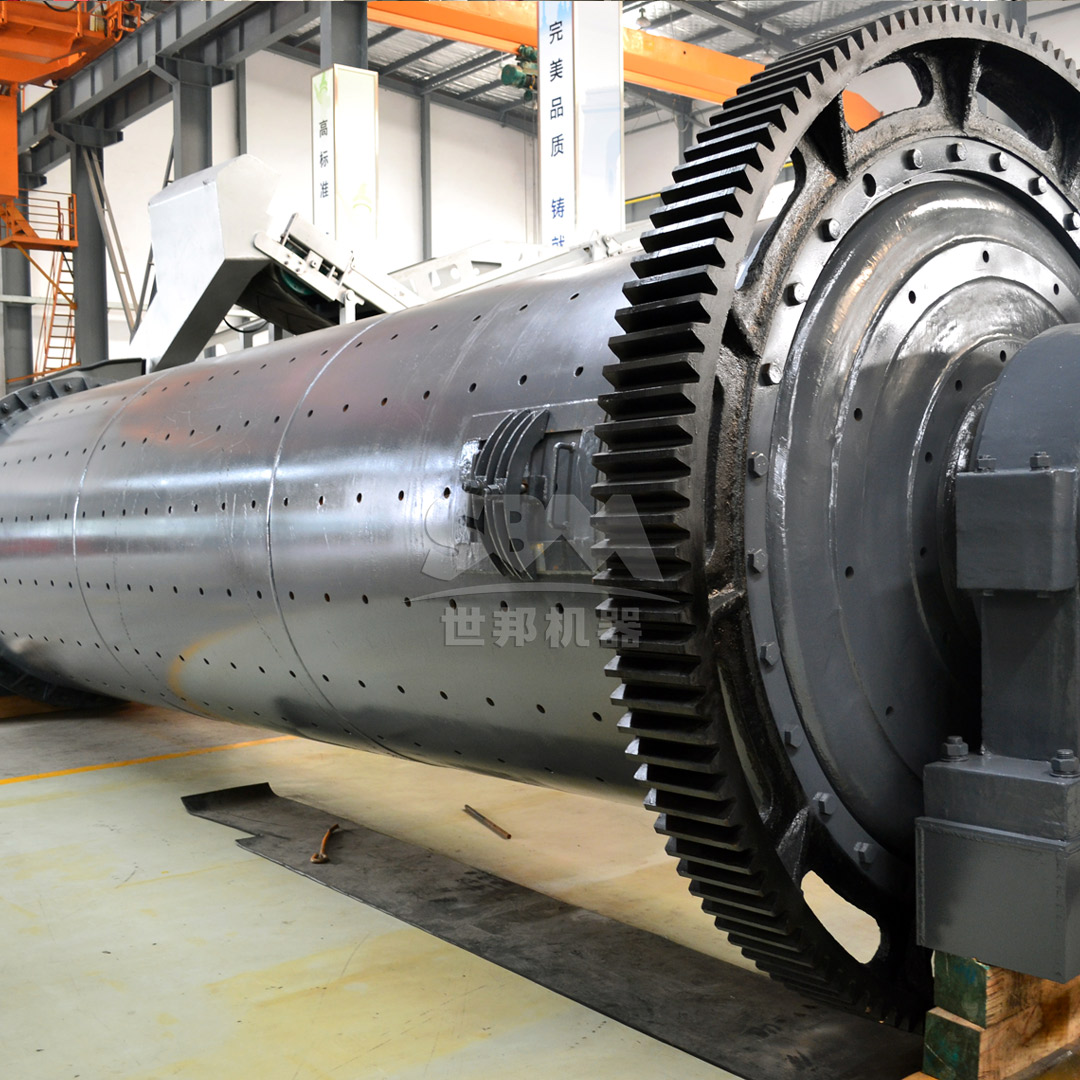
Understanding the inherent limitations of ball mills is the first step toward a solution. The primary causes of uneven output include:
- Inefficient Classification Mechanism: Ball mills rely on discharge grates to separate particles. This is a passive, size-based separation that often allows insufficiently ground particles to exit prematurely or retains fine particles for over-grinding, leading to a wide PSD.
- Thermal and Mechanical Stress: The high-impact, cascading action in a ball mill generates significant localized heat. For temperature-sensitive materials like lithium manganate, this can induce phase changes or surface degradation. Furthermore, the uncontrolled impact can create irregular particle shapes and micro-cracks.
- Agglomeration and Re-welding: As particles become finer, van der Waals forces cause them to re-agglomerate. In the chaotic environment of a ball mill, these agglomerates are constantly being broken and re-formed, creating a heterogeneous mix of primary particles and hard agglomerates.
- Limited Process Control: Key parameters like residence time, energy input per particle, and internal classification are difficult to control precisely in a standard ball mill setup, making reproducibility a challenge.
Advanced Technological Solutions Beyond Conventional Ball Milling
To achieve the stringent requirements for lithium manganate powder, the industry is transitioning to grinding systems that integrate precise mechanical action with instantaneous classification. The core principle is to separate the grinding and classification functions, allowing for independent optimization of each stage.
1. Integrated Grinding-Classifying Systems
The most effective solution replaces the simple discharge grate with a dynamic, high-precision air classifier integrated into the grinding loop. In this closed-circuit system, material is continuously extracted from the mill, sent to the classifier where “on-spec” fines are removed, and the coarse fraction is meticulously returned for further grinding. This prevents over-grinding and ensures a sharp particle size cut.
2. Controlled Grinding Energy and Mechanism
Moving from high-impact shattering to a combination of compression and shear forces is beneficial. Systems that apply controlled, bed-based grinding pressure create more uniform stress on the particle bed, resulting in more consistent breakage and less thermal damage compared to the random impacts in a ball mill.
Recommended Solution: The Vertical Roller Mill (VRM) Advantage
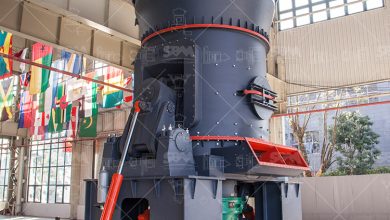
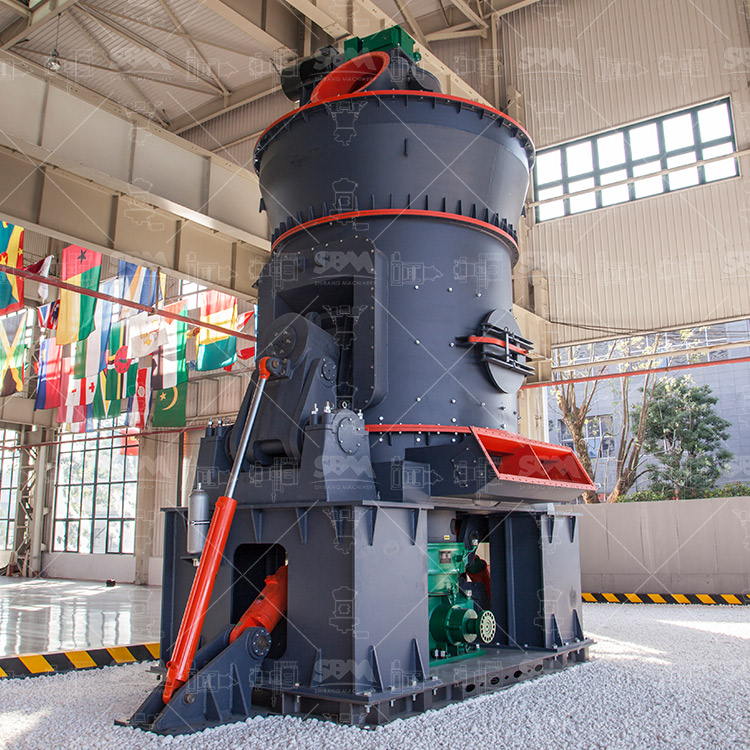
For the production of lithium manganate within a fineness range of 30-325 mesh (600-45μm), the LM Series Vertical Roller Mill presents a superior alternative to traditional ball mills. Its design directly addresses the core issues of uneven grinding:
- Integrated Grinding & Classification: The system seamlessly combines material bed grinding with an integrated high-efficiency classifier. This allows for real-time separation of fines, ensuring a consistently narrow PSD—a critical factor ball mills struggle with.
- Low Operating Cost & High Efficiency: Utilizing the bed grinding principle, the LM Mill consumes 30-40% less energy than a ball mill system for the same output. Its non-contact design between rollers and the grinding table also drastically reduces wear, increasing the service life of key parts.
- Superior Process Control: Equipped with an expert-level automatic control system, the LM Mill allows for precise regulation of grinding pressure, classifier speed, and feed rate. This enables stable operation and reproducible product quality, minimizing the manual intervention often required for ball mills.
- Environmental Compliance: The fully sealed negative pressure operation ensures dust emissions are kept well below international standards, and its operating noise is significantly lower than that of a ball mill plant.
For Ultrafine Requirements: The Ultrafine Mill Solution
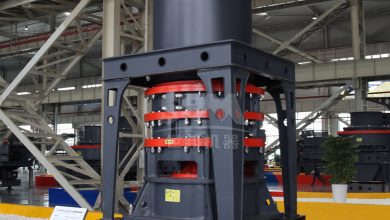
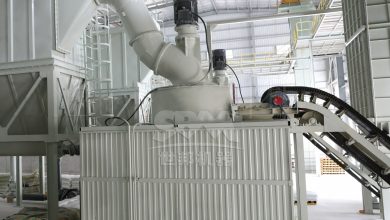
When the target product fineness for specialized lithium manganate applications extends into the ultrafine range (325-2500 mesh or 45-5μm), a different technology is required. For this purpose, we recommend our SCM Series Ultrafine Mill.
- High-Precision Classification: Its vertical turbine classifier is engineered for precise particle size cutting, ensuring no coarse powder is mixed into the final product. This delivers the uniformity essential for high-end battery cathodes.
- High Efficiency & Energy Saving: With a capacity twice that of jet mills and 30% lower energy consumption, it offers an economical path to ultrafine powders. The intelligent control system with automatic granularity feedback guarantees stable output quality.
- Gentle Grinding Action: The multi-layer grinding ring and roller design applies gradual pressure, reducing the risk of introducing lattice strain or defects into the lithium manganate particles compared to high-impact methods.
Implementation Strategy and Process Optimization
Transitioning to a new grinding technology requires a systematic approach:
- Material Characterization: Conduct a full analysis of the feed material, including initial PSD, moisture content, and Bond Work Index.
- Pilot Testing: Utilize pilot-scale equipment (like our available test centers for LM or SCM mills) to determine optimal operational parameters—classifier speed, grinding pressure, air volume—for your specific lithium manganate precursor.
- System Design: Based on pilot results, design a complete system including feeding, grinding, classification, dust collection (using high-efficiency pulse technology), and product conveying.
- Automation Integration: Implement a PLC-based control system to lock in the optimized parameters, ensuring long-term consistency and reducing human error.
Conclusion
The uneven grinding output from traditional ball mills poses a significant bottleneck in the quest for high-performance, long-life lithium-ion batteries. By understanding the mechanical and process limitations of ball mills, manufacturers can adopt advanced grinding technologies that offer integrated classification, precise control, and energy-efficient operation. Solutions like the LM Series Vertical Roller Mill for standard fineness ranges and the SCM Series Ultrafine Mill for ultrafine requirements provide a direct path to achieving the uniform, high-quality lithium manganate powder that modern battery technology demands. Investing in these systems is not merely an equipment upgrade but a strategic step towards superior product consistency, reduced operational costs, and a stronger position in the competitive battery materials market.