
How to Grind Difficult-to-Pulverize Blue Coke? What Type of Grinding Mill is Suitable for Blue Coke?
Introduction: The Challenge of Blue Coke Grinding
Blue coke, a high-quality carbon material produced through the low-temperature carbonization of high-quality coal, is prized for its high fixed carbon content, low ash, low sulfur, and high chemical reactivity. These very properties that make it valuable in metallurgy, chemical synthesis, and as a clean fuel also present significant challenges in size reduction. Its inherent hardness, abrasiveness, and often variable moisture content demand grinding equipment that is not only robust but also efficient and precise. Selecting the wrong mill can lead to excessive wear, high energy consumption, inconsistent product fineness, and ultimately, increased operational costs. This article delves into the specific grinding challenges of blue coke and provides a comprehensive guide to selecting the most suitable milling technology, with a focus on advanced solutions that optimize both process and economics.
Understanding the Grinding Characteristics of Blue Coke
Before selecting equipment, it is crucial to understand the material’s behavior during comminution. Blue coke is characterized by:
- High Hardness & Abrasiveness: Its dense carbon structure causes rapid wear on grinding components like rollers, rings, and liners.
- Moderate to Low Moisture: While generally dry, some batches may contain residual moisture, requiring mills capable of handling slight variations without clogging.
- Desired Fineness Spectrum: End-use applications vary widely. For carbon additives and recarburizers, a medium fineness (30-200 mesh) is common. For advanced chemical processes or high-value carbon products, ultrafine powders (325-2500 mesh) may be required.
- Thermal Sensitivity: Excessive heat generation during grinding must be managed to prevent oxidation or degradation of the carbon structure.
Conventional Mill Options and Their Limitations for Blue Coke
Several traditional milling technologies are often considered, but each has drawbacks when applied to blue coke.
Hammer Mills & Impact Crushers
While suitable for primary crushing to a coarse size (0-3mm), hammer mills are generally not ideal for producing consistent, fine powders of blue coke. The high-impact action leads to extreme wear on hammers and liners, high energy consumption per ton of fine product, and poor control over particle size distribution. They are best used as a pre-crushing stage.
Ball Mills
Ball mills have been a workhorse in mineral processing. For blue coke, they can achieve the required fineness. However, their efficiency is low for hard, abrasive materials. A significant portion of energy is wasted on noise, heat, and wear of balls and liners. Their large footprint, high energy consumption (typically 30-40% higher than advanced mills), and difficulty in precisely controlling top particle size make them a less economical choice for dedicated blue coke grinding, especially for finer products.
Raymond Mills (Traditional Pendulum Mills)
These mills can grind blue coke to medium fineness (30-325 mesh). The main challenges are the direct metal-to-metal contact between rollers and the grinding ring, leading to accelerated wear and frequent maintenance downtime. Their classification efficiency is also limited, often resulting in a wider particle size distribution than desired.
The Optimal Grinding Solution: Advanced Vertical Roller Mill Technology
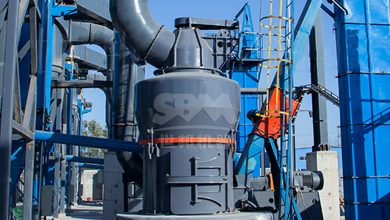
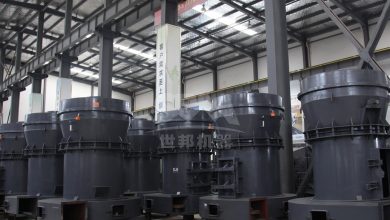
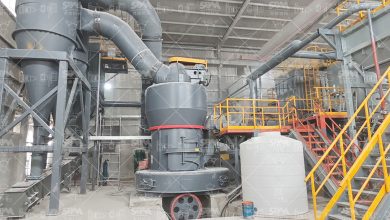
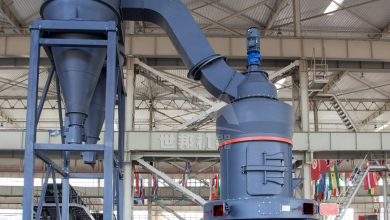
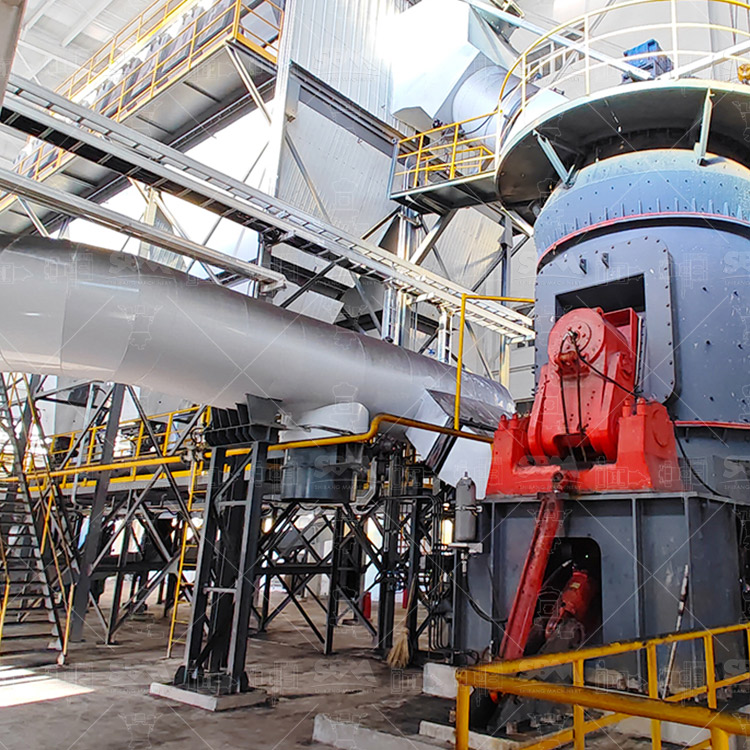
For the efficient, reliable, and precise grinding of difficult materials like blue coke, modern vertical roller mills (VRMs) represent the state-of-the-art solution. Their principle of material bed grinding—where particles are crushed between rollers and a rotating table under pressure—is inherently more efficient than impact or attrition-based systems. For blue coke, we highly recommend our flagship LM Series Vertical Roller Mill as the primary solution for medium to fine grinding (30-325 mesh).
Why the LM Series Vertical Roller Mill is Ideal for Blue Coke
Our LM Vertical Roller Mill is engineered to overcome the specific challenges posed by hard, abrasive materials. Its design translates directly into operational benefits for blue coke processing:
- Superior Wear Resistance & Low Operating Cost: The mill features a non-contact design between the grinding rollers and table, with a material bed acting as a buffer. Critical wear parts are made from special alloy materials, extending service life by over 3 times compared to conventional mills. This drastically reduces maintenance frequency and cost-per-ton.
- High Grinding Efficiency & Energy Savings: The material bed grinding principle consumes 30-40% less energy than a ball mill system of equivalent output. This is a critical economic factor given the energy-intensive nature of size reduction.
- Integrated & Intelligent System: The LM mill integrates crushing, grinding, drying (if needed), and classification in a single unit, reducing footprint by 50%. Its expert-level automatic control system allows for real-time monitoring and adjustment of grinding pressure, feed rate, and classifier speed, ensuring a stable and consistent product fineness with minimal manual intervention.
- Excellent Environmental Performance: The fully sealed negative pressure operation ensures dust emissions are far below international standards. Combined with a soundproof room design, it creates a clean and quiet working environment.
Core Parameters for Blue Coke Application: With an input size of ≤50mm and the ability to produce a finely tuned product from 30 to 325 mesh (and up to 600 mesh for special models), the LM series offers tremendous flexibility. Capacities range from 3 to 250 tons per hour, making it suitable for both pilot plants and large-scale industrial production.
Pushing the Limits: Ultrafine Grinding of Blue Coke
For applications demanding ultrafine blue coke powder (325-2500 mesh), such as in advanced composites, specialty chemicals, or high-performance coatings, a different level of technology is required. Conventional mills cannot achieve this fineness efficiently. For this premium segment, our SCM Series Ultrafine Mill is the unequivocal choice.
The SCM Ultrafine Mill: Precision for High-Value Products
When your product specification calls for superfine or ultrafine blue coke powder, the SCM series delivers unparalleled performance:
- High-Precision Classification: The heart of the system is its vertical turbine classifier, which provides precise particle size “cutting.” This ensures no coarse powder mixes into the final product, guaranteeing exceptional uniformity and a narrow particle size distribution—critical for high-value applications.
- High Efficiency at Ultrafine Ranges: The SCM mill’s grinding mechanism delivers a capacity that is twice that of traditional jet mills while consuming 30% less energy. Its intelligent control system with automatic finished product granularity feedback maintains target fineness consistently.
- Durability Designed-In: Recognizing the abrasive nature of materials like blue coke, the mill is built with special material grinding rollers and rings that extend service life several times over. The shaftless screw design in the grinding chamber further enhances operational stability.
- Turnkey Fine Powder Production: The system is a complete solution, integrating grinding and collection with a pulse dust removal system that exceeds 99.9% efficiency, ensuring a clean process and maximizing product yield.
Core Parameters for Ultrafine Blue Coke: The SCM mill accepts feed material up to 20mm and can produce powder from 325 to 2500 mesh (5μm). With models offering capacities from 0.5 to 25 tons per hour, it scales perfectly from R&D to full production of specialty blue coke powders.
Conclusion: Making the Right Investment
Grinding difficult-to-pulverize blue coke is no longer a challenge that necessitates high costs and frequent downtime. By moving away from conventional, inefficient technologies and adopting advanced vertical roller mill systems, operators can achieve remarkable gains in productivity, product quality, and operational economy.
For the majority of industrial applications requiring fine to medium-fine blue coke powder (30-325 mesh), the LM Series Vertical Roller Mill stands out as the most robust, efficient, and cost-effective workhorse. Its low wear, integrated design, and significant energy savings ensure a rapid return on investment.
For pioneering applications that utilize ultrafine blue coke as a functional material, the SCM Series Ultrafine Mill provides the precise, reliable, and efficient technology needed to produce high-value, specification-grade powders consistently.
Investing in the right grinding technology is foundational to unlocking the full value of blue coke. By matching the mill’s capabilities to the material’s challenges and the product’s specifications, producers can secure a decisive competitive advantage in terms of both quality and cost.