What Grinding Mill Is Best for Dry Grinding Fluorite to 350 Mesh?
Introduction to Fluorite and Its Applications
Fluorite (CaF₂), also known as fluorspar, is a strategically important industrial mineral with a wide range of applications. It is a primary source of fluorine and is extensively used in the production of hydrofluoric acid, aluminum fluoride, and cryolite for the aluminum industry. High-purity fluorite is essential in the optical and ceramic industries, while metallurgical-grade fluorite serves as a flux in steelmaking. With the rapid development of high-tech industries, the demand for finely ground fluorite powder, particularly at 350 mesh (approximately 45 microns), has surged significantly. Achieving this fineness through dry grinding requires careful selection of grinding equipment, as not all mills can efficiently handle fluorite’s moderate hardness (Mohs 4) and its tendency to generate fines.
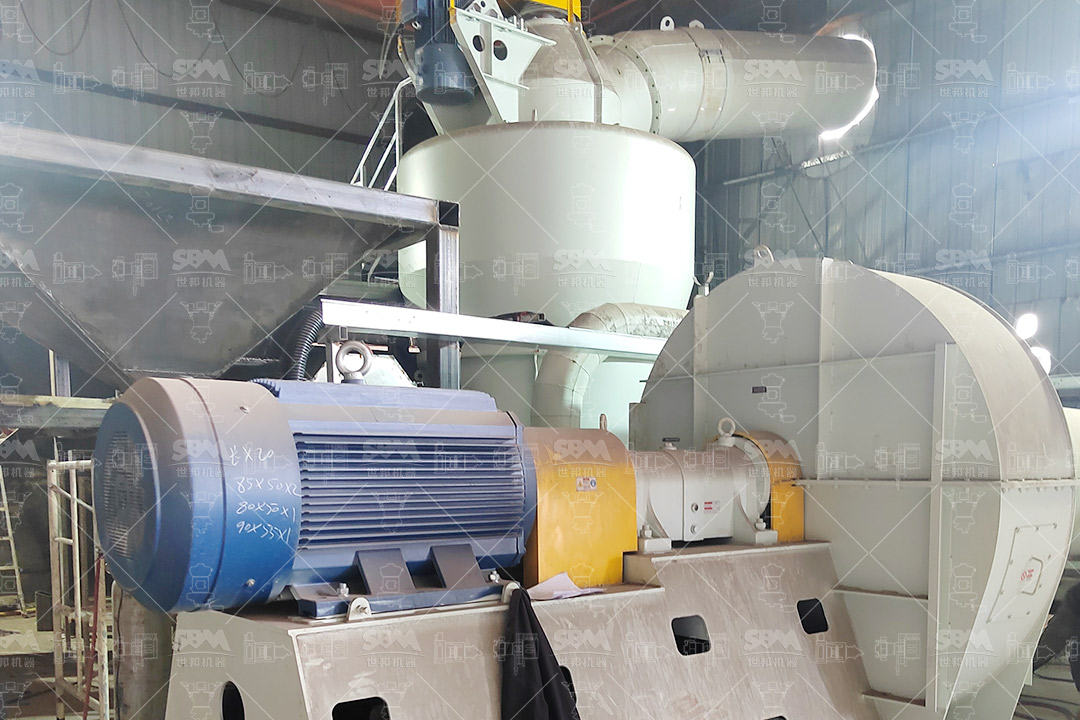
This article explores the technical considerations for dry grinding fluorite to 350 mesh and identifies the most suitable industrial grinding mills for this application. We will analyze key performance criteria such as fineness control, capacity, energy efficiency, and product purity, and recommend specific equipment from our company’s extensive portfolio that excels in this niche.
Why 350 Mesh? Understanding the Target Fineness
350 mesh corresponds to a particle size of approximately 45 micrometers (μm). In industrial practice, this fineness is often required for applications in:
- Glass and Ceramics: Finer fluorite improves transparency and reduces melting temperature.
- Chemical Manufacturing: High surface area enhances reaction rates in hydrofluoric acid production.
- Welding Electrodes: Fluorite powder serves as a flux component and requires uniform fineness.
- Optical Materials: Synthetic fluorite production demands ultra-fine, contamination-free powder.
Dry grinding is preferred over wet grinding when the downstream process cannot tolerate moisture or when water availability is limited. However, dry grinding of fluorite presents challenges: the material can become sticky at high temperatures, and fine particles tend to agglomerate. Therefore, the grinding mill must combine efficient size reduction with precise classification to avoid over-grinding and ensure a narrow particle size distribution.
Key Criteria for Selecting a Fluorite Grinding Mill
When choosing a grinding mill for dry grinding fluorite to 350 mesh, several factors must be evaluated:
- Fineness Capability: The mill must reliably produce 350 mesh (45 μm) with a narrow distribution, ideally with adjustable fineness to accommodate variations in product specifications.
- Capacity Match: Production scale ranges from small batch operations to large continuous lines. The mill’s capacity should match the required throughput without excessive energy consumption.
- Energy Efficiency: Grinding is energy-intensive; a mill that consumes less power per ton of product significantly reduces operating costs.
- Contamination Control: Fluorite for optical or chemical use must be free from iron and other wear debris. The grinding chamber and classifier should be designed to minimize wear and contamination.
- System Integration: Dry grinding systems typically include feeders, classifiers, dust collectors, and conveyors. A mill that integrates well with these components ensures stable operation.
- Maintenance and Wear: Fluorite is abrasive, though less so than quartz. Wear parts should have long service life and be easy to replace.
Overview of Grinding Mill Technologies for 350 Mesh Dry Grinding
Several types of mills can be considered for dry grinding fluorite to 350 mesh:
- Ball Mills: Capable of fine grinding but energy-intensive and typically used for coarser grinds (down to 200 mesh). Achieving 350 mesh often requires long retention times, leading to high energy costs.
- Raymond Mills (Pendulum Mills): Traditional pendulum mills can reach 325 mesh but may struggle with 350 mesh and have limited capacity for fine products.
- Hammer Mills: Only suitable for coarse grinding (0-3 mm), not for fine powder.
- Jet Mills: Can produce ultra-fine powders but have low capacity and high energy consumption, making them uneconomical for 350 mesh at industrial scale.
- Vertical Roller Mills: Efficient for fine grinding, but many models are designed for coarser products (e.g., 200 mesh).
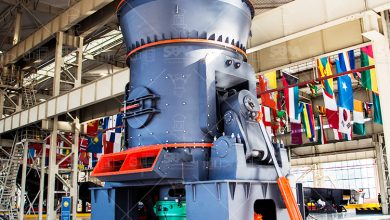
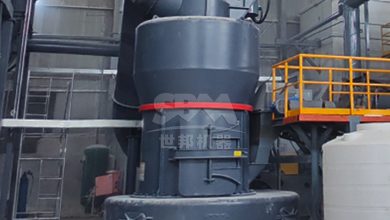
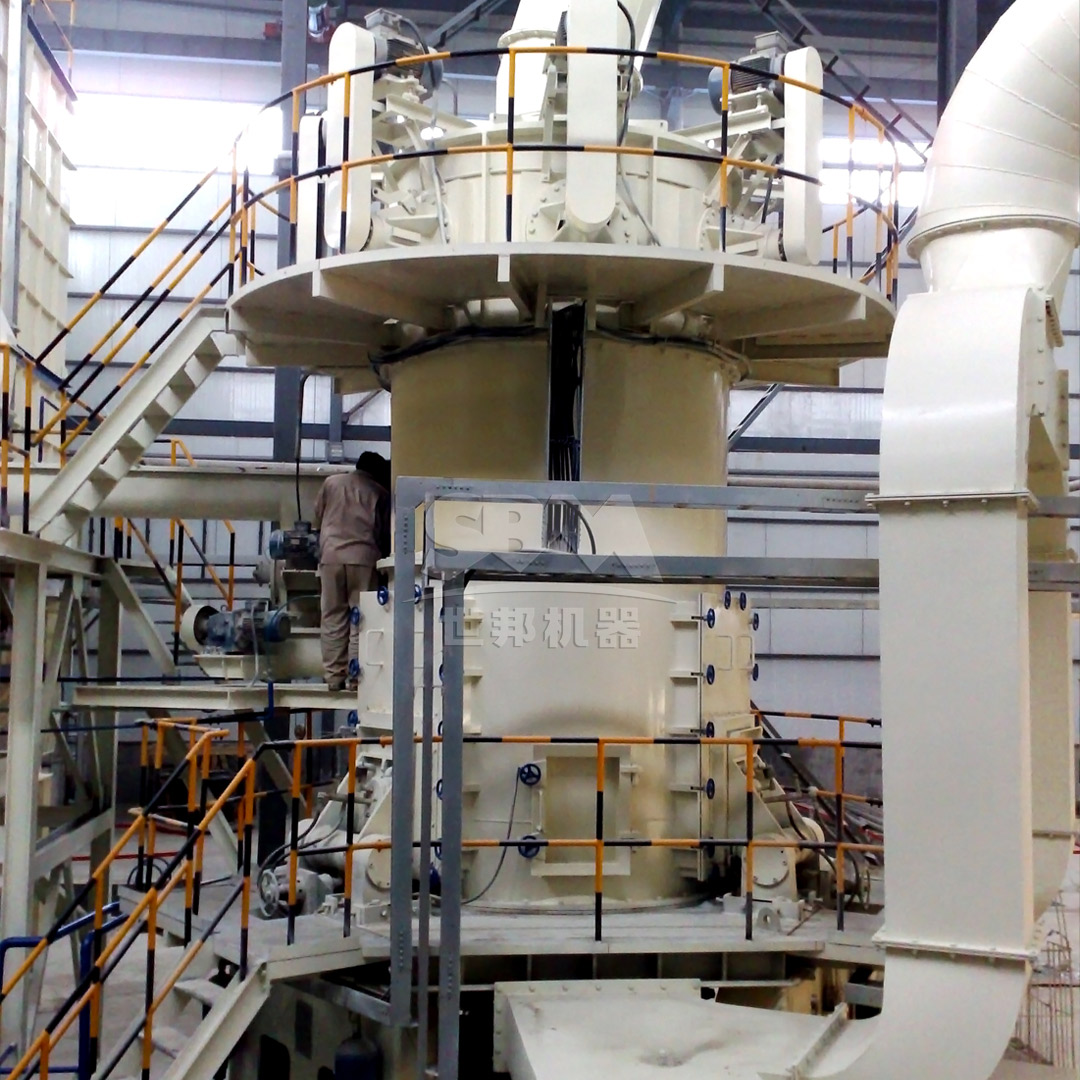
- Ultrafine Mills (e.g., SCM Series): Specifically engineered for fine and ultrafine grinding, with precise classifiers that can deliver 325-2500 mesh. These are ideal for 350 mesh.
- European Trapezium Mills (e.g., MTW Series): Advanced pendulum mills with enhanced classification, capable of 325 mesh and sometimes finer with optimized settings.
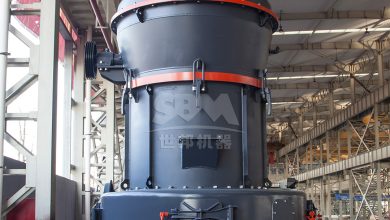
- LUM Ultrafine Vertical Roller Mill: Combines vertical roller milling with multi-rotor classification for fine products down to 5 μm.
Among these, the SCM Series Ultrafine Mill and the LUM Ultrafine Vertical Roller Mill stand out for their ability to efficiently produce 350 mesh dry powder. Let us examine each in detail.
SCM Series Ultrafine Mill: A Top Choice for 350 Mesh Fluorite Dry Grinding
The SCM Series Ultrafine Mill is a state-of-the-art grinding mill designed for producing fine and ultrafine powders from non-metallic minerals. With an output fineness range of 325-2500 mesh, it perfectly covers the 350 mesh requirement. Its technical advantages make it exceptionally suitable for fluorite dry grinding:
High Efficiency and Energy Saving
The SCM mill features a unique grinding mechanism where the main motor drives three layers of grinding rings to rotate. Materials are dispersed into the grinding path by centrifugal force and crushed by roller pressure, layer by layer. This principle yields a capacity twice that of jet mills while consuming 30% less energy. For fluorite, this translates to lower operating costs per ton.
High-Precision Classification
The vertical turbine classifier enables precise particle size cutting, ensuring no coarse powder mixing. This is critical for 350 mesh fluorite, where an oversize fraction can impair downstream performance. The classifier is adjustable, allowing quick changes in product fineness without shutting down the mill. Intelligent control with automatic finished product granularity feedback further ensures consistent quality.
Durable Design
Special material rollers and rings extend service life several times over compared to conventional mills. The shaftless screw grinding chamber ensures stable operation and reduces vibration. For abrasive fluorite, this durability minimizes maintenance downtime and maintains product purity by reducing wear debris.
Eco-friendly and Low Noise
The pulse dust collection system exceeds international standards, capturing fine particles and preventing emissions. A soundproof room design keeps noise levels low, contributing to a better working environment. Dry grinding generates dust, so effective dust collection is non-negotiable; the SCM mill’s system is a major advantage.
Models and Specifications
The SCM series offers several models to match different production scales:
- SCM800: Capacity 0.5-4.5 t/h, Main Power 75 kW
- SCM900: Capacity 0.8-6.5 t/h, Main Power 90 kW
- SCM1000: Capacity 1.0-8.5 t/h, Main Power 132 kW
- SCM1250: Capacity 2.5-14 t/h, Main Power 185 kW
- SCM1680: Capacity 5.0-25 t/h, Main Power 315 kW
All models accept feed sizes up to 20 mm and deliver fineness from 325 to 2500 mesh. For a typical fluorite grinding plant targeting 350 mesh, the SCM1000 or SCM1250 would be ideal for medium-scale production, while the SCM1680 suits large-scale operations. The ability to adjust fineness simply by changing classifier speed makes the SCM mill versatile for producing other grades as well.
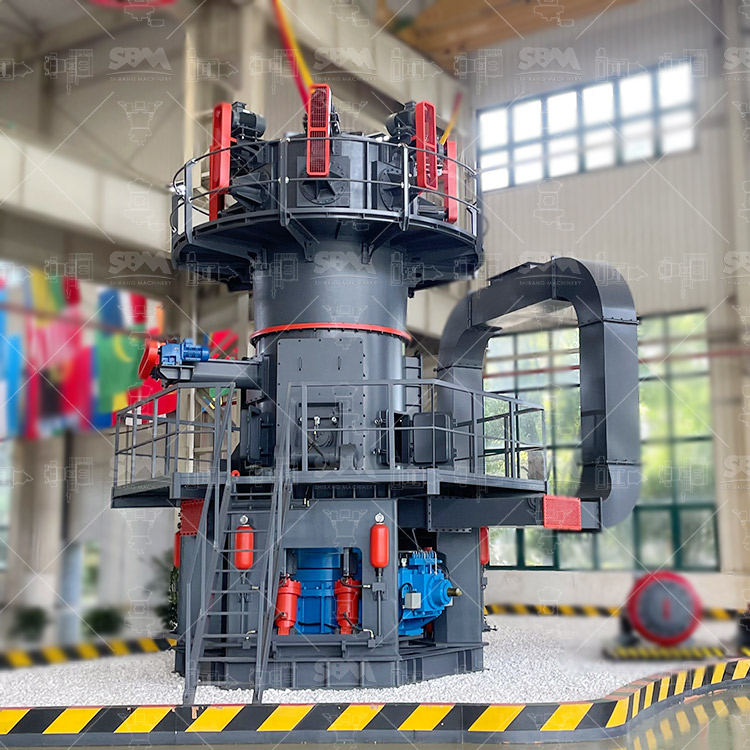
LUM Ultrafine Vertical Roller Mill: Another Excellent Option
The LUM Ultrafine Vertical Roller Mill is a specialized vertical mill that combines grinding and classification in a single unit. It is designed for ultrafine grinding of non-metallic minerals and delivers fineness from 325 to 2500 mesh, making it suitable for 350 mesh fluorite. Key features include:
- Efficient Grinding: Unique roller and liner curves improve grinding efficiency and reduce specific energy consumption.
- Precise Classifying: Multi-rotor classifier technology ensures no coarse particles, essential for tight specifications.
- Smart Control: PLC automation provides stable operation and easy adjustment.
- Environmental Performance: Negative pressure operation prevents dust leakage.
LUM models include LUM1525 (1.6-11.5 t/h), LUM1632 (2-13.5 t/h), and LUM1836 (2.3-15 t/h). The LUM mill is particularly advantageous when the feed material is already fine (0-20 mm) and when a compact footprint is desired. However, for very high capacities, the SCM series may offer a wider range.
Comparison and Recommendation
Both the SCM Series Ultrafine Mill and the LUM Ultrafine Vertical Roller Mill are excellent choices for dry grinding fluorite to 350 mesh. The decision between them depends on specific project requirements:
- For highest capacity and flexibility: The SCM1680 can reach 25 t/h, and the SCM series has a proven track record in non-metallic mineral processing.
- For compact installations and energy efficiency: The LUM mill integrates grinding and classification in a vertical arrangement, saving floor space.
- For contamination-sensitive applications: Both mills can be configured with wear-resistant liners to minimize iron contamination. The SCM mill’s special material rollers and rings are a strong point.
Based on our extensive experience with fluorite grinding, we recommend the SCM Series Ultrafine Mill as the primary choice for most dry grinding projects targeting 350 mesh. Its high-precision classifier, energy efficiency, and robust design make it a reliable workhorse. For projects where vertical mill layout is preferred, the LUM Ultrafine Vertical Roller Mill is an outstanding alternative.
System Configuration for Dry Grinding Fluorite to 350 Mesh
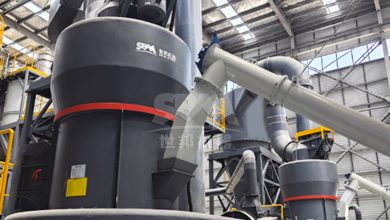
A complete dry grinding system using the SCM or LUM mill includes:
- Feed Hopper and Vibrating Feeder: Ensures uniform feed to the mill.
- Grinding Mill: SCM or LUM unit.
- Classifier: Integrated or separate, controls product fineness.
- Cyclone Collector: Separates the fine powder from the air stream.
- Pulse Dust Collector: Captures residual dust, ensuring emission compliance.
- Air Blower: Provides the necessary airflow for transport and classification.
- Discharge Screw Conveyor: Transports finished powder to storage or packaging.
All components are interconnected and controlled via a central PLC system to maintain stable operation and product quality. The system operates under negative pressure to prevent dust leakage.
Operating Tips for Dry Grinding Fluorite
To achieve optimal performance when grinding fluorite to 350 mesh, consider the following:
- Moisture Control: Fluorite feed should be dry (moisture <1%) to prevent agglomeration and clogging. If needed, a hot air generator can be integrated.
- Grinding Aid: In some cases, a small amount of grinding aid can improve flowability and reduce agglomeration, but this must be compatible with downstream use.
- Classifier Speed: Adjust to achieve the desired 350 mesh; too high a speed may reduce capacity.
- Regular Maintenance: Inspect wear parts (rollers, rings, classifier blades) periodically and replace as needed to maintain fineness and capacity.
- Dust Collector Cleaning: Ensure pulse jet system functions properly to maintain suction and emission control.
Conclusion
Dry grinding fluorite to 350 mesh is a technically demanding operation that requires a mill capable of fine grinding, precise classification, and efficient dust collection. Among the various mill types available, the SCM Series Ultrafine Mill and the LUM Ultrafine Vertical Roller Mill are the most suitable choices. Their ability to produce 350 mesh powder with high efficiency, low energy consumption, and minimal contamination makes them ideal for fluorite processing. By selecting the appropriate model and configuring the system correctly, producers can achieve consistent product quality and maximize profitability. For further assistance in selecting the right mill for your fluorite project, please consult our technical team.