Profit Margins for Bentonite Processing Plants: How Fine Should Bentonite Be Ground?
Introduction: The Economics of Particle Size
In the competitive world of industrial minerals, the profitability of a bentonite processing plant hinges on a delicate balance between energy expenditure, throughput, and product value. Bentonite, a versatile clay mineral, is used across dozens of industries—from drilling fluids and foundry binders to cat litter and pharmaceuticals. Each application demands a different particle size distribution. Grinding too coarsely risks losing high-value contracts; grinding too finely wastes energy and capital. The central question for plant managers is not merely ‘can we grind finer?’ but rather ‘how fine should we grind to maximize our profit margins?’
This article dissects the economic and technical variables that determine the optimal fineness for bentonite processing. We will explore how particle size affects market price, energy consumption, and equipment selection. By understanding these dynamics, processors can make data-driven decisions that directly improve their bottom line.
Understanding the Bentonite Market by Fineness
Bentonite is rarely sold as a standardized commodity. Instead, it is categorized by its physical and chemical properties, with fineness being a primary differentiator. The following table illustrates typical market segments and their associated price premiums:
| Application | Typical Fineness (Mesh) | Market Value (Relative Index) |
|---|---|---|
| Construction & Civil Engineering (grouting) | 30 – 100 mesh | Low (1.0x) |
| Foundry Sand Binder | 100 – 200 mesh | Medium (1.3x) |
| Drilling Mud (Oil & Gas) | 200 – 325 mesh | High (1.8x) |
| High-Value Additives (Pharma, Cosmetics) | 400 – 800 mesh (38 – 18 μm) | Premium (3.0x – 5.0x) |
| Ultra-fine Specialty (Rheology modifiers) | 1250 – 2500 mesh (10 – 5 μm) | Very High (10.0x+) |
As shown, the potential revenue per ton increases exponentially as fineness increases. However, this comes at a significant operational cost. The grinding energy required to reduce particle size follows a modified version of Bond’s Law, where energy consumption rises sharply as particle size decreases below a critical threshold.
The Energy vs. Value Trade-off
For a typical bentonite plant processing 100,000 tons per year (tpy), the difference between producing a 200-mesh product ($90/ton) and a 600-mesh product ($175/ton) represents an additional $8.5 million in annual revenue. Yet, achieving that finer grind often requires 40-60% more energy per ton. At an industrial electricity cost of $0.08/kWh, this energy penalty can quickly erode margins.
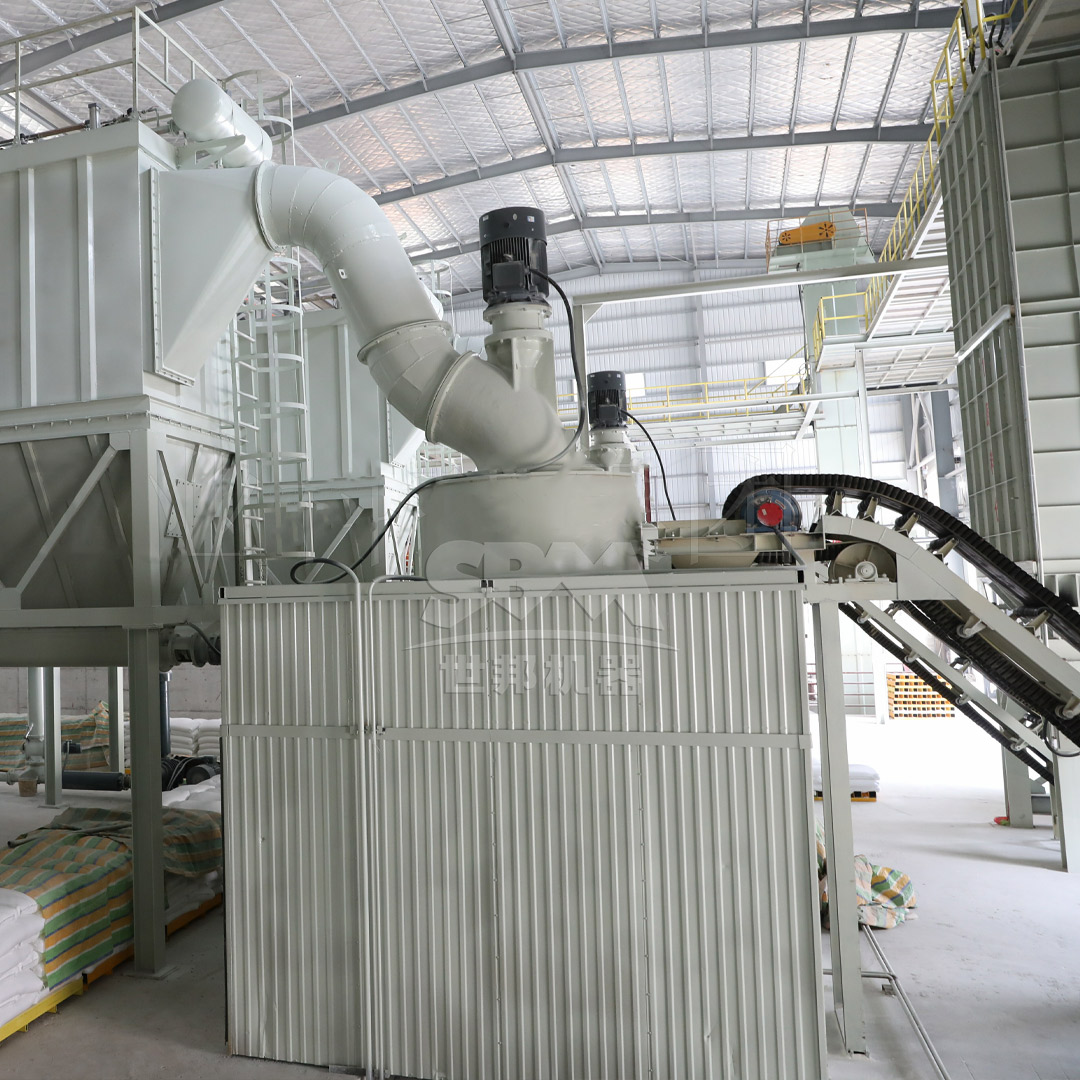
The key is to identify the ‘sweet spot’ where the incremental revenue from finer grinding exceeds the incremental cost. This is where modern milling technology, such as the SCM Series Ultrafine Mill, demonstrates its value. By offering a capacity that is 2x that of traditional jet mills while consuming 30% less energy, it allows processors to target the profitable 325-2500 mesh (45-5 μm) range without incurring prohibitive operational costs.
Application-Specific Grinding Strategies
The optimal fineness is not a universal number; it is dictated by the final application. Here is how different industries determine their grinding targets:
1. Oil & Gas Drilling (200-325 mesh)
For drilling fluids (mud), bentonite must swell and create a thixotropic gel. Particles that are too fine (<30 μm) can increase viscosity excessively, causing high torque and pump pressure. Particles that are too coarse (>74 μm) settle out of suspension. The ideal is a tight 200-325 mesh (74-44 μm) distribution. Processors targeting this sector benefit from the precision classification offered by mills like the SCM Series, which uses a vertical turbine classifier to achieve precise particle size cutting with no coarse powder mixing.
2. Foundry & Iron Ore Pelletizing (100-200 mesh)
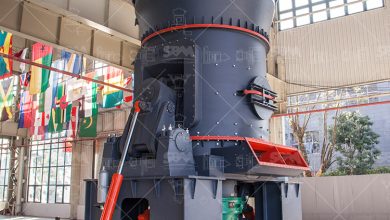
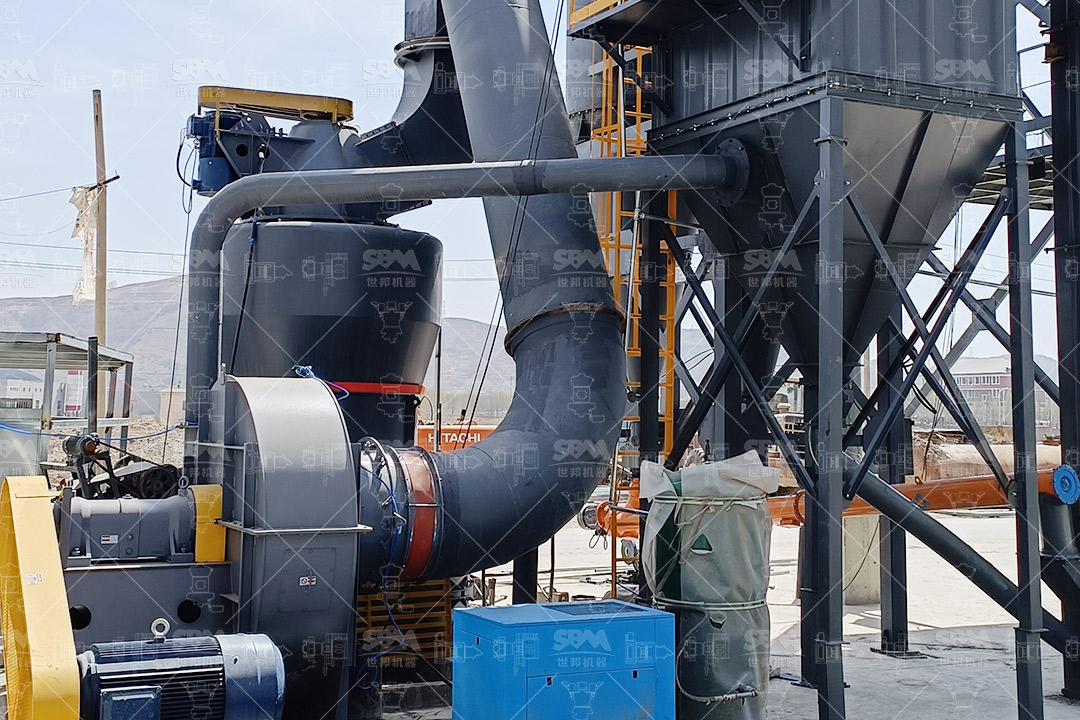
In foundry molds, bentonite acts as a binder. Fineness is critical for bonding strength, but excessive fines can cause dust issues and reduce permeability. A target of 90% passing 200 mesh is standard. For this application, where high throughput at a medium fineness is required, the MTW Series European Trapezium Mill is an excellent choice. Its output fineness ranges from 30-325 mesh (600-45 μm) and it offers capacities up to 45 tons per hour. The integral bevel gear drive provides transmission efficiency up to 98%, directly translating low energy costs into higher net margins.
3. Speciality & Ultra-fine Markets (800-1250 mesh)
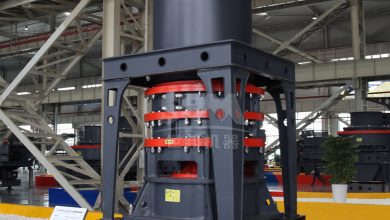
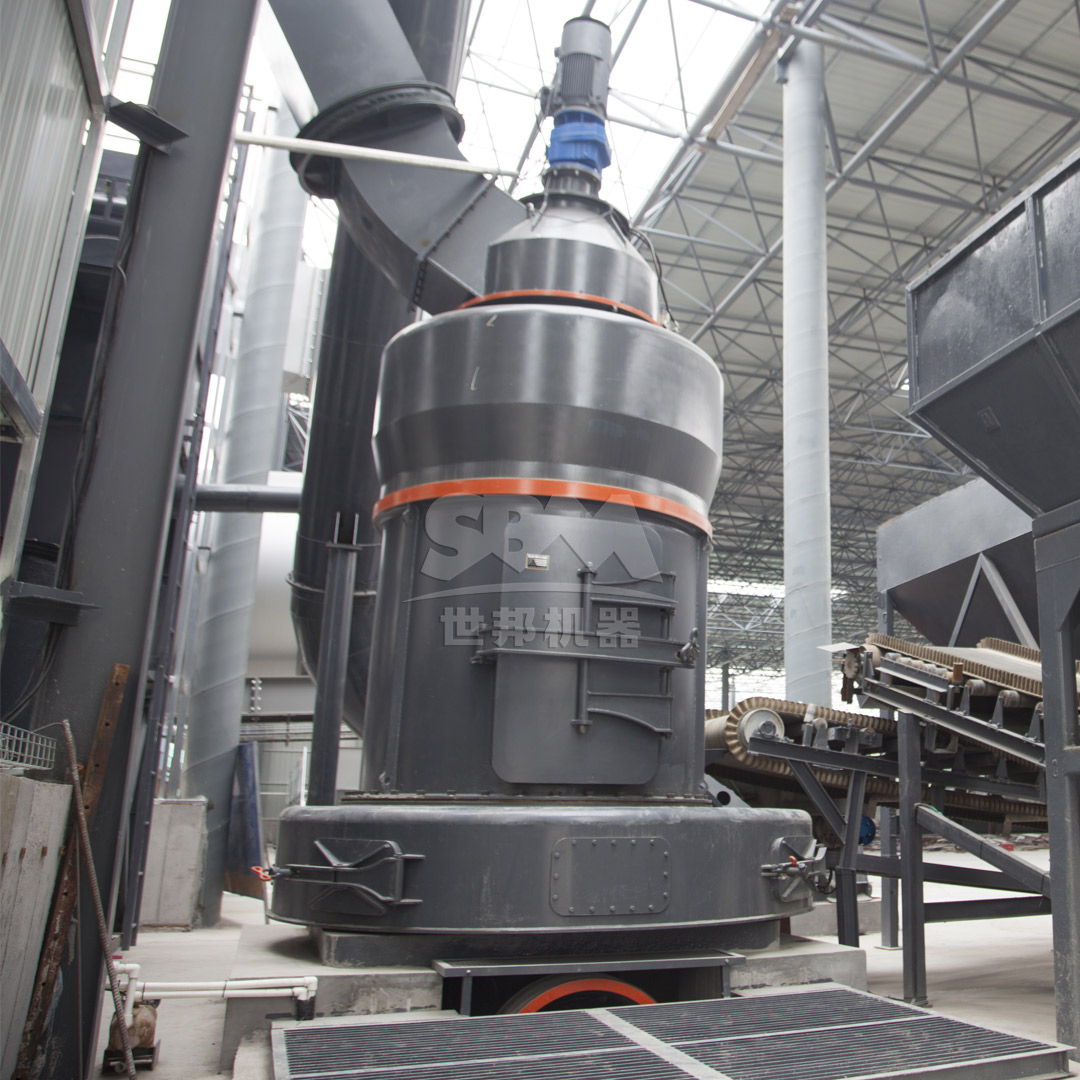
For high-end markets like rheology modifiers, cosmetics, or ink, the particle size must be below 20 μm. The value proposition is enormous, but the grinding difficulty is extreme. Here, equipment that can achieve ultra-fine output without high contamination or heat generation is crucial. The SCM Series Ultrafine Mill is specifically designed for this task. With models ranging from the SCM800 (0.5-4.5 t/h) up to the SCM1680 (5-25 t/h), it can produce fineness up to 2500 mesh (5 μm). Its unique working principle, where the main motor drives three layers of grinding rings for layer-by-layer crushing, ensures uniform particle distribution and stable operation. For plant managers looking to maximize profit, investing in equipment that unlocks the ‘very high’ value bracket is a strategic imperative.
Calculating the Profit Equation
Let’s consider a practical example for a medium-sized plant. Assume the plant processes 20 tons per hour (160,000 tpy).
- Scenario A (Coarse): Target 100 mesh. Revenue: $80/ton. Energy Cost: $3.50/ton. Gross Margin (excl. other costs): $76.50/ton. Total Annual Margin: $12.24 million.
- Scenario B (Medium-Fine): Target 325 mesh. Revenue: $145/ton. Energy Cost: $5.80/ton. Gross Margin: $139.20/ton. Total Annual Margin: $22.27 million.
- Scenario C (Ultra-Fine): Target 1250 mesh (10 μm). Revenue: $450/ton. Energy Cost: $12.00/ton. Gross Margin: $438.00/ton. Total Annual Margin: $70.08 million.
While Scenario C appears dramatically more profitable, the plant must have the correct equipment to achieve 10 μm at 20 t/h. This requires a mill with high capacity in the ultra-fine range. The SCM1680, with a capacity of 5-25 t/h at 325-2500 mesh, is one of the few machines capable of delivering this performance. The high-precision classification and intelligent control with automatic finished product granularity feedback ensure that the product meets the strict specifications of high-value clients, preventing rework and product rejection.
Beyond Grinding: The Role of Classification and Dust Collection
Profit margins are not solely determined by the grinding mill. The entire system must be optimized. High-efficiency classification ensures that once a particle reaches the target size, it is removed from the mill immediately. Over-grinding is a waste of energy. The SCM Series excels here with its vertical turbine classifier. Additionally, environmental compliance is a major cost factor. Stricter regulations mean that plants without efficient dust collection face fines or shutdowns. The SCM Series features a pulse dust collection system that exceeds international standards and a soundproof room design for noise control. This reduces the hidden costs of environmental management and improves the plant’s social license to operate.
Conclusion: A Strategic Decision
The question of how fine to grind bentonite is a strategic economic decision that defines a plant’s market position. For bulk commodity products, coarse grinding at high tonnage may suffice. However, for sustainable profitability and growth, targeting higher-value, finer markets is essential. The key is minimizing the energy penalty associated with fine grinding.
Investing in modern, efficient grinding technology like the SCM Series Ultrafine Mill (for 325-2500 mesh products) or the MTW Series European Trapezium Mill (for high-capacity 30-325 mesh products) allows processors to shift the cost curve downward. By reducing energy consumption by 30-50% compared to outdated systems and delivering precise, high-value product specifications, these mills directly enhance profit margins. The optimal fineness is whatever particle size provides the highest return on investment. With the right equipment, that fine line can lead to a very profitable bottom line.