How to Choose the Right Grinding Equipment for Electrolytic Manganese Powder Production Workshop?
Introduction: The Importance of Selecting the Right Grinding Equipment
Electrolytic manganese powder (EMP) is a critical material used in batteries, ceramics, fertilizers, and alloy production. Its production process involves the electrolysis of manganese sulfate solution followed by grinding, classification, and packaging. The grinding stage is crucial because it determines particle size distribution, surface area, and ultimately the performance of the final product. In a production workshop, choosing the right grinding equipment directly impacts productivity, energy consumption, product quality, and operational costs.
With numerous types of mills available – ball mills, Raymond mills, vertical roller mills, ultrafine mills, and hammer mills – selecting the optimal solution can be challenging. This article provides a systematic guide to help you make an informed decision, highlighting key technical and economic factors. We also recommend specific equipment from our company’s product portfolio that excel in electrolytic manganese powder processing.
Key Characteristics of Electrolytic Manganese Powder
Before selecting equipment, it’s essential to understand the material’s properties. Electrolytic manganese powder is typically brittle, with a Mohs hardness of 5–6. It is prone to oxidation and moisture absorption, so grinding must be performed in a dry environment or with inert gas protection. The target fineness usually ranges from 200 to 2500 mesh, depending on the application: battery-grade material requires finer sizes (e.g., D50 < 10 μm), while metallurgical or ceramic applications may accept coarser powders (e.g., 200–325 mesh).
Other factors include bulk density, flowability, and explosive dust characteristics. These properties influence the choice of mill type, classifier, and dust collection system.
Critical Factors for Equipment Selection
1. Required Fineness and Particle Size Distribution
The target fineness is the primary driver. For coarse grinding (down to 325 mesh), a vertical roller mill or European trapezium mill is efficient. For ultrafine grinding (up to 2500 mesh), an ultrafine mill or vertical ultrafine mill is necessary. A narrow particle size distribution is often required for battery materials, which demands a high-precision classifier.
2. Production Capacity
This should match your workshop’s throughput. Small workshops may require 0.5–5 t/h, while large plants may need 20–50 t/h. The selected mill must achieve the target capacity without excessive energy consumption or downtime.
3. Energy Efficiency and Operating Costs
Grinding is energy-intensive. Mills with advanced grinding mechanisms (e.g., roller pressure, centrifugal force) consume less power than traditional ball mills. Consider maintenance costs, wear part life, and automation level to reduce labor expenses.
4. Material Contamination and Product Purity
Electrolytic manganese powder must remain free of iron and other contaminants. Equipment with wear-resistant liners (e.g., ceramic or special alloys) and closed-loop systems with efficient dust collectors prevents contamination.
5. Environmental and Safety Compliance
Dust emissions and noise must meet regulations. Pulse dust collectors, negative pressure operation, and soundproof designs are essential.
6. Space and Infrastructure
Vertical mills occupy less floor space than ball mills and can be installed outdoors, reducing civil works. This is a key advantage for compact workshops.
Overview of Grinding Equipment Types
Several mill types are suitable for electrolytic manganese powder, each with distinct strengths:
- Ball Mills: Classic, robust, and capable of fine grinding (0.074–0.8 mm). However, they are energy-hungry, noisy, and have large footprints. Best for coarse to medium grinding in large-scale operations where capital cost is a constraint.
- Raymond Mills (Pendulum Mills): Offer fineness up to 325 mesh with moderate capacity. They are reliable but less efficient for ultrafine grinding and may require frequent maintenance.
- Vertical Roller Mills: Combine grinding, drying, and classification. They are energy-efficient, have high capacities, and produce consistent fineness (down to 600 mesh for special models). Ideal for medium to large workshops.
- Ultrafine Mills: Designed for fine and ultrafine powders (325–2500 mesh). They feature high-precision classifiers, low noise, and eco-friendly dust collection. Perfect for battery-grade electrolytic manganese powder.
- Hammer Mills: Used for pre-crushing to 0–3 mm, often as a first step before fine grinding.
Recommended Equipment from Our Portfolio
Based on our extensive experience in mineral processing, we recommend two flagship products that are particularly well-suited for electrolytic manganese powder production: the SCM Series Ultrafine Mill and the LM Series Vertical Roller Mill.
SCM Series Ultrafine Mill – For High-Precision Ultrafine Grinding
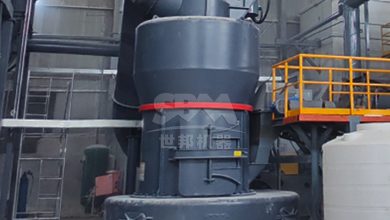
The SCM Series is a state-of-the-art ultrafine mill capable of producing powders from 325 to 2500 mesh. Its technical advantages make it an excellent choice for electrolytic manganese powder:
- High Efficiency & Energy Saving: Capacity is twice that of jet mills, with 30% lower energy consumption. The intelligent control system with automatic finished product granularity feedback ensures stable operation.
- High-Precision Classification: The vertical turbine classifier achieves precise particle size cutting, preventing coarse powder mixing and ensuring uniform finished products.
- Durable Design: Special material rollers and rings extend service life several times over. The shaftless screw grinding chamber ensures stable operation.
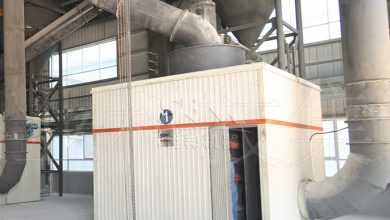
- Eco-friendly & Low Noise: Pulse dust collection efficiency exceeds international standards, and the soundproof room design keeps noise levels low.
With models from SCM800 (0.5–4.5 t/h) to SCM1680 (5–25 t/h), you can match the capacity to your workshop scale. The SCM mill’s ability to produce fine, uniform particles makes it ideal for battery-grade electrolytic manganese powder.
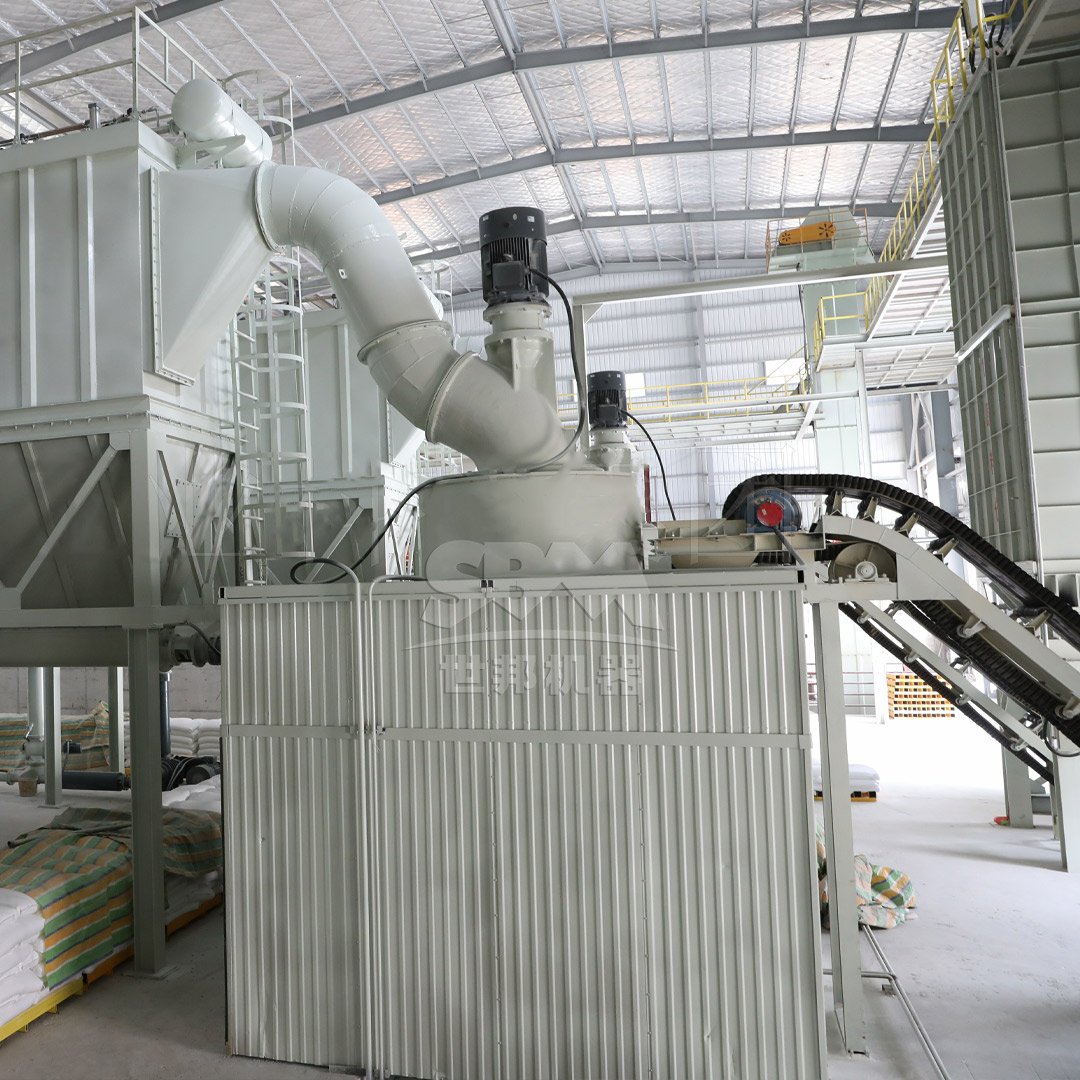
LM Series Vertical Roller Mill – For Large-Scale, Efficient Production
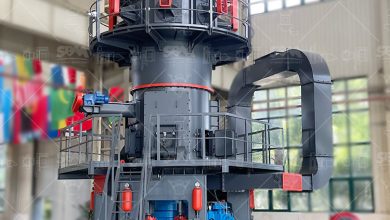
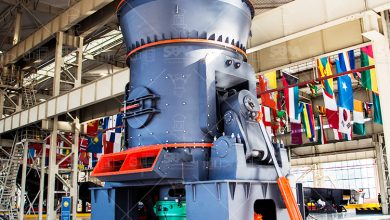
The LM Series is a versatile vertical mill that integrates crushing, grinding, and classification. It is designed for medium to large-scale production (3–250 t/h) and offers fineness up to 600 mesh (special models). Key benefits include:
- Integrated Design: Reduces floor space by 50% and allows outdoor installation, cutting infrastructure costs by 40%.
- Low Operating Cost: Non-contact design between rollers and table increases wear part life by 3x. Energy consumption is 30–40% lower than ball mill systems.
- Intelligent Control: Expert-level auto-control system with remote/local switching and real-time monitoring.
- Environmental Compliance: Fully sealed negative pressure operation ensures dust emission and noise are within limits.
Models like LM130K (10–28 t/h) to LM280K (50–170 t/h) can handle high capacities, making the LM Series a smart choice for large electrolytic manganese powder workshops aiming for cost-effective, sustainable production.
Comparative Analysis: SCM vs. LM for Electrolytic Manganese Powder
Both mills excel, but their applications differ:
- Fineness: SCM is superior for ultrafine (up to 2500 mesh), while LM typically goes to 600 mesh (special models). For battery-grade EMP, SCM is preferred. For ceramic or metallurgical grades, LM suffices.
- Capacity: LM offers higher capacities (up to 250 t/h) compared to SCM (up to 25 t/h). If your workshop requires >25 t/h, LM is the clear choice.
- Energy Consumption: Both are energy-efficient, but SCM’s jet-mill comparison highlights its advantage in ultrafine grinding. LM’s bed-grinding principle saves energy in large-scale operations.
- Footprint: LM’s integrated design saves space, while SCM is more compact than traditional ultrafine mills.
For a typical electrolytic manganese powder workshop producing battery-grade material at 5–15 t/h, the SCM1250 (2.5–14 t/h) is ideal. For a large plant producing 30–100 t/h of 200–325 mesh powder, the LM190K or LM220K is recommended.
Additional Equipment for a Complete Production Line
Grinding is just one stage. A complete workshop also requires:
- Hammer Mill: For pre-crushing raw manganese to 0–3 mm. Our PC4008-75 (8–15 t/h) is a robust option.
- Ball Mill: If wet grinding or coarse grinding is needed, our GMQG series offers capacities up to 450 t/h.
- Dust Collector: Pulse dust collectors are integrated into our mills, but standalone units may be needed for material handling.
- Feeder and Conveyor: Ensure consistent feed rate to optimize grinding efficiency.
Installation and Maintenance Considerations
Proper installation and maintenance extend equipment life. For SCM and LM mills, ensure a flat foundation, adequate ventilation, and regular inspection of wear parts. Our mills feature easy maintenance: SCM’s shaftless screw chamber and LM’s hydraulic roller change system reduce downtime. Training operators on automation systems is also crucial for optimal performance.
Conclusion: Making the Right Choice
Choosing the right grinding equipment for electrolytic manganese powder production requires a careful balance of fineness, capacity, energy efficiency, and environmental compliance. The SCM Series Ultrafine Mill and LM Series Vertical Roller Mill from our company represent the best-in-class solutions for ultrafine and large-scale grinding, respectively. By assessing your specific product requirements and production goals, you can select the mill that maximizes return on investment.
For further assistance, our technical team can provide customized recommendations and pilot testing. Contact us today to optimize your electrolytic manganese powder workshop.