How Does Calcium Carbonate Particle Size Affect Toothpaste Performance and Quality?
Introduction
Calcium carbonate is one of the most widely used functional fillers in the toothpaste industry globally. As a primary abrasive and bulking agent, its physical properties—most notably particle size—directly dictate critical performance metrics such as cleaning efficacy, enamel safety, mouthfeel, and product stability. For manufacturers seeking to formulate premium toothpaste that balances effective plaque removal with gentle abrasion, understanding the precise role of particle size distribution is not merely an academic exercise; it is a commercial imperative. This article provides an in-depth examination of how calcium carbonate particle size influences toothpaste quality and performance, offering technical insights for formulators and production managers.

The Role of Calcium Carbonate in Toothpaste Formulations
Calcium carbonate (CaCO₃) serves multiple functions in toothpaste. It acts as a mild abrasive to remove dental plaque, food debris, and surface stains. It also functions as a thickener and a filler, contributing to the paste’s rheological properties and providing body to the product. The particle size of the calcium carbonate determines its abrasivity, its compatibility with other ingredients, and the final texture of the toothpaste. Coarse particles may be too aggressive on enamel, while excessively fine particles may lack sufficient cleaning power.
Impact on Cleaning Efficacy and Abrasivity
The cleaning power of toothpaste is largely a function of the abrasive’s particle size and hardness. Industry standards, such as the Radioactive Dentin Abrasion (RDA) value, quantify this relationship. Calcium carbonate particles in the range of 10 to 20 microns typically offer an optimal balance. They are large enough to provide mechanical scrubbing action against dental pellicle and stains, yet small enough to avoid scratching the enamel surface.
When particle sizes exceed 20 microns, the risk of enamel damage and dentin hypersensitivity increases significantly. Conversely, when particles are reduced below 5 microns, the abrasive efficiency drops sharply, potentially leaving the teeth inadequately cleaned. Modern research indicates that a narrow particle size distribution—where the majority of particles fall within a tight range—is superior to a broad distribution containing both very fine and excessively coarse fractions. This uniformity ensures consistent performance in every brush stroke.

Influence on Mouthfeel and Rheology
Mouthfeel is a critical consumer-acceptance factor for toothpaste. Grittiness, which is directly caused by oversized calcium carbonate particles, is one of the most common consumer complaints. Particles above 45 microns are often perceptible to the human tongue and palate, leading to a negative user experience. Even if the average particle size is acceptable, the presence of a ‘tail’ of coarse particles in the distribution can ruin the product’s sensory profile.
Particle size also affects the rheological properties of the toothpaste paste. Very fine calcium carbonate powders (e.g., 5–10 microns) have a higher specific surface area, which increases the liquid absorption and viscosity of the paste. This can help formulators stabilize the formula and prevent phase separation. However, if the powder is too fine, it can make the paste excessively stiff or difficult to extrude from the tube. Therefore, the selection of the correct particle size grade is essential for optimizing both processability during manufacturing and the final consumer experience.
Stability and Chemical Reactivity
The stability of toothpaste over its shelf life is another area where particle size plays a vital role. Finer particles have a larger surface area per unit mass, making them more reactive with acidic components like flavor oils or fluoride compounds. In some formulations, this reactivity can lead to unwanted chemical changes, such as the formation of insoluble calcium fluoride, which reduces the bioavailability of fluoride. Controlling the particle size allows formulators to manage this surface reactivity effectively.
Additionally, particle size affects the settling behavior in liquid phases. In toothpaste, the solid calcium carbonate must remain uniformly suspended in the gel or paste matrix. If the particles are too large and heavy, they may settle to the bottom of the tube during storage, creating a hard, unusable plug and a watery supernatant. A properly engineered particle size distribution minimizes this risk, ensuring long-term stability and a consistent product every time the tube is used.
Production Efficiency: The Critical Link to Grinding Technology
From a manufacturing standpoint, achieving the precise particle size required for high-performance toothpaste depends entirely on the grinding and classification equipment used. Inefficient milling can lead to broad particle size distributions, excessive energy consumption, and high production costs. For toothpaste manufacturers, investing in advanced grinding technology is the most direct path to consistent quality and competitive advantage.
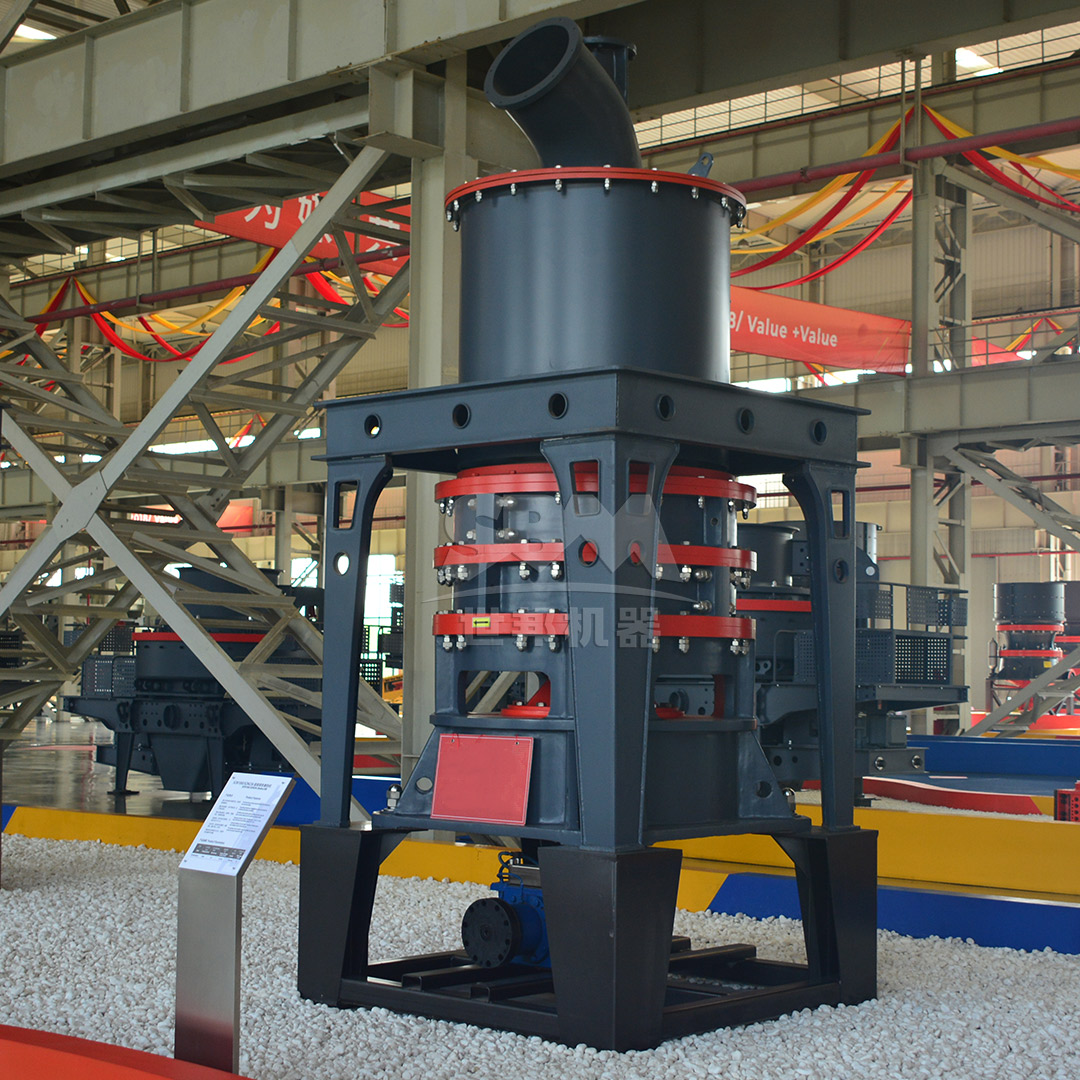
For applications requiring extremely fine and uniform calcium carbonate powders (45–5 microns), our SCM Series Ultrafine Mill is the industry benchmark. This mill features a vertical turbine classifier that achieves precise particle size cutting, ensuring no coarse powder mixing. The SCM Series delivers a capacity up to 2 times that of traditional jet mills while consuming 30% less energy. With output fineness ranging from 325 to 2500 mesh (approximately 45 to 5 microns), it is ideally suited for premium toothpaste formulations that demand superior mouthfeel and controlled abrasivity.
For manufacturers requiring higher throughput for general toothpaste-grade calcium carbonate (30–325 mesh, or 600–45 microns), the MTW Series European Trapezium Mill offers an unbeatable combination of efficiency and reliability. Its integral bevel gear drive achieves a transmission efficiency of up to 98%, and the optimized arc air duct reduces energy loss. The MTW mill is designed for continuous, heavy-duty production with minimal maintenance, making it the workhorse of the industrial minerals industry. Whether you need a fineness of 100 mesh for standard toothpaste or 325 mesh for sensitive-teeth formulations, the MTW series provides the flexibility and precision required.
Quality Control and Particle Size Analysis
To ensure that the calcium carbonate meets stringent toothpaste specifications, rigorous quality control is essential. Laser diffraction particle size analysis is the standard method for measuring distribution. Key parameters monitored include D10, D50, and D90 values, as well as the percentage of particles above a maximum threshold (e.g., >45 microns). A well-controlled grinding process, such as that provided by the SCM or MTW mills, generates consistent, repeatable results that satisfy both internal quality standards and regulatory requirements.
Conclusion
Calcium carbonate particle size is a decisive factor in toothpaste performance, affecting cleaning efficacy, enamel safety, mouthfeel, stability, and production efficiency. The shift towards high-quality, consumer-oriented toothpaste products demands that manufacturers source or produce powders with tightly controlled, application-specific particle size distributions. By leveraging advanced milling technologies like the SCM Series Ultrafine Mill and the MTW Series European Trapezium Mill, producers can achieve the precise specifications needed to deliver a superior product. The right particle size is not just a technical detail—it is the foundation of a successful toothpaste brand.