
HLM Vertical Mill Slag Grinding Production Line: Customer Case Study
Introduction
In the modern construction and cement industries, the efficient processing of slag—a byproduct of steel production—has become a critical factor for sustainability and profitability. Ground granulated blast-furnace slag (GGBFS) is widely used as a supplementary cementitious material, enhancing concrete durability and reducing carbon footprint. However, grinding slag is notoriously challenging due to its high hardness, abrasiveness, and moisture content. This case study examines how a leading customer successfully implemented an HLM vertical mill slag grinding production line to achieve high-capacity, energy-efficient processing, and how complementary equipment from our portfolio, such as the LM series vertical roller mill and the SCM series ultrafine mill, can further optimize operations.
Customer Background and Project Requirements
The customer, a major cement producer in Southeast Asia, sought to expand its production of GGBFS to meet growing demand from local infrastructure projects. The company required a grinding system capable of handling 100 tons per hour of slag with a specific surface area of 420 m²/kg, while minimizing energy consumption and maintenance downtime. Key challenges included the abrasive nature of slag (Bond Work Index of 12–15 kWh/t) and the need for consistent product fineness. Traditional ball mill systems proved inefficient, with high power draw and frequent wear-part replacement. The customer turned to our HLM vertical mill technology, known for its integrated grinding, drying, and classification capabilities.
Solution: HLM Vertical Mill Slag Grinding Production Line
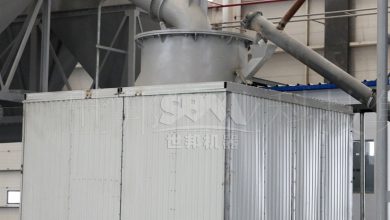
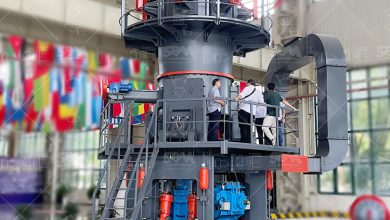
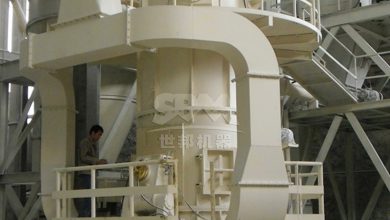
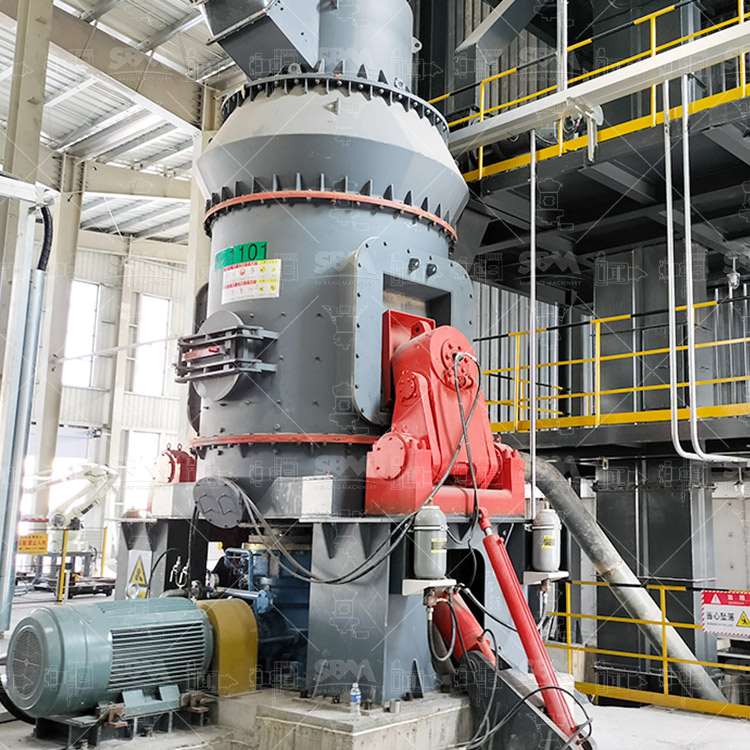
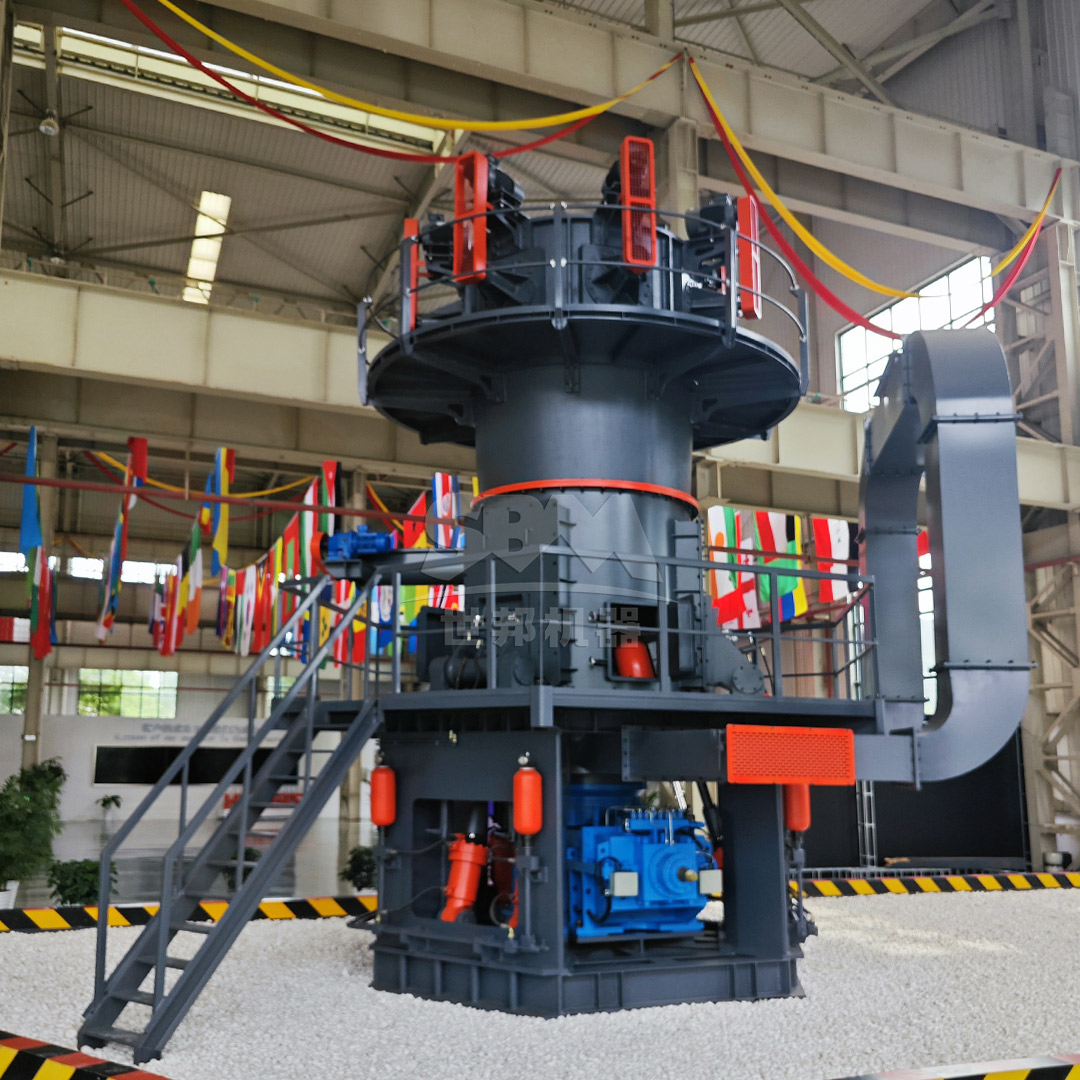
The core of the solution is the HLM series vertical roller mill, specifically the LM370N model from our vertical slag mill range. This mill features a modular grinding roller assembly quick-change system, dynamic classifier multi-stage adjustment, and a hot air circulation energy-saving system—all patented technologies that address the specific challenges of slag grinding. The production line was designed with a feed size of ≤50mm, a capacity of 110 t/h, and a fineness of 420 m²/kg (equivalent to approximately 400–450 m²/kg Blaine). The system integrates crushing, grinding, and selection, reducing floor space by 50% compared to traditional setups, and allows outdoor installation, cutting infrastructure costs by 40%.
Key technical advantages realized in this project include:
- Low Operating Cost: The non-contact design between rollers and table, combined with wear-resistant materials, increased wear-part life by 3x. Energy consumption was 30–40% lower than the customer’s previous ball mill system.
- Intelligent Control: An expert-level auto-control system with remote/local switching enabled real-time monitoring of parameters, reducing manual intervention and ensuring stable operation.
- Environmental Compliance: Fully sealed negative pressure operation with dust emission below 10 mg/m³ and noise levels below 85 dB(A), meeting stringent local regulations.
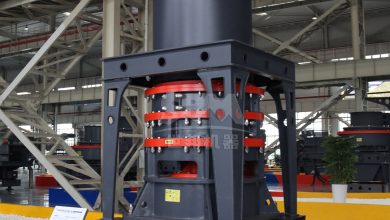
For finer product grades (e.g., 600 m²/kg for specialty applications), the customer also integrated our SCM series ultrafine mill. The SCM800 model, with a capacity of 0.5–4.5 t/h and fineness up to 2500 mesh, provides a cost-effective way to produce high-value slag powders. Its intelligent control with automatic finished product granularity feedback ensures consistent quality, while the vertical turbine classifier achieves precise particle size cutting.
Production Process and Performance
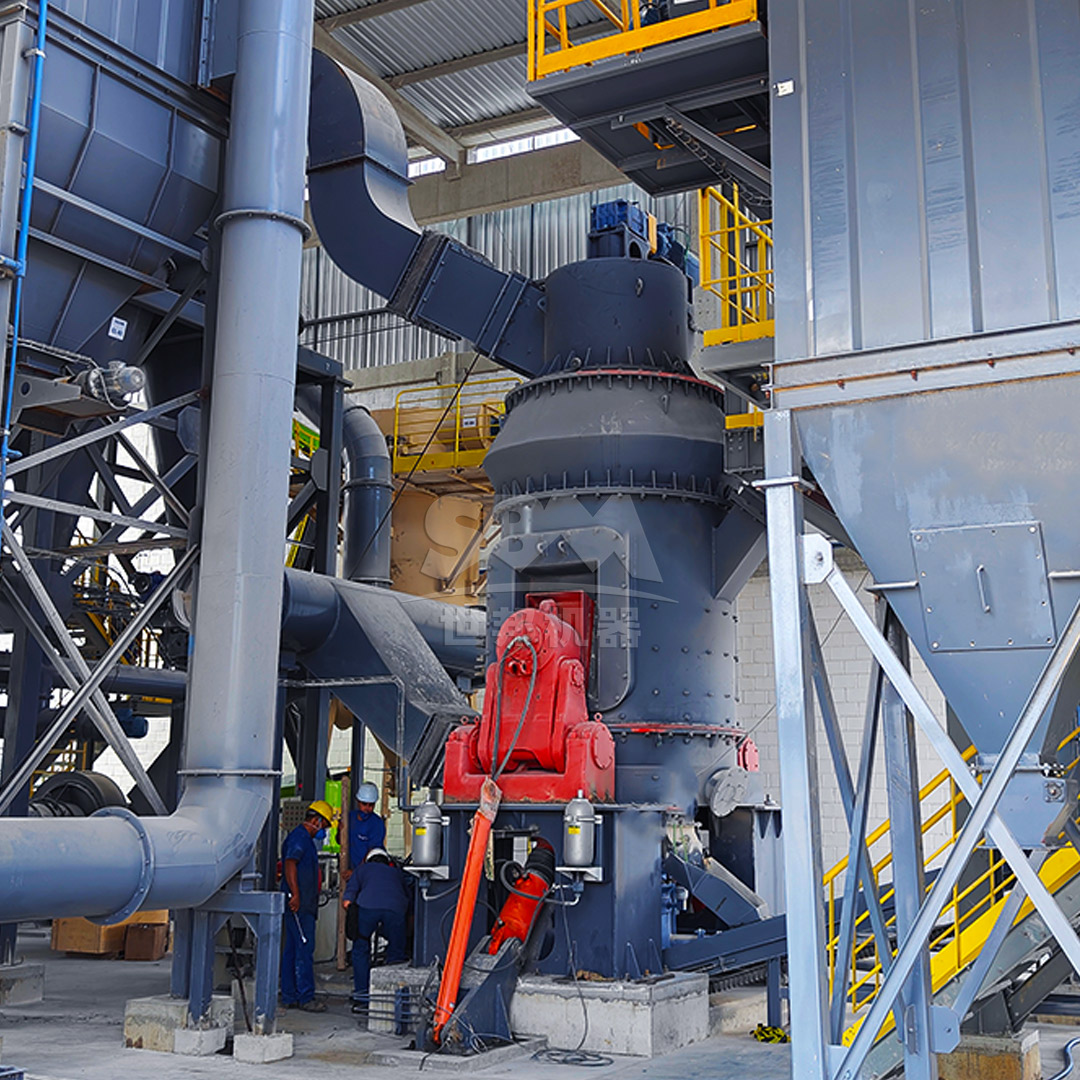
The HLM slag grinding line operates as follows: raw slag (≤50mm) is fed into the mill via a conveyor. The main motor drives the grinding table through a reducer. Material enters through the central feed port and spreads evenly via centrifugal force. Grinding rollers apply pressure to crush the material layer; qualified fines are carried by hot air to the dynamic classifier, while coarse powder returns to the table for re-grinding. The hot air circulation system recovers waste heat, reducing overall energy demand. The finished product is collected by a pulse dust removal system with efficiency exceeding international standards.
After commissioning, the production line achieved:
- Capacity: 105–115 t/h, exceeding design by 5%.
- Specific Surface Area: 420–430 m²/kg, with variability below 5%.
- Power Consumption: 28 kWh/t for the mill system, compared to 45 kWh/t for the previous ball mill.
- Availability: 95% uptime over six months, with roller life exceeding 8,000 hours.
Complementary Equipment Recommendations
For customers requiring finer slag powders or higher capacities, we recommend the LM series vertical roller mill (models LM130N to LM370N) for primary grinding, paired with the SCM series ultrafine mill for secondary or specialty grinding. The SCM1680 model, with a capacity of 5–25 t/h and fineness of 325–2500 mesh, is ideal for producing ultra-fine slag powders for high-performance concrete. Its high-efficiency classifier and durable roller/ring design ensure long service life and low maintenance.
Conclusion
This case study demonstrates the effectiveness of the HLM vertical mill slag grinding production line in achieving high capacity, energy efficiency, and environmental compliance. By leveraging patented technologies and intelligent control, the customer reduced operating costs by 35% and increased product quality consistency. For projects requiring ultrafine grinding, integrating the SCM series ultrafine mill provides a versatile and reliable solution. As the industry moves toward sustainable practices, our vertical mill technologies offer a proven path to profitable slag processing.