
Vertical Grinding Mill for Silica Powder Production: Equipment Introduction and Working Principle
Introduction
Silica powder, derived from quartz or silica sand, is a crucial industrial mineral widely used in ceramics, glass, refractories, electronics, and polymer composites. The demand for ultrafine silica powder with controlled particle size distribution has grown significantly, driving the need for efficient and reliable grinding equipment. Vertical grinding mills have emerged as the preferred solution for silica powder production due to their high grinding efficiency, precise classification, and environmental compliance. This article provides a comprehensive introduction to vertical grinding mills for silica powder production, covering equipment features, working principles, and recommended models from our product portfolio.
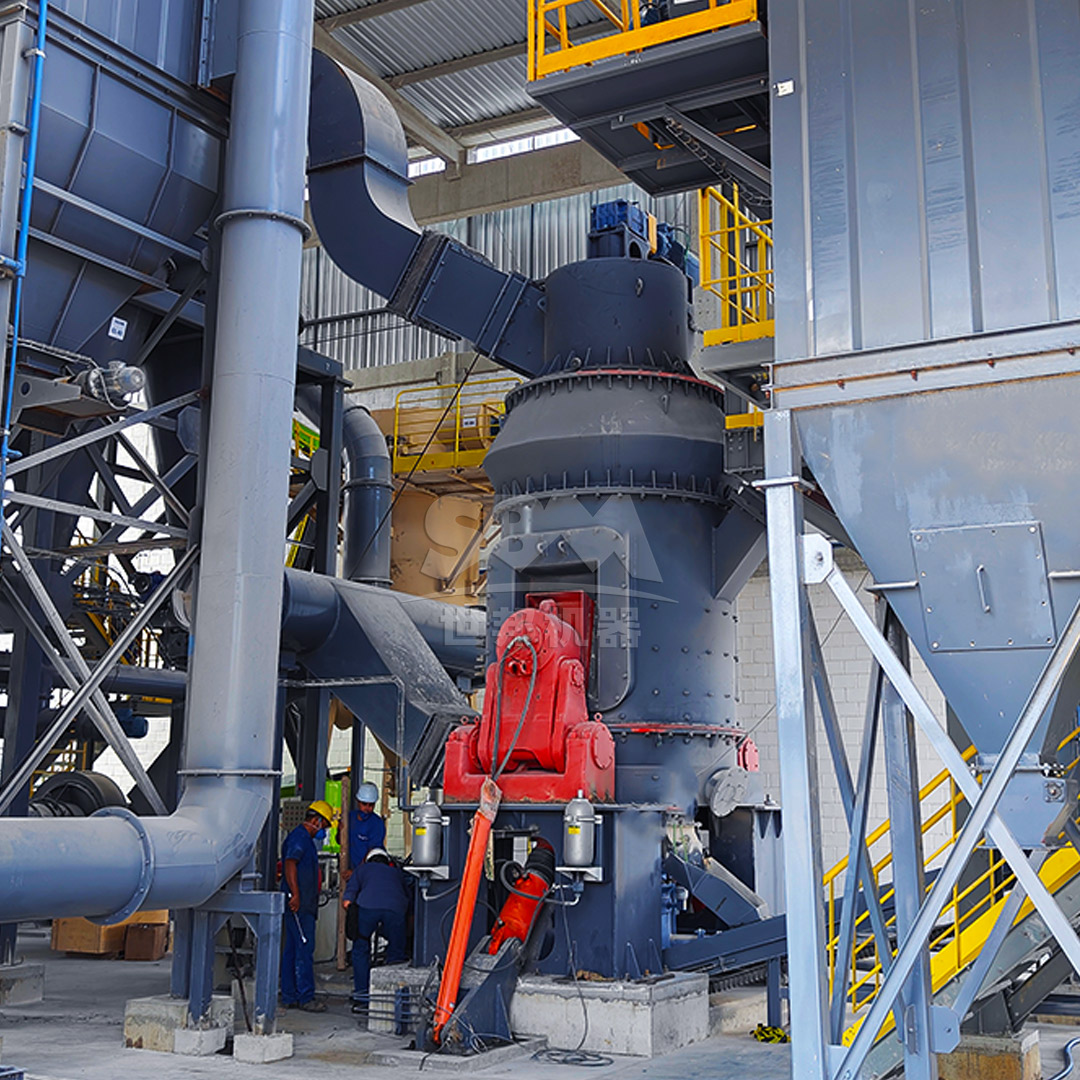
Why Choose Vertical Grinding Mills for Silica Powder?
Silica is a hard and abrasive material with a Mohs hardness of 7. Traditional grinding equipment such as ball mills suffer from high wear rates and low energy efficiency when processing silica. Vertical grinding mills, on the other hand, offer significant advantages:
- High grinding efficiency: The material bed grinding principle reduces energy consumption by 30-40% compared to ball mills.
- Precise classification: Integrated dynamic classifiers ensure narrow particle size distribution and eliminate coarse particles.
- Wear resistance: Specialized roller and liner materials extend service life when grinding abrasive silica.
- Environmental compliance: Fully enclosed negative pressure operation with pulse dust collection meets strict emission standards.
- Compact footprint: Integrated design reduces floor space by up to 50%.
Equipment Introduction: SCM Series Ultrafine Mill
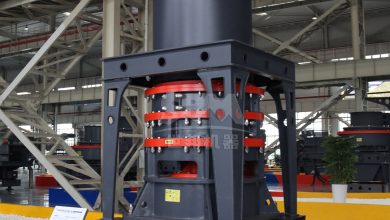
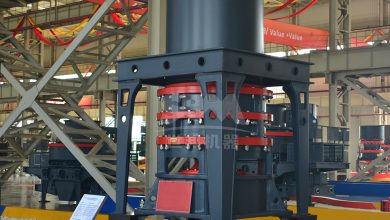
For ultrafine silica powder production (325-2500 mesh), the SCM Series Ultrafine Mill is an ideal choice. This vertical grinding mill incorporates advanced technologies to achieve high capacity and precise fineness control.
Core Parameters
- Input Size: ≤20 mm
- Output Fineness: 325-2500 mesh (45-5 μm)
- Capacity: 0.5-25 t/h (depending on model)
Technical Advantages
- High Efficiency & Energy Saving: Capacity is twice that of jet mills, with 30% lower energy consumption. Intelligent control with automatic finished product granularity feedback ensures stable operation.
- High-Precision Classification: The vertical turbine classifier achieves precise particle size cutting, preventing coarse powder mixing and ensuring uniform finished products.
- Durable Design: Special material rollers and rings extend service life several times over. The shaftless screw grinding chamber ensures stable operation even under high loads.
- Eco-friendly & Low Noise: Pulse dust collection efficiency exceeds international standards. Soundproof room design ensures noise levels are well below regulatory limits.
Working Principle
The main motor drives three layers of grinding rings to rotate. Materials are dispersed into the grinding path by centrifugal force, crushed by roller pressure, and ground layer by layer. Finally, powder collection is completed by a cyclone collector and a pulse dust removal system.
Recommended Models for Silica Powder
- SCM800: Capacity 0.5-4.5 t/h, Main Power 75 kW, Fineness 325-2500 mesh
- SCM900: Capacity 0.8-6.5 t/h, Main Power 90 kW, Fineness 325-2500 mesh
- SCM1000: Capacity 1.0-8.5 t/h, Main Power 132 kW, Fineness 325-2500 mesh
- SCM1250: Capacity 2.5-14 t/h, Main Power 185 kW, Fineness 325-2500 mesh
- SCM1680: Capacity 5.0-25 t/h, Main Power 315 kW, Fineness 325-2500 mesh
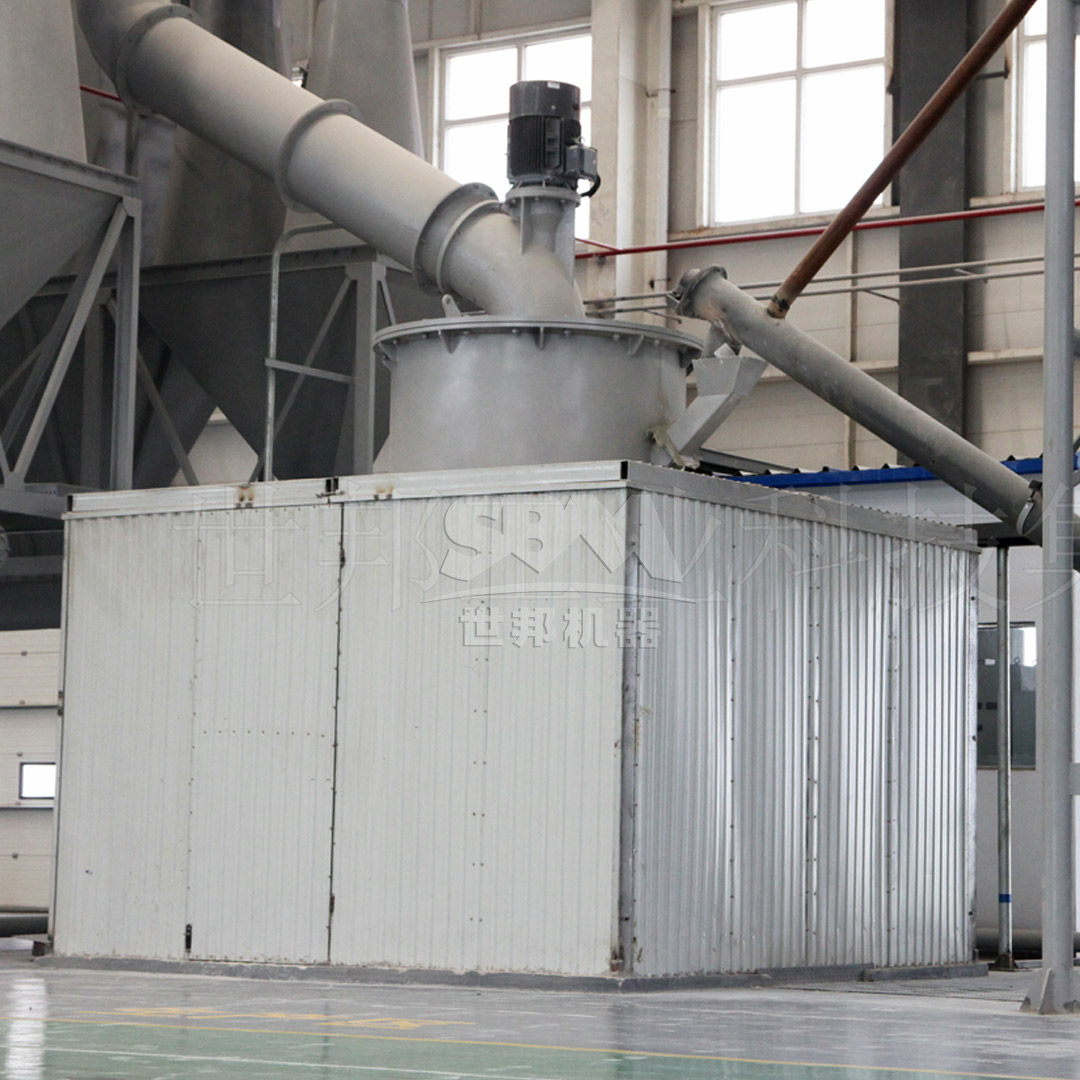
Equipment Introduction: LUM Ultrafine Vertical Roller Mill
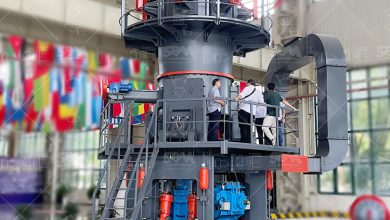
For even finer silica powder (down to 5 μm), the LUM Ultrafine Vertical Roller Mill offers exceptional performance. This mill is specifically designed for ultrafine grinding and classification.
Core Parameters
- Feed Size: 0-20 mm
- Output Fineness: 325-2500 mesh (5-30 μm)
Technical Advantages
- Efficient Grinding: Unique roller and liner curves improve grinding efficiency and reduce power consumption.
- Precise Classifying: Multi-rotor technology ensures no coarse particles escape, achieving a sharp top cut.
- Smart Control: PLC automation for stable running, with remote monitoring and adjustment capabilities.
- Environmental: Negative pressure operation with no dust leakage, meeting the most stringent environmental regulations.
Working Principle
The main motor drives the grinding table via a reducer. Materials enter the center of the table and are thrown outward by centrifugal force. Grinding rollers apply pressure to crush the material bed. Hot air carries fine particles to the multi-rotor classifier, where they are precisely separated. Coarse particles return to the table for re-grinding, while qualified powder is collected by the dust collector.
Recommended Models for Silica Powder
- LUM1525: Power 220-250 kW, Capacity 1.6-11.5 t/h, Fineness 5-30 μm
- LUM1632: Power 280-315 kW, Capacity 2-13.5 t/h, Fineness 5-30 μm
- LUM1836: Power 355-400 kW, Capacity 2.3-15 t/h, Fineness 5-30 μm
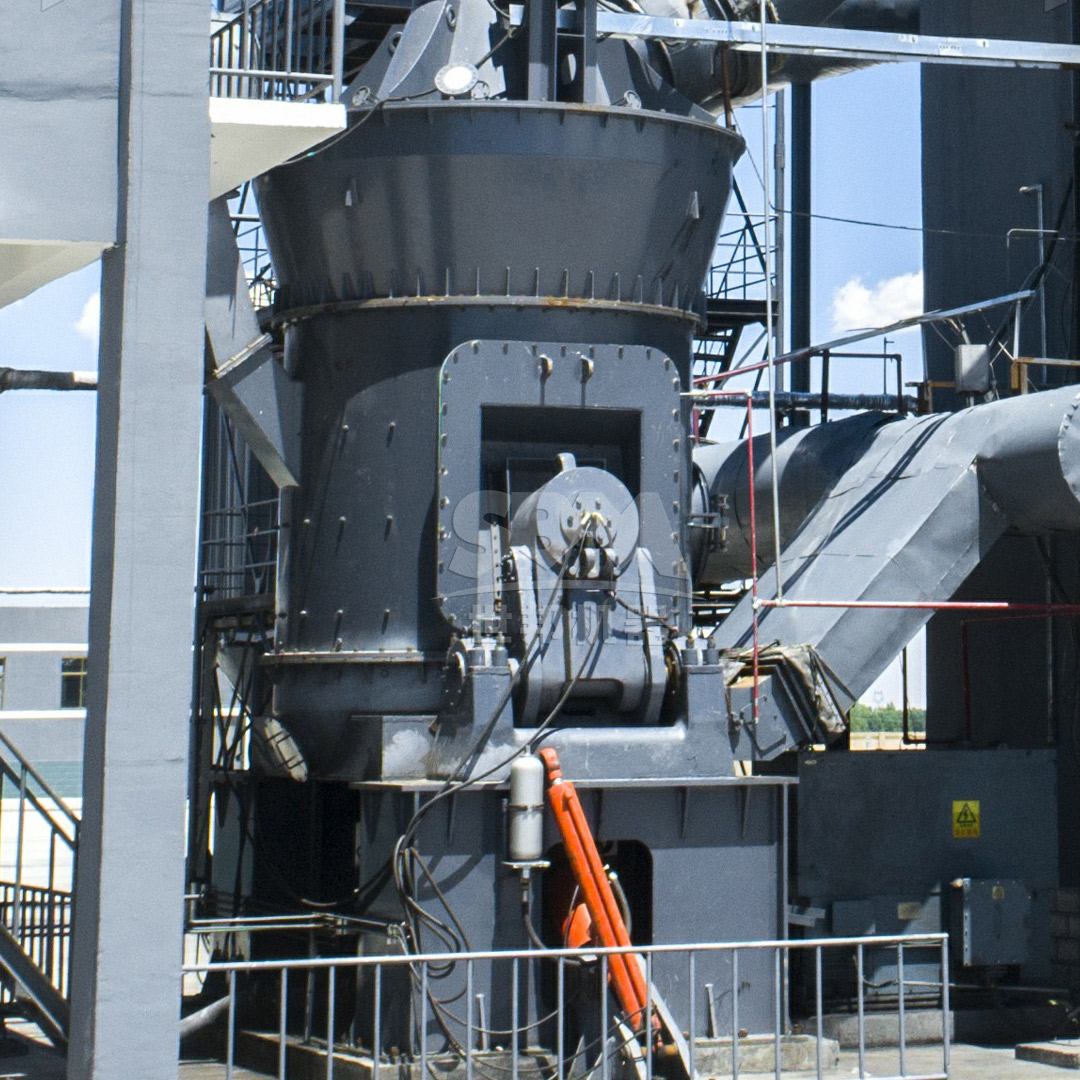
Equipment Introduction: LM Series Vertical Roller Mill
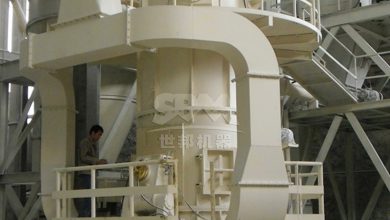
For large-scale silica powder production with moderate fineness requirements (30-325 mesh), the LM Series Vertical Roller Mill is the workhorse of the industry. It is known for its high capacity, low operating cost, and integrated design.
Core Parameters
- Input Size: ≤50 mm
- Output Fineness: 30-325 mesh (up to 600 mesh for special models)
- Capacity: 3-250 t/h (depending on model)
Technical Advantages
- Integrated Design: System integrates crushing, grinding, and selection; floor space reduced by 50%. Outdoor installation is possible, reducing infrastructure costs by 40%.
- Low Operating Cost: Non-contact design between rollers and table; wear part life increased by 3x. Energy consumption is 30-40% lower than ball mill systems.
- Intelligent Control: Expert-level auto-control system supporting remote/local switching. Real-time monitoring of parameters reduces manual intervention.
- Environmental Compliance: Fully sealed negative pressure operation; dust emission is well below national standards. Operating noise is minimized.
Working Principle
The main motor drives the grinding table via a reducer. Materials enter through the central feed port and spread evenly via centrifugal force. Grinding rollers apply pressure to crush the material layer; qualified fines are carried by hot air to the classifier, while coarse powder returns to the table for re-grinding.
Recommended Models for Silica Powder
- LM130K: Table Φ1300mm, Capacity 10-28 t/h, Fineness 170-40 μm, Power 200 kW
- LM150K: Table Φ1500mm, Capacity 13-38 t/h, Fineness 170-40 μm, Power 280 kW
- LM170K: Table Φ1700mm, Capacity 18-48 t/h, Fineness 170-40 μm, Power 400 kW
- LM190K: Table Φ1900mm, Capacity 23-68 t/h, Fineness 170-40 μm, Power 500 kW
- LM220K: Table Φ2200mm, Capacity 36-105 t/h, Fineness 170-45 μm, Power 800 kW
Comparison and Selection Guide
When selecting a vertical grinding mill for silica powder production, consider the following factors:
- Target Fineness: For ultrafine powder (below 45 μm), choose SCM or LUM series. For standard fineness (45-325 mesh), LM series is more economical.
- Capacity Requirement: LM series offers the highest capacity (up to 250 t/h), followed by SCM (up to 25 t/h) and LUM (up to 15 t/h).
- Energy Efficiency: All three series are energy-efficient, but LUM and SCM are optimized for ultrafine grinding, while LM is optimized for high-volume production.
- Wear Parts: Silica is abrasive, so choose models with wear-resistant rollers and liners. SCM and LUM feature special material rollers, while LM offers extended wear part life through non-contact design.
Case Study: Silica Powder Production Line with SCM1250
A silica powder manufacturer in Southeast Asia required 10 t/h of silica powder with fineness of 800 mesh (15 μm). After evaluating several options, they selected an SCM1250 ultrafine mill. The system includes a hammer crusher, bucket elevator, storage hopper, feeder, SCM1250 mill, pulse dust collector, and automatic packing system. The production line has been running for over two years with minimal downtime. The finished product has a uniform particle size distribution, and the pulse dust collector ensures a clean working environment. The customer reported a 25% reduction in energy costs compared to their previous jet mill system.
Conclusion
Vertical grinding mills are the ideal choice for silica powder production due to their high efficiency, precise classification, and environmental performance. Our company offers a complete range of vertical grinding mills to meet various fineness and capacity requirements. The SCM Series Ultrafine Mill and LUM Ultrafine Vertical Roller Mill are recommended for ultrafine silica powder, while the LM Series Vertical Roller Mill is suitable for large-scale production of standard fineness. With advanced technology, durable design, and intelligent control, our mills ensure stable operation and high-quality output. For more information or to request a quotation, please contact our sales team.