Calcium Carbonate in Modified Plastics: How to Boost Performance and Reduce Costs
Introduction: The Role of Calcium Carbonate in Plastic Modification
Calcium carbonate (CaCO₃) is one of the most widely used mineral fillers in the plastics industry. Its popularity stems from its ability to improve mechanical properties, enhance processability, and significantly reduce production costs. When properly processed and added to plastic resins such as polypropylene (PP), polyethylene (PE), and polyvinyl chloride (PVC), calcium carbonate can act as a functional additive that modifies the material’s performance characteristics. However, the key to unlocking these benefits lies in the quality and fineness of the calcium carbonate powder. Coarse or poorly classified fillers can lead to defects, reduced impact strength, and uneven dispersion. This article explores how high-quality calcium carbonate, ground to precise specifications, can boost performance and reduce costs in modified plastics, and highlights the advanced milling technologies that make this possible.

Enhancing Mechanical Properties with Fine Calcium Carbonate
The addition of calcium carbonate to plastics can improve stiffness, hardness, and dimensional stability. When particles are fine and uniformly distributed, they act as nucleation sites for crystallization in semi-crystalline polymers like PP, leading to a more uniform crystal structure and improved mechanical strength. For example, in polypropylene compounds, 20-40% loading of fine CaCO₃ (325-2500 mesh) can increase flexural modulus by 30-50% while maintaining acceptable impact resistance. The key is achieving a particle size distribution that avoids coarse agglomerates, which act as stress concentrators and cause premature failure. This is where high-precision classification technology becomes essential. Our SCM Series Ultrafine Mill, capable of producing powders between 45-5μm (325-2500 mesh), ensures that no coarse powder mixes into the final product. The vertical turbine classifier provides precise particle size cutting, guaranteeing uniform finished products that disperse evenly in the polymer matrix.
Cost Reduction Through Higher Filler Loading
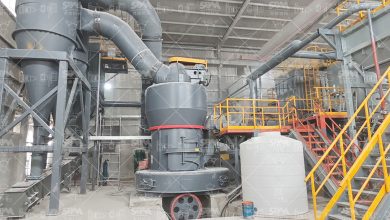
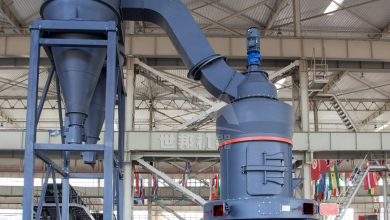
One of the most direct ways calcium carbonate reduces costs is by replacing a portion of the more expensive polymer resin. A typical masterbatch may contain 75-80% CaCO₃, with the remainder being carrier resin and additives. By increasing the filler loading, manufacturers can lower raw material costs by 15-30% without sacrificing essential performance. However, higher loading demands finer particle sizes and better surface treatment to maintain processability. Ultrafine grades (1250-2500 mesh) allow for loadings of up to 60% in injection molding applications while retaining good flow and surface finish. The grinding equipment must deliver consistent fineness at high throughput to make this economically viable. Our MTW Series European Trapezium Mill, with capacities from 3 to 45 tons per hour and output fineness down to 325 mesh (0.038mm), is ideal for large-scale production of calcium carbonate for plastic fillers. Its optimized arc air duct and integral bevel gear drive (98% transmission efficiency) reduce energy consumption and operating costs, making high-volume filler production both efficient and profitable.

Improving Processability and Surface Quality
Calcium carbonate can significantly improve the processing characteristics of plastics. It reduces shrinkage and warpage, improves heat dissipation during cooling, and enhances the surface finish of molded parts. In blown film applications, CaCO₃ acts as an antiblocking agent, preventing film layers from sticking together. In extrusion, it improves melt flow and reduces die swell. The particle shape and size distribution play a critical role here. A narrow distribution with controlled top size ensures consistent rheological behavior. Our SCM Series Ultrafine Mill not only produces ultra-fine powders but does so with 30% lower energy consumption compared to jet mills, while achieving twice the capacity. This means manufacturers can source consistently high-quality filler at a lower cost per ton. For applications requiring extreme fineness, such as thin-wall injection molding or high-gloss films, the SCM1000 model (capacity 1.0-8.5 t/h, fineness 325-2500 mesh) is an excellent choice for producing the fine calcium carbonate needed.
The Importance of Particle Size Distribution
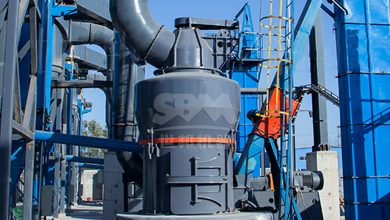
Achieving the right particle size distribution is perhaps the most critical factor in calcium carbonate performance. For plastic applications, the ideal distribution is often characterized by a steep curve where most particles fall within a narrow range. A d50 (median particle size) of 2-10 microns is common for general-purpose fillers, while high-performance masterbatches may require d50 below 2 microns. Coarse particles (above 40 microns) must be eliminated, as they cause surface defects and reduce mechanical properties. Our milling technology addresses this through advanced classification systems. The LM Series Vertical Roller Mill, with its dynamic classifier multi-stage adjustment technology, allows precise control over fineness from 30-325 mesh, with special models reaching 600 mesh. The integrated design combines crushing, grinding, and selection in a single system, reducing floor space by 50% and infrastructure costs by 40%. For producers looking to minimize capital investment while achieving high-quality output, the LM series offers exceptional value.
Surface Treatment and Dispersion
To achieve optimal dispersion in plastic resins, calcium carbonate is typically surface-treated with fatty acids (e.g., stearic acid) or other coupling agents. This coating reduces the hydrophilic nature of the mineral, improving compatibility with hydrophobic polymers. The coating process requires a consistent, high-surface-area powder to ensure uniform coverage. Ultrafine powders from our grinding mills provide the high specific surface area needed for efficient treatment. Additionally, the controlled particle shape produced by our mills—typically cubic or rhombohedral—enhances packing density and rheological properties. For applications requiring the highest levels of dispersion, such as engineering plastics or high-end masterbatch, we recommend using calcium carbonate ground on the SCM Series Ultrafine Mill, which produces powders with excellent uniformity and no coarse particle contamination.

Recommendations for Optimal Equipment Selection
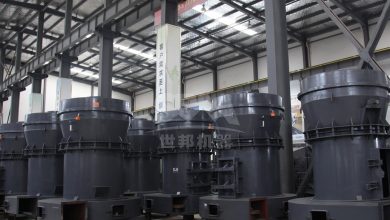
Selecting the right grinding equipment is crucial for achieving the desired calcium carbonate quality at the lowest cost. For producers requiring ultra-fine powders (325-2500 mesh) for high-performance masterbatch or engineering plastics, the SCM Series Ultrafine Mill is the ideal solution. With models ranging from SCM800 (0.5-4.5 t/h) to SCM1680 (5-25 t/h), it offers flexibility for various production scales. Its intelligent control system with automatic finished product granularity feedback ensures consistent quality, while the special material rollers and rings extend service life, reducing maintenance downtime and costs. For medium-fineness applications (30-325 mesh) such as general-purpose masterbatch, PVC profiles, and pipes, the MTW Series European Trapezium Mill provides an excellent balance of capacity and efficiency. Models like the MTW138Z (6-17 t/h) or the MRN158 (7-21 t/h) deliver high throughput with low energy consumption, thanks to the anti-wear shovel design and optimized arc air duct. Both series incorporate pulse dust collection systems that exceed international environmental standards, ensuring eco-friendly operation.
Environmental and Economic Benefits
Using calcium carbonate in plastic products also contributes to sustainability. By reducing the amount of virgin polymer required, manufacturers lower their carbon footprint and dependence on fossil fuels. Calcium carbonate is abundant, non-toxic, and can be sourced from natural limestone, making it an environmentally responsible choice. Modern grinding technology further enhances sustainability by reducing energy consumption per ton of product. Our LM Series Vertical Roller Mill, for instance, consumes 30-40% less energy than traditional ball mill systems, while its fully sealed negative pressure operation ensures dust emissions are below 20mg/m³ and noise levels are under 85dB. These features not only protect the environment but also create a safer, more pleasant working environment for operators. The long wear life of components—3 times longer in the case of the LM series—further reduces waste and resource consumption.
Conclusion: A Strategic Decision for Plastic Compounders
Incorporating high-quality calcium carbonate into modified plastics is a proven strategy for improving material performance while reducing costs. The key success factors are consistent particle size distribution, high fineness, and reliable supply. By investing in advanced grinding technology such as the SCM Series Ultrafine Mill or the MTW Series European Trapezium Mill, plastic compounders can produce or source calcium carbonate that meets the most demanding specifications. These mills offer not only superior product quality but also operational benefits including energy savings, reduced maintenance, and environmental compliance. Whether you are producing standard masterbatch for commodity applications or specialized compounds for automotive, packaging, or construction, the right calcium carbonate—ground with the right equipment—will give you a competitive edge in both performance and price. We invite you to explore our full range of milling solutions to find the perfect fit for your calcium carbonate production needs.