
How Much Does a Complete Set of Coking Coal Raymond Mill Cost?
Introduction: The Role of Coking Coal Grinding in Modern Industry
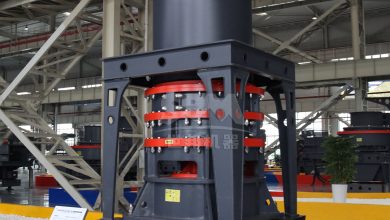
Coking coal, also known as metallurgical coal, is a critical raw material in the steel and iron industry. Before it can be used in blast furnaces or coke ovens, it must be ground to a fine powder to ensure efficient combustion and reactivity. The grinding process directly affects the quality of coke, energy consumption, and overall operational costs. Among the various milling technologies available, the Raymond mill—originally developed by Rammond—has long been a staple in coal grinding applications. However, when industry professionals ask, “How much does a complete set of coking coal Raymond mill cost?”, the answer is far from a single number. It depends on capacity, fineness requirements, automation level, and the specific equipment configuration.
In this article, we will break down the cost factors for a complete coking coal Raymond mill set, compare it with modern alternatives, and introduce two high-performance products from our company that can serve as cost-effective and efficient solutions for coking coal processing: the MTW Series European Trapezium Mill and the LM Series Vertical Roller Mill. Both are engineered to deliver superior grinding performance with lower total cost of ownership.
What Constitutes a Complete Set of Coking Coal Raymond Mill?
A “complete set” of a Raymond mill for coking coal typically includes the main mill, a jaw crusher or hammer crusher for primary crushing, a bucket elevator, a vibrating feeder, a classifier, a cyclone collector, a pulse dust removal system, an air blower, and an electric control cabinet. Some configurations also include a drying system if the coal has high moisture content. The cost of such a set ranges broadly from USD 30,000 to over USD 500,000, depending on the model and capacity.
For a small-scale operation with a capacity of 1–3 tons per hour, a basic Raymond mill set might cost around USD 30,000–60,000. For medium capacity (5–10 t/h), the price can rise to USD 80,000–150,000. Large industrial setups with capacities exceeding 20 t/h and advanced automation can exceed USD 300,000. However, it is important to note that traditional Raymond mills have limitations in fineness (typically 80–325 mesh) and energy efficiency. Therefore, many buyers are now considering more advanced alternatives that offer better return on investment.
Key Cost Factors for a Coking Coal Grinding System
Several variables influence the final price of a complete set:
- Capacity and Fineness: Higher throughput and finer product require larger motors, more robust components, and advanced classifiers.
- Automation Level: PLC control, remote monitoring, and automatic lubrication add to the initial cost but reduce labor and downtime.
- Dust Collection and Environmental Compliance: Strict emission standards necessitate high-efficiency pulse jet dust collectors and soundproof enclosures.
- Wear Parts Material: For abrasive coking coal, wear-resistant alloys or ceramic liners increase durability but raise the price.
- Installation and Auxiliary Equipment: Feeders, conveyors, silos, and electrical infrastructure are often overlooked but contribute significantly.
Given these factors, a traditional Raymond mill set may appear cheaper upfront, but its higher energy consumption and frequent maintenance can lead to higher operating costs over 5–10 years. This is where our advanced grinding mills shine.
Recommended Product 1: MTW Series European Trapezium Mill – A Modern Alternative to Raymond Mills
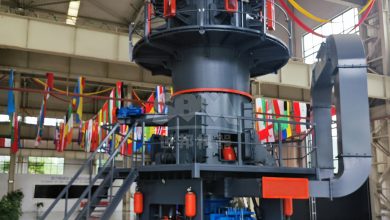
The MTW Series European Trapezium Mill is an ideal upgrade for coking coal grinding. It combines the advantages of traditional Raymond mills with innovative engineering. With input sizes up to 50 mm and output fineness adjustable from 30 to 325 mesh (down to 0.038 mm), it matches or exceeds Raymond mill performance while offering significant improvements.
Key technical advantages include:
- Anti-wear shovel design: Combined shovel blades reduce maintenance costs and extend roller life.
- Optimized arc air duct: Reduces airflow energy loss and improves transmission efficiency.
- Integral bevel gear drive: Transmission efficiency up to 98%, saving space and installation costs.
- Wear-resistant volute structure: Non-resistance flow design improves air selection efficiency and reduces maintenance costs by 30%.
For coking coal, the MTW mill’s capacity ranges from 3 t/h (MTW110) to 45 t/h (MTW215G), making it suitable for small to large operations. The complete set cost for an MTW mill is competitive with a high-end Raymond mill but delivers 30% lower maintenance and higher uptime. For example, the MTW138Z model with 6–17 t/h capacity and 90 kW main power offers an excellent balance of price and performance.
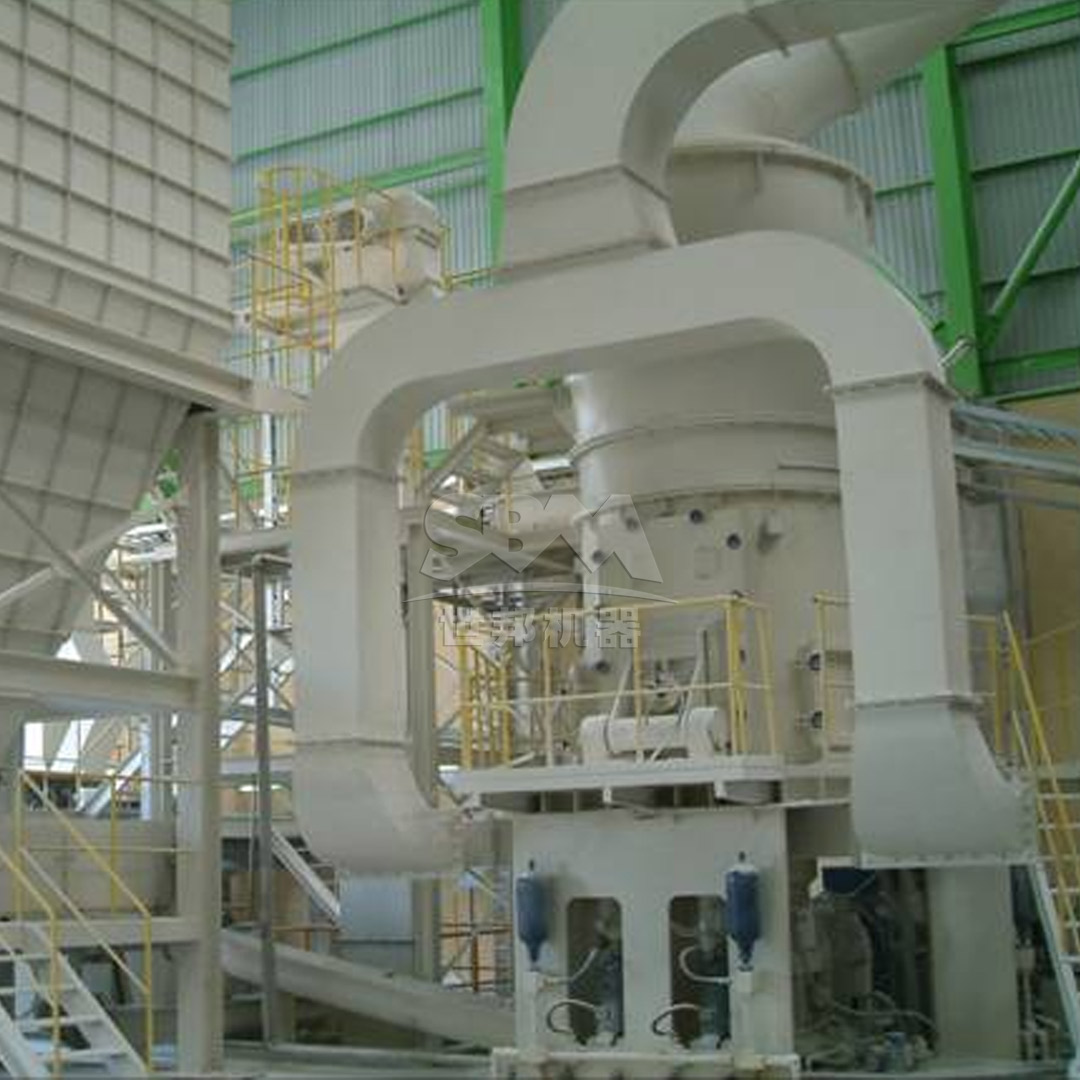
Recommended Product 2: LM Series Vertical Roller Mill – The Ultimate Cost-Effective Solution
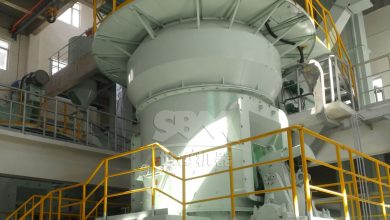
For larger-scale coking coal grinding, the LM Series Vertical Roller Mill is the most advanced and cost-efficient choice. It integrates crushing, grinding, and classification into one compact system, reducing floor space by 50% and infrastructure costs by 40%. The LM mill’s capacity ranges from 3 t/h to an impressive 250 t/h, with fineness from 30 to 325 mesh (special models up to 600 mesh).
Technical highlights for coking coal application:
- Integrated design: Outdoor installation possible, saving building costs.
- Low operating cost: Non-contact design between rollers and table increases wear part life by 3x; energy consumption is 30–40% lower than ball mill systems.
- Intelligent control: Expert-level auto-control system with remote/local switching and real-time monitoring.
- Environmental compliance: Fully sealed negative pressure operation ensures dust emission is well below standards; noise levels are minimized.
Specifically, the LM vertical coal mill series (LM80M to LM280M) is designed for pulverized coal with capacity 3–90 t/h and fineness 5–20% (equivalent to 80–200 mesh). The cost of a complete LM mill set is higher than a Raymond mill in terms of initial investment—typically starting at USD 150,000 for a small LM130K model and exceeding USD 1 million for large LM280K models. However, the return on investment is rapid due to dramatically lower energy consumption, reduced maintenance, and minimal downtime. For a 20 t/h coking coal grinding line, an LM mill can save over USD 100,000 per year in electricity and parts compared to a Raymond mill.
Comparing Costs: Raymond Mill vs. Modern Alternatives
To answer “How much does a complete set of coking coal Raymond mill cost?” precisely, let us consider a typical 10 t/h system with 200 mesh fineness. A traditional Raymond mill set (including crusher, feeder, classifier, dust collector, and controls) would cost approximately USD 120,000–180,000. However, its annual energy consumption would be around 500,000 kWh, and wear parts replacement would cost USD 15,000–20,000 per year.
In contrast, an MTW138Z complete set costs about USD 150,000–200,000, with 20% lower energy consumption and 30% less maintenance. An LM vertical mill set for the same capacity (e.g., LM150K) costs around USD 250,000–350,000, but its energy consumption is 40% lower and wear parts last three times longer. Over a 5-year period, the total cost of ownership (TCO) for the LM mill is often 25–35% lower than a Raymond mill, despite the higher initial price.
Therefore, when asking about the cost of a complete set of coking coal Raymond mill, it is wise to consider the total lifecycle cost rather than just the purchase price. Our MTW and LM mills provide superior value by combining advanced technology, robust construction, and intelligent control.
Conclusion and Recommendation
In summary, the cost of a complete set of coking coal Raymond mill varies from USD 30,000 to over USD 300,000, depending on capacity, fineness, and auxiliary equipment. However, traditional Raymond mills are increasingly being replaced by more efficient and durable alternatives. We strongly recommend our MTW Series European Trapezium Mill for medium-scale operations seeking a direct upgrade with minimal disruption, and our LM Series Vertical Roller Mill for large-scale, long-term projects where maximum energy efficiency and minimal maintenance are priorities. Both products come with patented technology, intelligent control systems, and environmental compliance that exceed international standards. For a detailed quotation tailored to your specific coking coal grinding requirements, please contact our engineering team with your capacity, feed size, and target fineness. We will provide a complete cost breakdown and process design within 48 hours.