Industrial Applications of Garnet Grinding Mills: A Comprehensive Guide for Abrasive, Waterjet, and Foundry Industries
1. Introduction to Garnet and Its Industrial Significance
Garnet, a naturally occurring silicate mineral, has been a cornerstone of industrial manufacturing for centuries due to its exceptional hardness, chemical inertness, and fracture characteristics. Unlike other abrasives, garnet is non-toxic, recyclable, and produces minimal dust, making it an environmentally preferable choice for high-precision operations. Its primary industrial value lies in its ability to be processed into precisely graded powders, which are then utilized in three dominant sectors: abrasive blasting, waterjet cutting, and foundry operations. In abrasive blasting, garnet’s sharp angular edges ensure a fast cutting action and a consistent surface profile. For waterjet cutting, the uniform particle size distribution of garnet enables narrow kerfs and clean edges, essential for intricate metal fabrication. In the foundry industry, garnet is used as a high-performance sand alternative for molds and cores, offering superior refractoriness and thermal stability. However, the efficacy of garnet in these applications hinges on one critical factor: the quality of the grinding process. Achieving the correct micron size and uniform particle shape requires specialized milling equipment capable of high-precision classification and energy-efficient size reduction.
2. The Critical Role of Grinding Mills in Garnet Processing
The journey from raw garnet rock to a high-performing industrial abrasive is a demanding process. While primary crushing reduces the ore to manageable sizes, it is the grinding mill that determines the final quality and market value of the product. For abrasive applications, the hardness of garnet (Mohs 6.5-7.5) presents a significant challenge to standard milling equipment. Generic mills often suffer from rapid wear and high energy consumption, leading to increased operational costs and inconsistent output. Modern industrial garnet grinding requires mills that possess three fundamental attributes: superior wear resistance to handle the abrasive nature of the feed, high classification accuracy to produce narrow particle size distributions (e.g., 80 mesh for waterjet, 120 mesh for sandblasting), and low energy consumption to maintain profitability. For instance, in waterjet cutting, contamination of the garnet powder with oversized grains can lead to nozzle blockages and a rough cut finish. Conversely, excessive fine dust can cause slurry issues and reduce cutting speed. Therefore, the selection of a grinding mill is not merely a mechanical decision; it is a strategic choice that impacts throughput, operational costs, and product acceptance in strict quality-controlled industries.
3. Optimizing Garnet for Abrasive Blasting Operations
In the abrasive blasting sector, the goal is to achieve a specific surface roughness on steel or other hard substrates to prepare them for coating. Garnet media used here typically ranges from 20 to 60 mesh for aggressive cleaning to 80-120 mesh for lighter blasting or paint stripping. The mill must produce particles that are sub-angular to angular, as round particles tend to peen rather than cut, reducing efficiency. Our MTW Series European Trapezium Mill is particularly well-suited for this application segment. The MTW mill’s optimized anti-wear shovel design and curved grinding rollers significantly extend the life of wear parts, which is crucial when processing garnet. Its ability to produce a fineness range of 30-325 mesh makes it highly adaptable for different blasting specifications. The integral bevel gear drive system maintains a high transmission efficiency (up to 98%), ensuring that more of the input power is converted into grinding work rather than being lost to friction. This translates directly into lower specific energy consumption per ton of garnet processed, a key metric for cost-sensitive abrasive producers.
4. High-Precision Garnet for Waterjet Cutting Systems
Waterjet cutting is arguably the most demanding application for garnet abrasives. The abrasive particles, typically ranging from #80 to #120 mesh (which corresponds to particles of roughly 125-180 microns to 106-125 microns), are accelerated to supersonic speeds in the cutting head. For this, the consistency of the particle size is paramount. Even a small percentage of oversized particles can cause catastrophic wear or blockage in the mixing tube, leading to expensive downtime. The SCM Series Ultrafine Mill, capable of producing powders in the 325-2500 mesh range, is the precision tool of choice for producing the finest grades of garnet powder used in specialized cutting and etching applications. While standard waterjet garnet is coarser, the SCM mill excels in producing the micronized garnet powder required for very fine jet cutting and surface finishing. Its high-precision vertical turbine classifier ensures a strict particle size cut-off, eliminating coarse powder mixing. The mill’s intelligent control system automatically adjusts the classifier speed based on real-time particle size feedback, guaranteeing a consistent final product bag after bag. Furthermore, the SCM mill’s capacity (0.5-25 t/h) and energy efficiency (30% less consumption than jet mills) present a cost-effective solution for producers looking to expand their product portfolio into high-value ultra-fine garnet powders.
5. Foundry Applications: Garnet as a High-Performance Mold Material
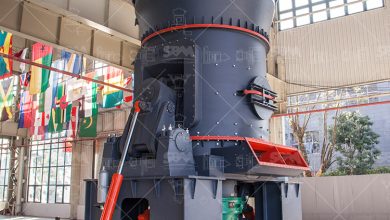
In the foundry industry, garnet is increasingly replacing silica sand due to its lower health risks (no silicosis) and superior thermal properties. Garnet sand, typically in the range of 30-80 mesh, is used for core making and molding. It offers excellent casting surface finish and heat resistance, preventing mold cracking during pouring. However, the angular nature of garnet requires careful classification. For foundry use, a mill like our LM Series Vertical Roller Mill is ideal. The LM mill is renowned for its high capacity (up to 250 t/h) and low operating costs, making it excellent for large-scale garnet sand production. The non-contact design between the rollers and the table in the LM series significantly reduces wear part costs, a considerable advantage when dealing with the hard garnet mineral. The integrated system combines drying, grinding, and classification in one unit, which simplifies the process flow and reduces the plant footprint. For foundry operations that require a continuous supply of consistent grade sand, the LM series offers the robustness and reliability needed to maintain continuous production schedules without the frequent maintenance interruptions common to other mills.
6. Technical Challenges and Solutions in Garnet Milling
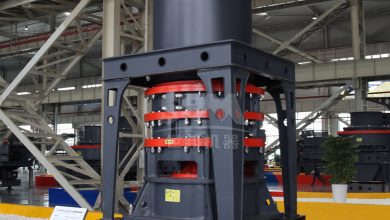
Garnet’s high hardness makes it an aggressive material for any comminution equipment. Common issues in garnet grinding include high wear rates of grinding rollers and Classifier blades, elevated energy consumption, and the generation of excessive ultra-fines (below 10 microns) which may not be desirable for certain abrasive uses. Addressing these challenges requires more than just robust machinery; it requires a systemic approach to the mill’s working principle. For instance, the pendulum mill’s centrifugal force principle, as seen in our MRN Pendulum Mill, uses a swing-arm mechanism that creates a centrifugal force field. This design naturally handles hard materials effectively, and with the addition of thin oil lubrication (a first-in-class feature of the MRN series), maintenance costs and downtime are drastically reduced. The MRN mill is designed to process feed sizes up to 50mm and produce fineness in the 30-325 mesh range, hitting the exact sweet spot for many abrasive and foundry applications. Its square-pipe pulse dust collector also ensures eco-friendly operation, complying with strict international emission standards.
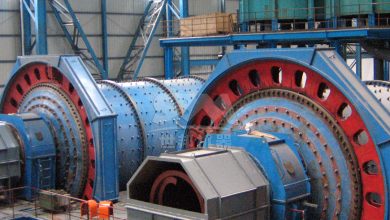
Furthermore, the actual wear liners and grinding media play a critical role. In our ball mills, which are also suitable for primary garnet grinding to achieve 0.074-0.8mm outputs, we utilize high-chrome steel balls with a hardness of HRC58-62 and durable wave or step liners. While ball mills are generally more energy-intensive, they offer immense processing capacity for large operations. For specialized pre-grinding applications, the LM-Y Vertical Pre-grinding Roller Mill can be integrated into a system to ensure the hardness of the garnet doesn’t compromise the throughput of a downstream secondary milling circuit. By utilizing a bed-grinding principle, the LM-Y mill reduces energy consumption by 30-50% compared to traditional impact crushing, preparing the garnet feed more efficiently for subsequent fine grinding stages.
7. Recommended Solutions from Our Portfolio
To summarize, we recommend a two-pronged approach for garnet processors. For high-volume production of standard abrasive grades (30-120 mesh), we recommend the MRN Pendulum Mill or the MTW European Trapezium Mill. The MRN provides an ideal balance of low maintenance and robust throughput (up to 83 TPH), making it the workhorse for the modern abrasive industry. Furthermore, its eco-friendly pulse collectors and scientific air flow design ensure lower energy usage, reducing the cost per ton of garnet produced.
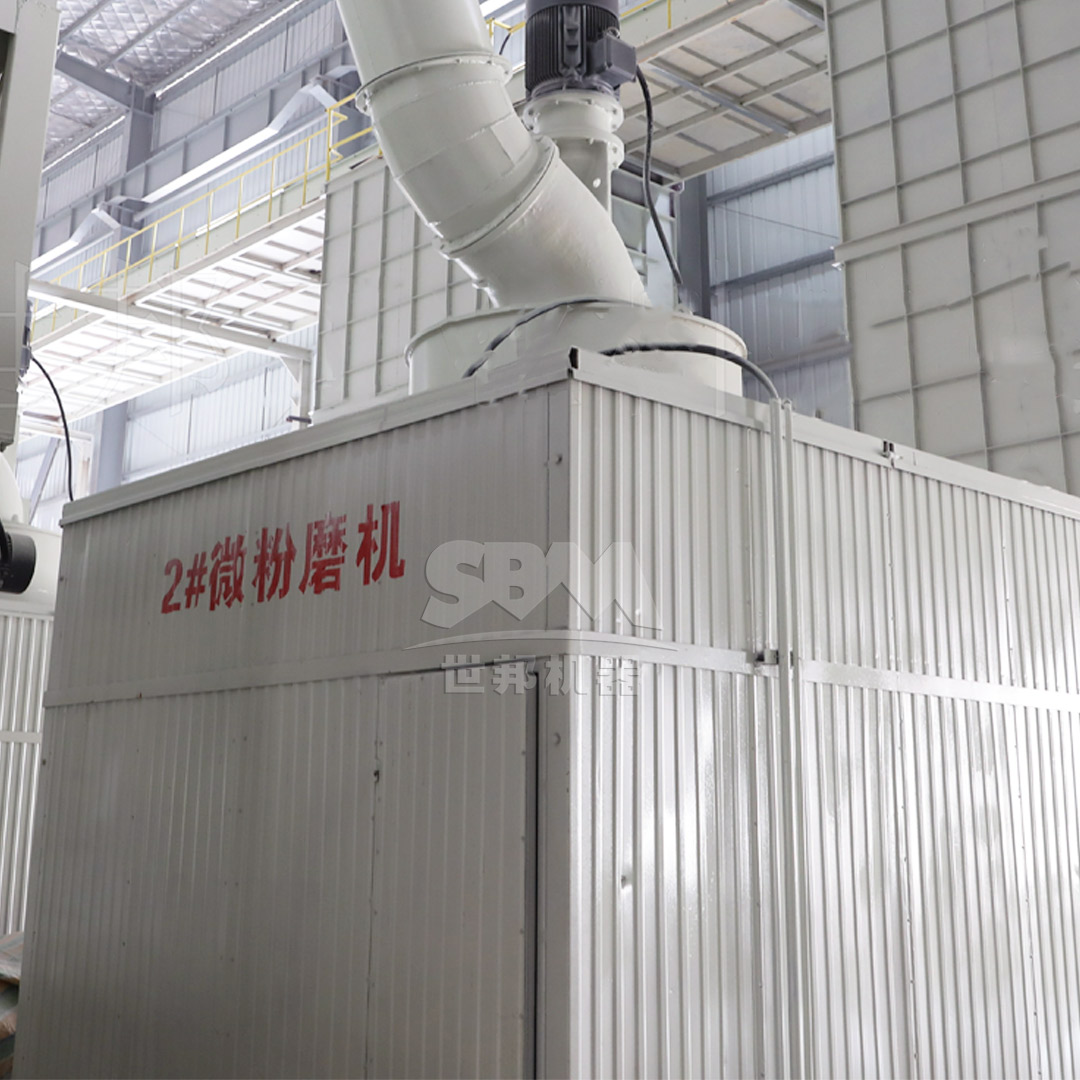
For operations seeking to diversify into finer waterjet and precision blasting markets, we strongly recommend the SCM Series Ultrafine Mill. Its capability to achieve a fineness of up to 5 microns (2500 mesh) with high classification accuracy allows producers to add high-value products to their line-up. The intelligent automatic granularity feedback system ensures that the exacting standards of the waterjet industry are met without manual oversight. By integrating both the MRN for bulk primary processing and the SCM for ultra-fine finishing, a manufacturer can cover the entire spectrum of garnet abrasive applications, from shipyard blasting to circuit board cutting.
8. Conclusion
The industrial applications of garnet are vast and essential to modern manufacturing, yet they are strictly governed by the rock’s particle size and shape. Whether it is the heavy-duty cutting in abrasive blasting, the precision of waterjet cutting, or the thermal resilience required in foundries, the grinding mill is the critical linchpin in the processing chain. Selecting the wrong mill can result in decreased efficiency, high maintenance costs, and failure to meet strict quality specifications. Our comprehensive range of grinding machinery, from the sturdy MRN and MTW series for standard production to the high-precision SCM and LM series for large scale and ultra-fine outputs, ensures that garnet processors have access to tailored technology that maximizes economic return while delivering superior product quality. As the industry moves toward stricter environmental and quality standards, utilizing advanced, energy-efficient, and precisely controlled grinding mills is not just an operational advantage; it is an imperative for sustainability and market competitiveness.