Needle Coke Grinding Process: Vertical Mill Production Workflow Explained
Needle coke, a premium petroleum or coal tar pitch-derived carbon material, is distinguished by its highly ordered, needle-like crystalline structure. This unique morphology is critical for its primary application as a filler in the production of ultra-high-power graphite electrodes for electric arc furnaces (EAFs) and lithium-ion battery anodes. The performance of these end-products is intrinsically linked to the particle size distribution (PSD), purity, and morphology of the ground needle coke powder. Consequently, the grinding process is not merely a size reduction step but a precision engineering operation that preserves the valuable acicular structure while achieving target fineness. This article delves into the specialized production workflow for needle coke grinding, with a focus on the pivotal role of vertical roller mill technology.
The Criticality of Grinding in Needle Coke Value Chain
Raw needle coke calcinate is a hard, abrasive material with a pronounced anisotropic structure. The grinding objective is twofold: first, to reduce the particle size to the specific range required for electrode or anode formulation (typically from a few millimeters down to 10-75 microns or finer); second, and more crucially, to do so with minimal destruction of the needle-like particles. Excessive shear or impact can produce excessive fines (flour) or round off the particles, degrading the packing density and electrical/thermal conductivity in the final molded product. Therefore, the grinding system must offer precise control over grinding force, particle trajectory, and classification efficiency.
Vertical Roller Mill: The Preferred Technology
Among various comminution technologies, the Vertical Roller Mill (VRM) has emerged as the optimal solution for needle coke processing. Its dominance is attributed to its working principle, which aligns perfectly with the material’s requirements.
Core Working Principle
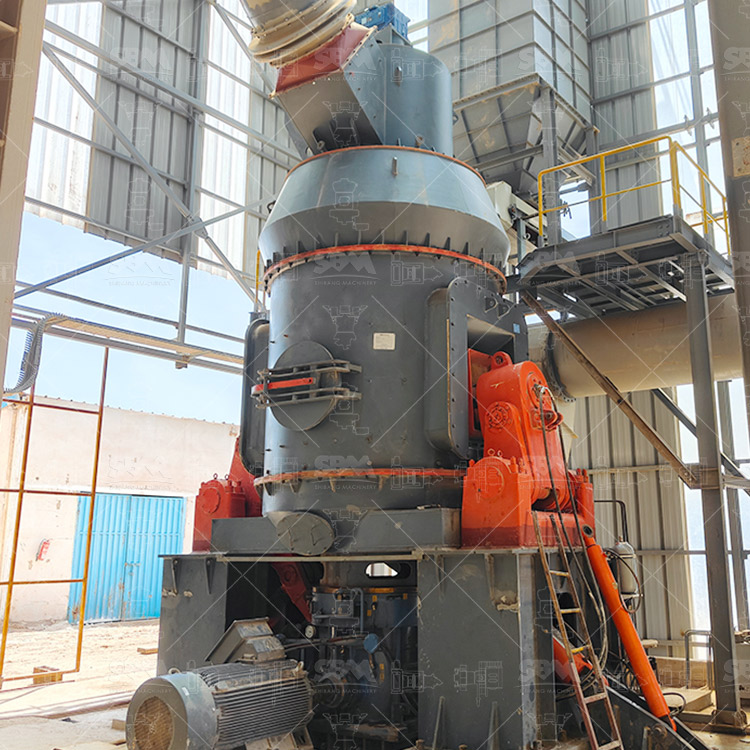
The VRM operates on the bed grinding principle. Feed material (pre-crushed needle coke) is introduced onto a rotating grinding table via a central feed pipe. Centrifugal force spreads the material evenly towards the periphery. Hydraulically loaded grinding rollers, positioned above the table, apply compressive force to the material bed, causing inter-particle comminution. This compression-shear mechanism is inherently gentler than the high-impact collisions in ball mills, better preserving particle morphology.
A stream of hot gas (typically process air, sometimes heated for moisture control) enters the mill housing from the bottom, fluidizing the ground material. The gas carries the particles upwards to an integrated, high-efficiency dynamic classifier. Here, centrifugal forces separate particles: fine product meeting the target size exits with the gas stream to the downstream dust collection system, while oversized coarse particles are rejected and fall back onto the grinding table for further size reduction. This internal circulation creates a highly efficient closed-loop grinding system.
Detailed Production Workflow for Needle Coke Grinding
A complete needle coke grinding plant based on a VRM system comprises several integrated stages.
1. Pre-Crushing and Feeding
Calcined needle coke lumps (≤50mm) are first pre-crushed in a jaw crusher or similar to a more uniform size (e.g., ≤20mm) suitable for the mill feed. This step ensures stable feeding and prevents table vibration. A belt conveyor transfers the crushed coke to a surge bin. A regulated feeder, such as a weigh belt or rotary valve feeder, meters the material at a consistent rate into the mill’s central feed chute. Precise feed rate control is essential for maintaining a stable grinding bed thickness.
2. Grinding and Drying
Inside the VRM, as described, the material undergoes bed grinding. If the raw coke contains residual moisture, the concurrent hot gas flow (adjusted to a controlled temperature) provides simultaneous drying. The gas temperature must be carefully regulated to avoid thermal degradation of the coke structure.
3. Classification and Separation
The dynamic classifier is the brain of the fineness control system. By adjusting the speed of the classifier rotor, the cut point (D97) can be precisely and quickly varied, often within a range of 30 to 600 mesh. For needle coke, a sharp cut is vital to prevent coarse particles from contaminating the product and to minimize over-grinding. The high-precision classification ensures a uniform product PSD.
4. Product Collection and Filtration
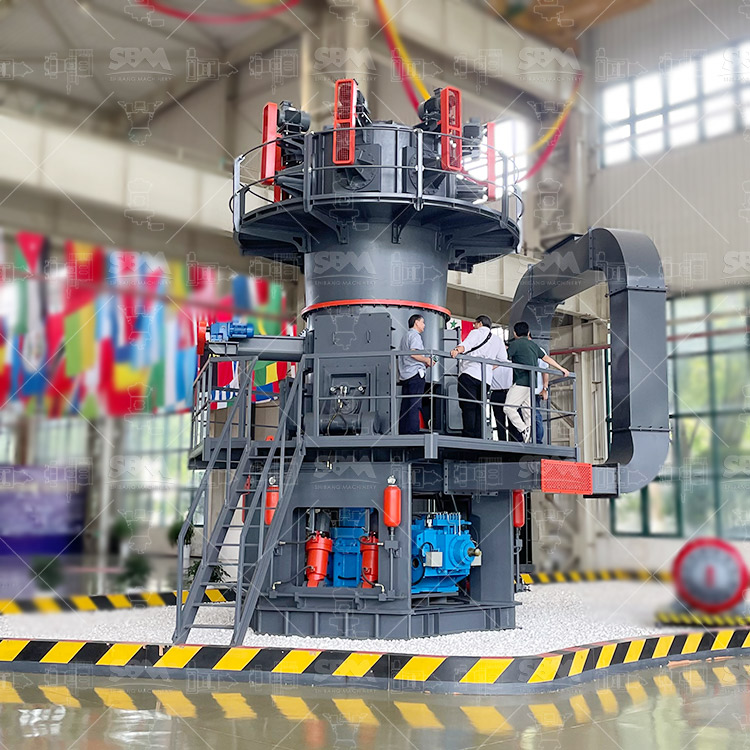
The fine powder-laden gas from the classifier enters a cyclone collector, where the bulk (80-90%) of the product is separated by centrifugal force and discharged via a rotary lock valve. The remaining fines in the exhaust gas are captured by a high-efficiency pulse-jet baghouse filter, ensuring emissions are well below environmental standards. The cleaned gas is then recirculated or exhausted by a system fan. The collected powder from both cyclone and baghouse is conveyed to product silos for storage or packaging.
5. System Control and Automation
Modern VRM systems are governed by a central PLC/DCS. Key parameters—mill motor load, grinding pressure, classifier speed, gas flow, temperature, and differential pressure—are monitored in real-time. The system can automatically adjust the feed rate or grinding pressure to maintain optimal operation, ensuring consistent product quality and protecting the mill from overload.
Advantages of Vertical Mills for Needle Coke
- Morphology Preservation: The bed grinding mechanism applies primarily compressive force, minimizing destructive shear and impact, thus protecting the needle-like shape.
- High Energy Efficiency: VRMs consume 30-50% less energy than traditional ball mills for the same output fineness, due to the efficient internal classification and reduced metal-to-metal contact.
- Precise Size Control: Instant adjustment of the dynamic classifier speed allows for quick changes in product fineness with minimal product waste.
- Compact Footprint: The integrated design of grinding, drying, and classification within a single machine reduces the plant’s overall space requirement.
- Low Noise and Clean Operation: Fully enclosed negative pressure operation contains dust effectively and results in lower noise levels compared to ball mills.
Selecting the Right Equipment: Our Recommended Solutions
Selecting the appropriate mill model is paramount for achieving the desired balance between capacity, fineness, and particle shape. Based on the specific requirements of needle coke grinding, we highly recommend two flagship series from our portfolio.
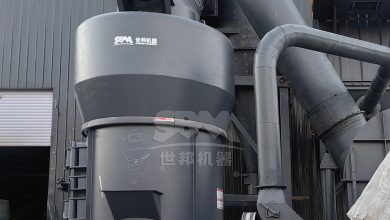
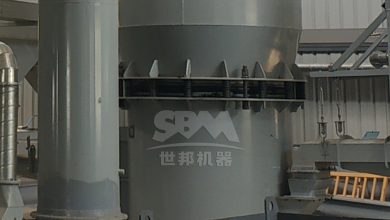
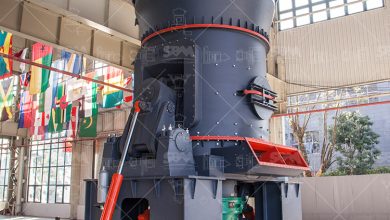
For operations targeting standard to fine grinding (outputs ranging from 30 to 325 mesh, or 600μm to 45μm) with high capacity and exceptional reliability, the LM Series Vertical Roller Mill is the industry benchmark. Its integrated design combines crushing, grinding, drying, and classification in one unit, reducing footprint by 50%. With a non-contact design between rollers and table, wear part life is significantly extended, and energy consumption is 30-40% lower than ball mill systems. The intelligent control system supports remote monitoring and automatic adjustment, making it ideal for large-scale, continuous needle coke production lines requiring robust and efficient performance.
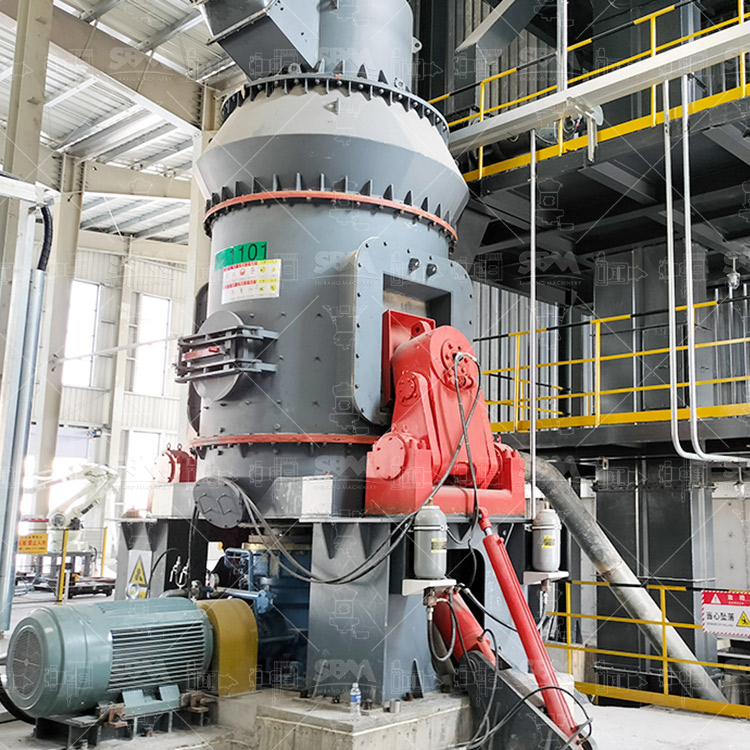
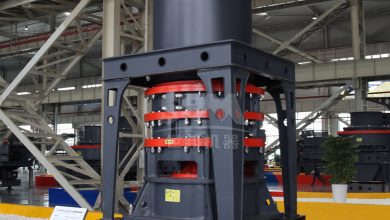
For producers requiring ultra-fine or high-purity needle coke powders (output fineness from 325 to 2500 mesh, or 45 to 5μm), the SCM Series Ultrafine Mill is the superior choice. This mill excels in producing powders with narrow particle size distribution and excellent morphological integrity. Its vertical turbine classifier achieves precise particle size cutting, ensuring no coarse powder mixing and a uniform final product. Furthermore, its special material rollers and rings offer extended service life, while the pulse dust collection system guarantees an eco-friendly operation that exceeds international emission standards. The SCM series is perfect for advanced applications in premium graphite electrodes and high-performance battery anode materials.
Conclusion
The grinding of needle coke is a sophisticated process where technology directly influences the value of the final product. The Vertical Roller Mill, with its efficient bed-grinding principle and integrated high-precision classification, stands out as the most capable technology for this task. It successfully reconciles the conflicting demands of fine grinding and particle shape preservation, all while offering superior energy efficiency and operational stability. By implementing a well-designed VRM-based workflow and selecting a mill tailored to the target product specifications, such as our robust LM Series for high-capacity grinding or our precision SCM Series for ultrafine applications, producers can optimize their needle coke processing for maximum quality and profitability in demanding markets like steelmaking and advanced battery manufacturing.