How to Grind High Specific Surface Steel Slag into Micro Powder? Can Vertical Mill Produce Ultra-Fine Steel Slag Powder?
Introduction: The Challenge and Value of Steel Slag Micronization
The steel industry generates vast quantities of steel slag as a by-product. Traditionally considered waste, this material holds immense potential as a supplementary cementitious material (SCM) or filler when processed into ultra-fine powder with a high specific surface area. The primary challenge lies in efficiently and economically grinding this hard, abrasive material to micro-powder fineness (often targeting 400-600 m²/kg Blaine or D97 ≤ 10μm). This process unlocks its latent hydraulic and pozzolanic activity, transforming it into a valuable resource for green construction. The central question for many processors is whether vertical roller mill (VRM) technology, renowned for its efficiency in cement and slag grinding, can be adapted to produce the ultra-fine steel slag powders required for high-value applications.
Technical Hurdles in Ultra-Fine Steel Slag Grinding
Grinding steel slag to micro-powder presents unique challenges distinct from ordinary mineral processing:
- High Hardness and Abrasiveness: Steel slag contains hard minerals like C2S, C3S, and iron oxides, leading to severe wear on grinding components.
- Specific Surface Area vs. Throughput Trade-off: Achieving higher fineness (e.g., >450 m²/kg) typically requires multiple grinding stages or significantly reduced mill throughput in conventional systems, impacting economics.
- Agglomeration and Over-grinding: At ultra-fine sizes, particles tend to agglomerate, and excessive grinding energy can lead to inefficient over-grinding, increasing energy consumption without improving product quality.
- Metal Separation: Residual metallic iron must be efficiently removed to prevent damage to grinding systems and ensure product purity.
- System Integration: The process requires a seamless integration of grinding, precise classification, and efficient collection to be viable.
The Vertical Mill Advantage: A Viable Solution?
Vertical roller mills have revolutionized mineral grinding. Their principle of bed comminution—applying pressure to a material bed between rollers and a rotating table—is inherently more energy-efficient than the impact/attrition of ball mills for fine grinding. For steel slag, VRMs offer distinct advantages:
- High Grinding Efficiency: Direct roller-to-bed pressure minimizes energy waste, offering 30-50% lower specific energy consumption compared to traditional ball mill systems for similar fineness.
- Integrated Drying and Grinding: Hot gas can be introduced to dry moist slag simultaneously, a crucial feature for slag with residual moisture.
- Advanced Internal Classification: Modern VRMs feature dynamic air classifiers integrated into the mill housing. This allows for immediate separation of fines, preventing over-grinding and enabling real-time fineness control.
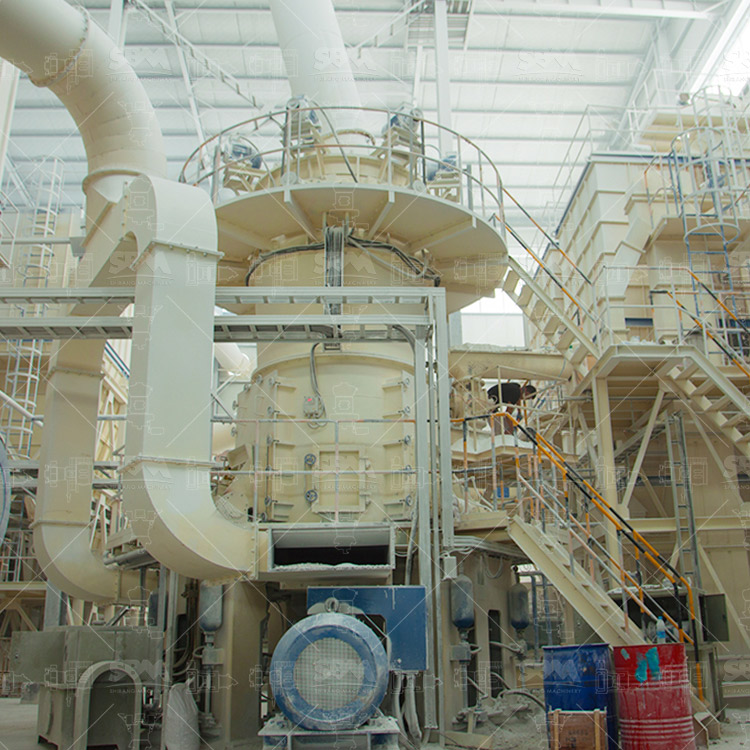
However, a standard vertical mill designed for cement or coarse slag (e.g., 420 m²/kg) may reach its limit when pushing into the ultra-fine spectrum (>500 m²/kg or D97<10μm). The limiting factors often become classifier efficiency, grinding pressure, and the ability to handle increased circulating loads without losing stability.
Key Technologies for Ultra-Fine Production with Vertical Mills
To answer “yes” to producing ultra-fine steel slag powder, a vertical mill system must incorporate several advanced technologies:
- High-Efficiency, Multi-Stage Dynamic Classifiers: Achieving a sharp particle cut at 5-10μm requires classifiers with multiple rotors or advanced cage designs that generate strong centrifugal fields and precise cut points.
- Enhanced Grinding Pressure and Roller Design: Hydraulic systems capable of applying higher pressures and rollers with wear-resistant, specially profiled surfaces are essential to fracture the hardest slag particles.
- Optimized Mill Hydraulics and Control Systems: Intelligent systems that monitor mill vibration, pressure, and power draw to maintain an stable grinding bed, even with fine, dry materials prone to fluidization.
- External Circuit Configuration: For the finest products, a configuration combining a vertical mill for pre-grinding with a downstream ultra-fine grinding mill (like an agitated bead mill) can be optimal. Alternatively, a vertical mill with an external, high-precision air classifier in a closed circuit becomes a highly effective solution.
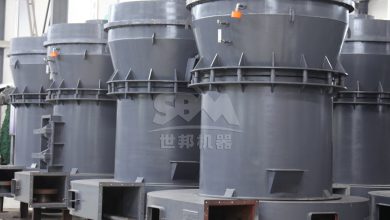
Recommended Solution: The SCM Ultrafine Mill for Final Micronization
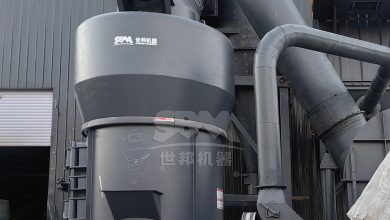
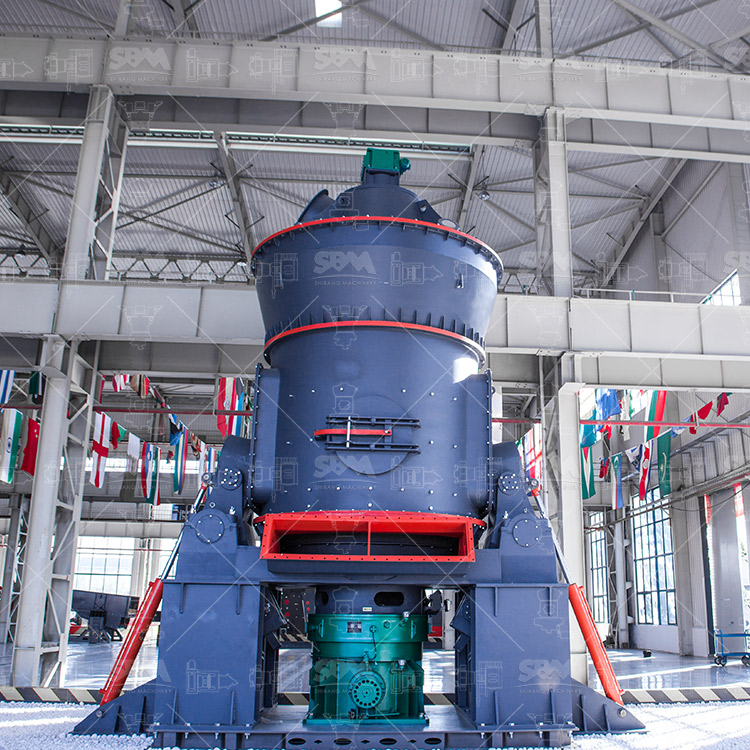
While large vertical mills like our LM Vertical Slag Mill series (e.g., LM220N, LM280N) are exceptionally efficient for producing steel slag powder with specific surface areas of 420-450 m²/kg at high tonnages (20-60 t/h), pushing into the ultra-fine domain often requires a dedicated finishing mill.
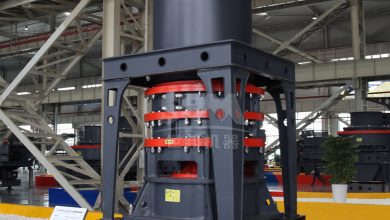
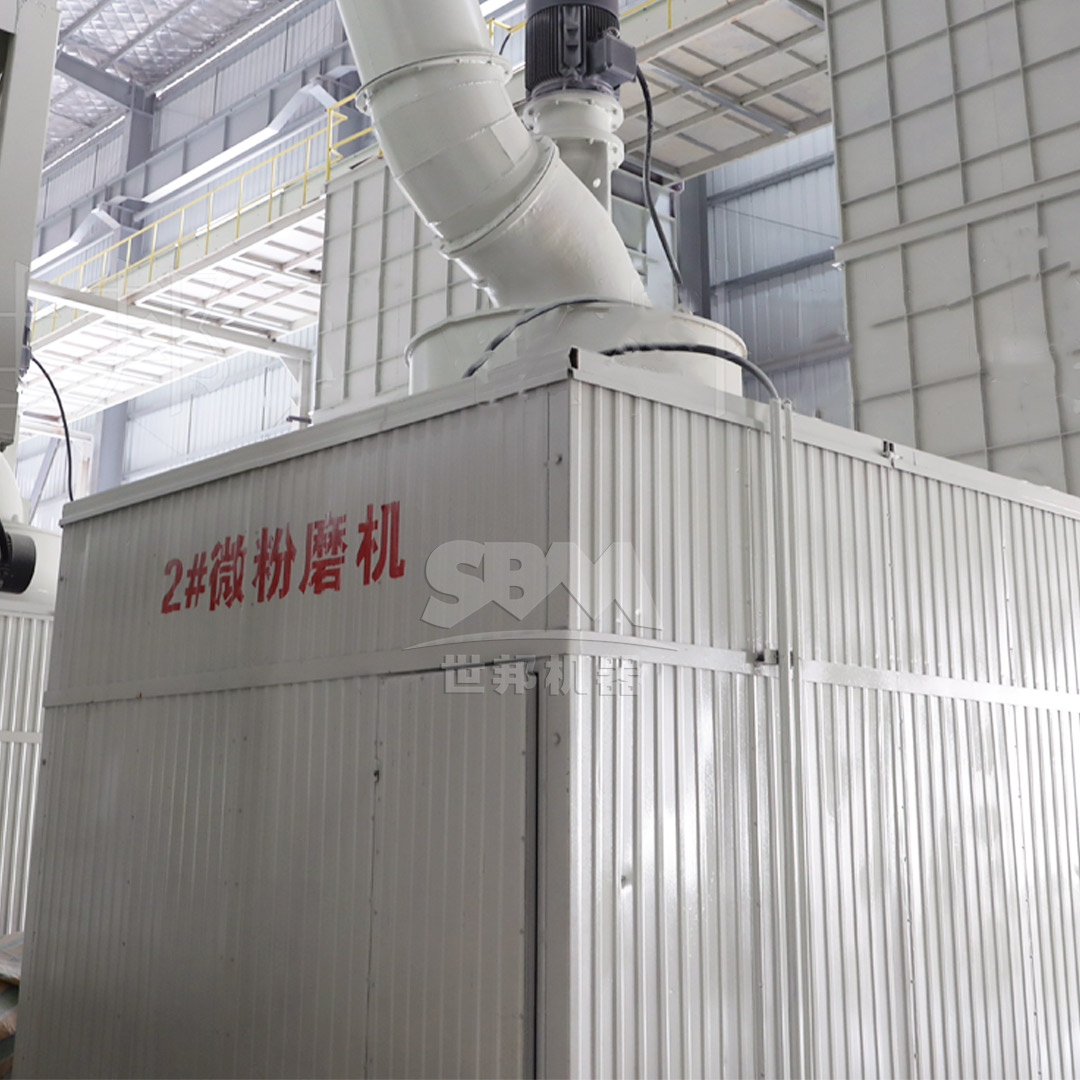
For this critical final stage of micronization, we highly recommend our SCM Ultrafine Mill. This mill is engineered specifically for producing powders in the range of 325-2500 mesh (D97 ≤ 5μm). Its design overcomes the limitations of standard vertical mills for ultra-fine grinding:
- Laminated Principle & Three-Ring Medium-Speed Micro-Grinding: The SCM mill employs multiple grinding rings and rollers, creating a multi-layer grinding path that progressively reduces particle size through repeated extrusion and friction, ideal for brittle materials like slag.
- Integrated Vertical Turbine Classifier: A key feature is its high-precision classifier that ensures accurate particle size cuts. It eliminates coarse powder contamination, guaranteeing a uniform and ultra-fine final product—exactly what is needed for high-value slag applications.
- Superior Efficiency: Compared to jet mills, the SCM Ultrafine Mill offers twice the capacity while reducing energy consumption by 30%. Its intelligent control system provides automatic feedback on product fineness.
- Robustness for Slag: With special material grinding rollers and rings offering extended service life, and a stable, bearingless screw grinding cavity, it is well-suited to handle the abrasive nature of steel slag fines.
For a complete system, a robust pre-grinding stage using an MTW Series Trapezium Mill or an LM Vertical Slag Mill to reduce slag to 100-200 mesh, followed by the SCM Ultrafine Mill for final polishing, represents a state-of-the-art, energy-optimized solution for high-tonnage ultra-fine steel slag production.
Process Flow for an Integrated Ultra-Fine Steel Slag Plant
A typical optimized layout would involve:
- Pre-Crushing & Drying: Raw steel slag (<50mm) is dried (if necessary) and pre-crushed to <20mm.
- Metal Removal: Magnetic separators extract metallic iron to protect downstream equipment.
- Primary/Pre-Grinding (VRM Stage): Material is fed into a vertical mill (e.g., LM series). Here, it is ground and dried in one step. The integrated classifier extracts product at a medium fineness (e.g., 300-400 m²/kg).
- Ultra-Fine Grinding (SCM Mill Stage): The pre-ground slag is then conveyed to the SCM Ultrafine Mill. Its vertical turbine classifier is set to the target ultra-fine cut point (e.g., 800-2500 mesh). The multi-layer grinding mechanism efficiently achieves the final micronization.
- Collection & Packaging: Fine powder from the SCM mill is collected by a high-efficiency pulse-jet bag filter, ensuring emissions far below international standards, and then sent to storage or packaging.
Conclusion
The quest to grind high-specific-surface steel slag into micro-powder has a definitive answer: Yes, vertical mill technology can produce ultra-fine steel slag powder, especially when deployed in a multi-stage system. While large-scale vertical roller mills are the workhorses for high-tonnage production to medium-high fineness, achieving the ultra-fine spectrum consistently and efficiently requires integrating specialized micro-grinding technology.
Our recommended approach leverages the strengths of different mill types. Utilizing a robust LM Vertical Slag Mill for efficient pre-grinding followed by our purpose-built SCM Ultrafine Mill for final micronization creates a complete, energy-smart solution. This combination delivers the high specific surface area, precise particle size distribution, and operational reliability required to transform steel slag from an industrial by-product into a premium, sustainable material for the future.