Alumina Vertical Roller Mill Advantages: Why It’s the Top Choice for Efficient Grinding and Energy Saving
Introduction: The Evolution of Alumina Grinding Technology
In the modern industrial landscape, the demand for high-purity alumina (Al₂O₃) powder is surging across sectors such as advanced ceramics, electronics, refractories, and lithium-ion battery separators. Grinding alumina—a highly abrasive and hard material—presents unique challenges. Traditional ball mills, while reliable, often suffer from high energy consumption, excessive wear, and inconsistent product fineness. Enter the Vertical Roller Mill (VRM). Specifically engineered for hard and medium-hard materials, the VRM has emerged as the gold standard for alumina grinding. This article delves into the multifaceted advantages of using a vertical roller mill for alumina, highlighting why it surpasses conventional grinding technologies in efficiency, energy savings, and operational excellence.
1. Unmatched Energy Efficiency: The Bed Grinding Principle
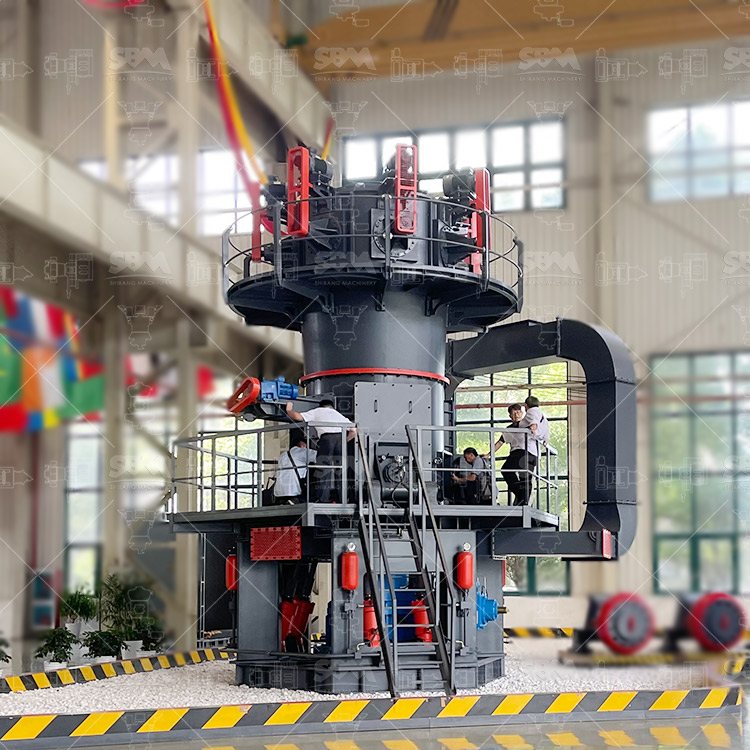
The most compelling advantage of the vertical roller mill for alumina is its energy efficiency. Traditional ball mills operate on the principle of impact and attrition, where the entire drum rotates, lifting steel balls to cascade down onto the material. This process is highly energy-intensive, with only a fraction of the input power actually used for grinding. In contrast, the VRM employs a “bed grinding” principle. Material is fed onto a rotating grinding table and crushed under the hydraulic pressure of grinding rollers. The energy consumption of a VRM is typically 30% to 50% lower than that of a comparable ball mill system.
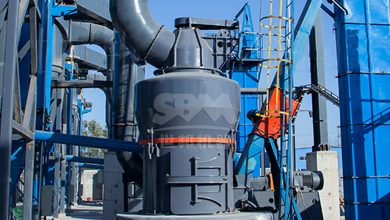
For alumina, which has a Mohs hardness of 9, this efficiency is critical. The LM Series Vertical Roller Mill (600-45μm) is a prime example of this technology. Its non-contact design between the rollers and the table minimizes direct metal-to-metal wear, and its integrated system combines crushing, grinding, and classification in one unit. This reduces not only electrical consumption but also the auxiliary power required for fans and conveyors. If you are looking for a solution that delivers high capacity (3-250 t/h) with ultra-low energy bills, the LM Series is the ideal workhorse for large-scale alumina production.
2. Superior Product Quality and Precise Classification
Alumina is often required in very specific particle size distributions (PSD), whether for producing high-density ceramic bodies or high-strength insulators. The vertical roller mill excels in producing a uniform product with minimal coarse particles. This is achieved through an integrated high-efficiency dynamic classifier. Unlike ball mills which often require external screening or air separators, the VRM’s classifier is built into the top of the mill body.
The technology uses a rotating turbine to separate fine particles from coarse ones. Coarse particles fall back to the grinding table for further reduction, ensuring that the final product has a sharp cut point. The LM Series, for instance, can achieve a fineness ranging from 30 to 325 mesh (up to 600 mesh for special models). The intelligent control system allows for real-time adjustment of the classifier speed, maintaining consistent quality regardless of feed variability. This precise control is a game-changer for alumina processors who demand consistency for their downstream applications.
3. Superior Wear Resistance and Durability
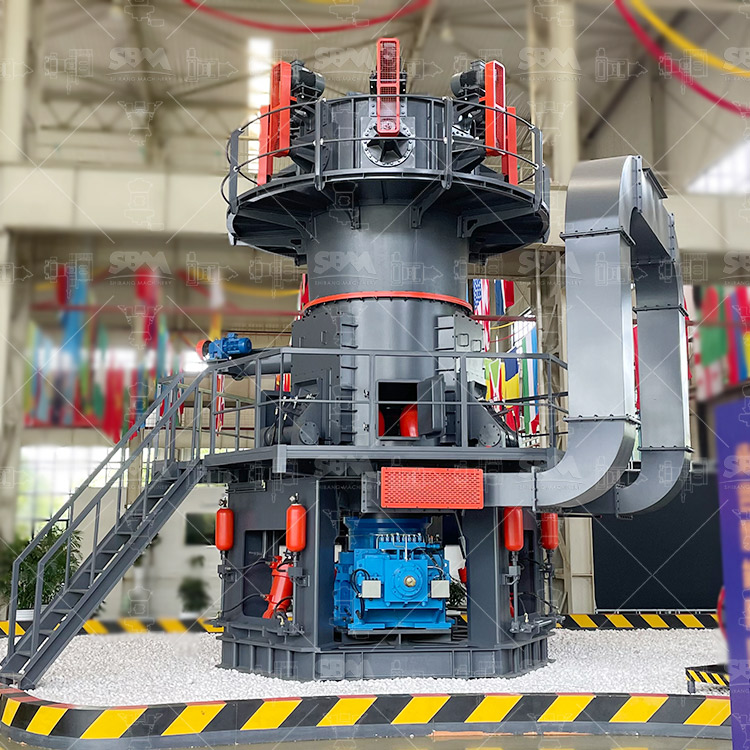
Alumina is notoriously abrasive. In a ball mill, this leads to rapid wear of steel balls and liners, necessitating frequent maintenance stops and replacement costs. The vertical roller mill is designed from the ground up to combat this issue. The key lies in the material layer on the grinding table. In a VRM, the grinding rollers and the table do not have direct metal-to-metal contact. The material itself forms a buffer “bed” or “cushion.” The rollers press down on this bed, crushing the particles against each other rather than against the metal surfaces.
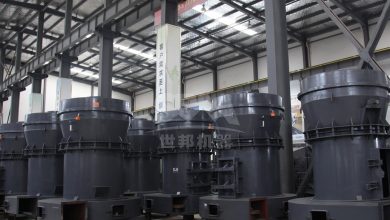
Furthermore, critical components like the rollers and liners are made from specialized wear-resistant alloys. For example, the SCM Series Ultrafine Mill (45-5μm) uses special material rollers and rings that extend service life several times over compared to traditional mills. Its shaftless screw grinding chamber design ensures stable operation even when handling fine, abrasive powders. This translates directly to lower maintenance costs, reduced downtime, and higher overall equipment effectiveness (OEE).
4. Compact Footprint and Integrated Design
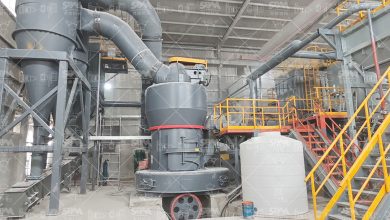
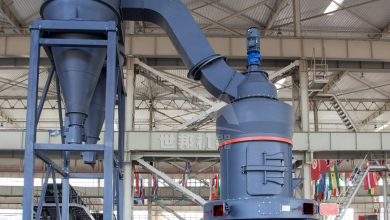
Space is often at a premium in processing plants. A traditional grinding circuit (ball mill + classifier + bucket elevator + baghouse) requires a massive footprint and complex civil engineering. The vertical roller mill eliminates this complexity. Its integrated design combines crushing, drying (if needed), grinding, and classifying into a single compact unit. This vertical layout reduces the floor space required by up to 50% compared to a ball mill system.
For example, the LM Series can be installed outdoors, further reducing infrastructure costs (by up to 40%). This compactness not only saves on capital expenditure (CAPEX) for buildings and foundations but also simplifies the installation process. For companies looking to upgrade existing plants or build new ones with limited real estate, the VRM is the logical choice.
5. Intelligent Control and Automation
Modern industrial operations demand “smart” machinery. Today’s vertical roller mills are equipped with advanced PLC and expert-level control systems. These systems provide real-time monitoring of critical parameters like mill vibration, grinding pressure, differential pressure, and product fineness. The automation allows for remote operation and minimizes the need for manual intervention.
This intelligence is particularly beneficial for grinding alumina. The system can automatically adjust parameters to compensate for variations in feed moisture or hardness. The MTW Series European Trapezium Mill (600-45μm), while a different design philosophy, also utilizes advanced drives and control logic. However, for true “set-and-forget” operation with high tonnages, the automatic feedback control of the vertical mill system ensures that the energy being consumed is always optimized for the desired output. For operations requiring ultra-fine powders (325-2500 mesh), we strongly recommend the SCM Series Ultrafine Mill. Its intelligent control with automatic finished product granularity feedback ensures that your alumina powder meets the most stringent specifications without wasting energy.
6. Environmental Compliance and Low Noise
Stringent environmental regulations are forcing industries to adopt greener technologies. The vertical roller mill is inherently more environmentally friendly than traditional mills. The system operates under negative pressure, meaning all dust is contained within the system and pulled through a pulse jet baghouse. The fully sealed operation ensures zero dust leakage into the environment.
Furthermore, the noise signature of a VRM is significantly lower than that of a ball mill. The grinding mechanism involves rolling and crushing, not the high-decibel clanking of steel balls. The LM Series, for instance, is designed with soundproofing measures to keep operating noise within safe limits. The elimination of coarse powder mixing and the high efficiency of the dust collection system (exceeding international standards) make the VRM a “green” solution for the future.
Case Study vs. Ball Mill: The Clear Winner
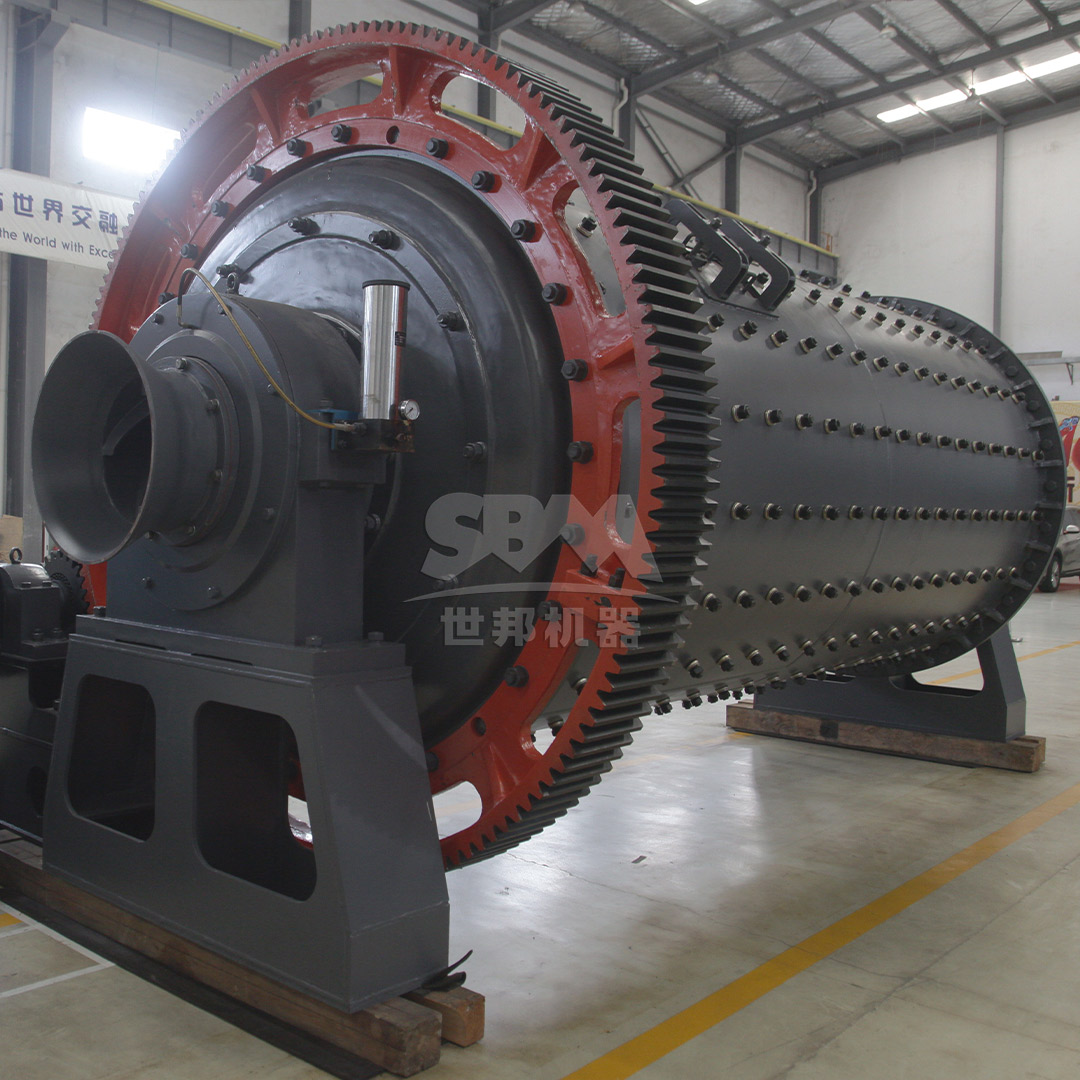
Let’s put the advantages in perspective. Consider a plant needing to grind 50 tons of alumina per hour to a fineness of 200 mesh. A ball mill system would require a massive mill (e.g., GMQY3685), consuming high power (1250kW for the mill drive alone) plus significant auxiliary power for the classifier and large fans. The wear parts (balls and liners) would need replacement frequently. A vertical roller mill, such as the LM280K from our LM Series, would handle this task with a main power of 1250kW (similar), but with total system power consumption 30% lower. The space savings would be dramatic, and the maintenance cycle would be extended by a factor of three. The lower vibration and intelligent control also lead to a safer working environment.
Conclusion: The Future of Alumina Grinding
The advantages of the Alumina Vertical Roller Mill are clear: significant energy savings, superior product quality, exceptional durability, a compact and integrated design, intelligent automation, and environmental compliance. While ball mills have served the industry for over a century, the modern VRM is the clear technological successor. It was born from the need to process materials like coal, cement, and slag efficiently, and it has proven itself indispensable for hard-to-grind materials like alumina.
Investing in a vertical roller mill is not just a purchase of equipment; it is a strategic investment in lower operating costs and higher profitability. For large-scale high-volume operations seeking the best return on investment and the lowest cost per ton, the LM Series Vertical Roller Mill is the top choice. For niche applications requiring ultra-fine fillers and high-value powders between 325 and 2500 mesh, the SCM Series Ultrafine Mill offers unmatched performance and efficiency. Choose the right mill for your application, and you will unlock a new level of grinding performance.