How to Manufacture Artificial Marble? What is the Role of a Vertical Mill in the Artificial Marble Filler Production Line?
Introduction: The Rise of Engineered Stone
The global demand for aesthetically pleasing, durable, and cost-effective building materials has propelled artificial marble, also known as engineered stone or quartz surface, to the forefront of modern construction and interior design. Unlike natural marble, which is quarried and cut, artificial marble is manufactured through a precise industrial process that combines natural minerals with polymer resins. This process allows for unparalleled control over color, pattern, consistency, and physical properties. A critical component determining the final quality, appearance, and economic viability of artificial marble is the production of its mineral filler. This article delves into the manufacturing process of artificial marble and explores the indispensable role of vertical roller mills, with a specific focus on high-performance solutions like our LM Series Vertical Roller Mill and SCM Series Ultrafine Mill, in optimizing the filler production line.
The Artificial Marble Manufacturing Process: An Overview
The production of artificial marble is a multi-stage, highly controlled process. While formulations vary, the core steps are consistent:
- Raw Material Selection & Preparation: The primary ingredients are high-purity quartz sand (SiO2), crushed marble, granite, or other natural stone aggregates (constituting 90-95% of the mixture), and polymer resins (typically 5-10% polyester or epoxy) as binders. Minor additives include pigments for color and catalysts for resin curing.
- Filler Processing & Grinding: This is the most technologically intensive stage. The natural aggregates must be ground to a specific, consistent, and ultra-fine powder. The particle size distribution (PSD), fineness, and shape of this filler powder directly influence the product’s strength, porosity, polishability, and visual texture.
- Mixing & Homogenization: The precisely ground mineral filler is thoroughly mixed with liquid resin, pigments, and catalysts in a high-shear mixer to create a homogeneous, damp blend with no dry spots.
- Molding & Compaction: The mixture is poured into molds and subjected to vacuum and vibration to remove entrapped air, ensuring a dense, non-porous slab. It is then compacted under high pressure.
- Curing: The compacted slab passes through a curing oven, where controlled heat initiates the polymerization (hardening) of the resin, binding the mineral particles into a solid mass.
- Post-Processing: The cured slab is cooled, calibrated to uniform thickness, polished to a high gloss, cut to size, and prepared for shipment.
The Heart of Quality: The Filler Production Line
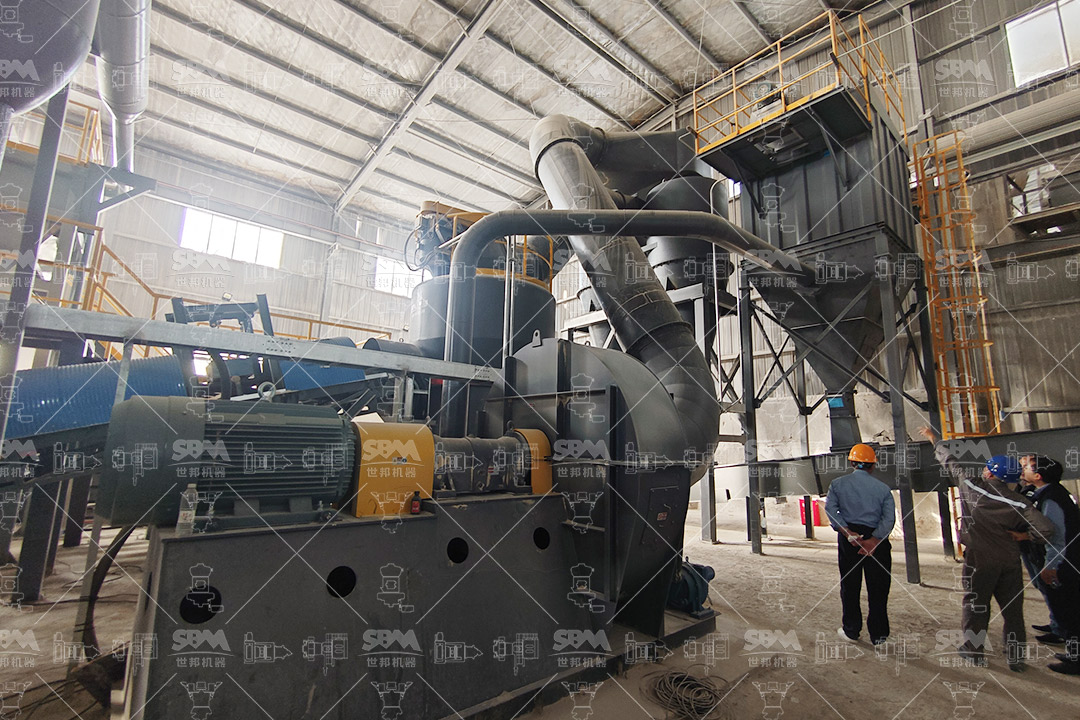
The quality of the mineral filler is non-negotiable. An inconsistent or coarse filler leads to weak spots, poor resin bonding, high porosity, and an inferior surface finish. Therefore, the grinding system in the filler production line is its technological core. The key requirements for the ideal filler powder are:
- Controlled Fineness: Typically ranging from 30 mesh (600μm) for base aggregates down to 325 mesh (45μm) and even ultrafine levels (2500 mesh / 5μm) for surface texture and density.
- Narrow Particle Size Distribution (PSD): A tight PSD ensures uniform resin coating and packing density, leading to superior mechanical strength and consistency.
- High Production Capacity & Efficiency: To supply a continuous slab production line, the grinding system must be high-yield and energy-efficient.
- Low Contamination & Wear: The grinding process must not introduce metallic impurities from wear parts, which could cause discoloration or weak points.
The Pivotal Role of the Vertical Roller Mill
Traditionally, ball mills or Raymond mills were used for size reduction. However, the modern artificial marble industry has overwhelmingly adopted Vertical Roller Mills (VRMs) as the preferred technology for filler production, especially for the critical medium to fine grinding stages. Here’s why:
1. Working Principle Tailored for Efficiency
A VRM operates on the principle of bed grinding. The raw material is fed onto a rotating grinding table. Hydraulically loaded grinding rollers press down onto the material bed, comminuting the particles through compression and shear. A stream of hot air (or ambient air) dries the material (if needed) and transports the fine particles upwards to an integrated high-efficiency classifier.
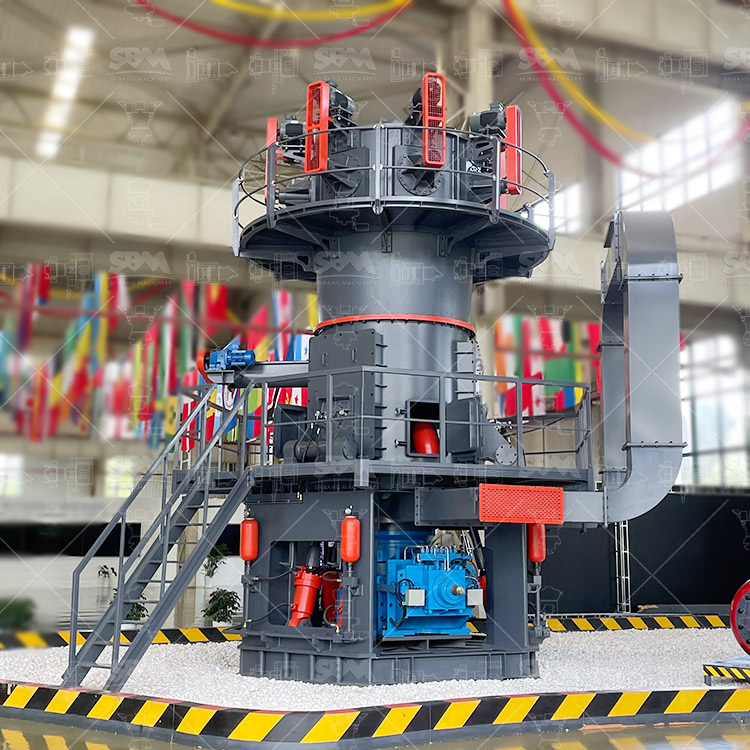
The classifier acts as a precision gatekeeper, allowing only particles that meet the target fineness to pass through to the product collector. Coarser particles are rejected and fall back onto the grinding table for further size reduction. This closed-circuit grinding and classification within a single machine is a key advantage.
2. Technical Advantages for Artificial Marble Production
- Superior Energy Efficiency: VRMs consume 30-50% less energy than traditional ball mills for the same output, as energy is directly applied to the material bed rather than wasted on moving heavy steel balls and the mill shell.
- Precise Particle Size Control: The dynamic classifier allows for real-time adjustment of product fineness from 30 mesh to 325 mesh (and finer for special models) by simply changing its rotor speed, ensuring the exact PSD required for the recipe.
- High Capacity in a Compact Footprint: The integrated design of crushing, grinding, drying, and classification significantly reduces the plant’s floor space requirements.
- Low Noise and Dust Emissions: Fully sealed negative pressure operation ensures a clean working environment, which is crucial for a quality-controlled production facility.
- Excellent Drying Capability: If raw aggregates have surface moisture, the hot air flow within the VRM can effectively dry them during grinding, simplifying the process flow.
Recommended Solution: SBM’s LM Series Vertical Roller Mill
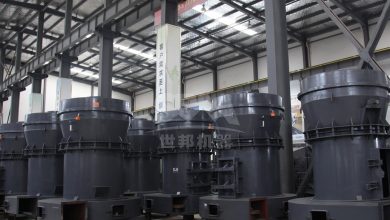
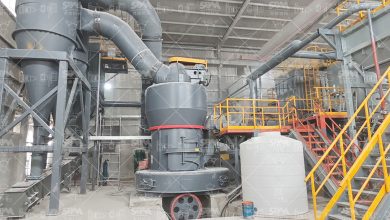
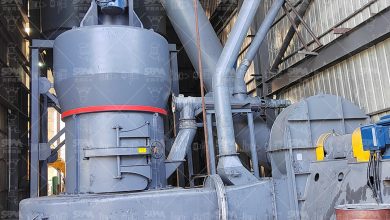
For the core grinding process in an artificial marble filler plant, we highly recommend our flagship LM Series Vertical Roller Mill. Engineered for non-metallic mineral processing, it embodies all the critical advantages needed for this application.
Our LM Series Mill features an integrated design that reduces infrastructure costs by up to 40%. Its intelligent control system enables expert-level automation, allowing for real-time monitoring and adjustment of grinding parameters to maintain consistent filler quality with minimal manual intervention. The mill’s low operating cost is a result of its non-contact grinding roller design and wear-resistant materials, which extend the life of consumable parts dramatically.
With models like the LM190K (capacity: 23-68 t/h, fineness: 170-45μm) or the LM220K (capacity: 36-105 t/h), it can serve as the workhorse for medium to high-capacity production lines, reliably producing filler within the crucial 30-325 mesh range.
Taking Fineness to the Next Level: The Role of Ultrafine Grinding
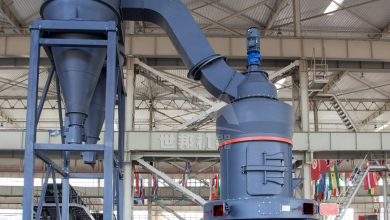
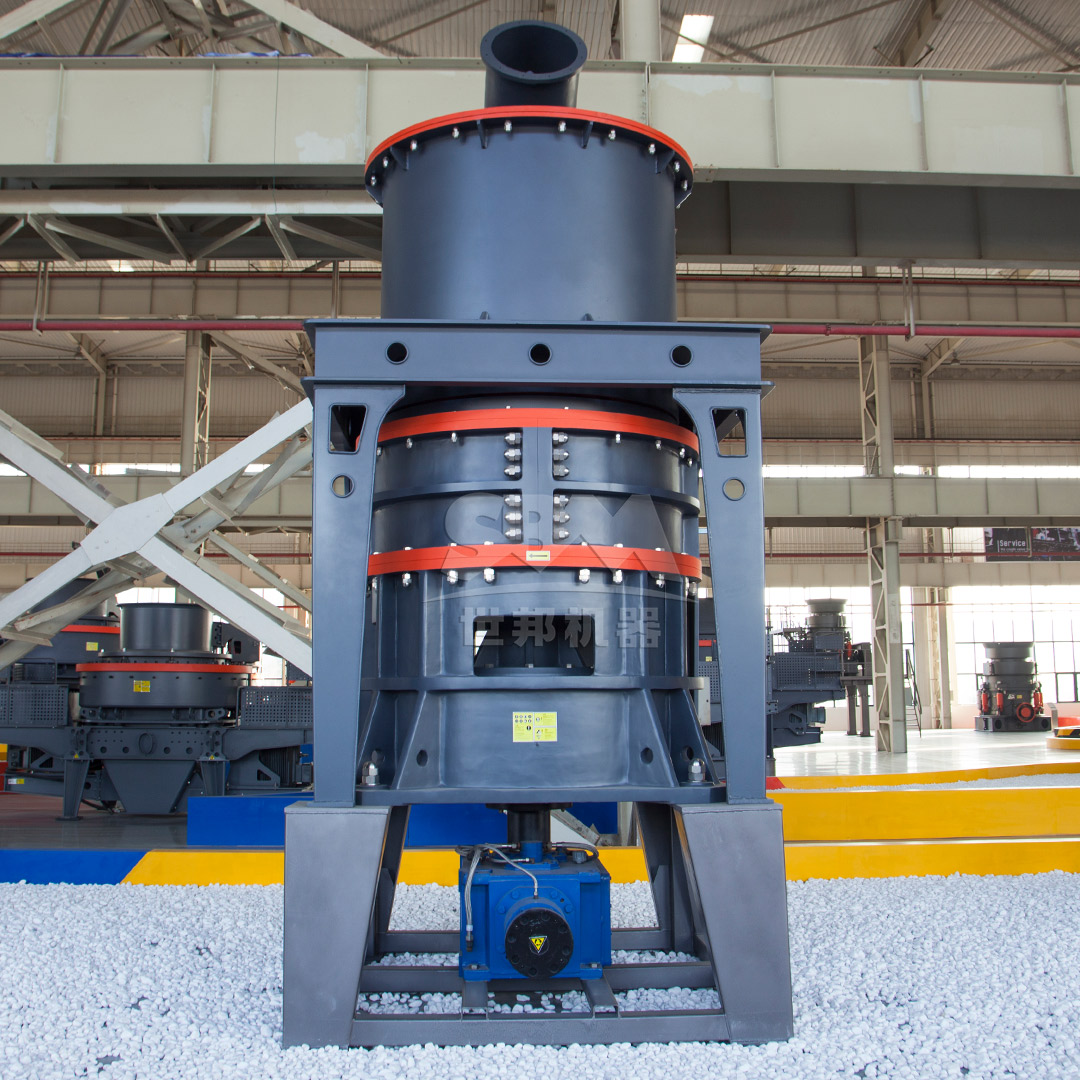
For premium artificial marble products requiring exceptional density, smoothness, and a more homogeneous appearance, an ultrafine grinding stage is often incorporated. This is where our SCM Series Ultrafine Mill excels.
While the LM Series VRM handles the bulk grinding, the SCM Mill can be deployed to process a portion of the filler to ultrafine levels (325-2500 mesh / 45-5μm). Incorporating this ultrafine powder into the mix fills the microscopic voids between larger particles, creating a denser matrix with higher mechanical strength and a more lustrous polish.
The SCM Series is renowned for its high-efficiency & energy-saving operation, offering capacity twice that of jet mills with 30% lower energy consumption. Its high-precision turbine classifier guarantees a uniform product with no coarse powder mixing. For a filler line aiming for top-tier product quality, pairing an LM Vertical Mill with an SCM Ultrafine Mill provides the ultimate flexibility and quality spectrum.
Conclusion
The manufacture of high-quality artificial marble is a symphony of material science and precision engineering. The performance of the filler production line, particularly the grinding system, sets the stage for the final product’s success. Vertical Roller Mills have proven to be the superior technology for this task, offering unmatched efficiency, control, and reliability.
By selecting advanced milling solutions like SBM’s LM Series Vertical Roller Mill for primary grinding and the SCM Series Ultrafine Mill for specialized fine powder production, manufacturers can achieve the precise mineral filler specifications needed to produce consistent, durable, and beautiful engineered stone that meets the highest market standards. Investing in the right grinding technology is, therefore, an investment in the product’s future.