How to Use Vertical Mill for Grinding Coal Gangue to Prepare Calcined Kaolin
Introduction: From Coal Gangue to High-Value Calcined Kaolin
Calcined kaolin, also known as metakaolin, is a highly sought-after industrial mineral valued for its whiteness, chemical inertness, and pozzolanic activity. It finds extensive applications in paper coating, paints, plastics, rubber, and high-performance concrete. A primary and cost-effective raw material for producing high-quality calcined kaolin is coal gangue, a common solid waste from coal mining. The transformation of this waste into a premium product hinges on a critical step: ultra-fine grinding. This article provides a comprehensive guide on utilizing vertical roller mills (VRMs) to grind coal gangue efficiently for subsequent calcination into high-grade kaolin.
The Importance of Particle Size in Kaolin Calcination
Before delving into the grinding process, it’s crucial to understand why fineness matters. The calcination process, typically conducted at temperatures between 600°C and 900°C, aims to drive off chemically bound water (dehydroxylation) from the kaolinite in the gangue. The fineness of the feed material directly impacts:
- Reaction Kinetics: Finer particles have a larger surface area, allowing for more uniform and complete heat transfer, leading to consistent dehydroxylation.
- Product Whiteness and Brightness: Uniform fine grinding ensures even exposure to calcination temperatures, maximizing the removal of organic impurities and carbonaceous matter that affect color.
- Pozzolanic Activity: The amorphous metakaolin structure, responsible for its reactivity in cementitious systems, is more readily and completely formed from finely ground material.
- Downstream Processing: The final calcined product often requires further classification or dispersion. A uniformly fine feed results in a more manageable and consistent final product.
The target fineness for coal gangue feed to a calciner typically ranges from 325 mesh (45μm) to as fine as 2500 mesh (5μm), depending on the desired end-use specifications of the calcined kaolin.
Why Choose a Vertical Roller Mill for Coal Gangue Grinding?
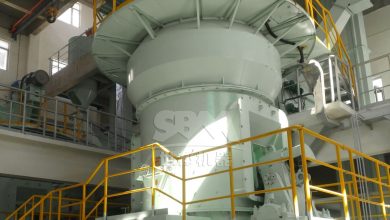
Vertical Roller Mills have become the industry standard for processing non-metallic minerals like coal gangue due to their superior efficiency and control compared to traditional ball mills or Raymond mills. Key advantages include:
- High Grinding Efficiency & Energy Savings: VRMs utilize a bed-compression grinding principle, applying pressure to a material layer rather than impact or attrition alone. This method is significantly more energy-efficient, often consuming 30-40% less power than a ball mill system for the same output.
- Integrated Drying Capability: Coal gangue often contains residual moisture. VRMs can integrate a hot air generator, allowing simultaneous grinding and drying within the same unit, simplifying the process flow.
- Precise Particle Size Control: Equipped with high-efficiency dynamic classifiers (often integrated into the mill housing), VRMs offer precise control over the top particle size and a steep particle size distribution curve, minimizing oversized particles.
- Compact Footprint & Low Noise: The vertical design integrates crushing, grinding, drying, and classification into a single unit, reducing plant footprint by up to 50%. Fully sealed operation also results in lower dust emissions and noise levels.
- Ability to Handle Abrasive Materials: Modern VRMs feature wear-resistant designs for rollers and grinding tables, making them suitable for the moderately abrasive nature of coal gangue.
Selecting the Right Vertical Mill: Key Considerations
Not all vertical mills are created equal. For the specific task of preparing coal gangue for calcination, several factors must be evaluated:
- Feed Size: Coal gangue from crushers is typically ≤50mm.
- Required Product Fineness: Target range of 325-2500 mesh (45-5μm).
- Moisture Content: Determines if a mill with hot air supply is necessary.
- Abrasion Resistance: The mill’s grinding elements must be made of special alloys to withstand wear.
- System Intelligence: Automated control systems are vital for maintaining consistent product quality.
Recommended Solution: The SCM Series Ultrafine Mill
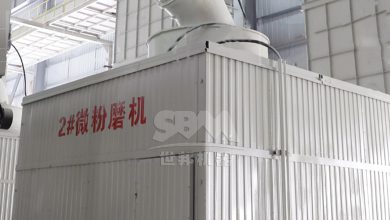
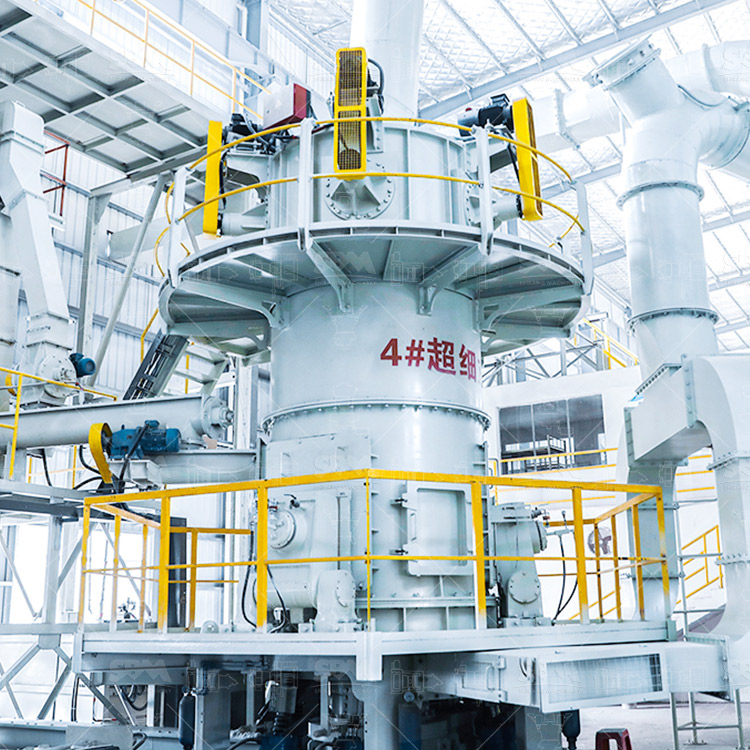
For projects demanding the finest product specifications (up to 2500 mesh), the SCM Series Ultrafine Mill is an exceptional choice. Engineered for high-precision, large-capacity fine and ultra-fine grinding, it excels in processing materials like coal gangue into calciner-ready powder.
Core Advantages for Kaolin Preparation:
- High-Precision Classification: Its advanced vertical turbine classifier ensures precise particle size cutting, delivering a uniform finished product with no coarse powder mixing. This uniformity is critical for consistent calcination results.
- High Efficiency & Energy Saving: With a capacity that can be twice that of jet mills and 30% lower energy consumption, the SCM series offers outstanding operational economy. Its intelligent control system with automatic finished product granularity feedback ensures stable operation at target fineness.
- Durable Design for Abrasive Feed: The mill features special material rollers and rings that extend service life several times over, directly combating the wear from coal gangue. The shaftless screw design in the grinding chamber further enhances operational stability.
Key Parameter Match: With an input size of ≤20mm (easily achieved with a primary crusher), an output fineness range of 325-2500 mesh, and capacities from 0.5 to 25 t/h, the SCM series perfectly aligns with the requirements for preparing calcined kaolin feed. A model like the SCM1000 (1.0-8.5t/h, 132kW) is often an ideal balance of capacity and power for mid-sized production lines.
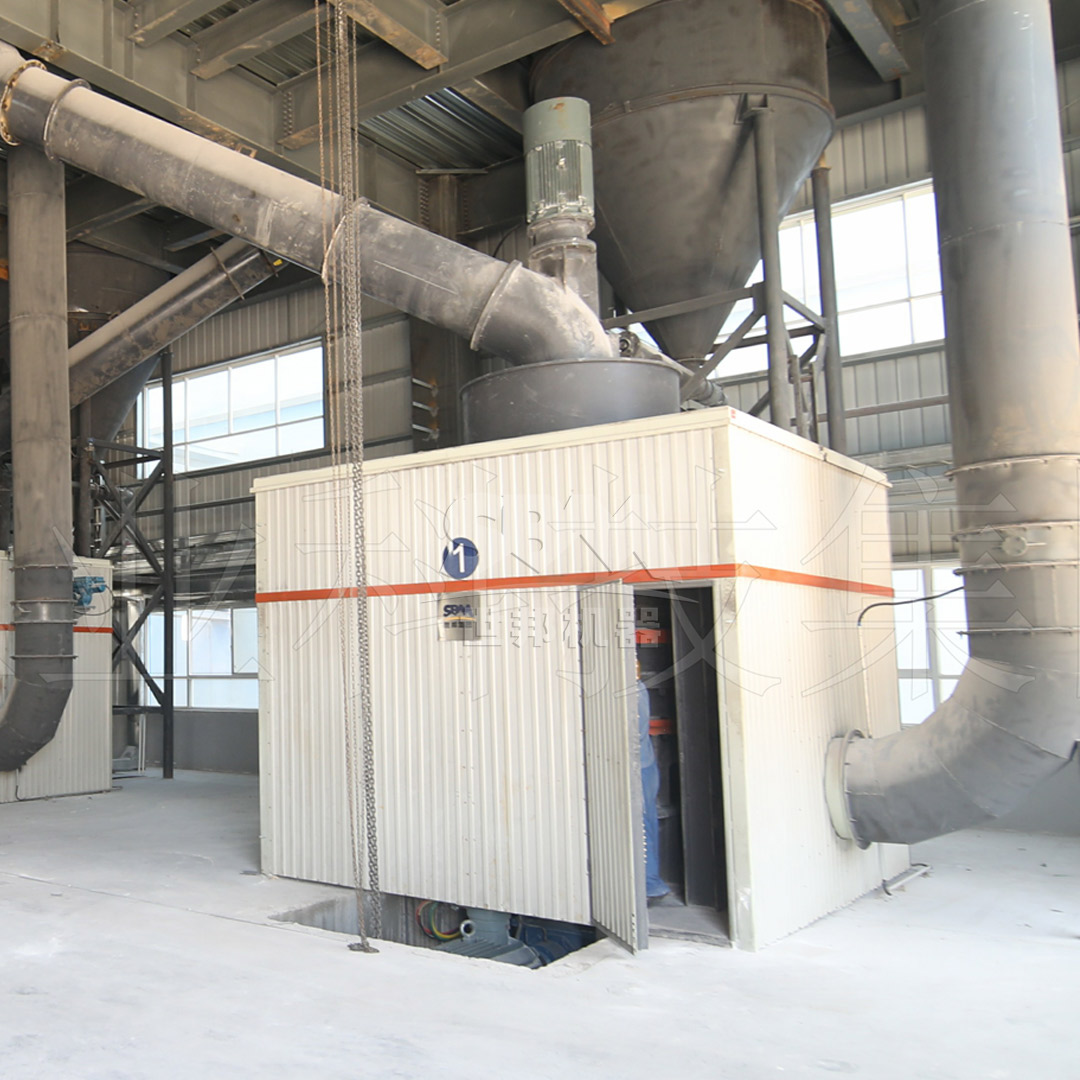
Process Flow: From Raw Gangue to Mill Feed
- Primary Crushing & Storage: Run-of-mine coal gangue is first reduced to ≤50mm by a jaw crusher and stored.
- Pre-Drying (if necessary): If moisture is exceptionally high, a pre-drying step may be employed.
- Feed Preparation: Material is conveyed to the mill feed bin. A vibrating feeder or weigh feeder ensures a steady, controlled supply to the mill.
- Grinding & Drying in the VRM: Material enters the mill center, falls onto the rotating grinding table, and is ground under rollers. Simultaneously, hot gas (if needed for drying) is introduced, lifting fine particles to the classifier.
- Classification: The integrated dynamic classifier rejects coarse particles, which fall back to the table for regrinding. Finely ground, qualified powder exits with the gas stream.
- Product Collection: The powder-gas mixture enters a cyclone collector and a subsequent pulse-jet bag filter (ensuring dust emission compliance) where the final product is collected.
- Calcination Feed: The collected, ultra-fine coal gangue powder is now ready to be conveyed to the calcination kiln or furnace.
An Alternative for Coarser Requirements: The MTW Series European Trapezium Mill
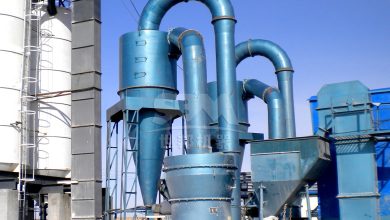
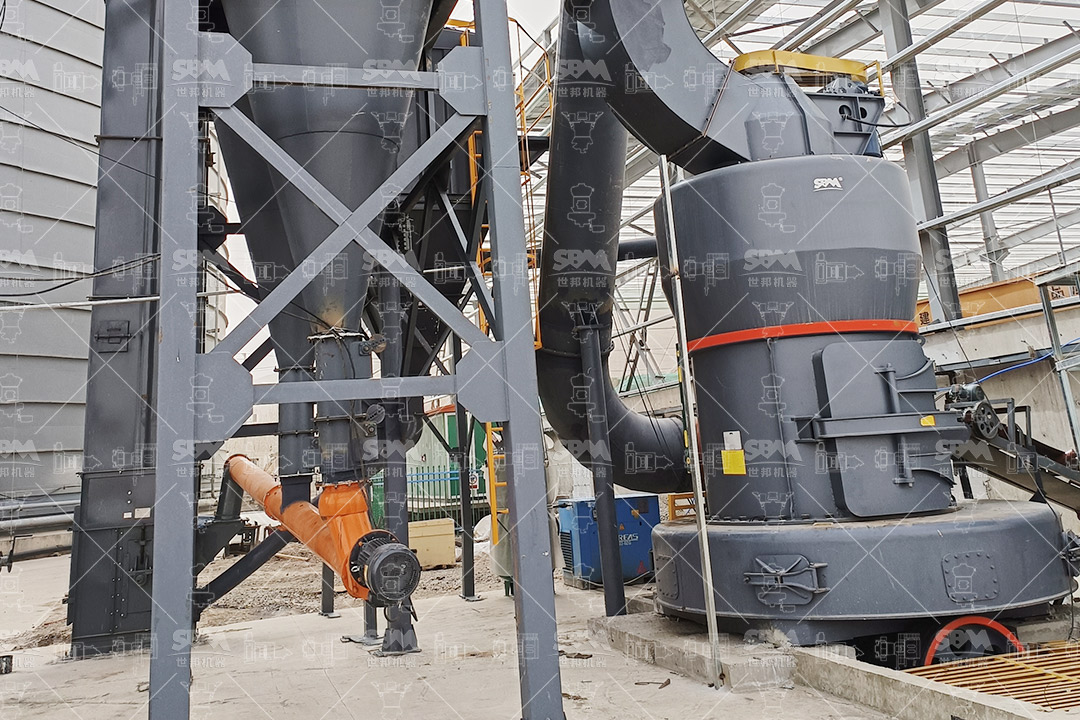
For operations where the target fineness for calcination is in the coarser range of 30-325 mesh (600-45μm) and capacity demands are higher, the MTW Series European Trapezium Mill presents a robust and efficient solution. Its advantages include:
- Large Capacity & Robustness: With capacities from 3 to 45 t/h and the ability to handle feed sizes up to 50mm, it is ideal for high-tonnage applications.
- Anti-wear Design: Its combined shovel blades and curved roller design are built to handle abrasive materials, extending maintenance intervals and reducing operating costs.
- Efficient Drive System: The integral bevel gear drive boasts 98% transmission efficiency, saving energy and space.
This mill is perfectly suited for initial grinding stages or for producing calcined kaolin used in applications like construction materials where extremely high fineness is not the primary concern.
Optimization and Best Practices
- Grinding Pressure: Optimize hydraulic pressure on the rollers to achieve the best balance between throughput, fineness, and wear.
- Classifier Speed: This is the primary control for product fineness. Higher speed yields finer product.
- Gas Flow & Temperature: Ensure adequate gas flow to transport fines and optimize temperature for effective drying without overheating the material.
- Wear Monitoring: Implement a regular schedule for inspecting and replacing grinding rollers and table segments to maintain efficiency and product consistency.
Conclusion
The successful production of high-value calcined kaolin from coal gangue waste is heavily dependent on an efficient and controlled fine grinding process. Vertical Roller Mills, with their integrated drying, precise classification, and superior energy efficiency, are the definitive technology for this task. By selecting a mill tailored to the specific fineness and capacity requirements—such as the ultra-fine grinding capability of the SCM Series or the high-capacity robustness of the MTW Series—producers can transform a low-value byproduct into a consistent, high-quality raw material for the calcination process, unlocking significant economic and environmental benefits.