Ball Mill vs Vertical Roller Mill for Producing GGBS from Granulated Blast Furnace Slag
Introduction
The production of Ground Granulated Blast Furnace Slag (GGBS), a vital supplementary cementitious material, hinges on the efficient grinding of granulated blast furnace slag (GBFS). The choice of grinding technology is paramount, directly impacting product quality, energy consumption, operational costs, and plant footprint. The two dominant technologies in this arena are the traditional Ball Mill (BM) and the modern Vertical Roller Mill (VRM). This article provides a comprehensive technical comparison of these two systems for GGBS production, analyzing their principles, performance metrics, and suitability for modern, sustainable operations.
1. Fundamental Working Principles
1.1 Ball Mill (BM) Operation
The ball mill is a well-established, horizontal rotating cylinder partially filled with grinding media, typically steel balls. The granulated slag is fed into one end. As the mill rotates, the balls are lifted and then cascade down, impacting and abrading the slag particles through a combination of impact and attrition forces. The grinding process is a combination of crushing and shearing actions. The ground material exits through a discharge grate, with particle size controlled primarily by the residence time and the size of the grate openings. Classification is usually an external, separate process.
1.2 Vertical Roller Mill (VRM) Operation
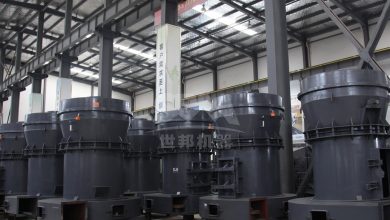
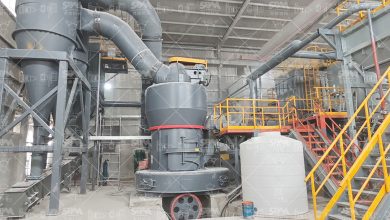
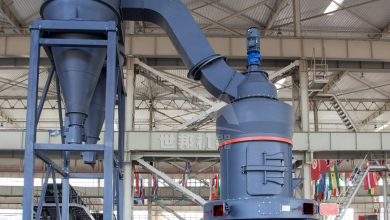
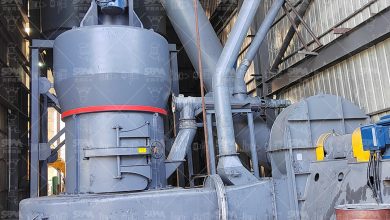
The Vertical Roller Mill operates on a bed-grinding principle. Granulated slag is fed onto a rotating grinding table. Centrifugal force spreads the material evenly under two, three, or four hydraulically loaded grinding rollers. The rollers exert high pressure on the material bed, crushing the particles primarily by compression. Simultaneously, a stream of hot gas (often waste gas from a preheater) flows upward through the mill, drying the slag and carrying the fine particles to an integrated, high-efficiency classifier mounted atop the mill. Coarse particles are rejected by the classifier and fall back onto the grinding table for further size reduction, creating an internal circulation loop.
2. Comparative Analysis for GGBS Production
2.1 Grinding Efficiency and Energy Consumption
This is the most significant differentiator. VRMs demonstrate a clear advantage in specific energy consumption, typically consuming 30-40% less electrical energy than a ball mill producing GGBS of equivalent fineness (e.g., 400-450 m²/kg Blaine). The reasons are multifold:
- Bed Grinding vs. Impact Grinding: VRMs utilize energy-efficient compression grinding on a material bed, whereas ball mills rely on less efficient impact and attrition, with significant energy lost to noise, heat, and wear of the media and liners.
- Integrated Drying and Classification: The VRM’s ability to use hot gases for simultaneous drying of moist slag (typically 10-15% moisture) and material transport, combined with internal classification, eliminates the need for separate, energy-intensive drying and classifying equipment required by a ball mill circuit.
For operations prioritizing sustainability and low operating costs, the energy savings offered by VRM technology are decisive.
2.2 Product Quality and Particle Size Distribution
Both systems can produce high-quality GGBS meeting international standards. However, the particle characteristics differ:
- Ball Mill: Tends to produce particles with a more spherical shape due to the prolonged tumbling action. The particle size distribution (PSD) can be broader. Control over the top-size is good, but achieving very high fineness (>500 m²/kg) can be challenging and energy-intensive.
- Vertical Roller Mill: Produces particles with a more angular and flaky morphology due to the compression breakage. Modern VRMs with advanced dynamic classifiers offer excellent control over PSD, enabling the production of a steeper, narrower distribution. This can be beneficial for the strength development and water demand of the final cement blend.
2.3 Capital Investment and Plant Layout
A ball mill system for GGBS requires the mill itself, a large drive motor, a separate drying system (if slag is wet), an external classifier (e.g., separator), and extensive auxiliary equipment (bucket elevators, conveyors). This results in a larger physical footprint and more complex plant layout.
In contrast, a VRM is a highly integrated system. Grinding, drying, classification, and product conveyance all occur within a single, compact unit. This leads to a 50% or greater reduction in footprint and significantly simpler infrastructure. While the specific cost of a VRM unit may be higher, the total installed cost for a complete grinding plant can be competitive or even lower due to reduced civil works and auxiliary requirements.
2.4 Operational Flexibility and Maintenance
Ball Mills are known for their robustness and ability to handle variations in feed material hardness. They offer simpler mechanical design in some aspects but require regular maintenance of liners and grinding media (ball charge), which constitutes a major operating cost. Changing liners and refilling balls is a labor-intensive and time-consuming process.
Vertical Roller Mills offer superior operational flexibility, with quick adjustment of product fineness via classifier speed and easy control of grinding pressure. Wear occurs on the grinding rollers and table, but the wear parts have significantly longer service lives (often over 8,000-10,000 hours for slag). Crucially, our LM Series Vertical Roller Mill features a patented modular grinding roller quick-change system, allowing roller refurbishment or replacement in days instead of weeks, dramatically reducing downtime. Furthermore, its intelligent control system enables real-time monitoring and expert-level automation, reducing manual intervention.
2.5 Environmental Impact
Modern VRMs are designed as closed, negative-pressure systems. Dust emissions are minimal and easily controlled with a compact, integrated baghouse filter. Noise levels are also considerably lower than those of a ball mill installation.
Ball mill circuits, with their multiple transfer points and external equipment, present more challenges for dust containment and generally operate at higher noise levels, often requiring additional soundproofing measures.
3. Technology Recommendation for Modern GGBS Plants
For new GGBS production facilities or major upgrades, the Vertical Roller Mill presents a compelling, future-proof solution. Its superior energy efficiency, lower operating costs, compact design, and excellent environmental performance align perfectly with the industry’s goals of sustainability and profitability.
For projects requiring the production of ultra-fine GGBS or where the slag characteristics are highly variable, a two-stage system might be considered. In such a configuration, a VRM like our LM Vertical Slag Mill Series (e.g., LM220N) can serve as an efficient pre-grinder or finish grinder for standard fineness. For achieving ultra-high fineness (e.g., >600 m²/kg), the pre-ground slag can be fed to a dedicated ultra-fine grinding mill.
In this context, our SCM Series Ultrafine Mill is an excellent complementary technology. Capable of producing fineness from 325 to 2500 mesh (45-5μm), it employs a vertical turbine classifier for high-precision particle size cutting, ensuring no coarse powder mixing and a uniform final product. Its energy-efficient design offers capacity twice that of jet mills with 30% lower consumption, making it ideal for producing premium, high-value ultra-fine GGBS for specialized applications.
4. Conclusion
The choice between a Ball Mill and a Vertical Roller Mill for GGBS production is no longer merely a technical preference but a strategic business decision. While the robust and familiar ball mill remains a viable option, the Vertical Roller Mill technology has matured to offer overwhelming advantages in energy efficiency, plant design, operational cost, and environmental compliance.
For operators seeking to minimize their carbon footprint and operational expenditure while maximizing product quality and plant capacity, the Vertical Roller Mill is the unequivocal leader. Our LM Series Vertical Roller Mill, with its integrated design, intelligent control, and patented quick-maintenance features, provides a reliable and efficient platform for sustainable GGBS production. For projects targeting the ultra-fine slag market, integrating our SCM Series Ultrafine Mill into the process flow ensures capability at the highest end of the fineness spectrum.