
Principle of Preparing Calcium Oxide from Carbide Slag: Process, Reactions and Industrial Applications
Introduction
Carbide slag, a calcium-rich industrial byproduct generated during acetylene production from calcium carbide, poses significant environmental challenges due to its high alkalinity and volume. However, with proper processing, it can be transformed into valuable calcium oxide (CaO), a key material in construction, metallurgy, and chemical industries. This article elucidates the scientific principles underlying the preparation of calcium oxide from carbide slag, detailing the process flow, chemical reactions, and industrial applications. Furthermore, it highlights how advanced grinding and calcination equipment, such as the SCM Series Ultrafine Mill and MTW Series European Trapezium Mill, can enhance the efficiency and quality of this conversion.
Process Overview
The conversion of carbide slag to calcium oxide involves three main stages: pretreatment (drying and grinding), calcination, and post-treatment (cooling and packaging). Carbide slag primarily consists of calcium hydroxide (Ca(OH)₂) along with impurities such as silica, iron oxide, and unreacted carbon. The preparation process aims to decompose Ca(OH)₂ into CaO through thermal treatment, while minimizing impurity interference.
Pretreatment: Drying and Grinding
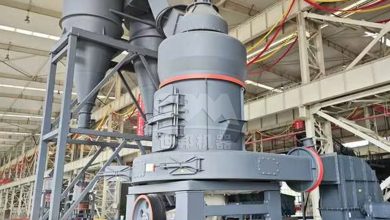
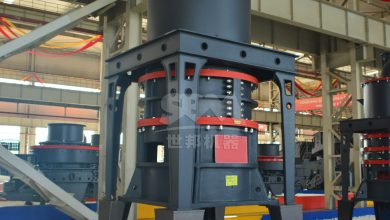
Raw carbide slag typically contains 20–40% moisture, which must be reduced to below 2% to ensure efficient calcination. Drying is usually performed in a rotary dryer at 120–200°C. Subsequently, the dried slag is ground to a fine powder (typically 80–200 mesh) to increase surface area and facilitate uniform decomposition. For high-precision requirements, ultrafine grinding to 325–2500 mesh can be achieved using the SCM Series Ultrafine Mill. This mill’s high-efficiency classification and durable roller design ensure consistent particle size, which is crucial for achieving complete decomposition at lower temperatures.
Calcination: Thermal Decomposition
The ground carbide slag is fed into a calciner (e.g., rotary kiln or fluidized bed) and heated to 500–900°C. The core reaction is the endothermic decomposition of calcium hydroxide:
Ca(OH)₂ (s) → CaO (s) + H₂O (g) ΔH = +109 kJ/mol
At temperatures above 580°C, the reaction proceeds rapidly. However, impurities such as SiO₂ and Al₂O₃ may react with CaO to form belite (Ca₂SiO₄) or calcium aluminates, reducing the purity of the final product. Therefore, controlling the calcination temperature and residence time is critical. The use of a uniformly ground feed from the SCM mill helps maintain consistent thermal history, minimizing impurity reactions.
Post-Treatment: Cooling and Classification
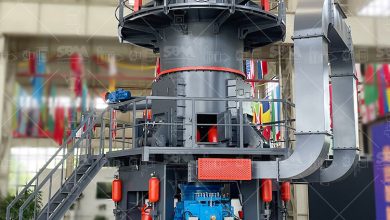
After calcination, the hot CaO is cooled in a rotary cooler to below 100°C to prevent rehydration. The cooled product is then classified to remove oversized particles and impurities. For applications requiring high reactivity, further grinding to finer sizes may be necessary. Here, the MTW Series European Trapezium Mill offers an ideal solution with its optimized arc air duct and wear-resistant shovel design, ensuring low energy consumption and long service life while producing 30–325 mesh powder.
Chemical Reactions and Mechanisms
The primary reaction is the dehydration of calcium hydroxide. However, secondary reactions influence product quality:
- Decarbonation: If calcium carbonate (CaCO₃) is present (from carbonation of slag), it decomposes at 700–900°C: CaCO₃ → CaO + CO₂.
- Impurity reactions: Silica (SiO₂) reacts with CaO at >800°C to form dicalcium silicate (Ca₂SiO₄), reducing free CaO content. Iron oxide (Fe₂O₃) may form calcium ferrite (Ca₂Fe₂O₅).
- Sulfation: Sulfur compounds (e.g., CaSO₄) decompose at 900–1200°C, releasing SO₂.
To maximize CaO yield and purity, it is essential to maintain calcination temperature below 850°C and use a finely ground, homogeneous feed. The SCM Series Ultrafine Mill’s precise classification ensures minimal coarse particles, promoting uniform heat transfer and reaction.
Industrial Applications of Calcium Oxide from Carbide Slag
Calcium oxide produced from carbide slag finds diverse applications:
- Construction materials: Used as a binder in mortars, plasters, and soil stabilization. Its high reactivity makes it suitable for autoclaved aerated concrete.
- Steelmaking: Acts as a flux to remove impurities (e.g., phosphorus, sulfur) from molten steel. The low cost of carbide slag-derived CaO offers economic advantages.
- Environmental protection: Employed in flue gas desulfurization (FGD) to capture SO₂. The high surface area of ultrafine CaO (produced via SCM mill) enhances absorption efficiency.
- Chemical manufacturing: Raw material for calcium carbide, bleaching powder, and calcium salts.
- Agriculture: Used to adjust soil pH and supply calcium nutrient.
Equipment Recommendations for Efficient Production
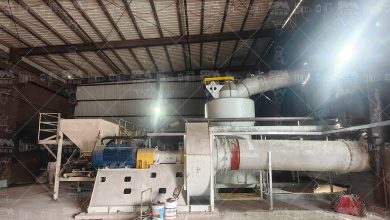
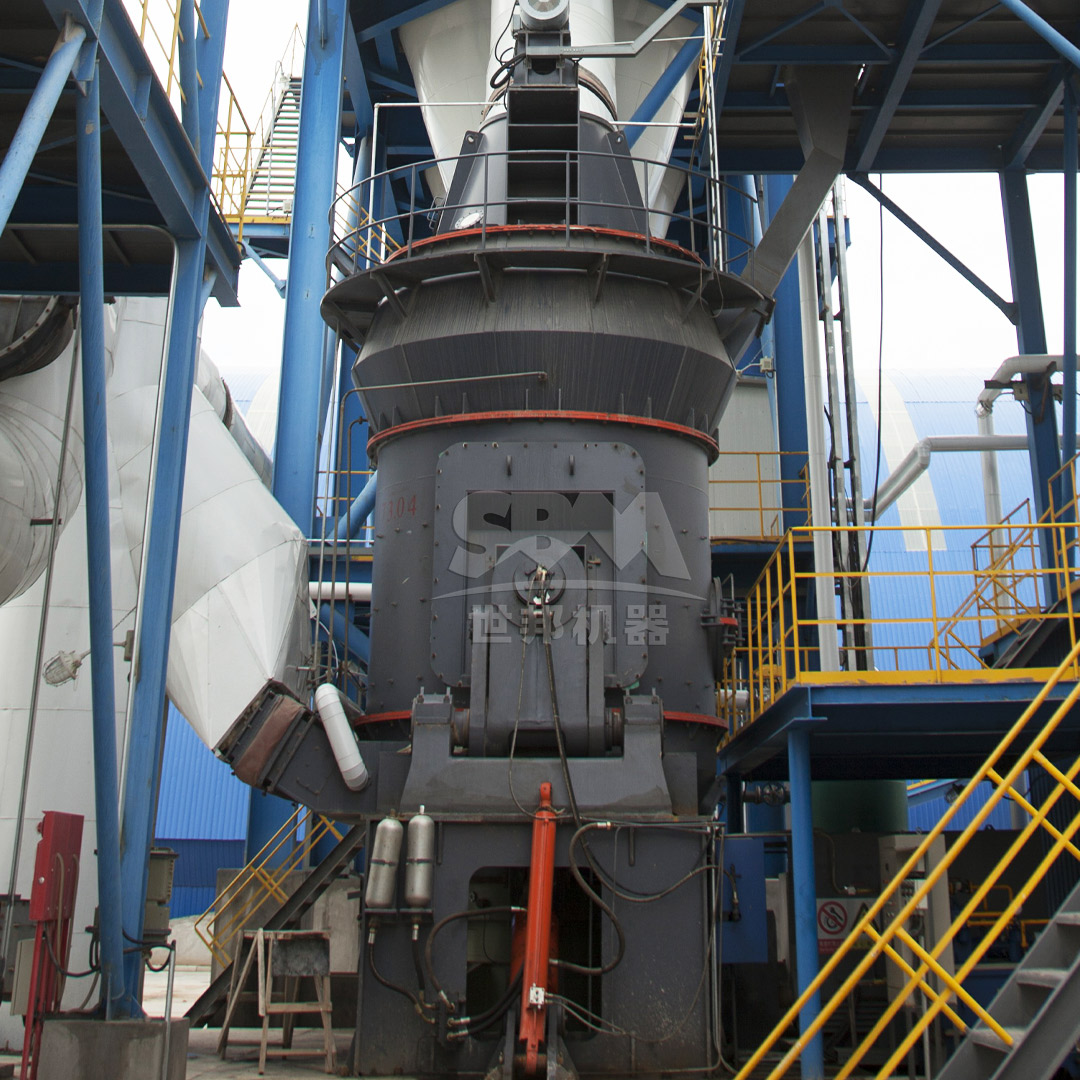
To achieve high-quality calcium oxide from carbide slag, proper grinding and classification are paramount. The SCM Series Ultrafine Mill is particularly suited for ultrafine grinding (325–2500 mesh) with capacities up to 25 t/h. Its intelligent control and pulse dust collection ensure eco-friendly operation. For coarser grinding (30–325 mesh) at higher capacities (up to 45 t/h), the MTW Series European Trapezium Mill offers robust performance with patented bevel gear drive and wear-resistant volute structure. Both mills can be integrated into a complete production line, from drying to calcination and final grinding.
Conclusion
The preparation of calcium oxide from carbide slag is a sustainable route that converts industrial waste into a valuable resource. Understanding the process principles, chemical reactions, and optimal equipment selection is key to successful implementation. By leveraging advanced mills like the SCM and MTW series, manufacturers can achieve high purity, energy efficiency, and environmental compliance, turning carbide slag into a profitable asset for construction, metallurgy, and environmental sectors.