
Application of Graphite Powder Grinding Mill in Anode Material Market
Introduction
The anode material market, driven by the rapid expansion of the lithium-ion battery industry, has witnessed surging demand for high-quality graphite powder. Graphite, particularly synthetic and natural spherical graphite, serves as the dominant anode material due to its excellent conductivity, stability, and cost-effectiveness. However, converting raw graphite into anode-grade powder requires precise particle size reduction and classification—a process where advanced grinding mills play a pivotal role. This article explores the application of graphite powder grinding mills in the anode material market, highlighting key technical requirements and showcasing how modern milling solutions from our company meet these demanding specifications.
Graphite’s Role in Anode Materials
Anode materials are critical to battery performance, influencing energy density, cycle life, and safety. Graphite, with its layered structure, allows reversible lithium-ion intercalation, making it the preferred anode material for commercial lithium-ion batteries. The market demands graphite powder with specific characteristics: high purity, narrow particle size distribution (typically D50 between 10–20 μm for spherical graphite), and minimal defects. Achieving these specifications requires grinding mills that deliver uniform fineness, prevent contamination, and operate efficiently at scale.
As battery manufacturers push for higher energy densities and faster charging rates, the quality of graphite powder becomes increasingly critical. Coarse particles or inconsistent size distribution can lead to uneven lithiation, reduced cycle life, and safety hazards. Therefore, the grinding and classification stages must be meticulously controlled.
Key Requirements for Graphite Grinding in Anode Production
Graphite powder processing for anodes involves several stages: crushing, grinding, spheroidization, and classification. The grinding mill must address unique challenges posed by graphite’s soft, lubricating nature and tendency to agglomerate. Key requirements include:
- Precise Fineness Control: Anode materials typically require fineness in the range of 325–2500 mesh (45–5 μm), with tight distribution to ensure consistent electrochemical performance.
- High Capacity and Efficiency: As the anode market scales, mills must deliver high throughput without compromising quality.
- Contamination Prevention: Iron and other metal contamination can degrade battery performance; thus, wear-resistant materials and closed systems are essential.
- Energy Efficiency: Grinding is energy-intensive; mills with low energy consumption per ton are favored to reduce production costs and environmental impact.
- Uniform Particle Shape: Spherical or near-spherical particles improve packing density and rate capability. Grinding methods that minimize flakiness are preferred.
Traditional ball mills, while widely used, often struggle with energy efficiency and precise classification. Modern ultrafine mills and vertical roller mills offer superior solutions.
Our Grinding Mill Solutions for Graphite Anode Materials
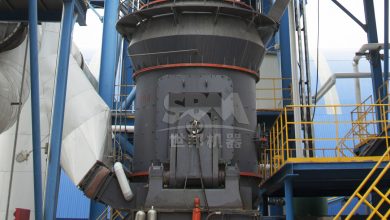
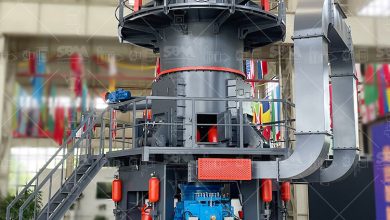
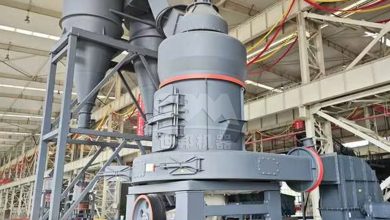
To meet the stringent demands of the anode material market, our company offers two flagship grinding mills: the SCM Series Ultrafine Mill and the MTW Series European Trapezium Mill. Both are engineered to deliver precise fineness, high capacity, and reliable operation, making them ideal for graphite powder production.
SCM Series Ultrafine Mill: Precision Grinding for High-End Anodes
The SCM Series Ultrafine Mill is specifically designed for ultrafine grinding down to 2500 mesh (5 μm), making it perfect for producing high-performance anode graphite. Its technical advantages align seamlessly with anode material requirements:
- High Efficiency & Energy Saving: The SCM mill achieves twice the capacity of jet mills while consuming 30% less energy. Intelligent control with automatic finished product granularity feedback ensures consistent quality.
- High-Precision Classification: A vertical turbine classifier provides precise particle size cutting, eliminating coarse powder mixing and ensuring uniform finished products—critical for anode performance.
- Durable Design: Special material rollers and rings extend service life, while the shaftless screw grinding chamber ensures stable operation, reducing maintenance downtime.
- Eco-friendly & Low Noise: Pulse dust collection exceeds international standards, and soundproof room design minimizes noise.
With models ranging from SCM800 (0.5–4.5 t/h) to SCM1680 (5–25 t/h), the SCM series scales to meet various production capacities. For anode material producers targeting high-end battery markets, the SCM series delivers the precision and reliability needed.
MTW Series European Trapezium Mill: Versatile and Cost-Effective
For anode material producers requiring a balance of capacity and fineness in the 30–325 mesh range, the MTW Series European Trapezium Mill offers an excellent solution. Its innovative design reduces maintenance costs and improves efficiency:
- Anti-wear Shovel Design: Combined shovel blades and curved design extend grinding roller life, reducing maintenance costs.
- Optimized Arc Air Duct: Reduces airflow energy loss and improves transmission efficiency, while high-strength guard plates protect the working surface.
- Integral Bevel Gear Drive: Transmission efficiency up to 98%, saving space and reducing installation costs.
- Wear-resistant Volute Structure: Non-resistance flow design improves air selection efficiency, reducing maintenance costs by 30%.
With models like MTW110 (3–9 t/h) up to MTW215G (15–45 t/h), the MTW series is suited for medium-to-large-scale graphite processing. Its ability to handle feed sizes up to 50 mm and deliver consistent fineness makes it a reliable workhorse for anode material plants.
Case Study: Implementing SCM Series in Graphite Anode Production
A leading graphite anode manufacturer recently upgraded its production line with SCM1250 ultrafine mills to meet the growing demand for high-capacity battery anodes. The challenge was to achieve a D50 of 15 μm with narrow distribution while maintaining capacity above 10 t/h. The SCM1250, with its 2.5–14 t/h capacity and precise classification, exceeded expectations. The intelligent control system ensured stable fineness, and the pulse dust collection met stringent environmental regulations. As a result, the manufacturer reported a 30% reduction in energy consumption compared to their previous ball mill circuit and a significant improvement in product consistency.
Conclusion
The anode material market’s growth hinges on the availability of high-quality graphite powder, and grinding mills are at the heart of this supply chain. Our SCM Series Ultrafine Mill and MTW Series European Trapezium Mill offer advanced solutions that deliver the precision, efficiency, and reliability required for anode-grade graphite production. By leveraging these technologies, manufacturers can enhance product quality, reduce operating costs, and stay competitive in the rapidly evolving battery industry. As demand for lithium-ion batteries continues to soar, investing in the right grinding technology will be a decisive factor for success.