Choosing Between Ball Mill and Vertical Mill for Lignite Ultrafine Grinding
Introduction
Lignite, often referred to as brown coal, is a low-rank coal characterized by its high moisture content and relatively low calorific value. Despite these characteristics, lignite remains a significant energy source and industrial raw material in many regions. The processing of lignite into ultrafine powders (typically 325-2500 mesh or 45-5μm) has become increasingly important for applications such as power plant fuel enhancement, briquette production, activated carbon manufacturing, and soil amendment. Selecting the appropriate grinding equipment is crucial to achieving optimal efficiency, product quality, and operational economy. This article provides a comprehensive technical comparison between two primary grinding technologies: the ball mill and the vertical mill, specifically for lignite ultrafine grinding applications.
Understanding the Material: Lignite Characteristics
Before delving into equipment selection, it is essential to understand the unique properties of lignite that influence the grinding process. Lignite typically has a moisture content ranging from 30% to 70%, which can cause adherence issues, material flow problems, and increased energy consumption during grinding. Its fibrous and sometimes plastic nature makes it more challenging to pulverize compared to higher-rank coals. The ash content varies widely, and the presence of volatile organic compounds requires careful consideration of safety measures, including explosion prevention and inert gas protection systems. These material-specific challenges directly impact mill selection and operating parameters.
Ball Mill Technology for Lignite Grinding
Working Principle
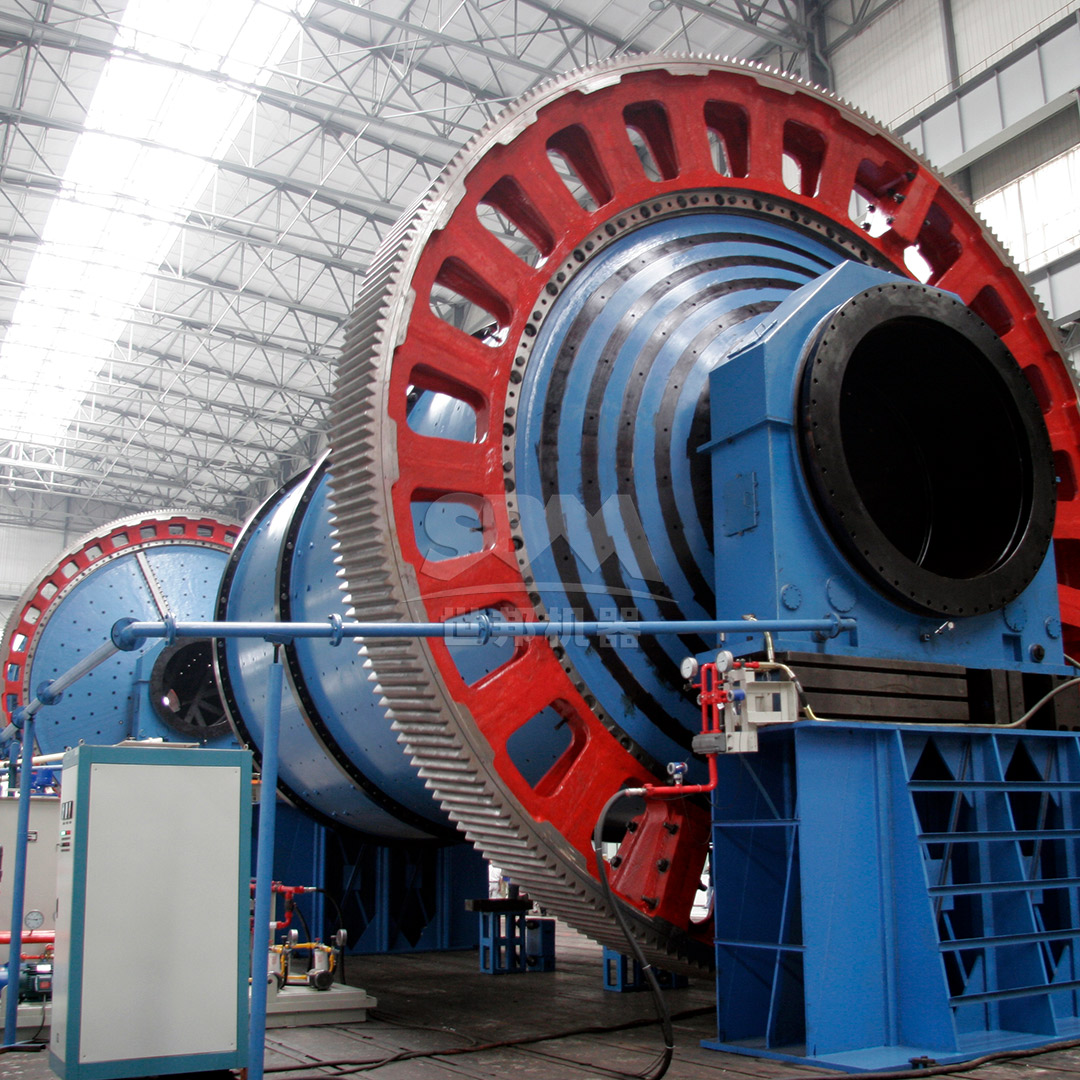
The ball mill operates on a relatively straightforward principle. A rotating cylindrical shell is partially filled with grinding media, typically steel balls. When the mill rotates, centrifugal force lifts the balls to a certain height before they cascade or cataract down, crushing the lignite through impact and attrition. The material enters through one end of the drum and exits through the opposite end after being ground to the desired fineness.
Advantages for Lignite Grinding
Ball mills offer several advantages that make them suitable for lignite processing. They are robust and can handle materials with high moisture content, including lignite, without significant operational issues. The technology is mature and well-understood, with a vast installed base of equipment and service infrastructure globally. Ball mills can achieve relatively high throughput rates, especially when configured in closed-circuit systems with external classifiers. The grinding media can be selected and adjusted to suit specific lignite characteristics, providing flexibility in process optimization.
Limitations for Ultrafine Grinding
When targeting ultrafine products below 45 microns (325 mesh), the limitations of ball mills become apparent. Energy efficiency drops dramatically as the specific energy required to create new surface area increases exponentially. Typical ball mills consume 30-40% more energy than vertical roller mills for equivalent fine grinding duties. The noise level is considerably higher, often exceeding 95 dB, requiring substantial soundproofing measures. Product quality can suffer from particle size distribution issues, with a higher proportion of both coarse and ultra-fine particles compared to vertical mills. The classification system must be carefully designed to prevent over-grinding, which wastes energy and can damage the product. Additionally, the wear rate of liners and grinding media is significant, leading to higher maintenance costs and potential product contamination from metallic debris.
Vertical Roller Mill (VRM) Technology for Lignite Grinding
Working Principle
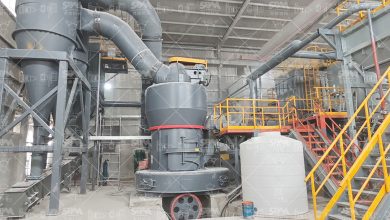
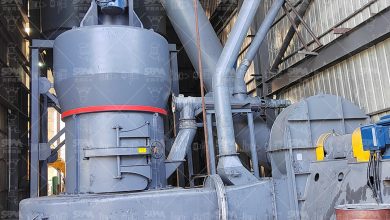
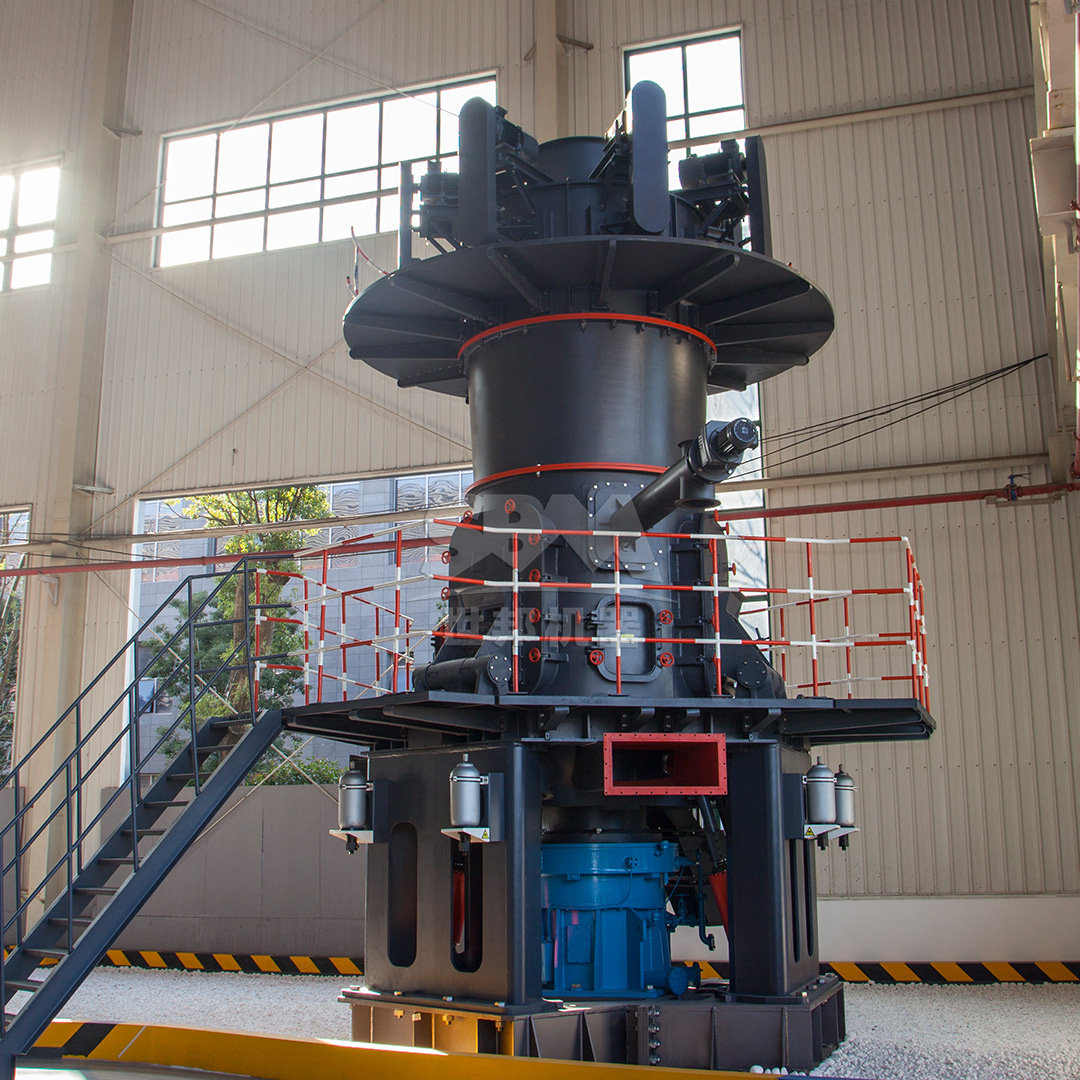
Vertical roller mills operate on a fundamentally different principle. The material is fed onto the center of a rotating grinding table. Hydraulically or pneumatically loaded grinding rollers press down on the material, forming a dense bed that is crushed and ground as the table rotates. Hot gases typically enter from below the table, carrying the ground material upward to a dynamic classifier. Coarse particles are rejected and returned to the table for further grinding, while fine particles pass through and are collected in a baghouse or cyclone.
Advantages for Ultrafine Lignite Grinding
Vertical mills have become the preferred technology for coal and lignite grinding in many modern installations, particularly for fine and ultrafine applications. The energy savings compared to ball mills can be substantial, typically 30-50% lower specific power consumption. The internal classification system provides highly precise particle size distribution with minimal coarse particle contamination. Vertical mills can dry the lignite simultaneously with grinding by using hot gases, which is beneficial given the high moisture content of fresh lignite. The system operates under negative pressure, ensuring dust-free and safe operation. Noise levels are significantly lower, typically below 85 dB, creating a better working environment. The wear components are fewer and more accessible, leading to lower maintenance downtime and costs.
Technical Considerations
Certain technical aspects must be addressed when using vertical mills for lignite. The mill must be designed with appropriate explosion relief and inert gas systems to handle the volatile content of lignite. The roller and table materials must resist abrasion from ash components while maintaining grinding efficiency. For ultrafine grinding below 45 microns, specialized designs with multi-stage classifiers and optimized grinding geometry may be required.
Head-to-Head Comparison for Ultrafine Lignite Grinding
| Parameter | Ball Mill | Vertical Roller Mill |
|---|---|---|
| Specific Energy Consumption (kWh/t) | 35-50 | 20-30 |
| Product Fineness (d97) | 10-45 μm (with limitations) | 5-30 μm (precise control) |
| Moisture Content Tolerance | Up to 30% | Up to 70% (with drying gases) |
| Noise Level | 90-105 dB | 75-85 dB |
| Floor Space Required | Large (500-2000 m²) | Moderate (200-800 m²) |
| Maintenance Frequency | High (liner change every 6-12 months) | Low (roller change every 18-36 months) |
| Product Contamination | Higher (metallic wear debris) | Lower (ceramic/composite materials) |
| Capital Cost (per ton capacity) | Lower base, higher auxiliary | Higher base, lower auxiliary |
Our Recommended Solutions
Based on extensive testing and field installations for lignite and similar low-rank coal materials, we offer two exceptional solutions depending on your specific production requirements.
For High-Capacity Ultrafine Production: SCM Series Ultrafine Mill
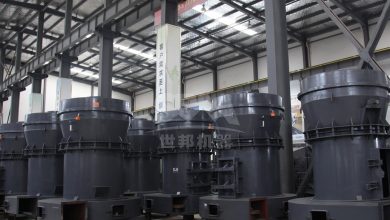
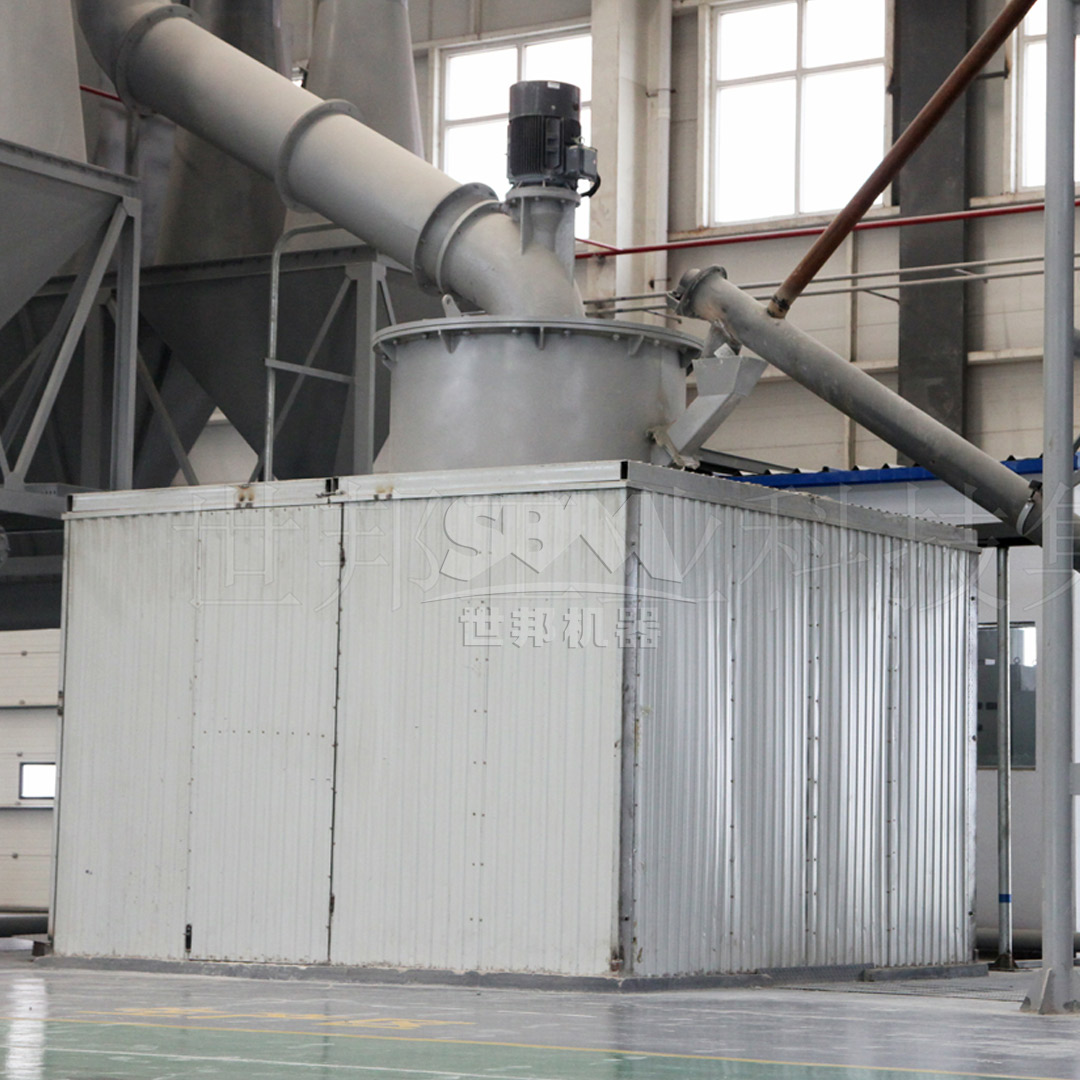
Our SCM Series Ultrafine Mill is specifically engineered for producing powders in the 45-5 micron (325-2500 mesh) range. When applied to lignite grinding, the SCM series delivers capacity up to 2 times that of traditional jet mills while consuming 30% less energy. The vertical turbine classifier ensures precise particle size cutting without coarse powder mixing, which is critical for consistent product quality. The shaftless screw grinding chamber design ensures stable operation even with challenging materials. For a typical lignite ultrafine grinding application requiring 5-25 tons per hour of product finer than 325 mesh, we recommend the SCM1680 model with 315kW main power, capable of processing feed sizes up to 20mm.
For Medium-Capacity Multi-Application: MTW Series European Trapezium Mill
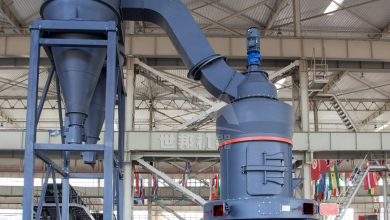
For operations requiring both fine grinding (30-325 mesh) and the capability to handle larger feed sizes up to 50mm, the MTW Series European Trapezium Mill is an outstanding choice. The MTW series features patented anti-wear shovel design and optimized arc air ducts that reduce energy loss and extend component life. The integral bevel gear drive achieves transmission efficiency up to 98%, while the wear-resistant volute structure reduces maintenance costs by 30%. For lignite applications requiring capacities of 15-45 tons per hour with fineness down to 30-325 mesh, we recommend the MTW215G or MRN218 models, both offering robust performance with main power ratings of 280kW.
Process Integration Considerations
Successful lignite ultrafine grinding requires careful attention to the complete process system beyond the mill itself. The feed system must handle the sticky, moist nature of lignite without clogging. A hot gas generator, typically using coal-fired or waste heat sources, is necessary for in-situ drying when processing high-moisture feeds. The classification system must be precisely matched to the mill output to maintain product consistency. Our SCM and MTW series mills integrate seamlessly with pulse dust collection systems that exceed international emission standards, crucial for both environmental compliance and product recovery. The intelligent control systems with automatic finished product granularity feedback ensure stable operation even with variations in lignite feed quality.
Economic Analysis
A comprehensive total cost of ownership (TCO) analysis reveals significant advantages for modern vertical mills in lignite ultrafine grinding. While the initial capital investment for an SCM series mill may be higher than a comparable ball mill system (typically 15-25% more), the operating cost savings typically result in payback periods of 12-18 months. Taking into account energy savings of 30-40%, reduced maintenance costs from longer-lasting wear parts, higher product quality commanding premium prices, and lower civil engineering costs from reduced footprint, the total economic advantage of our vertical mill solutions is compelling for most applications with annual production exceeding 5,000 tons of ultrafine product.
Conclusion
Both ball mills and vertical mills can technically grind lignite to ultrafine specifications, but the choice depends on specific project parameters. For operations targeting high-volume, consistent ultrafine production with optimal energy efficiency and product quality, vertical mill technology — particularly our SCM Series Ultrafine Mill — represents the superior choice. For smaller operations, lower capital budgets, or applications where fineness requirements are less demanding, cost-effective solutions from our MTW series may be more appropriate. We invite you to contact our engineering team for a detailed consultation based on your specific lignite characteristics, production targets, and budget constraints. Our technical specialists can provide laboratory-scale testing and simulation to validate the optimal solution for your unique requirements.