How to Choose Graphite Grinding Equipment for Graphite Ore Processing?
Introduction
Graphite, a critical industrial mineral prized for its conductivity, lubricity, and thermal stability, requires precise processing to unlock its value. The grinding stage is arguably the most crucial, as it directly determines the final particle size distribution, shape, and purity—key factors influencing the performance of graphite in applications like lithium-ion battery anodes, refractories, and lubricants. Selecting the optimal grinding equipment is therefore a strategic decision that impacts product quality, operational efficiency, and overall project economics. This guide provides a comprehensive framework for choosing the right graphite grinding mill.
Key Considerations for Graphite Grinding
1. Target Product Fineness and Particle Size Distribution (PSD)
Graphite applications demand specific fineness ranges. Coarse flake graphite for refractories may require 30-100 mesh (600-150μm), while high-purity spherical graphite for batteries needs ultrafine powders of 10-20μm (D50) with a narrow PSD. The equipment must offer precise classification to achieve the desired cut point and minimize over-grinding, which can damage crystal structures and reduce yield.
2. Preservation of Flake Structure
For applications valuing the natural flake morphology (e.g., expandable graphite), equipment that applies shear and attrition forces is preferable over high-impact crushing, which can destroy flakes. The grinding principle must allow for liberation while maintaining particle shape integrity.
3. Purity and Contamination Control
Graphite is soft and abrasive. Grinding media and mill liners must be made of specialized materials to minimize iron contamination, which is detrimental to conductivity and chemical purity. Equipment designed for minimal wear and easy cleaning is essential.
4. Energy Efficiency and Operational Cost
Grinding can be energy-intensive. Mills with high grinding efficiency, integrated classification systems, and intelligent controls significantly reduce power consumption per ton of product, a major factor in long-term operational expenditure.
5. System Integration and Environmental Compliance
A modern grinding circuit should be compact, feature efficient dust collection (>99.9% efficiency), and operate under negative pressure to ensure a clean working environment and meet stringent emission standards.
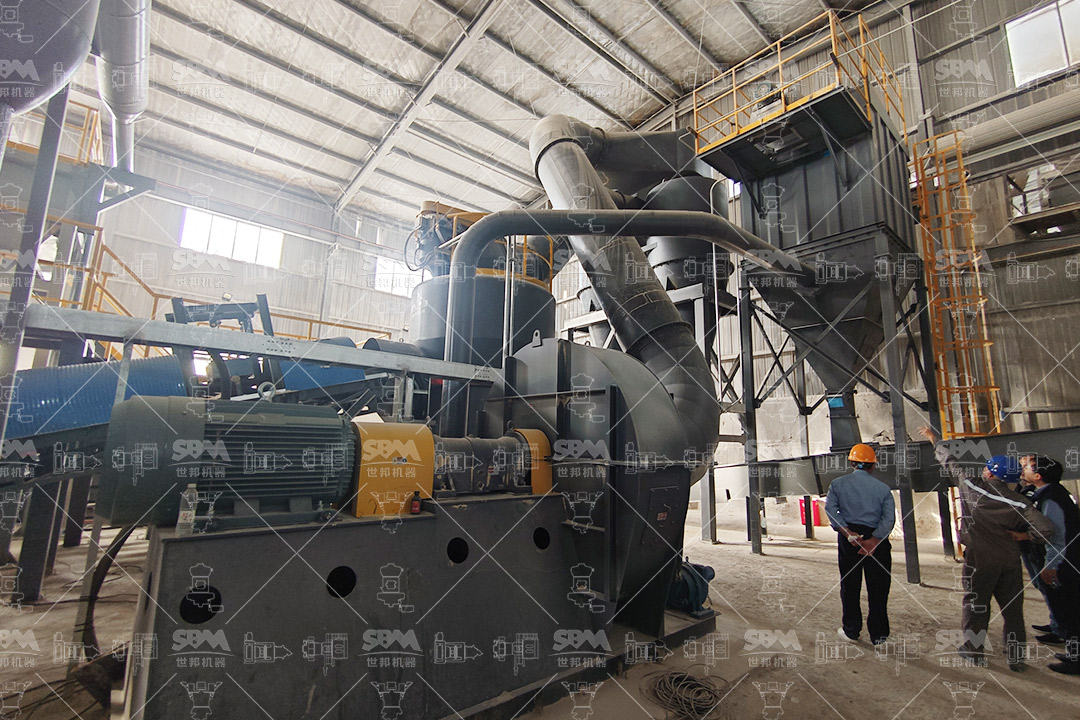
Overview of Grinding Equipment for Graphite
Ball Mill
A traditional workhorse, suitable for producing relatively coarse graphite powders (0.074-0.8mm). It operates via impact and attrition of steel balls. While robust and versatile, it can introduce higher iron contamination, has lower energy efficiency for fine grinding, and offers less precise PSD control compared to more modern mills. It is often used in earlier processing stages or for specific coarse-grade products.
Raymond Mill (or Pendulum Roller Mill)
Well-suited for producing powders in the medium-fineness range (30-325 mesh / 45-600μm). It uses spring-loaded rollers to crush materials against a stationary ring. It offers good efficiency for its range but may struggle to achieve ultrafine sizes without significant capacity drop and may not be optimal for preserving delicate flake structures.
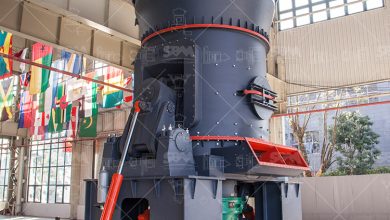
Vertical Roller Mill (VRM)
An advanced, dry grinding system where material is ground between a rotating table and hydraulically-loaded rollers. It is highly energy-efficient, integrates drying, grinding, and classification, and is excellent for medium to fine grinding (30-325 mesh, with special models reaching 600 mesh). Its bed-compression grinding mechanism can be gentler on flakes than high-impact systems.
Jet Mill
Uses high-speed compressed air or steam to create particle-on-particle impact, achieving ultrafine and even nanoscale sizes. It is excellent for producing high-purity, contamination-free powder with a narrow PSD. However, it has very high energy consumption and is typically used for final, high-value product refinement rather than primary grinding.
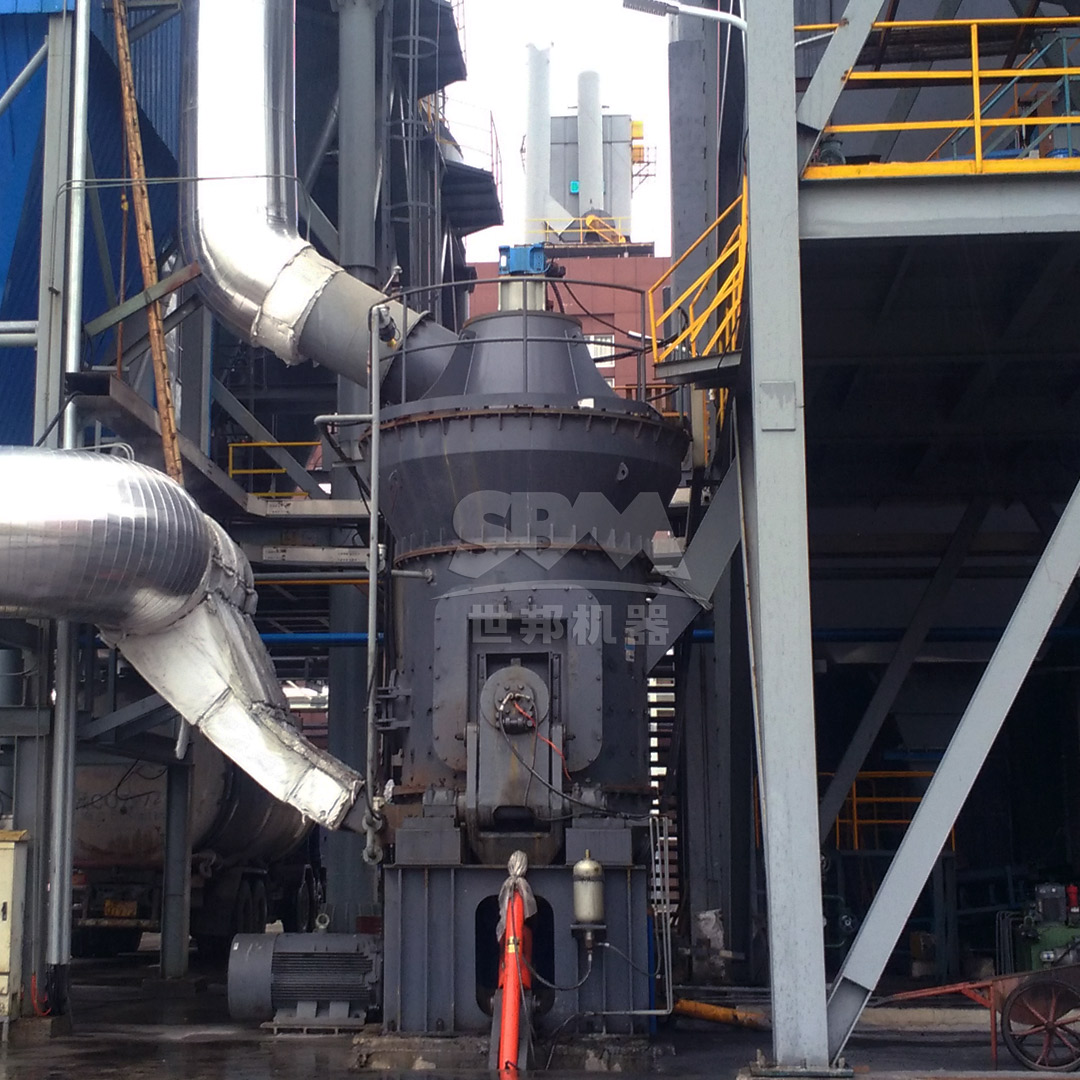
Recommended Solutions for Specific Graphite Applications
For High-Purity Ultrafine/Spherical Graphite (Battery Anode Material)
The goal is to produce powders in the 5-25μm range with spherical or potato shape, high purity, and excellent electrochemical performance. A multi-stage process is often required. For the final precision grinding and shaping stage, an ultrafine grinding mill with a high-precision classifier is critical.
Our Recommendation: SCM Series Ultrafine Mill
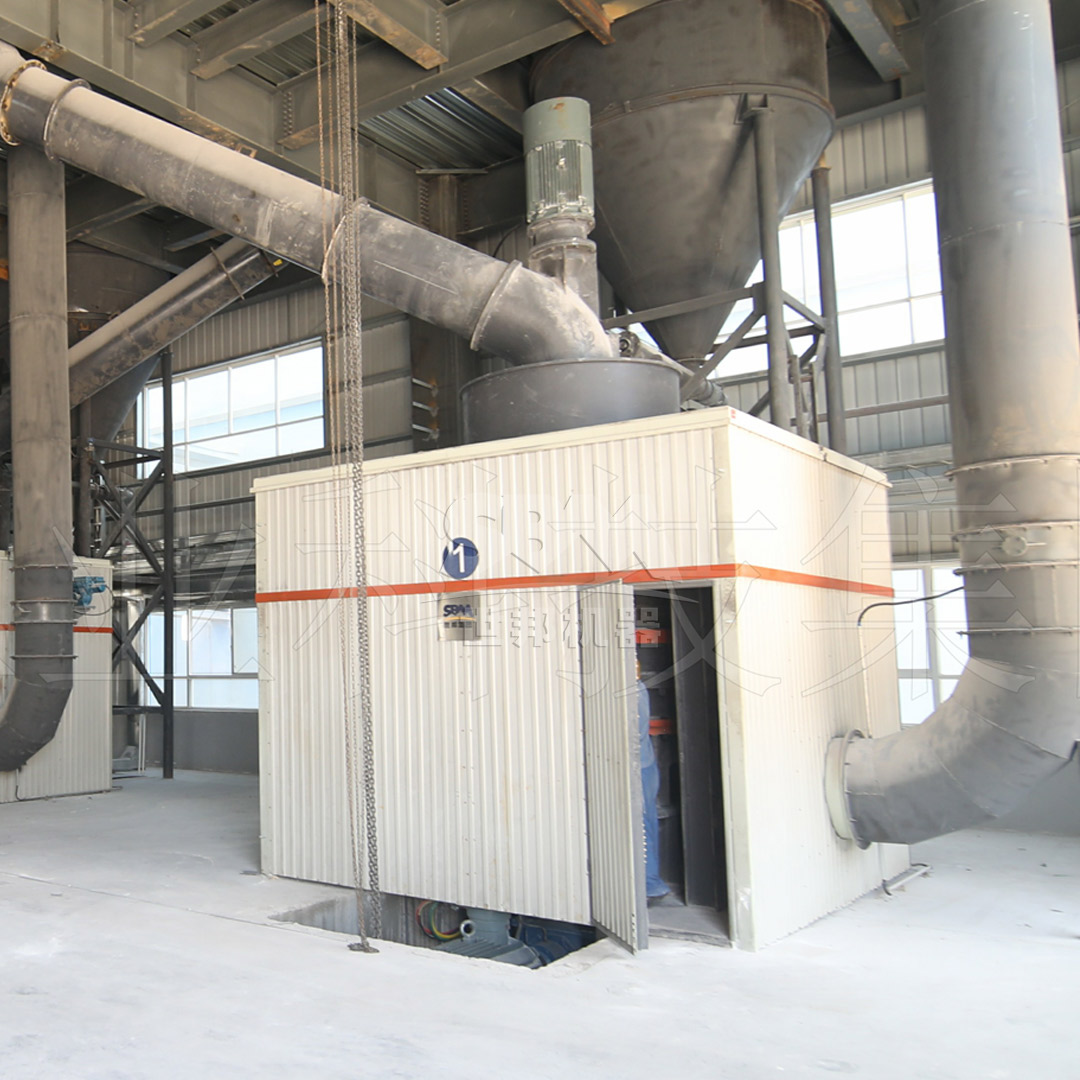
For producing premium battery-grade graphite, our SCM Series Ultrafine Mill is an industry-leading solution. Engineered to deliver fineness between 325 and 2500 mesh (45-5μm), it is perfect for the final refining stage. Its vertical turbine classifier ensures precise particle size cutting, eliminating coarse powder mixing and delivering the uniform, narrow PSD essential for consistent battery performance. The grinding rollers and rings utilize special materials, drastically reducing wear and iron contamination—a paramount concern for anode materials. Furthermore, its design is highly energy-efficient, consuming up to 30% less energy than jet mills while offering higher capacity, making it a cost-effective choice for high-volume production. The fully sealed system with pulse dust collection guarantees an environmentally clean operation.
For Medium-Fine Flake Graphite (Expandable Graphite, Refractories)
This application requires grinding to liberate and preserve the flake structure within the 100-600μm (30-150 mesh) range. The equipment must balance capacity, energy efficiency, and gentle grinding action.
Our Recommendation: MTW Series European Trapezium Mill
For efficient production of medium-fine flake graphite, the MTW Series European Trapezium Mill is an excellent choice. It reliably produces powder from 30 to 325 mesh (600-45μm), covering the core needs of this sector. Its curved shovel blade design and wear-resistant volute structure ensure stable, long-lasting operation with low maintenance costs. The integral bevel gear drive achieves 98% transmission efficiency, translating to significant energy savings. The grinding mechanism, which involves rollers revolving around a central axis and compressing material on a ring, provides a more favorable shear and compression force for flake preservation compared to high-impact crushers. Its high capacity (up to 45 t/h depending on model) makes it suitable for large-scale processing lines.
Selection Process and Conclusion
- Define Product Specifications: Clearly establish the target fineness (D50, D97), PSD, particle shape, and purity requirements.
- Analyze Feed Material: Characterize the raw graphite’s hardness, moisture content, feed size, and flake structure.
- Evaluate Grinding Principles: Match the mechanical action (compression, attrition, impact) of the mill to your product shape and purity goals.
- Calculate Economics: Consider not only the capital cost but the total cost of ownership, focusing on energy consumption (kWh/ton), wear part life, and maintenance requirements.
- Plan the Circuit: Often, a combination of equipment is optimal (e.g., jaw crusher for primary breaking, followed by a Raymond or VRM for intermediate grinding, and an ultrafine mill for final processing).
In conclusion, there is no universal “best” mill for graphite. The choice hinges on a detailed analysis of the end-product requirements and process economics. For high-value ultrafine applications, advanced mills like the SCM Series are indispensable. For robust, high-volume production of medium-fine graphite, the MTW Series offers an outstanding balance of performance and efficiency. Investing time in proper equipment selection is the foundation for a profitable and competitive graphite processing operation.