What Are the Uses of Lithium Slag and Which Grinding Mill Enables Its Comprehensive Utilization?
Introduction: From Waste to Resource
The rapid expansion of the global lithium battery industry, driven by the electric vehicle revolution and renewable energy storage demands, has led to a significant byproduct: lithium slag. Traditionally considered a waste material from the lithium extraction process (primarily from spodumene), this industrial residue poses environmental challenges related to disposal and landfilling. However, with advancing research and technology, lithium slag is now recognized as a valuable secondary resource with immense potential for comprehensive utilization. The key to unlocking this potential lies in efficient processing, particularly through advanced grinding technology that can transform raw slag into high-value, functional materials. This article explores the diverse applications of processed lithium slag and identifies the optimal grinding solutions that make its large-scale, value-added utilization feasible.
Chemical and Physical Properties of Lithium Slag
Lithium slag is primarily composed of aluminosilicate phases, with its exact composition varying based on the source ore and extraction method. Typical constituents include SiO2, Al2O3, CaO, and residual Li2O, along with minor amounts of Fe2O3, MgO, and Na2O. Its particle morphology is often irregular and porous, with a relatively high hardness. The latent hydraulic and pozzolanic activity of lithium slag makes it reactive in the presence of activators like calcium hydroxide, forming cementitious compounds. To be effectively utilized in most high-value applications, lithium slag requires processing to achieve a specific fineness and particle size distribution (PSD), which directly influences its reactivity, packing density, and performance in composite materials.
Comprehensive Utilization Pathways for Ground Lithium Slag
1. Construction and Building Materials
This represents the largest volume application for processed lithium slag.
- Supplementary Cementitious Material (SCM): Finely ground lithium slag (typically to a fineness of 400-600 m2/kg Blaine or 325-800 mesh) can partially replace Portland cement (10-30%). It contributes to later-age strength development through pozzolanic reactions, reduces heat of hydration, and improves durability against sulfate attack and alkali-silica reaction.
- Autoclaved Aerated Concrete (AAC): The silica-rich composition makes it an excellent raw material for AAC blocks, where it reacts with lime under high-pressure steam curing.
- Geopolymer Precursor: As a source of silica and alumina, activated lithium slag can be used to produce geopolymer binders, a low-carbon alternative to traditional cement.
- Fine Aggregate and Filler: Appropriately graded slag can be used in mortars, paving materials, and as a mineral filler.
2. Ceramics and Glass-Ceramics
The aluminosilicate base is ideal for producing ceramic tiles, sanitary ware, and especially glass-ceramics. The residual lithium oxide can act as a flux, lowering the melting temperature and energy consumption during firing. Ground slag with controlled chemistry and ultra-fine particle size is crucial for achieving uniform sintering and desired product properties.
3. Adsorbents and Environmental Remediation
The porous structure and specific surface area of ultra-finely ground lithium slag can be enhanced or modified to create adsorbents for wastewater treatment, capable of removing heavy metals (e.g., Pb, Cu, Cd) and dyes. Its alkaline nature also allows it to be used for acidic wastewater neutralization.
4. Recovery of Residual Lithium and Other Elements
Advanced grinding can liberate encapsulated lithium-bearing minerals, improving the efficiency of secondary recovery processes through methods like froth flotation or leaching, turning waste into a source of critical raw materials.
The Critical Role of Grinding Technology
The transformation of coarse, heterogeneous lithium slag into a consistent, high-performance powder is the foundational step for all aforementioned applications. The choice of grinding mill directly impacts:
- Product Fineness & PSD: Different applications require different fineness levels, from coarse filler (30-100 mesh) to ultra-fine SCM (2500 mesh).
- Particle Morphology: Some mills produce more spherical particles, beneficial for fluidity in concrete, while others produce sharper grains.
- Processing Efficiency & Cost: Energy consumption is the major operational cost. High-efficiency mills are essential for economic viability.
- System Flexibility: The ability to adjust fineness easily and handle variations in feed material moisture and hardness is crucial.
Selecting the Optimal Grinding Mill for Lithium Slag
Given the moderately abrasive nature and required fineness spectrum for lithium slag, several grinding systems are contenders. However, two technologies stand out for their efficiency, reliability, and suitability for comprehensive utilization projects.
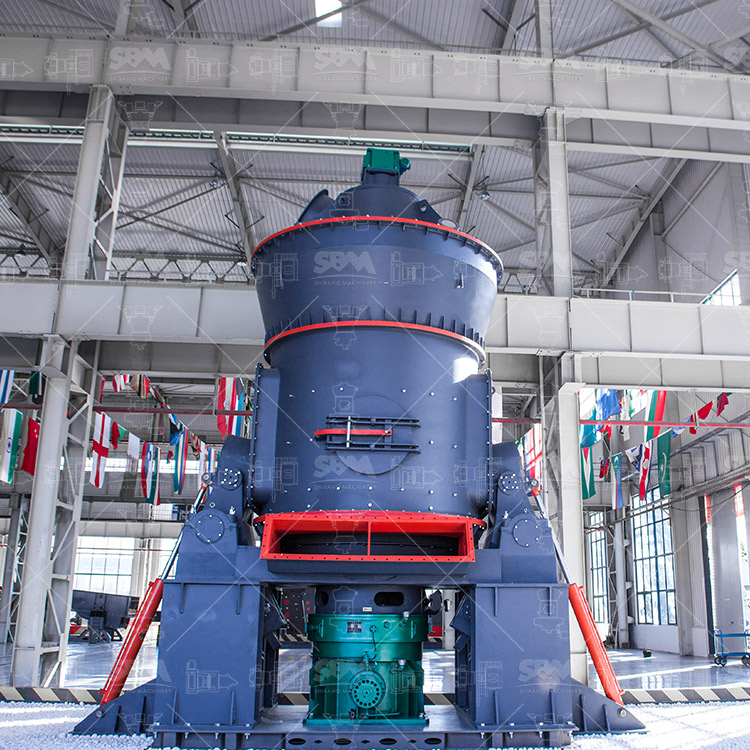
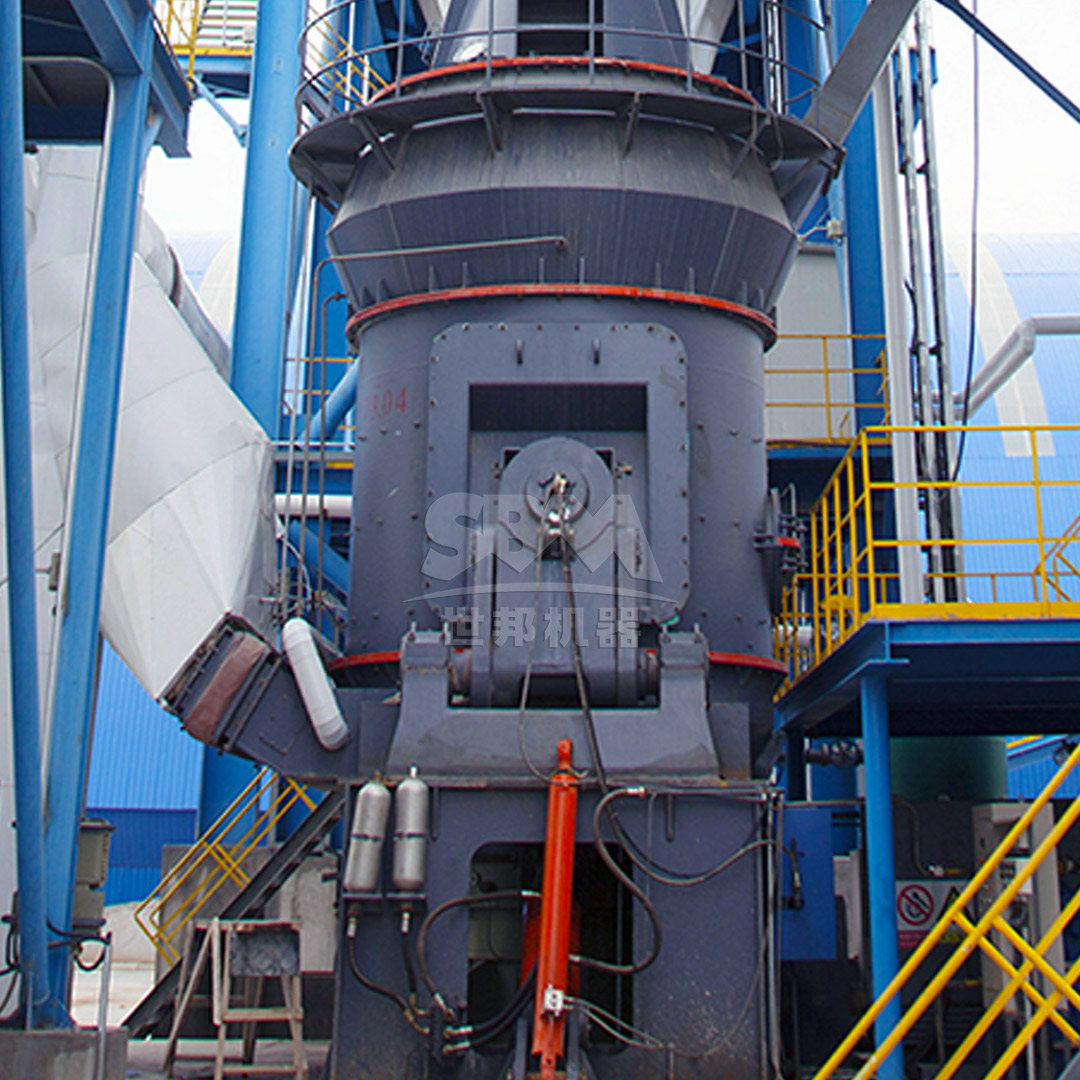
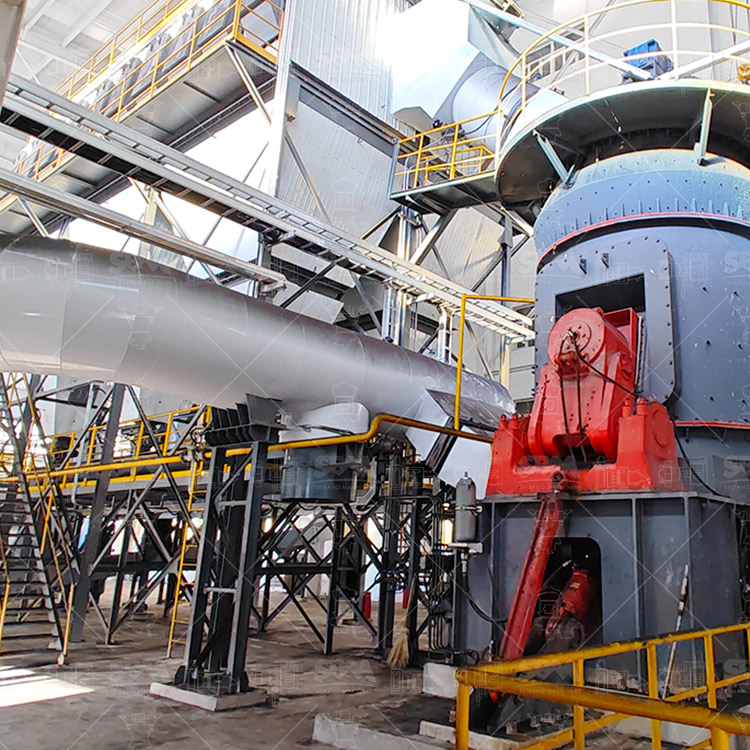
Primary Recommendation: LM Series Vertical Roller Mill (For High-Capacity, Coarse to Medium-Fine Grinding)
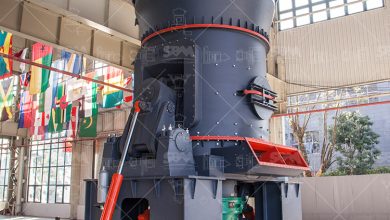
For large-scale processing plants aiming to produce lithium slag powder for construction materials (SCM, AAC, geopolymers) in the range of 30-325 mesh (600-45μm), the LM Series Vertical Roller Mill is the industry-preferred solution. Its integrated design combines drying, grinding, and classification in a single unit, offering unparalleled efficiency for moisture-containing slag.
Why the LM Mill is Ideal for Bulk Lithium Slag Processing:
- High Capacity & Low Operating Cost: With capacities ranging from 3 to 250 tons per hour, it is built for scale. Its bed-grinding principle is significantly more energy-efficient than traditional ball mills, reducing power consumption by 30-40%. The non-contact design between rollers and table also drastically reduces wear part consumption.
- Integrated Drying: Hot air can be introduced to dry slag with moisture content up to 15-20% simultaneously with grinding, eliminating the need for a separate dryer.
- Intelligent Control & Stability: The expert-level auto-control system ensures stable product fineness and optimizes mill loading, reducing manual intervention and guaranteeing consistent quality for downstream applications like ready-mix concrete.
- Environmental Compliance: The fully sealed negative pressure operation ensures dust emissions are well below international standards, a critical factor for sustainable industrial operations.
For a project targeting the production of 100,000 tons per year of lithium slag SCM, an LM190K Vertical Roller Mill (capacity 23-68 t/h, fineness 170-45μm) would be a robust and economical core investment, offering low total cost of ownership and high availability.
Secondary Recommendation: SCM Series Ultrafine Mill (For High-Value, Ultra-Fine Products)
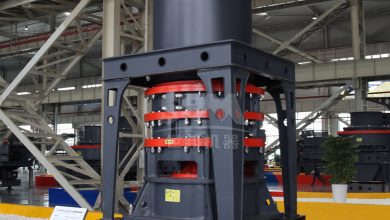
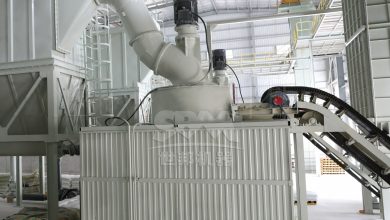
When the application demands ultra-fine or high-purity lithium slag powder—such as for high-performance composites, advanced ceramics, or as a functional filler—the SCM Series Ultrafine Mill is the superior choice. This mill excels in producing powders in the range of 325-2500 mesh (45-5μm).
Why the SCM Mill is Ideal for High-Value Lithium Slag Products:
- High-Precision Classification: Its advanced vertical turbine classifier enables extremely sharp particle size cuts. This is vital for applications where consistent ultra-fineness and the absence of coarse particles are required to maximize reactivity or achieve specific surface properties.
- Energy Efficiency in the Fine Range: Compared to other ultra-fine grinding technologies like jet mills, the SCM mill offers double the capacity with approximately 30% lower energy consumption, making ultra-fine processing more economical.
- Excellent Product Uniformity: The grinding principle and classifier design ensure a very narrow particle size distribution, leading to uniform performance in the final product.
- Durable & Low-Noise Operation: Special material rollers and rings extend service life, while the soundproof room design creates a better working environment.
For a pilot line or specialized production unit focusing on lithium slag-based adsorbents or ceramic precursors, an SCM1000 Ultrafine Mill (capacity 1.0-8.5 t/h, fineness 325-2500 mesh) provides the flexibility and precision needed to develop and manufacture these advanced materials.
Conclusion: Partnering Technology with Opportunity
The comprehensive utilization of lithium slag is no longer a theoretical concept but a practical pathway towards a circular economy in the lithium industry. By repurposing this industrial byproduct into construction materials, ceramics, and environmental solutions, we can significantly reduce environmental footprint and create new value streams. The success of this endeavor hinges on selecting the right grinding technology. For high-volume, cost-effective production of construction-grade powders, the LM Series Vertical Roller Mill offers unmatched efficiency and reliability. For venturing into high-value, ultra-fine specialty markets, the SCM Series Ultrafine Mill provides the necessary precision and performance. Investing in the appropriate grinding solution is the critical first step in transforming lithium slag from a disposal liability into a strategic resource.