
Why Calcium Carbonate is Essential in Biodegradable Plastics: Roles and Benefits
Introduction: The Biodegradable Plastics Revolution and the Role of Fillers
The global push towards sustainability has propelled biodegradable plastics to the forefront of material science and industrial innovation. These materials, designed to decompose under specific environmental conditions, offer a promising alternative to conventional, petroleum-based plastics that persist for centuries. However, the development of truly effective, cost-efficient, and high-performance biodegradable polymers presents significant challenges. Key among these are managing raw material costs, improving mechanical properties, and ensuring controlled degradation. It is within this complex landscape that calcium carbonate (CaCO3) has emerged as an indispensable component. As a natural, abundant, and versatile mineral filler, calcium carbonate is not merely an additive but a strategic enabler that addresses multiple critical needs in the formulation of advanced biodegradable plastics. This article delves into the multifaceted roles and substantial benefits of calcium carbonate, highlighting why its proper integration, facilitated by advanced processing equipment, is fundamental to the future of sustainable plastics.
The Multifunctional Roles of Calcium Carbonate in Biodegradable Plastics
1. Cost Reduction and Resource Efficiency
The primary polymers used in biodegradable plastics, such as Polylactic Acid (PLA), Polybutylene Adipate Terephthalate (PBAT), and Polyhydroxyalkanoates (PHA), are often derived from renewable but relatively expensive resources like corn starch or through complex fermentation processes. Incorporating calcium carbonate, which is significantly less costly per unit volume than the polymer resin, directly reduces the overall material cost. This “extender” effect makes biodegradable plastics more economically viable for widespread applications, from packaging and agricultural films to disposable utensils. By replacing a portion of the polymer with a low-cost, inert filler, manufacturers can produce more material from the same amount of bio-based feedstock, enhancing overall resource efficiency.
2. Enhancement of Mechanical and Physical Properties
Contrary to the misconception that fillers merely dilute properties, finely ground and well-dispersed calcium carbonate actively improves key performance metrics:
- Stiffness and Modulus: Rigid CaCO3 particles increase the tensile and flexural modulus of the plastic composite, making it more dimensionally stable and less prone to deformation under load.
- Impact Strength and Toughness: At optimal loading levels and with proper surface treatment, calcium carbonate particles can act as stress concentrators, initiating and terminating micro-cracks, thereby improving the impact resistance of otherwise brittle polymers like PLA.
- Thermal Properties: Calcium carbonate can improve heat deflection temperature (HDT), allowing the plastic to maintain its shape at higher temperatures during use or in post-processing steps.
- Dimensional Stability: It reduces shrinkage and warpage during processing (e.g., injection molding, film blowing), leading to more consistent and precise final products.
3. Modulation of Biodegradation Rate
The degradation of biodegradable plastics is a complex process involving hydrolysis, enzymatic action, and microbial assimilation. Calcium carbonate plays a nuanced role in this process. As an alkaline mineral, it can help neutralize acidic by-products that sometimes form during the degradation of polymers like PLA, potentially creating a more favorable environment for microbial activity in composting facilities. Furthermore, the inclusion of CaCO3 particles increases the surface area-to-volume ratio of the composite material. This creates more pathways for water and microorganisms to penetrate the polymer matrix, potentially accelerating the onset and rate of biodegradation under controlled composting conditions, while not compromising the product’s integrity during its useful life.
4. Improvement in Processing and Rheology
Calcium carbonate can positively influence the melt flow behavior of biodegradable polymers during extrusion or molding. It acts as a nucleating agent, promoting more uniform crystallization in semi-crystalline polymers, which leads to faster cycle times in production. Additionally, it can improve the melt strength of polymers during film blowing operations, resulting in more stable bubbles and better gauge control in the final film.
The Critical Link: Particle Size and Distribution
The benefits outlined above are not inherent to calcium carbonate in its raw, coarse form. They are critically dependent on achieving a specific, controlled particle size (fineness) and a narrow particle size distribution. This is where advanced milling technology becomes paramount.
- Ultrafine Particles (e.g., <5μm): Essential for achieving high loading levels without sacrificing transparency (in some applications) or mechanical properties. Ultrafine particles provide a larger surface area for polymer-filler interaction, leading to superior reinforcement and smoother surface finish. They are crucial for high-end applications like thin films and injection-molded items requiring high clarity and strength.
- Fine to Medium Particles (e.g., 45-600 mesh): Ideal for applications where extreme fineness is not the primary concern but where cost-effectiveness, stiffness enhancement, and degradation modulation are key, such as in thicker sheets, blow-molded containers, or agricultural mulch films.
Poorly ground calcium carbonate with a wide size distribution and coarse particles acts as a defect site, leading to stress concentration, reduced mechanical strength, poor surface quality, and potential equipment wear during processing.
Enabling Superior Performance: The Right Processing Equipment
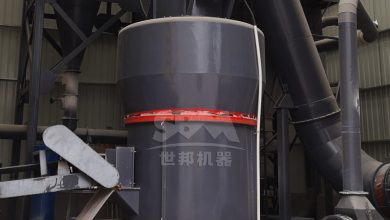
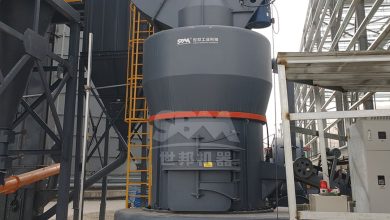
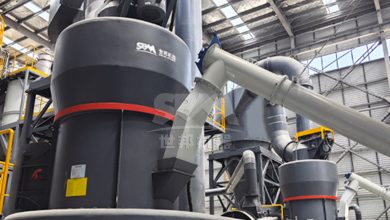
To unlock the full potential of calcium carbonate in biodegradable plastics, producers require grinding mills capable of delivering precise fineness, high throughput, and consistent quality with energy efficiency. Our company provides industry-leading solutions tailored for this exact purpose.
For Ultrafine, High-Performance Fillers: The SCM Series Ultrafine Mill
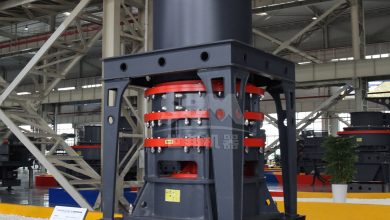
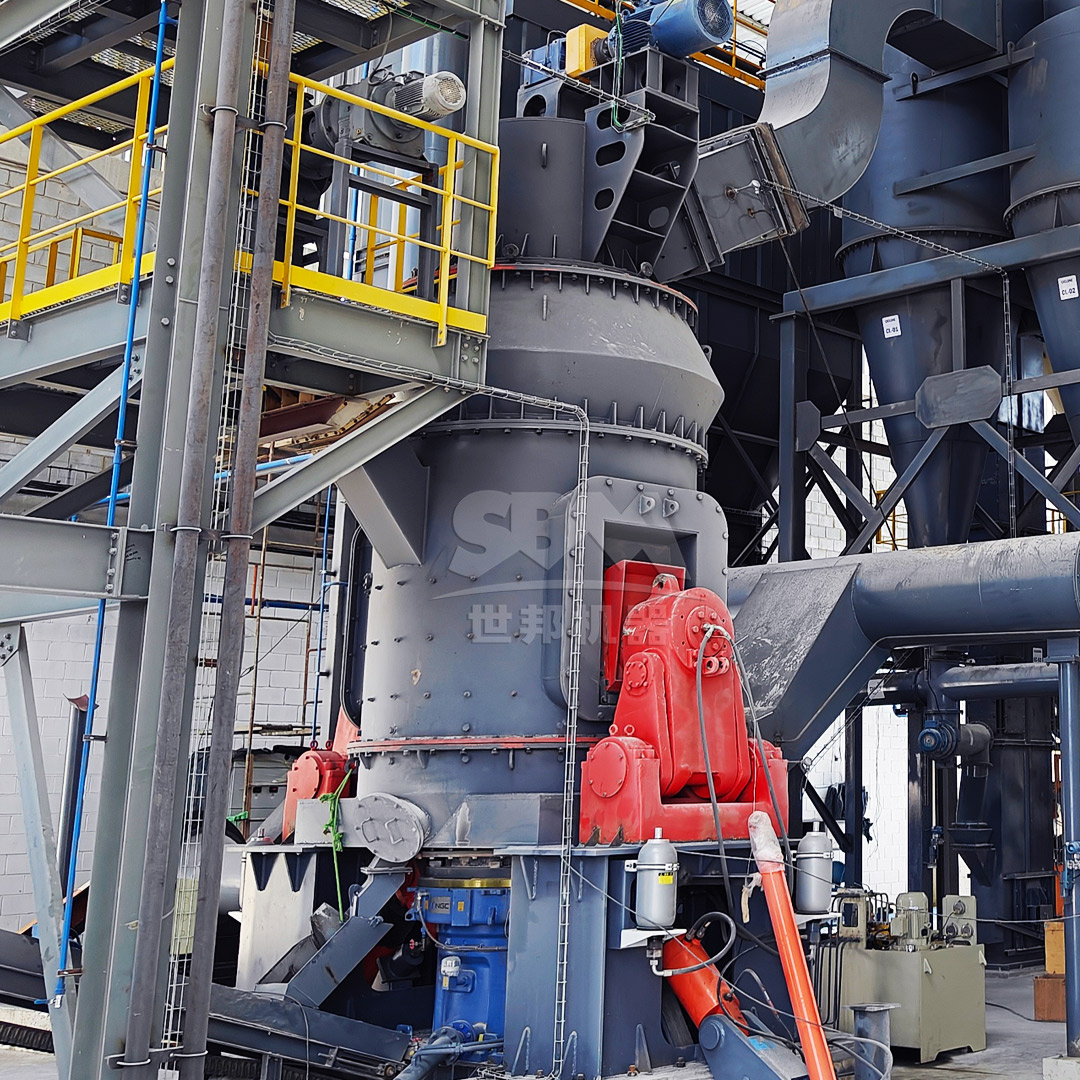
When your biodegradable plastic formulation demands the highest performance from calcium carbonate—requiring particles in the range of 325 to 2500 mesh (45-5μm)—the SCM Series Ultrafine Mill is the optimal choice. This mill is engineered for high-efficiency, precision grinding of non-metallic minerals.
Its high-precision vertical turbine classifier ensures a sharp particle size cut, eliminating coarse powder mixing and guaranteeing a uniform finished product essential for homogeneous composite materials. The mill operates with 30% lower energy consumption compared to traditional jet mills while offering double the capacity, making it both an economical and productive solution. For manufacturers targeting high-value, high-loading, or transparent biodegradable plastic applications, the SCM Series, particularly models like the SCM1000 (1.0-8.5t/h) or SCM1250 (2.5-14t/h), provides the reliable, consistent ultrafine powder necessary to achieve superior material properties.
For High-Capacity, Cost-Effective Fillers: The MTW Series European Trapezium Mill
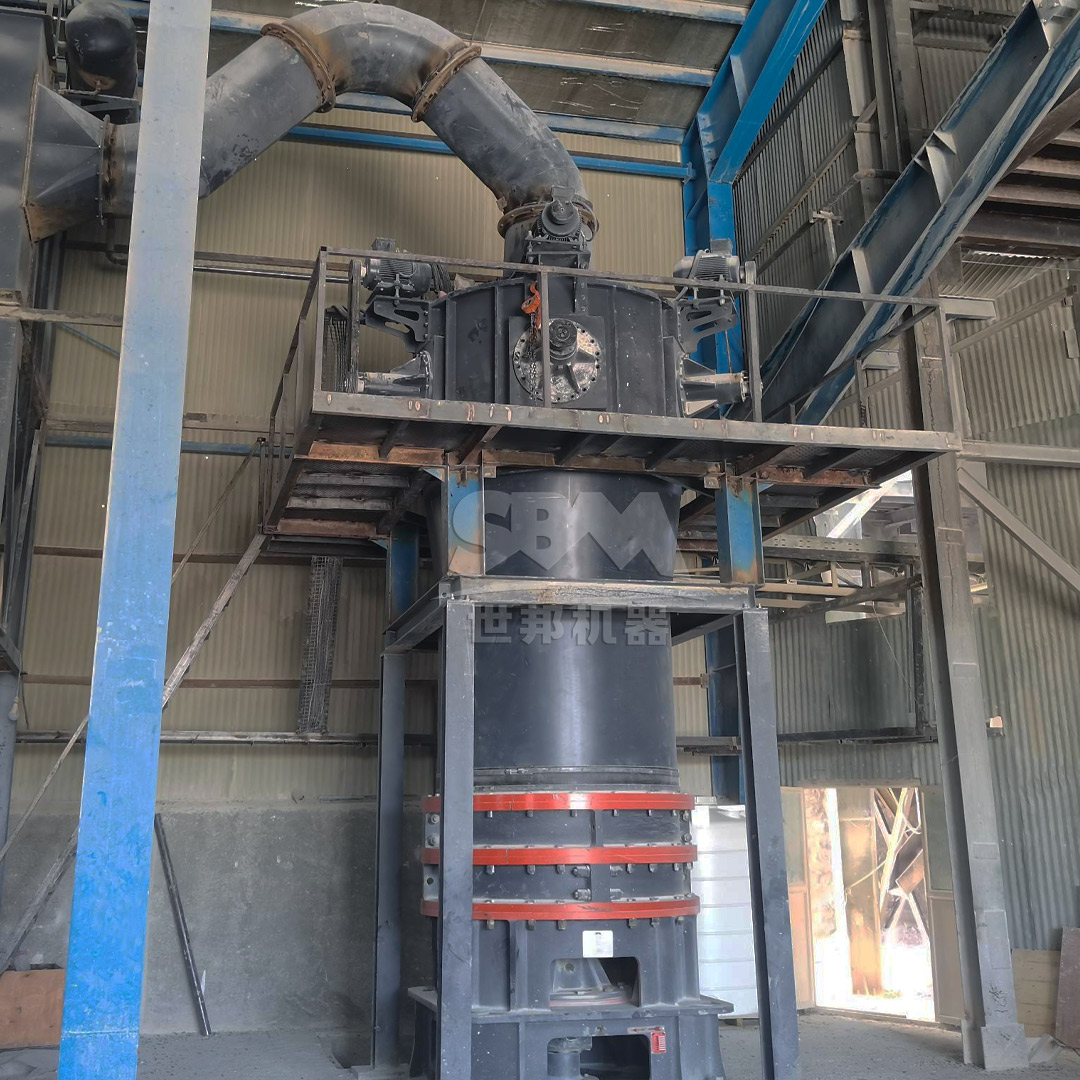
For many large-scale biodegradable plastic production lines, the priority is a consistent supply of high-quality calcium carbonate in the fine to medium range (30-325 mesh) at a high tonnage rate. The MTW Series European Trapezium Mill excels in this domain.
Designed for robustness and efficiency, it features an anti-wear shovel design and a wear-resistant volute structure that significantly reduce maintenance costs and downtime. Its integral bevel gear drive achieves a remarkable 98% transmission efficiency, saving energy over continuous operation. With capacities ranging from 3 to 45 tons per hour across its model range, such as the MTW175G (9.5-25t/h) or MTW215G (15-45t/h), this mill is perfectly suited for supplying the substantial volumes of filler needed for commodity-grade biodegradable bags, packaging, and agricultural products, ensuring a stable and cost-effective raw material stream.
Conclusion: A Synergistic Partnership for a Sustainable Future
Calcium carbonate is far more than a simple cost-cutting filler in biodegradable plastics. It is a multifunctional additive that enhances mechanical properties, modulates degradation behavior, and improves processability. The realization of these benefits, however, is inextricably linked to the quality of the calcium carbonate powder, which is defined by its particle size, distribution, and consistency. Investing in advanced grinding technology, such as our SCM Series for ultrafine applications or MTW Series for high-capacity fine grinding, is not an overhead but a strategic decision. It ensures that the calcium carbonate performs its essential roles effectively, enabling the production of biodegradable plastics that are not only environmentally sound but also commercially viable and functionally reliable. As the demand for sustainable materials grows, the synergy between high-performance mineral fillers and the advanced equipment that processes them will continue to be a cornerstone of innovation in the plastics industry.