What is the Composition of an Aluminum Hydroxide Fine Grinding Mill System?
Introduction
Aluminum hydroxide (Al(OH)3), a crucial industrial mineral widely used as a flame retardant, filler, and raw material for alumina production, requires precise particle size control to meet the stringent specifications of various end-use applications. The production of fine and ultrafine aluminum hydroxide powder necessitates a sophisticated and integrated grinding system. This article delves into the composition, key components, and operational principles of a modern aluminum hydroxide fine grinding mill system, highlighting the technological advancements that ensure efficiency, product uniformity, and environmental compliance.
System Composition and Key Components
A complete aluminum hydroxide fine grinding system is far more than just a grinding mill. It is an engineered circuit comprising several interconnected units, each performing a critical function. The primary components include:
1. Feeding and Pre-Sizing Unit
The process begins with a controlled feeding system, typically employing vibrating feeders or screw conveyors, to ensure a steady and regulated supply of raw aluminum hydroxide (often with a feed size ≤20mm) into the mill. A pre-crusher, such as a jaw crusher or hammer mill, may be integrated to achieve a consistent initial particle size, optimizing the feed for the main grinding unit.
2. The Core: Fine Grinding Mill
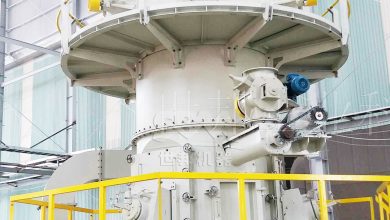
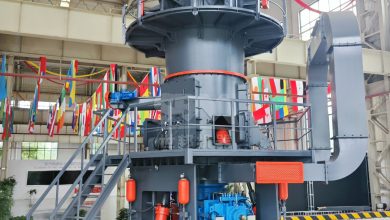
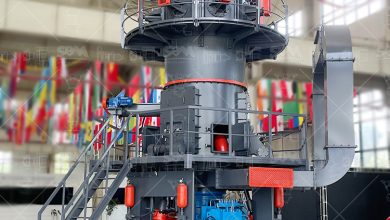
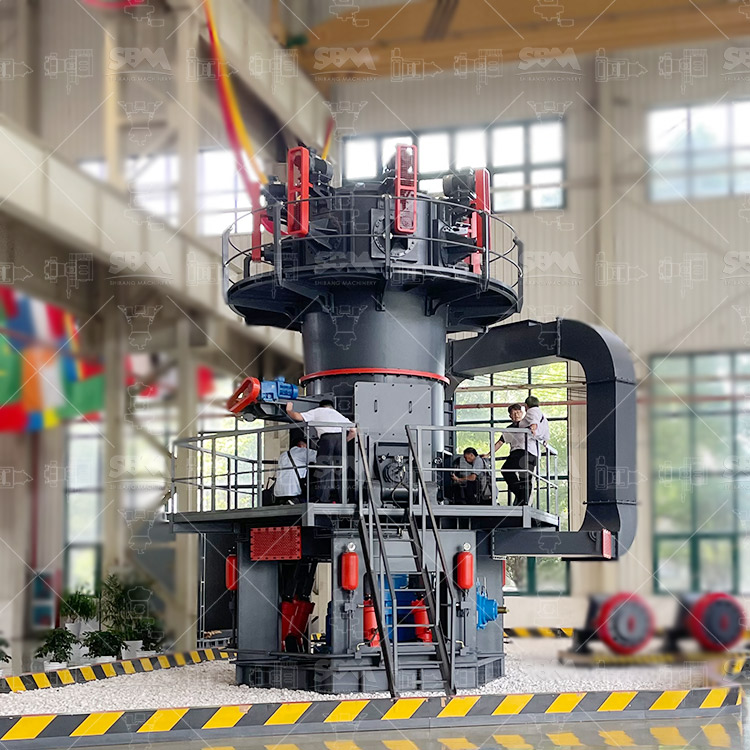
This is the heart of the system. The choice of mill technology is paramount and depends on the target fineness, capacity, and energy efficiency goals. For aluminum hydroxide aiming for fine to ultrafine powders (typically from 325 mesh to 2500 mesh or D97 ≤5μm), advanced ring-roller mills and vertical roller mills are preferred over traditional ball mills due to their superior energy efficiency and precise particle size distribution control.
For producers targeting the highest purity and finest grades of aluminum hydroxide (e.g., for high-performance flame retardants), an ultrafine grinding solution is essential. Our SCM Ultrafine Mill series is engineered precisely for this demanding application. With an output fineness range of 325-2500 mesh (D97≤5μm) and a capacity of 0.5-25 tons per hour, it represents the pinnacle of ultrafine grinding technology. Its core advantages include high-efficiency grinding with energy consumption 30% lower than jet mills, a vertical turbine classifier for precise particle cut-point control ensuring no coarse powder contamination, and a durable, low-noise design featuring special material rollers and rings. The integrated pulse dust collector ensures environmental standards are met, making it an ideal, turnkey solution for premium aluminum hydroxide production.
3. Classification System
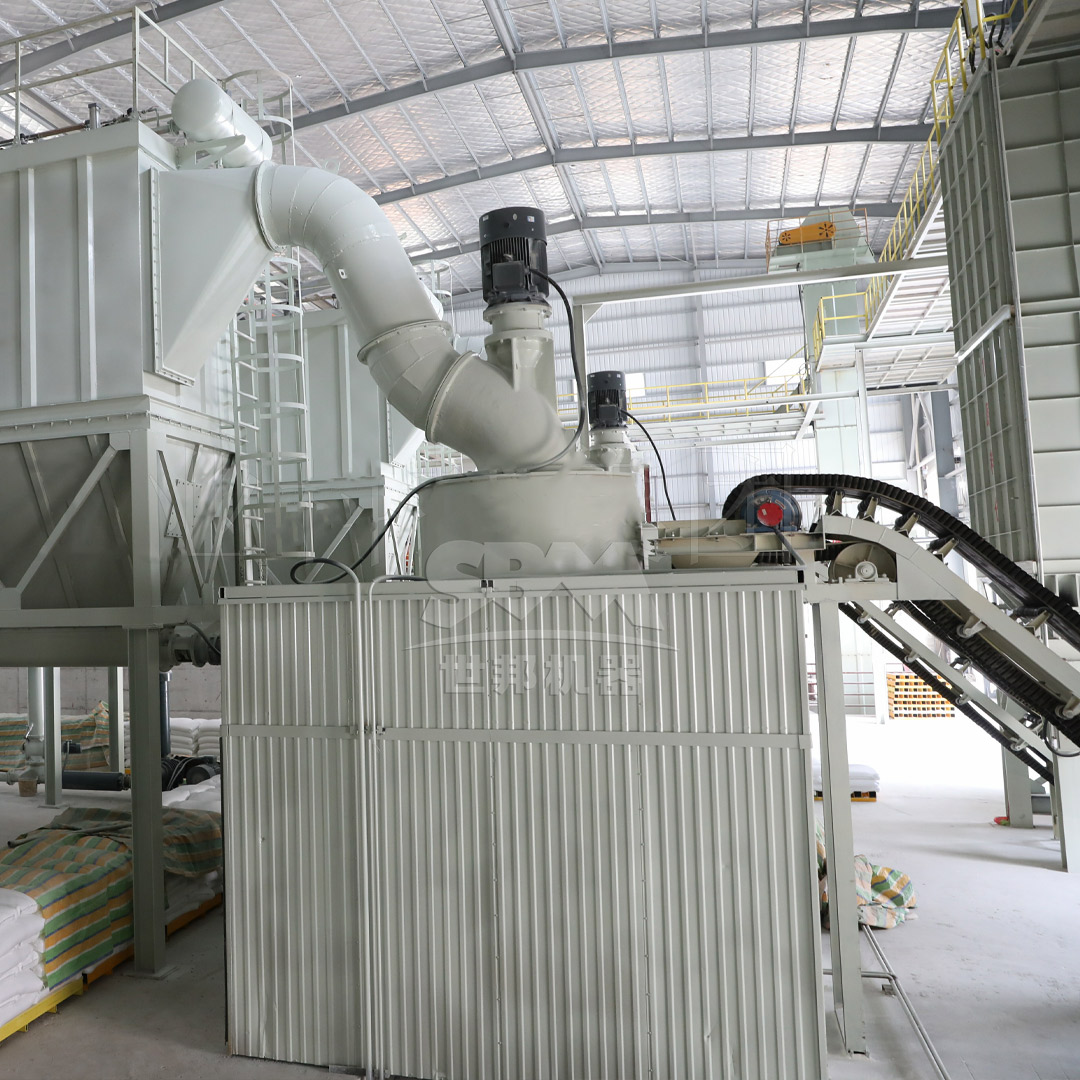
Integrated or standalone air classifiers are critical for achieving tight particle size distributions. They separate the ground product into “fine” (which proceeds to collection) and “coarse” (which is recirculated back to the mill for further size reduction). Modern systems use high-efficiency turbo classifiers that allow real-time adjustment of the cut size, enabling flexible production of different product grades from the same mill.
4. Product Collection and Dedusting
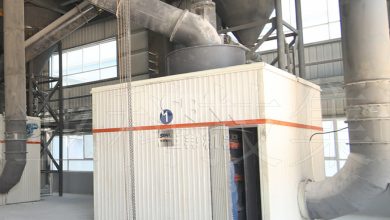
Once classified, the fine powder is transported by an air stream to collection devices. A cyclone collector serves as the primary stage, recovering the bulk of the product. A subsequent pulse-jet baghouse filter or cartridge filter acts as the final polishing stage, capturing ultrafine particles with an efficiency exceeding 99.9%. This ensures minimal product loss and guarantees that exhaust air meets the strictest emission standards (<20 mg/m³). The collected powder from both stages is conveyed to storage silos.
5. Driving, Transmission, and Control System
The mill is driven by a high-efficiency motor through a robust gearbox or planetary reducer. The entire system is governed by a centralized Programmable Logic Controller (PLC) with a human-machine interface (HMI). This intelligent control system monitors and regulates key parameters like feed rate, mill load, classifier speed, fan flow, and temperature, ensuring stable, automated operation and consistent product quality.
Operational Workflow
The material flow within the system follows a closed-circuit, negative-pressure pattern:
- Raw aluminum hydroxide is fed at a controlled rate into the grinding chamber of the mill.
- Inside the mill (e.g., an SCM Ultrafine Mill), rotating rollers exert pressure on the material bed against a stationary ring, achieving comminution through compression and shear forces.
- The ground material is carried by the internal airflow to the integrated classifier. Particles meeting the fineness target pass through, while oversize material is rejected back to the grinding zone.
- The fine powder-laden air exits the mill and enters the cyclone, where most of the product is separated and discharged via a rotary lock valve.
- The air, still carrying fines, proceeds to the pulse-jet bag filter for final cleaning. The collected powder is combined with the cyclone product.
- The cleaned air is exhausted to the atmosphere by a system fan, which also creates the necessary negative airflow throughout the circuit.
Technical Considerations for Aluminum Hydroxide Grinding
Grinding aluminum hydroxide presents specific challenges that the system must address:
- Soft to Medium Hardness: While not extremely abrasive, its hardness requires careful selection of wear parts to prevent contamination.
- Thermal Sensitivity: Excessive heat generation during grinding can lead to partial dehydration, transforming Al(OH)3 into alumina phases. Modern mills with efficient air circulation and, if necessary, cooling systems manage this risk.
- Product Purity: The system design must prevent contamination from wear metals. The use of ceramic or specially hardened alloy liners and grinding elements in our recommended mills is a key feature.
- Explosion Risk (Dust): Fine aluminum hydroxide dust can be explosive. The system incorporates safety measures such as explosion vents, inerting options, and anti-static design in electrical components and filters.
Choosing the Right Mill System
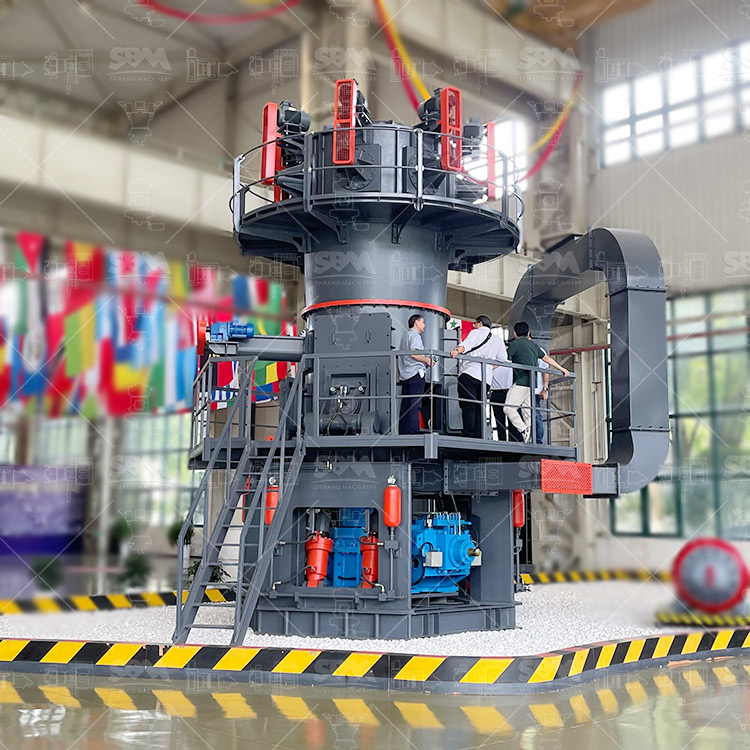
Selecting the optimal system depends on project specifics. For large-scale production of fine aluminum hydroxide (e.g., 30-325 mesh) where high capacity and low operating cost are critical, our MTW Series Trapezium Mill offers an outstanding solution. With a capacity range of 3-45 tons per hour and features like a curved air duct for reduced energy loss, conical gear integral transmission with 98% efficiency, and a wear-resistant volute structure, the MTW mill delivers robust and economical performance for demanding industrial applications.
Conclusion
The composition of a modern aluminum hydroxide fine grinding mill system is a sophisticated integration of feeding, grinding, classification, collection, and intelligent control technologies. It is designed not only to reduce particle size but to do so efficiently, consistently, and cleanly. The shift towards advanced vertical and ring-roller mills, such as the SCM Ultrafine Mill for ultrafine products and the MTW Trapezium Mill for high-capacity fine grinding, represents the industry standard, offering significant advantages in energy savings, product quality control, and environmental protection. Investing in a well-composed, technologically advanced system is fundamental to achieving a competitive edge in the high-value aluminum hydroxide market.