What Grinding Mill is Needed for Bentonite Processing in Feed Production?
Introduction: The Critical Role of Bentonite in Modern Feed Production
Bentonite, a naturally occurring clay primarily composed of montmorillonite, has become an indispensable functional additive in modern animal feed production. Its unique properties—including high cation exchange capacity, swelling ability, binding characteristics, and adsorption of mycotoxins—make it valuable for pellet binding, nutrient flowability enhancement, gut health support, and toxin mitigation. However, to fully unlock these benefits within a feed matrix, bentonite must be processed into a fine, uniform, and consistently sized powder. The selection of the appropriate grinding mill is therefore not merely a processing step but a critical determinant of final feed quality, production efficiency, and operational cost. This article explores the specific requirements for bentonite grinding in feed applications and analyzes the most suitable milling technologies.
Key Requirements for Bentonite Grinding in Feed Production
The ideal bentonite powder for feed incorporation must meet several stringent criteria dictated by both the material’s nature and the feed manufacturing process.
1. Target Particle Size and Uniformity
For optimal functionality as a pellet binder and flow agent, bentonite typically requires a fineness between 200 mesh (75μm) and 325 mesh (45μm). A uniform particle size distribution is crucial. Overly coarse particles reduce binding efficiency and can lead to pellet disintegration, while excessive fines (below 5μm) can create dust, pose inhalation risks, and negatively affect feed flowability. The mill must therefore offer precise classification control to produce a consistent, targeted particle cut.
2. Preservation of Natural Properties
Bentonite’s value lies in its crystalline structure and surface chemistry. Excessive heat generation during grinding can dehydrate the clay, damaging its swelling capacity and ion-exchange properties—its very raison d’être. A milling system must operate at controlled temperatures, ideally below 60°C, to preserve these thermally sensitive characteristics.
3. Hygiene and Contamination Control
Feed production adheres to strict hygiene standards. The grinding system must be designed for easy cleaning, with smooth internal surfaces and effective sealing to prevent cross-contamination between batches. Furthermore, the mill’s construction materials must not introduce metallic or other contaminants into the product.
4. Capacity and Energy Efficiency
Feed mills operate on high-volume, continuous, or large-batch principles. The grinding solution must match the required throughput (often ranging from 5 to 25 tons per hour) reliably and with minimal energy consumption, as grinding can be a significant portion of a plant’s operational expense.
5. System Integration and Environmental Compliance
The mill should integrate seamlessly with feeding, conveying, and dust collection systems. Effective, closed-circuit dust control is non-negotiable, both for product recovery and to maintain a clean plant environment compliant with occupational health standards.
Analysis of Common Grinding Technologies for Bentonite
Not all grinding mills are created equal for this specific application. Here’s a comparative analysis:
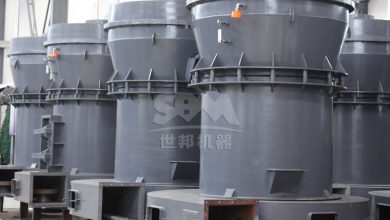
Raymond Mill (Traditional Pendulum Mill)
While commonly used for non-sensitive minerals, traditional designs often struggle with bentonite. They can generate excessive heat due to friction and may lack the precise classification needed for the tight particle size range required in feed. Maintenance frequency on grinding rollers and rings can be high.
Ball Mill
Ball mills are capable of producing fine powder but are generally less energy-efficient for the target fineness range. They operate wet or dry, but for feed-grade bentonite, dry processing is standard. The main drawbacks are high energy consumption, significant heat buildup, and less precise particle size control compared to more modern classifier mills.
Hammer Mill
Hammer mills are excellent for coarse crushing and initial size reduction (e.g., breaking down raw bentonite lumps). However, they are not suitable for achieving the final, fine, and uniform powder required for feed additives. Their action is primarily impact-based, leading to a wide particle size distribution that would require subsequent classification.
The Optimal Milling Solution: Advanced Vertical Roller Mills and Ultrafine Grinding Systems
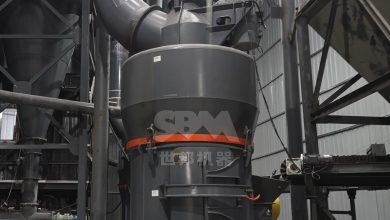
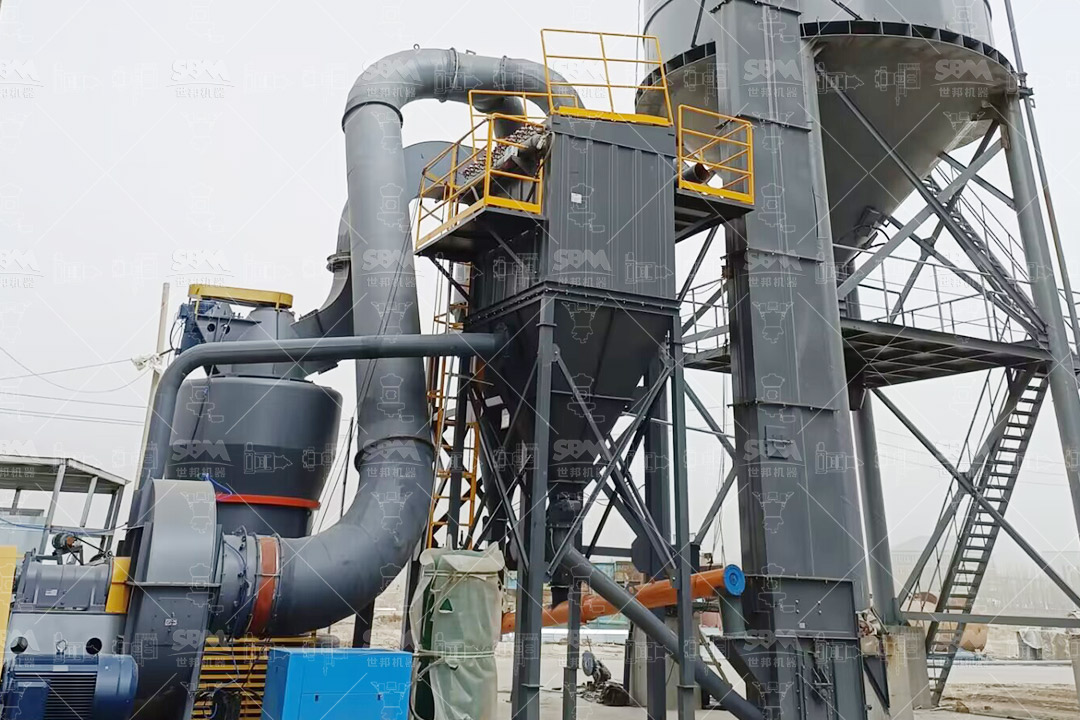
For modern, high-capacity feed bentonite processing, advanced vertical roller mills and specialized ultrafine mills represent the optimal technological choice. These systems are engineered to address all the critical requirements outlined above.
Why Vertical Roller Mills Excel
Modern vertical roller mills (VRMs) operate on the principle of bed grinding, where material is ground between rotating rollers and a stationary table. This method is inherently more energy-efficient than impact or tumbling mills. Key advantages for bentonite include:
- Low Heat Generation: The grinding process in a VRM involves compression rather than high-speed impact, significantly reducing heat buildup and protecting bentonite’s properties.
- Integrated Drying and Grinding: If the raw bentonite has elevated moisture, low-temperature hot air can be introduced into the VRM to dry the material during grinding in a single step.
- Precise Classification: An integrated dynamic classifier allows for real-time adjustment of product fineness, ensuring a consistent output of 200-325 mesh powder.
- High Capacity & Low Footprint: VRMs offer large throughput in a compact, vertically integrated design.
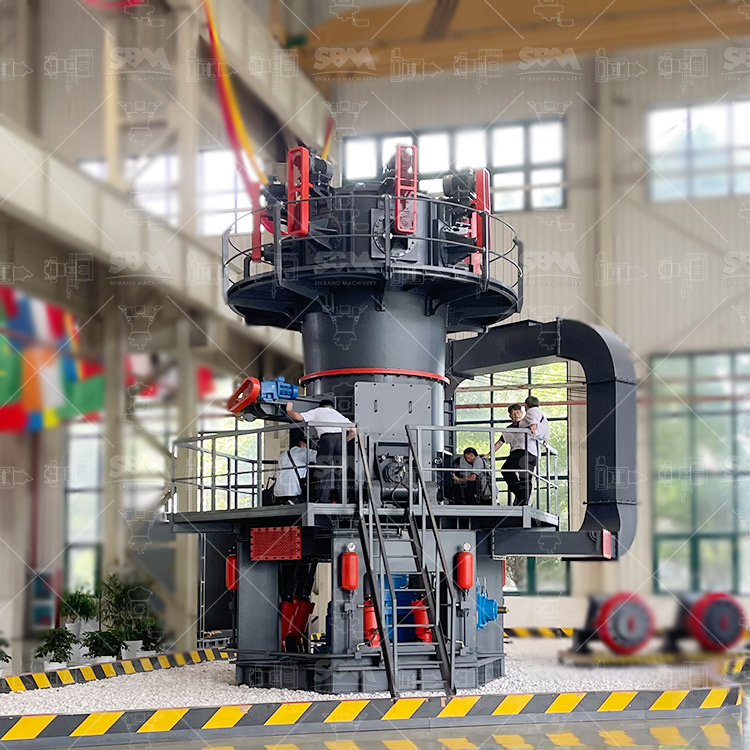
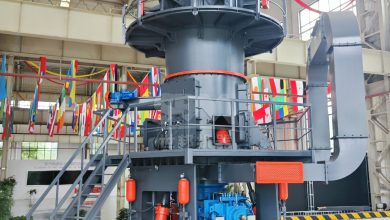
For feed mills requiring robust, high-volume processing of bentonite to a consistent 30-325 mesh fineness, our MTW Series European Trapezium Mill is an outstanding choice. Its advanced features directly align with bentonite processing needs:
- Anti-wear Design: The combined shovel blades and curved roller design ensure long service life when processing abrasive clay minerals, reducing maintenance costs.
- Efficient Classification: The optimized arc air duct and wear-resistant volute structure work in tandem with the integral bevel gear-driven classifier to achieve precise particle size separation, crucial for feed-grade specifications.
- Proven Reliability: With models like the MTW175G offering capacities from 9.5 to 25 t/h at a main power of 160kW, it provides a scalable and efficient solution for mid-to-large-scale feed additive production.
Pushing the Limits: Ultrafine Mills for Specialty Applications
For feed formulations that demand even higher levels of uniformity or where bentonite is used as a carrier for micro-ingredients (e.g., vitamins, enzymes), an ultrafine mill may be considered. These mills can produce powders in the 325-2500 mesh (5-45μm) range with exceptionally narrow particle size distribution.
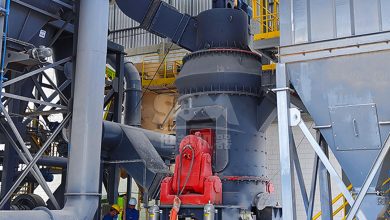
Our SCM Series Ultrafine Mill is engineered for such precision applications. It is particularly relevant for premium feed producers or those developing specialized functional feed blends:
- High-Precision Classification: Its vertical turbine classifier ensures a sharp particle cut, eliminating coarse powder mixing and guaranteeing a uniform final product that disperses perfectly in feed pre-mixes.
- Energy Efficiency: Despite its ability to produce ultrafine powder, it operates with 30% lower energy consumption than traditional jet mills, making fine grinding economically viable.
- Eco-friendly Operation: The fully sealed system with pulse dust collection efficiency exceeding 99.9% ensures a clean production environment, a critical factor in feed mill GMP standards.
Conclusion and Recommendation
Selecting the right grinding mill for bentonite in feed production is a strategic decision that impacts product efficacy, operational cost, and production hygiene. While hammer mills serve for primary crushing, the final grinding stage to achieve feed-grade quality demands a mill with precise classification, low heat output, and high efficiency.
For the majority of feed mill applications aiming for a standard 200-325 mesh bentonite powder, a modern Vertical Roller Mill like the MTW Series offers the ideal balance of capacity, precision, energy savings, and operational robustness. Its design directly counters the challenges of heat sensitivity and particle size control inherent to bentonite processing.
For producers targeting ultra-uniform blends or specialty feed additives where supreme fineness and consistency are paramount, investing in an Ultrafine Mill like the SCM Series provides the technological edge needed for premium product differentiation.
Ultimately, partnering with a milling technology provider that understands the specific material science of bentonite and the stringent requirements of the feed industry is essential to optimizing this critical link in your feed additive supply chain.