
How to Dispose of Lepidolite Residue? What Are the Uses of Lithium Slag from Lepidolite Processing?
Introduction: The Challenge of Lepidolite Processing Residue
The global surge in demand for lithium, driven by the electric vehicle and energy storage revolutions, has intensified the extraction of lithium from various sources. Lepidolite, a lithium-bearing mica, represents a significant hard-rock lithium resource. However, the hydrometallurgical or pyrometallurgical processes used to extract lithium carbonate or hydroxide from lepidolite generate substantial amounts of solid residue, commonly known as lithium slag or lepidolite tailings. This by-product, if not managed properly, poses significant environmental and economic challenges. This article explores responsible disposal methods and, more importantly, valorization pathways for lepidolite residue, transforming a waste liability into a valuable resource.
1. Understanding Lepidolite Residue: Composition and Characteristics
Lepidolite residue is primarily composed of the non-lithium fraction of the ore after lithium extraction. Its specific composition varies based on the original ore grade and the processing method (e.g., sulfate roasting, acid leaching). Typically, it contains high levels of silica (SiO₂) and alumina (Al₂O₃), along with residual alkali metals (potassium, sodium), fluorine, and minor amounts of other metals. The material is often fine-grained, chemically stable, and may have latent hydraulic or pozzolanic activity. These characteristics are the key to unlocking its potential uses.

2. Responsible Disposal: The Foundation of Sustainable Operations
Before considering reuse, safe and compliant disposal is paramount. The primary method is engineered landfilling.
2.1 Engineered Secure Landfilling
This involves depositing the residue in specially designed landfills with multiple protective layers to prevent leaching and groundwater contamination. Key steps include:
- Site Selection & Liner System: Choosing geologically stable sites with low permeability clay layers, supplemented with synthetic geomembranes (HDPE).
- Leachate Collection: Installing drainage systems to collect any percolated liquid for treatment.
- Dust Control: Regularly covering the residue with soil or using dust suppressants to prevent particulate matter emissions.
- Long-term Monitoring: Implementing groundwater monitoring wells to ensure environmental integrity post-closure.
While disposal is necessary, it represents a sunk cost and a lost opportunity for resource recovery. The future lies in utilization.
3. Valorization Pathways: Transforming Slag into Resource
The high silicate and aluminate content of lepidolite residue makes it suitable for several industrial applications, particularly in construction and materials science.
3.1 Use in Construction Materials
This is the most promising and large-scale application.
- Supplementary Cementitious Material (SCM): When finely ground, the residue can act as a pozzolan, reacting with calcium hydroxide in cement to form additional cementitious compounds. This partially replaces Portland cement (typically 10-30%), reducing the carbon footprint of concrete and improving long-term strength and durability.
- Raw Material for Clinker Production: The silica and alumina can be incorporated into the raw meal for cement clinker manufacturing, reducing the need for virgin clay or shale.
- Aggregate or Filler: Coarser fractions can be used as lightweight aggregate in concrete blocks or as a filler in asphalt and road bases.
3.2 Ceramics and Glass-Ceramics
The composition is similar to that of some glass and ceramic frits. Residue can be used in the production of:
- Ceramic Tiles and Sanitaryware: As a fluxing agent and body component, lowering firing temperatures.
- Foam Glass-Ceramics: By mixing with a foaming agent and sintering, lightweight, insulating construction materials can be produced.
3.3 Other Niche Applications
- Soil Amendment: After detoxification (e.g., fluoride removal), it can provide silica and potassium to soils.
- Adsorbents: Processed residue can be used for wastewater treatment to adsorb heavy metals.
- Recovery of Residual Values: Advanced processes can aim to extract remaining rubidium, cesium, or other rare elements.
4. The Critical Role of Fine Grinding: Unlocking Pozzolanic Activity
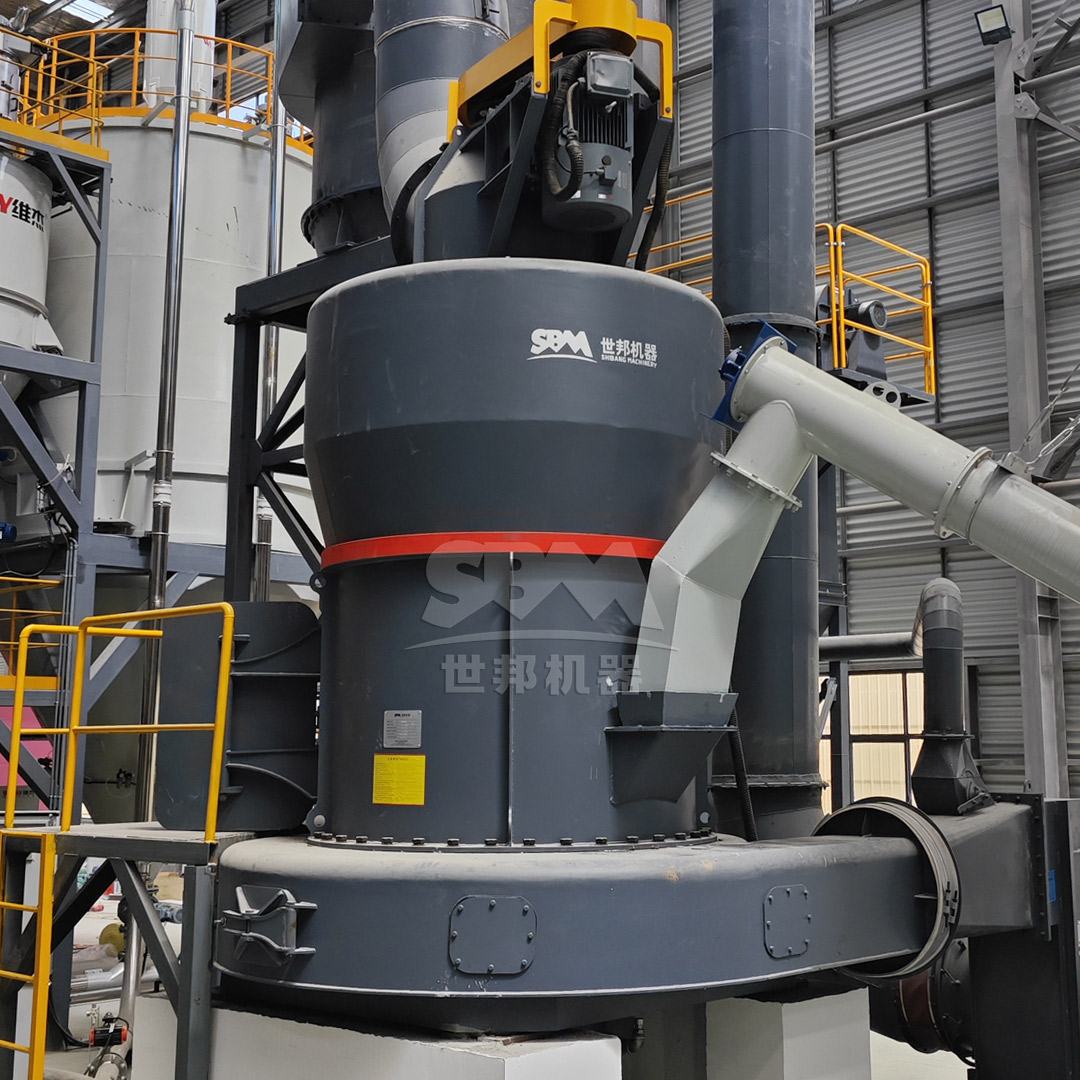
The effectiveness of lepidolite residue as a high-value SCM is directly dependent on its fineness and particle size distribution. To achieve the necessary reactivity, the material must be ground to a very fine powder, typically with a Blaine fineness exceeding 400 m²/kg or a particle size below 45 microns (325 mesh). This increases the specific surface area, exposing more particles for the pozzolanic reaction.
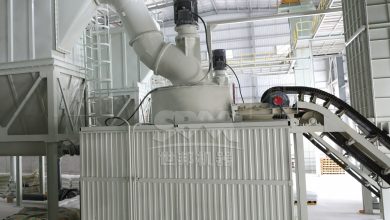
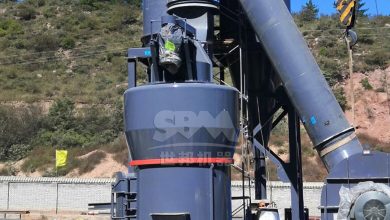
This is where advanced grinding technology becomes essential. For this specific application, we recommend our SCM Series Ultrafine Mill. Engineered for high-efficiency processing of mineral powders, it is ideally suited for activating lepidolite residue.
- High Efficiency & Energy Saving: Its capacity is twice that of traditional jet mills while consuming 30% less energy, making the activation process economically viable.
- High-Precision Classification: The integrated vertical turbine classifier ensures precise particle size cutting, producing a uniform, ultra-fine powder (325-2500 mesh) with no coarse particle contamination. This uniformity is critical for consistent pozzolanic performance in concrete.
- Eco-friendly Operation: The mill system features a pulse dust collector with efficiency exceeding 99%, ensuring a clean production environment when handling fine powders.
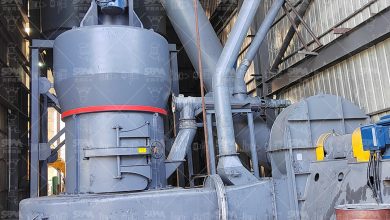
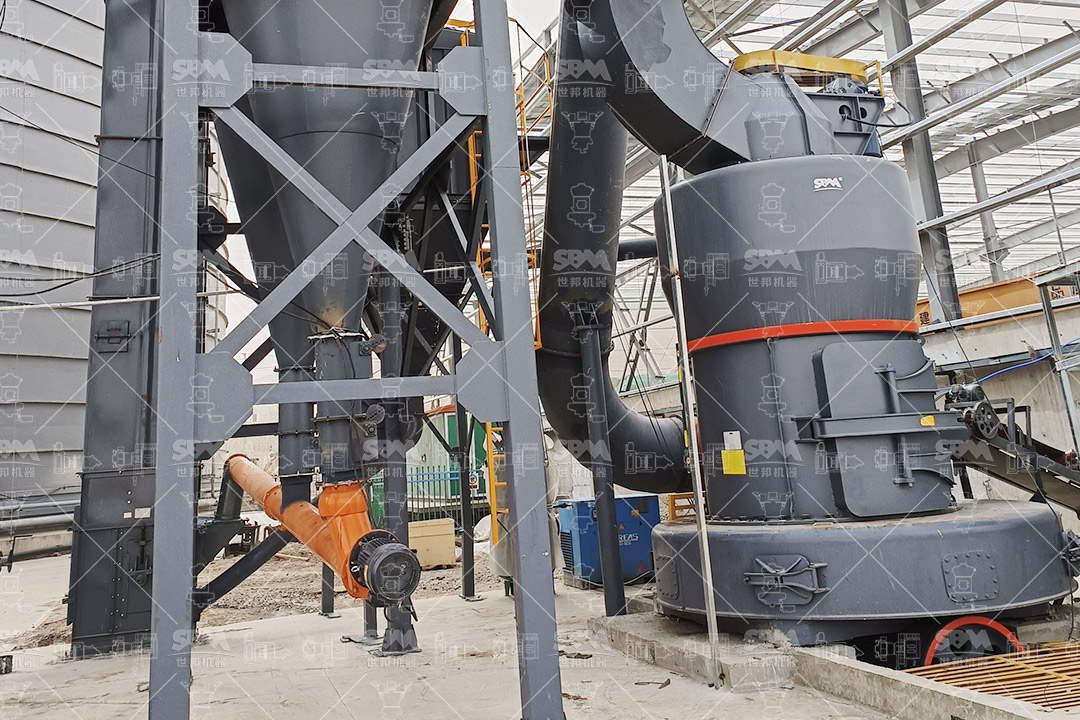
For projects requiring processing of larger feed sizes or where the target fineness is in the coarser range (e.g., for use as a raw meal component), our MTW Series European Trapezium Mill offers a robust solution. With an input size of up to 50mm and an output fineness adjustable between 30-325 mesh, it provides high capacity (3-45 t/h) and features wear-resistant components like combined shovel blades and a curved grinding roller design, ensuring low maintenance costs for continuous operation.
5. Integrated Processing Flow for Value Addition
A holistic approach to lepidolite residue management involves:
- De-watering: Filter pressing or drying the wet filter cake from the lithium extraction circuit.
- Primary Crushing: Reducing larger agglomerates to a manageable size (e.g., <20mm).
- Fine/Ultrafine Grinding: Using equipment like the SCM or MTW mills to achieve the target fineness for the chosen application.
- Quality Control: Testing the ground powder for chemical composition, fineness, and pozzolanic activity index.
- Packaging & Dispatch: Sending the valorized product to cement or concrete plants.
6. Conclusion: From Linear to Circular Economy
The disposal of lepidolite residue is no longer just an end-of-pipe environmental concern; it is a strategic materials challenge. By adopting a circular economy mindset, lithium producers can transform this by-product into a commercially viable commodity, primarily for the construction industry. The key technological enabler is efficient, precise, and reliable fine grinding. Investing in advanced milling solutions not only mitigates disposal costs and environmental liabilities but also creates a new revenue stream, enhancing the overall sustainability and profitability of lepidolite-based lithium operations. The future of hard-rock lithium mining is not just about extraction, but about integrated resource utilization.