Application of LUM Superfine Vertical Mill in Non-metallic Mineral Ultrafine Powder Processing Technology
Introduction
The demand for ultrafine powders derived from non-metallic minerals such as calcium carbonate, talc, kaolin, barite, and quartz has surged across modern industries including plastics, coatings, rubber, pharmaceuticals, and advanced ceramics. These applications demand powders with exceptionally fine particle sizes, narrow particle size distribution (PSD), high purity, and superior surface characteristics. Meeting these stringent requirements necessitates advanced grinding technology that is not only efficient and precise but also energy-conscious and environmentally friendly. Among the various grinding solutions, vertical roller mills (VRMs) have emerged as a dominant force, with the LUM Superfine Vertical Mill representing a pinnacle of innovation for producing ultrafine powders in the range of 325 to 2500 mesh (D97 ≤ 5μm). This article explores the technological advantages and application efficacy of the LUM Superfine Vertical Mill in the ultrafine processing of non-metallic minerals.
Technological Challenges in Ultrafine Grinding
Processing non-metallic minerals into ultrafine powders presents several significant challenges. First, achieving and maintaining a consistent sub-5μm fineness requires immense grinding energy, traditionally leading to high operational costs. Second, the comminution process generates substantial heat, which can degrade heat-sensitive minerals and cause equipment issues like packing and clogging. Third, efficient classification at such fine cut sizes is critical to prevent coarse particle contamination and ensure product uniformity. Finally, the entire process must be contained to meet strict environmental regulations regarding dust emissions and noise pollution. Conventional ball mills or older generation mills often struggle with these challenges, resulting in high energy consumption, poor product quality control, and significant environmental footprints.
The LUM Superfine Vertical Mill: A Paradigm of Advanced Engineering
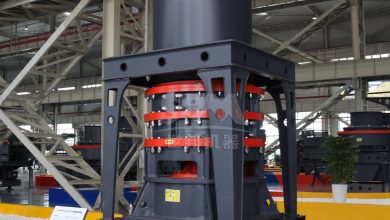
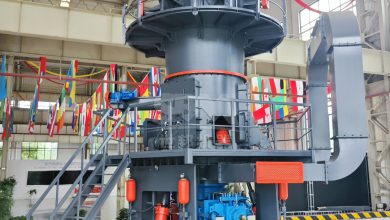
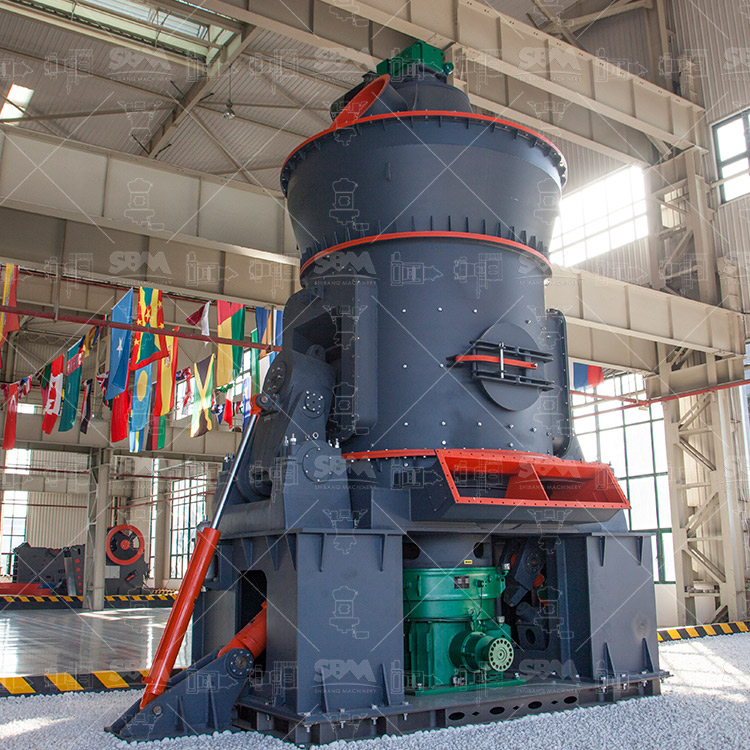
The LUM Superfine Vertical Mill is engineered specifically to overcome the limitations of traditional ultrafine grinding equipment. Its design integrates high-efficiency grinding, precision classification, and intelligent control into a single, compact system.
Core Working Principle
The operation begins with feed material (≤20mm) entering the mill through a central feed pipe. The material falls onto the rotating grinding table, where it is distributed by centrifugal force. Multiple grinding rollers, hydraulically loaded against the table, apply intense pressure to the material bed, causing inter-particle comminution—a highly efficient method that minimizes direct metal-to-metal contact and reduces wear. The ground material is then transported by the incoming hot gas stream (for drying, if needed) upwards into the integral classifier.

This is where a key innovation lies: the multi-rotor, vertical turbine classifier. It utilizes several rotating turbine stages to create a precise centrifugal force field. Fine particles that meet the target size are carried through the classifier by the airflow to the downstream collection system. Coarse particles are rejected by the classifier blades and fall back onto the grinding table for further size reduction. This closed-circuit grinding and classification loop ensures exceptional product uniformity.
Distinct Technological Advantages
The LUM mill boasts several features that make it ideal for non-metallic mineral processing:
- High Efficiency & Energy Savings: Utilizing the efficient bed grinding principle and an optimized drive system, the LUM mill offers grinding efficiency significantly higher than traditional Raymond mills or jet mills. Comparative data shows it can achieve over double the output of a jet mill with similar fineness while reducing specific energy consumption by up to 30%.
- Ultra-Precise Classification System: The heart of the LUM’s capability is its advanced vertical turbine classifier. It enables precise cut-point control from 325 to 2500 mesh, ensuring a steep particle size distribution curve. The absence of coarse particle contamination (“fish eyes”) is critical for high-value applications like functional fillers in polymers or electronic materials.
- Intelligent Automation & Stability: The mill is equipped with a PLC-based automatic control system. It continuously monitors key parameters such as grinding pressure, differential pressure, motor load, and classifier speed. The system can automatically adjust the operation to maintain a stable product fineness, even with variations in feed material characteristics. This reduces manual intervention and guarantees consistent product quality.
- Superior Durability & Low Maintenance: Critical wear parts like grinding rollers and the table liner are made from special alloy materials with exceptional hardness and toughness, extending service life several times over conventional parts. The innovative design often incorporates features like a bearing-less grinding chamber for rollers, enhancing operational stability and reducing maintenance frequency.
- Outstanding Environmental Performance: The entire grinding and classification process occurs under negative pressure, preventing dust leakage. It is paired with a high-efficiency pulse jet bag filter, achieving a collection efficiency of over 99.9% and ensuring dust emissions are well below international standards (e.g., <20 mg/Nm³). Furthermore, comprehensive sound insulation measures keep operational noise levels below 75 dB(A).
Application in Key Non-Metallic Minerals
The versatility of the LUM Superfine Vertical Mill is demonstrated across a spectrum of minerals:
- Ground Calcium Carbonate (GCC): For producing GCC with D97 = 2-10μm for paper, plastics, and paints. The LUM mill ensures high brightness (by minimizing iron contamination), narrow PSD for better opacity/filler loading, and efficient drying of moist feed.
- Talc: Grinding soft minerals like talc to ultrafine grades (e.g., 1250-2500 mesh) for cosmetics and polymers. The gentle bed-grinding action helps preserve the lamellar structure of talc, which is essential for its reinforcing and barrier properties.
- Kaolin: Used in coatings and ceramics, kaolin often requires delamination and size reduction. The LUM system can effectively process calcined kaolin to ultrafine sizes while maintaining low abrasiveness.
- Quartz/Silica: Producing high-purity silica flour for electronics, epoxy molding compounds, or specialty coatings. The mill’s precision classification is crucial for removing oversized particles that can be detrimental in these sensitive applications.
- Barite: For oil drilling grade barite requiring fine grinding and high density, the LUM mill provides an efficient and controlled process.
Product Portfolio Integration: The SCM Ultrafine Mill
For operations requiring a dedicated solution in the superfine range, our SCM Series Ultrafine Mill stands as a proven and reliable choice. This mill is specifically designed for producing powders in the range of 325 to 2500 mesh (D97 ≤ 5μm) from non-metallic minerals with a feed size of ≤20mm. Its technological highlights include a high-precision vertical turbine classifier for accurate particle size cuts, a grinding chamber design that promotes efficiency and longevity, and a comprehensive pulse dust collector ensuring clean operation. With models like the SCM800 (0.5-4.5 t/h, 75kW) to the high-capacity SCM1680 (5.0-25 t/h, 315kW), the SCM series offers a scalable solution for various production needs, delivering energy savings of up to 30% compared to alternative technologies.
Conclusion
The transition towards high-performance, sustainable industrial materials has placed ultrafine non-metallic mineral powders at the forefront. The LUM Superfine Vertical Mill, with its synergistic combination of efficient bed grinding, revolutionary multi-rotor classification, intelligent control, and robust environmental design, provides a comprehensive technological answer to the challenges of modern powder processing. It enables producers to achieve unparalleled product quality, operational efficiency, and environmental compliance. As the industry continues to evolve towards finer specifications and greener practices, advanced grinding systems like the LUM Superfine Vertical Mill will remain indispensable tools for value creation and competitive advantage.
For medium to coarse grinding applications preceding the LUM system, or for projects with different fineness requirements, our MTW Series Trapezium Mill presents an excellent solution. Capable of handling feed up to 50mm and producing powders from 30 to 325 mesh, the MTW mill features advanced design elements such as curved air ducts for reduced flow resistance, conical gear overall transmission for high efficiency (up to 98%), and wear-resistant components. Models like the MTW215G offer capacities up to 45 tons per hour, making it a powerful and efficient workhorse for primary size reduction in mineral processing circuits.