Which Type of Calcium Hydroxide Grinding Mill Offers Higher Production Capacity?
Introduction
Calcium hydroxide, also known as slaked lime, is a crucial industrial chemical with applications ranging from water treatment and construction to food processing and chemical manufacturing. The production efficiency of calcium hydroxide powder directly depends on the grinding equipment used. Selecting the right grinding mill is paramount for achieving optimal production capacity while maintaining product quality and operational efficiency. This comprehensive analysis examines various grinding technologies and identifies the most suitable solutions for high-capacity calcium hydroxide processing.
Understanding Calcium Hydroxide Grinding Requirements
Calcium hydroxide presents unique challenges in grinding operations due to its specific physical and chemical properties. The material tends to be abrasive and can cause significant wear on grinding components. Additionally, calcium hydroxide is sensitive to temperature increases during processing, as excessive heat can lead to dehydration and product degradation. The ideal grinding system must address these challenges while delivering consistent particle size distribution and high throughput.
Key considerations for calcium hydroxide grinding include:
- Maintaining product purity and chemical composition
- Achieving precise particle size control (typically between 200-1250 mesh)
- Minimizing energy consumption per ton of processed material
- Reducing maintenance requirements and operational downtime
- Ensuring environmental compliance with dust emission standards
Comparative Analysis of Grinding Mill Technologies
Ball Mills for Calcium Hydroxide Processing
Traditional ball mills have been widely used in mineral processing industries, including calcium hydroxide production. These systems operate on the principle of impact and attrition between grinding media (balls) and the material. While ball mills offer reliable operation and can handle various feed sizes, they suffer from significant limitations in calcium hydroxide applications.
The primary disadvantages include:
- High energy consumption relative to output
- Limited control over particle size distribution
- Substantial heat generation during operation
- Large footprint and high capital investment
- Significant media wear and maintenance requirements
For operations requiring production capacities beyond 20 tons per hour, ball mills become increasingly inefficient compared to modern grinding technologies.
Raymond Mills and Traditional Pendulum Systems
Raymond mills and similar pendulum-style grinding systems have been workhorses in the lime industry for decades. These mills utilize spring-loaded grinding rollers that rotate against a stationary grinding ring. While offering improvements over ball mills in terms of energy efficiency, these systems still present limitations for high-capacity calcium hydroxide production:
- Limited maximum capacity typically under 25 tons per hour
- Progressive efficiency loss as grinding components wear
- Challenges in achieving ultra-fine particle sizes
- Higher maintenance frequency compared to newer technologies
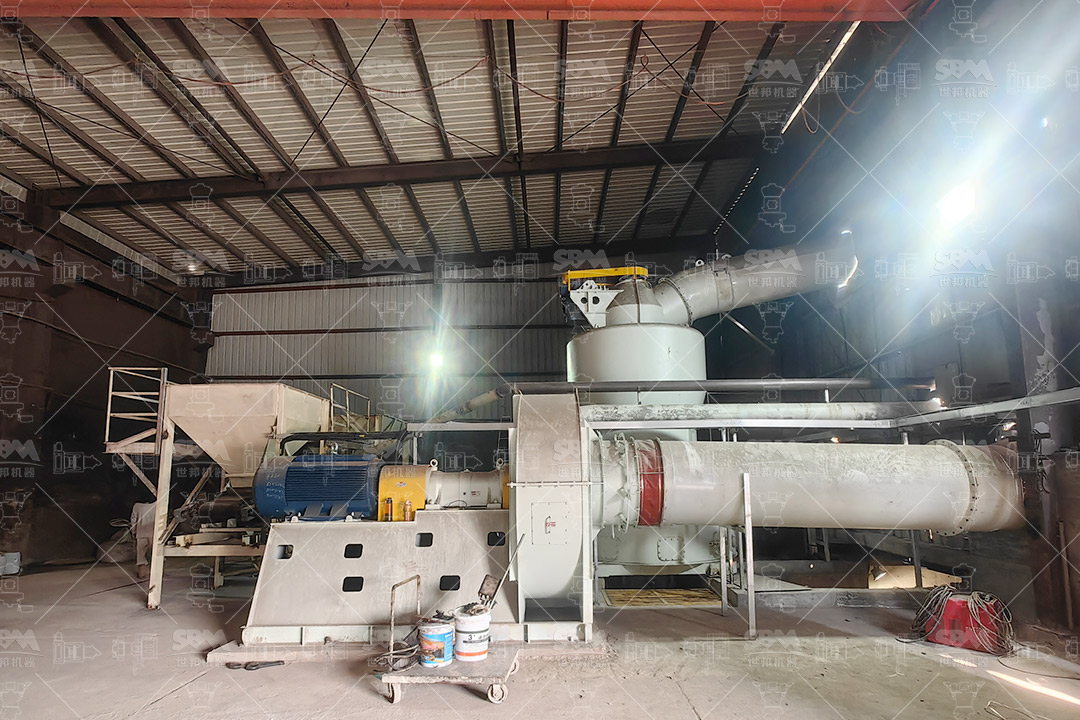
Vertical Roller Mills: The Modern Solution
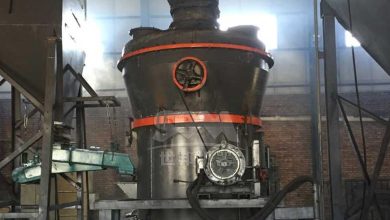
Vertical roller mills (VRMs) represent a significant advancement in grinding technology, offering substantial benefits for calcium hydroxide processing. These systems utilize hydraulically-loaded grinding rollers that press against a rotating grinding table, implementing the efficient bed compression principle.
The advantages of VRMs for calcium hydroxide include:
- Superior energy efficiency with 30-50% lower power consumption compared to ball mills
- Integrated drying capability for moist feed materials
- Excellent particle size control with integrated dynamic classifiers
- Compact design with significantly reduced footprint
- Lower operating noise levels and improved working environment
For large-scale calcium hydroxide production facilities, VRMs typically offer the most compelling combination of capacity, efficiency, and product quality.
Recommended Solutions for High-Capacity Calcium Hydroxide Grinding
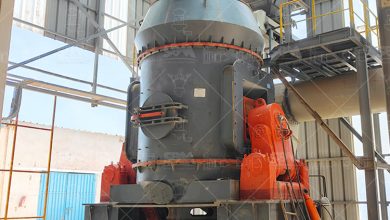
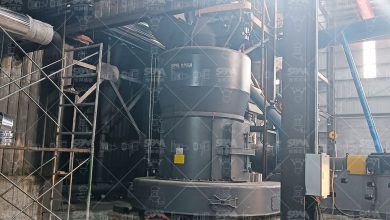
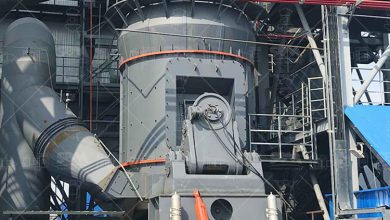
LM Series Vertical Roller Mill: Optimal for Large-Scale Production
For operations requiring the highest production capacities, our LM Series Vertical Roller Mill stands as the premier solution. This advanced grinding system combines robust construction with sophisticated process control to deliver unmatched performance in calcium hydroxide applications.
The LM Series offers exceptional capabilities:
- Massive Production Capacity: Ranging from 3-250 tons per hour depending on model selection, with the LM280K model delivering 50-170 t/h specifically for mineral applications
- Precise Particle Size Control: Capable of producing calcium hydroxide powders from 30-325 mesh (standard models) to 600 mesh (specialized models)
- Integrated System Design: Combining crushing, grinding, and classification in a single compact unit, reducing footprint by 50% compared to traditional systems
- Advanced Process Control: Expert-level automation system with remote monitoring capabilities for optimized operation
- Superior Energy Efficiency:\nConsuming 30-40% less power than ball mill systems for equivalent output
The LM Series incorporates patented technologies including modular roller assemblies for quick maintenance, multi-stage dynamic classification, and advanced heat recovery systems. These features make it particularly suitable for high-volume calcium hydroxide production where consistent quality and operational reliability are paramount.

SCM Ultrafine Mill: Excellence in Fine and Ultrafine Grinding
For applications requiring ultra-fine calcium hydroxide powders, our SCM Ultrafine Mill delivers exceptional performance with production capacities up to 25 tons per hour. This specialized mill is engineered specifically for challenging fine grinding applications where traditional mills reach their limitations.
Key advantages of the SCM Ultrafine Mill for calcium hydroxide include:
- Exceptional Fineness Range: Capable of producing calcium hydroxide powders from 325 to 2500 mesh (D97 ≤ 5μm)
- High-Efficiency Operation: Delivering twice the capacity of jet mills with 30% lower energy consumption
- Precision Classification: Vertical turbine classifiers ensure sharp particle size cuts without coarse particle contamination
- Durable Construction: Specially formulated grinding components provide extended service life in abrasive applications
- Environmental Compliance: Pulse dust collection exceeding international standards with noise levels below 75dB
The SCM Series employs a unique multi-layer grinding principle with three grinding rings, progressively refining material through centrifugal force and roller compression. Models range from the SCM800 (0.5-4.5 t/h) to the high-capacity SCM1680 (5.0-25 t/h), providing solutions for various production requirements.
Technical Comparison and Selection Guidelines
When selecting a grinding system for calcium hydroxide production, several factors must be considered beyond raw capacity numbers. The following comparison highlights key performance metrics across different mill types:
| Mill Type | Capacity Range (t/h) | Power Consumption (kWh/t) | Product Fineness (mesh) | Footprint Ratio |
|---|---|---|---|---|
| Ball Mill | 0.65-450 | 25-40 | 200-325 | 1.0 (Reference) |
| Raymond Mill | 3-22 | 18-28 | 80-325 | 0.6 |
| MTW Trapezium Mill | 3-45 | 15-25 | 30-325 | 0.5 |
| LM Vertical Mill | 3-250 | 12-20 | 30-600 | 0.4 |
| SCM Ultrafine Mill | 0.5-25 | 20-35 | 325-2500 | 0.5 |
Selection guidelines based on production requirements:
- For capacities above 50 t/h: LM Vertical Roller Mills provide the most economical solution
- For ultra-fine applications (above 800 mesh): SCM Ultrafine Mill delivers superior performance
- For moderate capacities (10-30 t/h): MTW Trapezium Mills offer excellent value
- For limited space applications: Vertical mills provide the smallest footprint
- For operations with variable feed moisture: LM Series with integrated drying capability
Operational Considerations for Maximizing Production Capacity
Achieving the theoretical maximum capacity of any grinding system requires attention to several operational factors:
Feed Material Preparation
Proper preparation of calcium hydroxide feed material significantly impacts grinding efficiency. Key considerations include:
- Controlling feed size to match mill specifications (typically below 20mm for vertical mills)
- Managing moisture content to optimize grinding efficiency
- Ensuring consistent chemical composition to maintain stable operation
- Implementing effective pre-crushing where necessary
System Integration and Ancillary Equipment
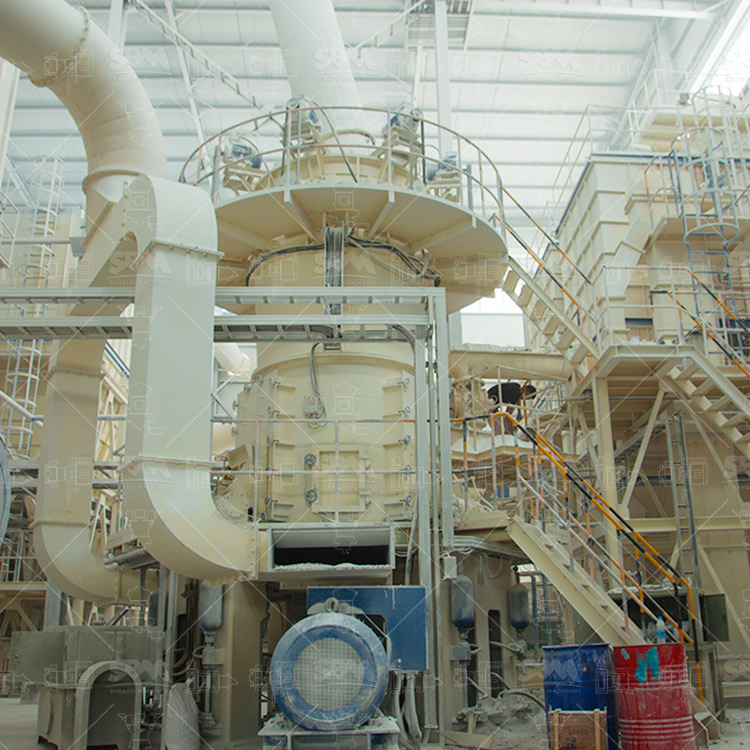
The grinding mill represents only one component of a complete production system. Maximizing capacity requires proper integration with:
- Efficient feeding systems with accurate rate control
- High-performance classification equipment
- Reliable product collection and packaging systems
- Comprehensive dust control and environmental systems
- Automated control systems for process optimization
Maintenance and Operational Practices
Sustained high-capacity operation depends on effective maintenance strategies:
- Implementing predictive maintenance for grinding components
- Establishing proper lubrication schedules
- Monitoring wear patterns and planning component replacements
- Training operational staff on optimal running parameters
- Maintaining comprehensive operational records for performance tracking
Economic Analysis: Total Cost of Ownership
When evaluating grinding systems for calcium hydroxide production, considering only the initial investment provides an incomplete picture. A comprehensive total cost of ownership analysis must include:
- Capital Investment: Equipment purchase and installation costs
- Energy Consumption: Power requirements per ton of product
- Consumables Cost: Grinding media, liner, and classifier wear parts
- Maintenance Labor: Routine maintenance and component replacement
- Operational Labor: Staff requirements for system operation
- Product Quality Impact: Effect on downstream processes and product value
For high-capacity calcium hydroxide production, vertical roller mills typically demonstrate the lowest total cost of ownership due to their superior energy efficiency, reduced maintenance requirements, and higher operational availability.
Conclusion
Selecting the optimal grinding mill for calcium hydroxide production requires careful consideration of multiple factors, with production capacity being a primary concern. While various technologies are available, vertical roller mills, particularly our LM Series, offer the most compelling solution for high-capacity applications, combining massive throughput capabilities with excellent energy efficiency and product quality control.
For operations requiring ultra-fine calcium hydroxide powders, the SCM Ultrafine Mill provides unmatched performance in the sub-5μm range while maintaining respectable production capacities up to 25 tons per hour.
The ultimate selection should be based on a comprehensive analysis of specific production requirements, including target capacity, product specifications, available utilities, space constraints, and economic considerations. With proper system selection and operational practices, modern grinding technology can deliver exceptional performance in calcium hydroxide production, meeting the growing demands of various industrial sectors.