Which Grinding Mill is Best for Processing Spodumene Ore?
Introduction to Spodumene Ore Processing
Spodumene, a lithium aluminum inosilicate mineral with the chemical formula LiAl(SiO3)2, has become increasingly important in the global market due to the rising demand for lithium-ion batteries. The efficient processing of spodumene ore requires specialized grinding equipment that can handle its unique physical and chemical properties while achieving the precise particle size distribution necessary for downstream extraction processes.
The selection of an appropriate grinding mill for spodumene processing depends on multiple factors including ore characteristics, target particle size, production capacity requirements, energy efficiency considerations, and overall operational costs. This comprehensive analysis examines various grinding technologies and their suitability for spodumene ore processing applications.
Understanding Spodumene Ore Characteristics
Spodumene ore presents several challenges in grinding operations due to its specific mineralogical properties:
- Hardness: Spodumene has a Mohs hardness of 6.5-7, making it relatively hard and abrasive
- Specific Gravity: Typically ranges from 3.03 to 3.22
- Crystal Structure: Prismatic crystals with perfect cleavage
- Thermal Properties: Undergoes phase transformation at high temperatures (α to β spodumene at ~1000°C)
- Chemical Reactivity: Requires careful handling to prevent lithium loss during processing
These characteristics necessitate grinding equipment with robust construction, wear-resistant components, and precise control over the grinding process to optimize liberation while minimizing overgrinding.
Key Considerations for Spodumene Grinding Mill Selection
Particle Size Requirements
The target particle size for spodumene concentration typically ranges from 150 to 600 microns for flotation feed, while chemical processing may require finer grinding down to 45 microns or less. The selection of grinding equipment must align with these specific size requirements while considering the energy consumption associated with achieving finer particle sizes.
Throughput Capacity
Commercial spodumene operations require grinding circuits capable of handling significant tonnages, often ranging from 10 to 500 tons per hour depending on the scale of the operation. The selected mill must provide consistent performance at the required production rate with minimal downtime.
Energy Efficiency
Grinding operations typically account for 30-50% of total energy consumption in mineral processing plants. Energy-efficient grinding technologies can significantly reduce operational costs and environmental impact while maintaining product quality.
Wear Resistance and Maintenance
Given the abrasive nature of spodumene ore, grinding equipment must feature wear-resistant components and designs that minimize maintenance requirements and extend service intervals.
Types of Grinding Mills for Spodumene Processing
Ball Mills
Traditional ball mills have been widely used in spodumene processing operations due to their reliability and ability to handle varying feed sizes. These mills operate by tumbling grinding media (steel balls) inside a rotating cylinder, achieving particle size reduction through impact and attrition.
Advantages:
- Proven technology with extensive industry experience
- Capable of handling wide variations in feed size
- Suitable for both wet and dry grinding applications
- Relatively simple operation and maintenance
Limitations:
- Lower energy efficiency compared to newer technologies
- Limited ability to produce ultra-fine particles efficiently
- Higher wear rates in abrasive applications
- Larger footprint compared to vertical mills
Vertical Roller Mills
Vertical roller mills have gained popularity in spodumene processing due to their superior energy efficiency and compact design. These mills utilize hydraulically-loaded grinding rollers that compress and shear the material against a rotating grinding table.
Advantages:
- 30-50% lower energy consumption compared to ball mills
- Compact design with smaller footprint
- Excellent drying capability when processing moist ores
- Ability to handle variations in feed size and hardness
Limitations:
- Higher initial investment cost
- More complex operation and maintenance requirements
- Potential for vibration issues with certain ore types
- Limited ultra-fine grinding capability
Recommended Grinding Solutions for Spodumene Processing
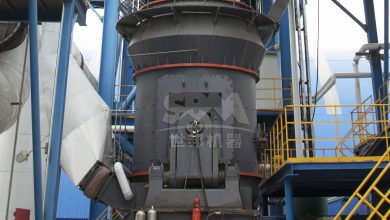
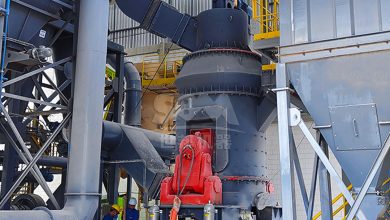
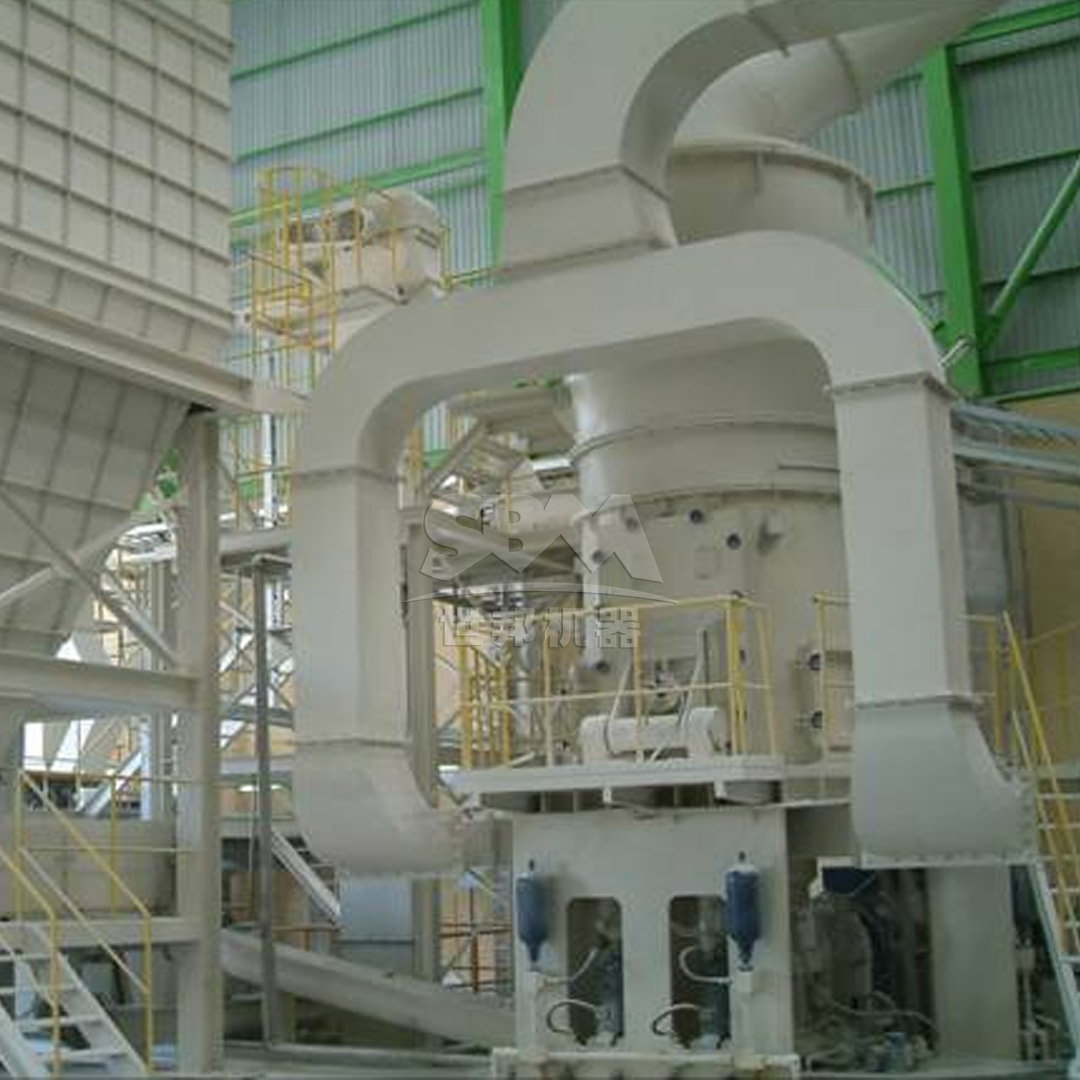
LM Series Vertical Roller Mill for Primary and Secondary Grinding
For most spodumene processing applications, we recommend our LM Series Vertical Roller Mill as the optimal solution for primary and secondary grinding stages. This advanced grinding technology offers significant advantages for spodumene processing:
Technical Advantages for Spodumene Applications:
- High Grinding Efficiency: The LM Series utilizes a bed compression grinding principle that delivers 30-40% lower energy consumption compared to traditional ball mills, significantly reducing operational costs in energy-intensive spodumene processing.
- Integrated Drying Capability: With the ability to handle feed moisture up to 15%, the LM Series eliminates the need for separate drying equipment when processing naturally moist spodumene ores.
- Precise Particle Size Control: Advanced dynamic separators enable precise control of product fineness from 30 to 325 mesh (600-45μm), meeting the specific requirements for both physical and chemical spodumene processing routes.
- Robust Wear Protection: Specially designed wear parts with advanced materials provide extended service life when processing abrasive spodumene ore, reducing maintenance frequency and costs.
Key Technical Specifications:
- Input Size: ≤50mm
- Output Fineness: 30-325 mesh (special models to 600 mesh)
- Processing Capacity: 3-250 tons/hour (model dependent)
- Power Consumption: 30-40% lower than ball mill systems
The LM Series Vertical Roller Mill is particularly suitable for medium to large-scale spodumene operations where energy efficiency, production reliability, and product quality are critical considerations.
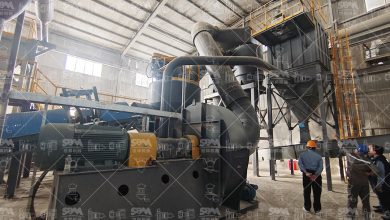
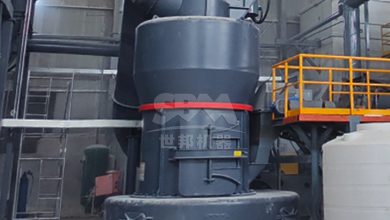
SCM Ultrafine Mill for Specialty Applications
For operations requiring ultra-fine spodumene powders for specialized lithium extraction processes or high-value lithium chemical production, we recommend our SCM Series Ultrafine Mill. This advanced grinding system delivers exceptional performance in the fine and ultra-fine grinding ranges that are increasingly important in modern spodumene processing.
Technical Advantages for Fine Spodumene Grinding:
- Ultra-Fine Grinding Capability: The SCM Series produces powders in the range of 325-2500 mesh (45-5μm), enabling more efficient lithium extraction through increased surface area.
- High-Precision Classification: Advanced vertical turbine classifiers ensure precise particle size distribution with no coarse particle contamination, critical for consistent downstream processing performance.
- Superior Energy Efficiency: With twice the capacity of jet mills and 30% lower energy consumption, the SCM Series provides significant operational cost savings in fine grinding applications.
- Advanced Wear Resistance: Specially engineered grinding rollers and rings manufactured from premium materials deliver extended service life in abrasive spodumene applications.
Key Technical Specifications:
- Input Size: ≤20mm
- Output Fineness: 325-2500 mesh (D97≤5μm)
- Processing Capacity: 0.5-25 tons/hour (model dependent)
- Noise Level: ≤75dB with integrated acoustic enclosure
The SCM Ultrafine Mill is ideally suited for spodumene operations targeting high-value lithium products or employing innovative extraction technologies that benefit from ultra-fine particle sizes.
Comparative Analysis of Grinding Technologies for Spodumene
| Technology | Energy Efficiency | Particle Size Range | Capital Cost | Operating Cost | Suitability for Spodumene |
|---|---|---|---|---|---|
| Ball Mill | Medium | Coarse to Medium Fine | Low to Medium | High | Good for conventional processing |
| Vertical Roller Mill (LM Series) | High | Medium to Fine | Medium to High | Low to Medium | Excellent for most applications |
| Ultrafine Mill (SCM Series) | Very High | Fine to Ultra-Fine | High | Medium | Superior for specialized applications |
Optimizing Grinding Circuit Design for Spodumene
The most efficient spodumene processing operations typically employ a combination of grinding technologies in a well-designed circuit. A common approach involves:
- Primary Crushing: Jaw or gyratory crushers to reduce run-of-mine ore to 150-200mm
- Secondary Crushing: Cone crushers to achieve 20-50mm product
- Primary Grinding: LM Series Vertical Roller Mill to reduce particle size to 100-300μm
- Secondary/Fine Grinding: SCM Series Ultrafine Mill for applications requiring finer particles
This multi-stage approach optimizes energy consumption while achieving the target particle size distribution for efficient downstream processing.
Economic Considerations in Mill Selection
The economic evaluation of grinding mills for spodumene processing must consider both capital and operating expenditures:
Capital Expenditure (CAPEX)
Vertical roller mills typically require higher initial investment compared to traditional ball mills but offer significant operational benefits that justify the additional capital outlay in most commercial operations.
Operating Expenditure (OPEX)
Energy consumption represents the largest component of operating costs in grinding circuits. The superior energy efficiency of vertical roller mills and ultrafine mills can reduce operating costs by 30-50% compared to conventional technologies.
Maintenance Costs
Advanced grinding technologies with improved wear protection and modular component designs can significantly reduce maintenance requirements and associated costs over the equipment lifecycle.
Conclusion
The selection of the optimal grinding mill for spodumene ore processing depends on specific operational requirements, including target particle size, production capacity, and economic considerations. For most commercial spodumene operations, our LM Series Vertical Roller Mill provides the ideal balance of performance, efficiency, and reliability. For specialized applications requiring ultra-fine particles, the SCM Series Ultrafine Mill delivers exceptional results with superior energy efficiency.
By leveraging these advanced grinding technologies, spodumene processors can optimize their operations for maximum efficiency, reduced environmental impact, and improved economic returns in the competitive lithium market.