
Which Grinding Mill is Best for Power Plant Desulfurization?
Introduction: The Critical Role of Grinding in Flue Gas Desulfurization
Flue Gas Desulfurization (FGD) is a cornerstone technology for modern power plants to comply with stringent environmental regulations, primarily targeting the reduction of sulfur dioxide (SO2) emissions. The most prevalent method, wet limestone-gypsum FGD, relies on the chemical reaction between a limestone slurry and SO2. The efficiency, cost, and reliability of this entire process are fundamentally dependent on one key factor: the quality of the ground limestone.
The ideal desulfurization absorbent requires a very fine, uniformly sized powder with a high specific surface area. This maximizes the reaction rate with SO2, leading to higher desulfurization efficiency (often exceeding 95%), lower limestone consumption, and reduced operational costs. Therefore, selecting the optimal grinding mill is not merely an equipment choice; it is a strategic decision impacting the plant’s environmental compliance, energy footprint, and overall economics. This article explores the key considerations and technologies, highlighting advanced solutions for modern power plants.
Key Requirements for Desulfurization Grinding Mills
Before evaluating specific mill types, it is essential to define the performance criteria for an ideal FGD grinding system:
- Target Fineness: Typically, a product fineness of 325 mesh (45μm) to 2500 mesh (5μm) is required, with a steep particle size distribution to ensure high reactivity.
- High Capacity & Availability: Power plants operate continuously. The grinding system must deliver consistent, high throughput (often tens to hundreds of tons per hour) with exceptional operational reliability and low maintenance downtime.
- Energy Efficiency: Grinding is an energy-intensive process. Selecting a mill with low specific energy consumption (kWh/ton) directly reduces the operating cost of the FGD system.
- System Simplicity & Environmental Control: The system should be easy to operate and maintain, with fully enclosed, negative-pressure design to prevent dust emission and integrate seamlessly with the plant’s dust collection systems.
- Wear Resistance & Low Operating Cost: Abrasive materials like limestone cause wear on grinding components. Mills designed with wear-resistant materials and innovative structures that extend service life are crucial for controlling long-term costs.
Analysis of Common Grinding Mill Technologies for FGD
Several grinding technologies are applied in power plant desulfurization, each with distinct advantages and limitations.
1. Ball Mill
The traditional workhorse for limestone grinding. Ball mills operate on the principle of impact and attrition as the grinding media (steel balls) cascade inside a rotating drum.
Advantages: Proven technology, robust construction, capable of producing fine powder, and can handle wet or dry grinding.
Disadvantages for Modern FGD: High energy consumption (a significant portion of energy is wasted on noise, heat, and wear), large footprint, relatively complex system with auxiliary equipment, and the particle size distribution is often broad, which can limit desulfurization efficiency. The grinding fineness for high-efficiency FGD is often at the upper limit of its efficient operating range.
2. Raymond Mill (or Pendulum Roller Mill)
A widely used medium-speed mill where rollers swing outward and rotate, pressing against a stationary ring to crush material fed by a shovel.
Advantages: Lower initial investment than some advanced mills, stable operation for medium-fineness products (typically up to 325 mesh).
Disadvantages: The grinding mechanism involves direct metal-to-metal contact (roller and ring), leading to higher wear rates when processing abrasive limestone. Its energy efficiency and ability to produce ultra-fine powder (<45μm) consistently are generally inferior to more modern vertical roller mills.
3. Vertical Roller Mill (VRM)
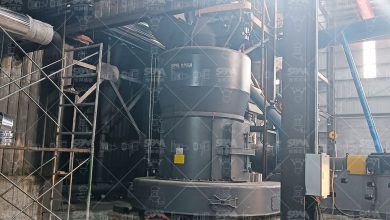
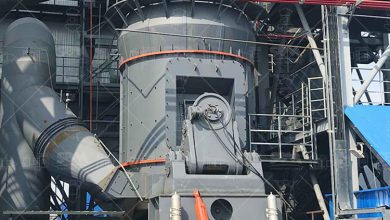
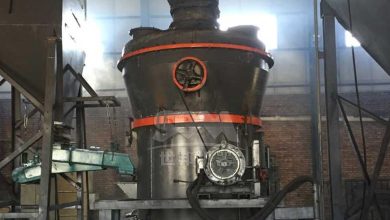
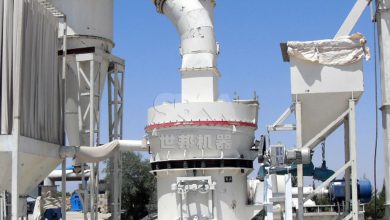
This has become the dominant technology for new, large-scale power plant FGD systems. Material is fed onto a rotating grinding table and crushed under hydraulic pressure applied by grinding rollers.
Advantages: Superior energy efficiency (30-50% less energy than a ball mill for the same task), excellent drying capability (can use waste heat from the plant), compact footprint, and inherently produces a narrower, more desirable particle size distribution due to the bed-compression grinding principle. It operates with minimal metal-to-metal contact, reducing wear.
Disadvantages: Higher initial capital cost and more sophisticated operation and maintenance requirements compared to traditional mills.
The Advanced Choice: Vertical Roller Mills for Superior FGD Performance
For modern power plants seeking the optimal balance of efficiency, cost, and reliability, the Vertical Roller Mill stands out. Its design principles align perfectly with the demands of high-volume, fine limestone grinding for desulfurization.
The working principle involves a motor driving a grinding table via a reducer. Limestone is fed centrally, spread by centrifugal force, and forms a uniform material bed. Hydraulically loaded rollers apply high pressure, causing inter-particle comminution (bed grinding)—a highly efficient method. Hot gas (often pre-heated) dries the material and transports the ground powder to an integrated, high-efficiency classifier. Coarse particles are rejected and fall back to the table for re-grinding, while fine product is conveyed to the collection system.
This closed-circuit grinding and classifying process within a single machine body allows for precise control over final product fineness, from 325 mesh down to ultra-fine ranges, ensuring the optimal particle size for maximum SO2 capture.
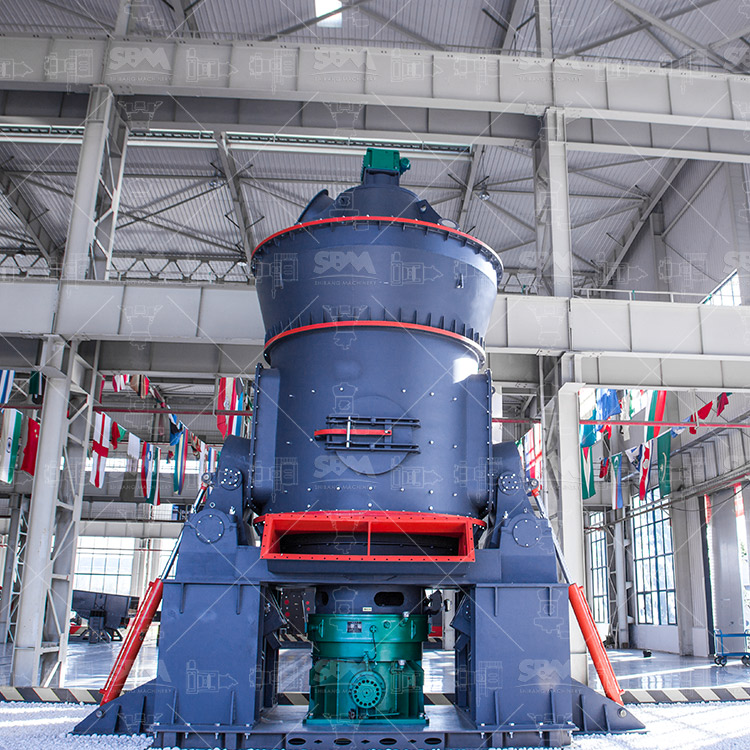
Recommended Solution: Our LM Series Vertical Roller Mill
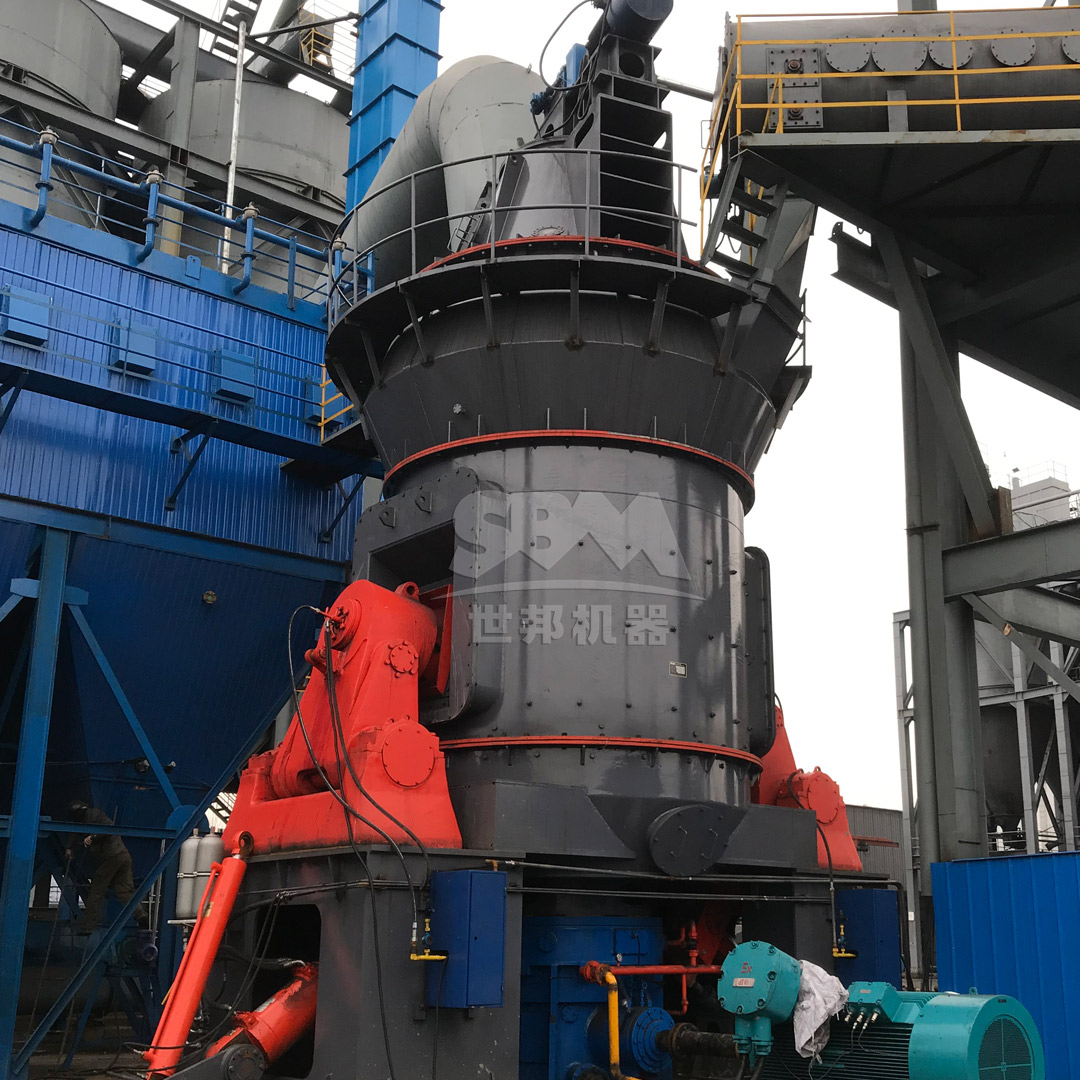
For power plants aiming to achieve best-in-class desulfurization performance, we highly recommend our LM Series Vertical Roller Mill. Engineered based on decades of experience and continuous innovation, it is specifically designed to meet the rigorous demands of large-scale industrial grinding, including FGD limestone preparation.
Why the LM Series is the Ideal Choice:
- Unmatched Energy Efficiency: Utilizing the efficient bed-grinding principle, the LM mill consumes 30-40% less energy than traditional ball mill systems for the same output, significantly reducing the operating cost of your FGD plant.
- High Capacity & Integrated Design: The system integrates crushing, grinding, drying, classification, and conveying. This not only reduces the plant footprint by approximately 50% but also simplifies the process flow. With capacities ranging from 3 to over 250 tons per hour, a single LM mill can serve even the largest power units.
- Low Wear & Operating Costs: Featuring a non-contact design between rollers and the grinding table liner, coupled with high-wear-resistant materials, the service life of wear parts is dramatically extended. Our patented quick-change system for grinding roller assemblies minimizes maintenance downtime.
- Intelligent Environmental Control: The mill operates under full negative pressure, ensuring no dust leakage. Combined with an advanced pulse dust collection system, emissions are kept well below international standards. An expert-level automatic control system allows for stable, optimized operation with remote monitoring capabilities.
- Precise Product Control: Equipped with a high-efficiency dynamic classifier, the LM mill can precisely control product fineness between 30-325 mesh (and up to 600 mesh for special models), guaranteeing the high-quality limestone powder essential for >95% desulfurization efficiency.
For power plants with specific requirements for ultra-fine limestone powder to achieve the highest possible reactivity, our SCM Series Ultrafine Mill presents an excellent specialized solution. Capable of producing powder from 325 to 2500 mesh (5μm), it incorporates a high-precision vertical turbine classifier to ensure no coarse powder mixing and uniform product quality. Its high-efficiency design offers capacity double that of some jet mills while saving 30% on energy, making it a viable option for advanced or retrofitted FGD systems demanding the finest absorbent.
Conclusion
The choice of grinding mill is pivotal to the success of a power plant’s desulfurization system. While traditional technologies like ball mills and Raymond mills have their place, the modern imperative for highest efficiency, lowest operating cost, and stringent environmental compliance points decisively towards Vertical Roller Mill technology.
Our LM Series Vertical Roller Mill embodies the next generation of grinding solutions, offering an optimal combination of energy savings, high capacity, operational reliability, and superior product quality tailored for FGD applications. By investing in this advanced technology, power plants can ensure not only reliable compliance with emission regulations but also achieve significant long-term economic benefits through reduced energy and maintenance costs. For your next FGD project or upgrade, consider the LM Series as the foundation for a cleaner, more efficient, and more economical operation.