What Machine is Used to Produce 200 Mesh Stone Powder? Is 200 Mesh Considered Coarse or Fine Powder?
Introduction to Stone Powder Production and Particle Size Classification
The production of stone powder with specific particle size distributions is crucial across numerous industries, including construction, paints and coatings, plastics, rubber, and pharmaceuticals. Among the various specifications, 200 mesh stone powder represents one of the most commonly requested grades in industrial applications. Understanding both the classification of 200 mesh powder and the appropriate machinery for its production is essential for optimizing manufacturing processes and product quality.
This comprehensive guide examines the technical aspects of 200 mesh stone powder production, including its position in particle size classification systems, the various grinding technologies available, and recommendations for selecting the most efficient equipment for your specific application requirements.
Understanding Mesh Size and Particle Distribution
In powder technology, ‘mesh’ refers to the number of openings in a linear inch of a screening medium. A 200 mesh screen contains 200 openings per linear inch, which corresponds to an opening size of approximately 74 microns (0.074 mm). Particles that pass through a 200 mesh screen are generally smaller than 74 microns, though the exact particle size distribution depends on the specific material characteristics and production method.
The mesh system originated from the weaving industry and was adopted for particle size classification due to its practicality for sieve analysis. While modern particle size analysis often uses more precise laser diffraction methods, the mesh system remains widely used in many industries for its simplicity and historical prevalence.
Is 200 Mesh Considered Coarse or Fine Powder?
To properly classify 200 mesh powder, we must examine it within the context of standard powder classification systems:
Powder Classification Standards
According to international standards such as ISO 14688-1 and various industry-specific classifications, powders are typically categorized as follows:
- Coarse Powder: Generally particles larger than 250 microns (60 mesh)
- Medium Powder: Particles between 250-75 microns (60-200 mesh)
- Fine Powder: Particles between 75-45 microns (200-325 mesh)
- Very Fine Powder: Particles between 45-20 microns (325-635 mesh)
- Ultrafine Powder: Particles smaller than 20 microns (635+ mesh)
Based on this classification, 200 mesh powder (74 microns) falls at the transition point between medium and fine powders. In practical industrial applications, 200 mesh is generally considered a fine powder, though it represents the coarser end of the fine powder spectrum.
Application-Based Classification
The perception of whether 200 mesh is coarse or fine often depends on the specific application:
- In construction applications (concrete additives, joint compounds), 200 mesh is typically considered a fine powder.
- In paint and coating industries, 200 mesh represents a medium-fine extender pigment.
- In pharmaceutical applications, 200 mesh would be considered relatively coarse.
- In advanced ceramics and electronic materials, 200 mesh is definitely coarse.
The versatility of 200 mesh powder stems from this intermediate position, making it suitable for applications requiring good coverage and opacity while maintaining reasonable material handling properties and cost-effectiveness.

Equipment for Producing 200 Mesh Stone Powder
Selecting the appropriate equipment for producing 200 mesh stone powder depends on multiple factors, including production capacity requirements, material characteristics, energy efficiency considerations, and total operational costs. Below we examine the most common types of grinding equipment capable of producing 200 mesh stone powder.
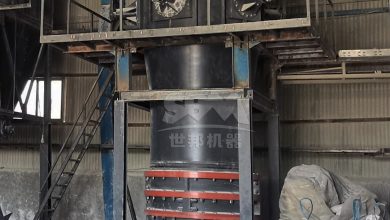
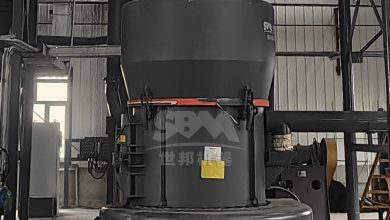
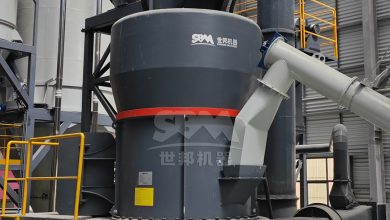
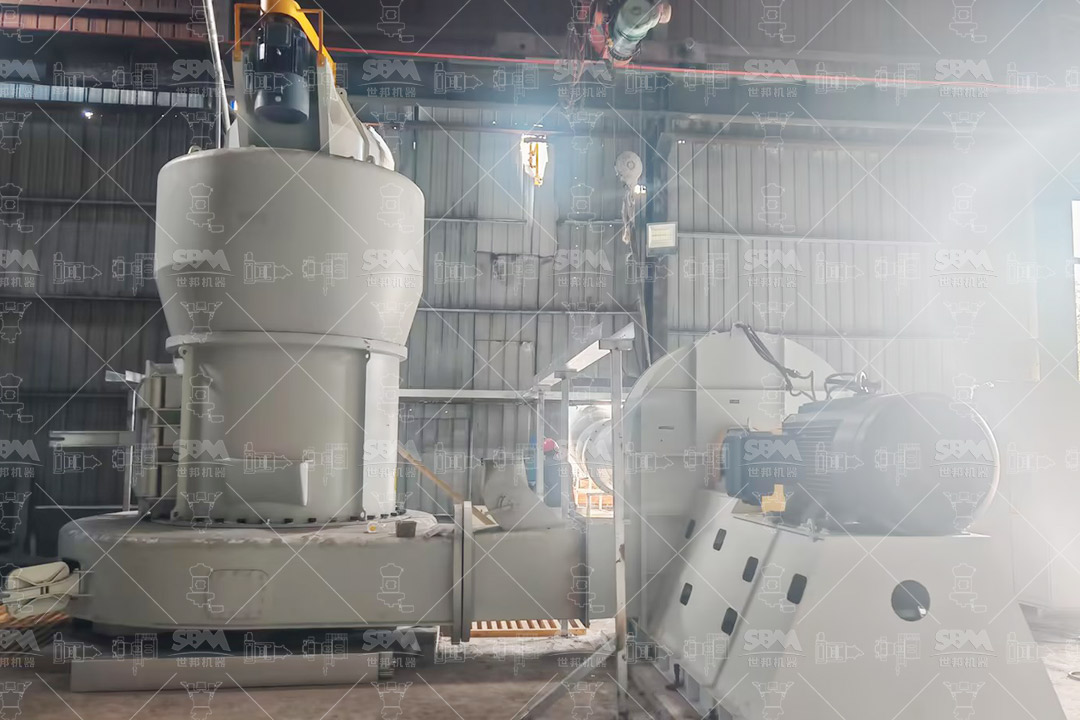
1. MTW Series Trapezium Mill – The Optimal Solution for 200 Mesh Production
For dedicated production of 200 mesh stone powder, the MTW Series Trapezium Mill represents an excellent balance of efficiency, precision, and operational economy. With an output range of 30-325 mesh (approximately 600-45 microns), this equipment is specifically designed to target the fine powder range that includes 200 mesh.
The MTW Series offers several distinct advantages for 200 mesh production:
- Precise Particle Control: Advanced classification system ensures tight particle distribution around the target 200 mesh specification
- High Efficiency: Curved air channel design reduces energy consumption while maintaining high throughput
- Wear Resistance: Combined blade design and special wear-resistant materials extend maintenance intervals
- Proven Reliability: Integrated gear transmission system with 98% efficiency reduces mechanical failures
With models ranging from the MTW110 (3-9 ton/h capacity) to the high-capacity MRN218 (15-45 ton/h), the MTW series can accommodate operations of virtually any scale while maintaining consistent 200 mesh quality.

2. Ball Mills – Traditional Approach with Limitations
Ball mills represent the traditional technology for powder production and can certainly produce 200 mesh stone powder. These rotating cylinders containing grinding media (typically steel balls) achieve size reduction through impact and attrition as the mill rotates.
While ball mills are capable of reaching 200 mesh specifications, they present several disadvantages compared to modern grinding technologies:
- Higher Energy Consumption: Typically 30-50% more energy intensive than advanced mills for equivalent output
- Limited Precision: Broader particle size distribution often requires additional classification steps
- Longer Grinding Times: Extended processing required to reach finer sizes
- Higher Maintenance: Regular replacement of liners and grinding media increases operational costs
For these reasons, ball mills are increasingly being replaced by more efficient technologies for dedicated 200 mesh production, though they remain suitable for applications requiring very high capacity with less stringent size distribution requirements.
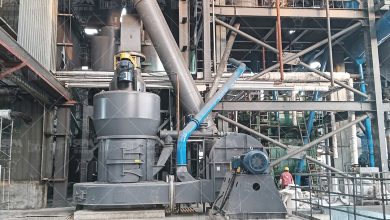
3. Vertical Roller Mills – High Capacity Alternative
Vertical roller mills (VRMs) offer another alternative for 200 mesh production, particularly for large-scale operations. Our LM Series Vertical Roller Mills can produce powder in the 30-325 mesh range, making them suitable for 200 mesh applications.
Key advantages of vertical roller mills include:
- High Capacity: Models available with capacities up to 250 tons/hour
- Compact Design: Integrated system requires 50% less space than traditional ball mill circuits
- Low Operating Costs: Reduced wear part consumption and lower energy requirements
However, for dedicated 200 mesh production at moderate capacities, the MTW Series typically offers better operational economy and more precise particle control.
4. Hammer Mills for Preliminary Size Reduction
While hammer mills typically produce coarser products (0-3mm range), they can be configured with appropriate screens to produce 200 mesh powder. However, this approach is generally less efficient than using dedicated fine grinding equipment due to:
- High Energy Consumption when pushing beyond design parameters
- Rapid Wear of hammers and screens when producing fine powders
- Limited Control over particle size distribution
For these reasons, hammer mills are better suited as preliminary crushing equipment ahead of dedicated fine grinding systems rather than as primary 200 mesh producers.
Technical Comparison of Equipment for 200 Mesh Production
The following table provides a comparative analysis of the main equipment options for 200 mesh stone powder production:
| Equipment Type | Optimal Output Range | Energy Efficiency | Particle Distribution Control | Capital Investment | Operating Costs |
|---|---|---|---|---|---|
| MTW Trapezium Mill | 30-325 mesh | Excellent | Precise | Medium | Low |
| Ball Mill | 0.074-0.8mm | Fair | Moderate | Low-Medium | High |
| Vertical Roller Mill | 30-325 mesh | Good | Good | High | Medium |
| Hammer Mill | 0-3mm | Poor (for fine powder) | Limited | Low | High (for fine powder) |
Why Choose Our MTW Series Trapezium Mill for 200 Mesh Production?
Based on the technical analysis above, our MTW Series Trapezium Mill emerges as the optimal solution for most 200 mesh stone powder production requirements. Here’s why:
Technical Superiority
The MTW Series incorporates multiple advanced technologies specifically designed for efficient fine powder production:
- Conical Gear Overall Transmission: Achieves 98% transmission efficiency with compact design and reduced installation costs
- Internal Oil Lubrication System: Advanced patented system ensures reliable operation with minimal maintenance
- Curved Air Duct Optimization: Reduces air flow resistance and improves overall system efficiency
- Wear-Resistant Volute Structure: No-blocking volute design extends service life and reduces maintenance frequency
Economic Advantages
Beyond technical performance, the MTW Series delivers significant economic benefits:
- 30% Lower Energy Consumption compared to traditional grinding systems
- Reduced Maintenance Costs through innovative wear-resistant designs
- Higher Production Efficiency with integrated intelligent control systems
- Longer Component Life through optimized material selection and engineering
Model Selection Guide
Our MTW Series offers multiple models to match your specific production requirements:
- MTW110/MTW110Z: Ideal for small to medium operations (3-10 ton/h capacity)
- MTW138Z: Balanced solution for medium-scale production (6-17 ton/h capacity)
- MTW175G: High-capacity model for larger operations (9.5-25 ton/h capacity)
- MTW215G/MRN218: Maximum capacity solutions (15-45 ton/h capacity)
Advanced Applications of 200 Mesh Stone Powder
Understanding the diverse applications of 200 mesh stone powder helps contextualize the importance of precise production control:
Construction Industry
In construction applications, 200 mesh stone powder serves as:
- Concrete Additive: Improves workability and reduces cement content requirements
- Asphalt Filler: Enhances stability and durability of asphalt mixtures
- Dry Mix Mortars: Provides optimal particle packing for improved performance
Industrial Applications
Beyond construction, 200 mesh powder finds use in:
- Paints and Coatings: As extender pigments providing improved coverage and rheology
- Plastics and Rubber: As functional fillers enhancing mechanical properties
- Agricultural Products: As carriers for pesticides and fertilizers
- Ceramics: As raw material components in traditional ceramic production
Optimizing Your 200 Mesh Production Process
Achieving consistent, high-quality 200 mesh stone powder requires more than just selecting the right equipment. Consider these additional factors:
Feed Material Preparation
Proper preparation of feed material significantly impacts grinding efficiency and product quality:
- Initial Crushing: Reduce feed material to ≤30mm for optimal MTW Series performance
- Moisture Control: Maintain feed moisture below 5% for dry grinding processes
- Contamination Prevention: Implement effective tramp metal removal systems
Process Control and Automation
Modern grinding systems offer advanced control options:
- Automated Feed Control: Maintains optimal mill loading for consistent operation
- Particle Size Monitoring: Online or at-line measurement ensures product consistency
- Energy Optimization: Intelligent systems adjust operational parameters for maximum efficiency
Maintenance Planning
Proactive maintenance ensures continuous operation and consistent product quality:
- Wear Part Monitoring: Track consumption of grinding elements and classifiers
- Preventive Maintenance Schedules: Regular inspection and servicing prevents unexpected downtime
- Spare Parts Strategy: Maintain critical spares to minimize production interruptions
Conclusion
200 mesh stone powder occupies an important position in the spectrum of industrial powders, representing a fine powder with broad applicability across multiple industries. While several grinding technologies can produce this specification, our MTW Series Trapezium Mill stands out as the optimal solution for most applications, offering an ideal balance of precision, efficiency, and operational economy.
With output specifically targeting the 30-325 mesh range, advanced features for wear reduction and energy savings, and multiple models to match any production requirement, the MTW Series provides a future-proof solution for 200 mesh stone powder production. The integration of intelligent control systems further ensures consistent product quality while minimizing operational costs.
For operations requiring production of 200 mesh stone powder, we recommend careful evaluation of the MTW Series against your specific capacity requirements, material characteristics, and quality expectations. Our technical team remains available to assist with equipment selection, process design, and optimization of your powder production operations.