What is the Processing Flow for Water Slag Powder Production?
Introduction to Water Slag Powder Production
Water slag, also known as ground granulated blast-furnace slag (GGBS or GGBFS), is a by-product of the iron-making industry. When rapidly quenched with water, molten slag forms granular particles that, when finely ground, exhibit excellent cementitious properties. The production of water slag powder involves a sophisticated process that transforms this industrial by-product into a valuable supplementary cementitious material for the construction industry. This comprehensive guide explores the complete processing flow for water slag powder production, from raw material preparation to final product packaging.
Raw Material Preparation and Pre-treatment
The production process begins with the preparation of raw water slag. Freshly produced molten slag from blast furnaces is rapidly quenched with large volumes of high-pressure water. This rapid cooling process, known as granulation, prevents crystallization and results in the formation of glassy, granular particles with latent hydraulic properties. The granulated slag typically contains about 10-20% moisture and must undergo drying before grinding.
The drying process is critical to ensure efficient grinding operations. Various drying systems can be employed, including rotary dryers, fluidized bed dryers, or vertical roller mills with integrated drying capabilities. The target moisture content after drying is typically below 1-2% to optimize grinding efficiency and prevent clogging in the milling system. Proper drying also enhances the reactivity of the final product by preventing the formation of hydration products during storage.
Grinding Process: The Core of Slag Powder Production
The grinding stage is the most critical and energy-intensive part of water slag powder production. The objective is to reduce the granulated slag particles to a fine powder with a specific surface area typically between 400-600 m²/kg (Blaine), which corresponds to approximately 45-5μm particle size. The choice of grinding equipment significantly impacts the final product quality, energy consumption, and overall production efficiency.
Traditional ball mills have been widely used for slag grinding, but modern facilities increasingly prefer vertical roller mills and specialized grinding systems that offer higher energy efficiency and better product quality control. The grinding process must achieve not only the target fineness but also maintain the glassy structure of the slag particles, as crystallization during grinding can reduce reactivity.
Recommended Equipment: SCM Series Ultrafine Mill
For operations requiring high-precision fine grinding of water slag, our SCM Series Ultrafine Mill offers exceptional performance with output fineness ranging from 325 to 2500 mesh (D97≤5μm). This advanced grinding system combines high efficiency with significant energy savings, consuming 30% less energy compared to conventional jet mills while delivering twice the production capacity.
The SCM Ultrafine Mill features a vertical turbine classifier that ensures precise particle size distribution without coarse particle contamination. Its durable design incorporates special material rollers and grinding rings that extend service life significantly. With models ranging from SCM800 (0.5-4.5 ton/h capacity) to SCM1680 (5.0-25 ton/h capacity), this system can be tailored to various production requirements while maintaining consistent product quality.
Key advantages for water slag applications include:
- Intelligent control system with automatic feedback on product fineness
- Pulse dust collection exceeding international standards
- Noise reduction design with operation below 75dB
- Bearingless screw grinding chamber for stable operation
Classification and Separation
Following the grinding process, the powdered slag undergoes classification to separate particles according to size. Efficient classification is essential for producing slag powder with consistent properties and optimal reactivity. Modern classification systems typically employ high-efficiency dynamic separators integrated with the grinding mill or standalone air classifiers.
The classification process works on the principle of centrifugal force and air flow, where finer particles are carried upward by the air stream while coarser particles are rejected back to the grinding chamber for further size reduction. Advanced classification systems allow for precise control over the particle size distribution, which directly influences the strength development and workability of slag-blended cements.

Product Collection and Storage
Once the slag powder reaches the desired fineness, it is transported to collection systems. Cyclone separators initially capture the majority of the product, while baghouse filters or electrostatic precipitators collect the remaining fine particles. Modern collection systems achieve efficiency rates exceeding 99.9%, minimizing product loss and environmental emissions.
The collected slag powder is then conveyed to storage silos equipped with aeration systems to prevent compaction and maintain flowability. Proper storage conditions are crucial to preserve the material’s reactivity. Silo design must consider factors such as material fluidity, segregation prevention, and moisture protection. Typically, slag powder silos include level indicators, temperature monitoring, and discharge aids to ensure consistent material flow.
Quality Control and Testing
Rigorous quality control is maintained throughout the production process to ensure the final product meets relevant standards such as ASTM C989, EN 15167-1, or equivalent national specifications. Key quality parameters include:
- Chemical composition (especially CaO, SiO2, Al2O3, and MgO content)
- Fineness (specific surface area and particle size distribution)
- Glass content (typically >90% for high-reactivity slag)
- Activity index (compressive strength compared to Portland cement reference)
- Moisture content
- Setting time and soundness
Modern production facilities employ automated sampling systems and online analyzers to monitor critical parameters in real-time, allowing for immediate process adjustments to maintain product consistency.
Alternative Production Systems
While the process described above represents a typical modern slag powder production line, alternative configurations exist based on specific requirements and available equipment. Some facilities utilize combined grinding systems where slag is interground with clinker to produce composite cements directly. Others employ separate grinding with subsequent blending to optimize the properties of both materials.
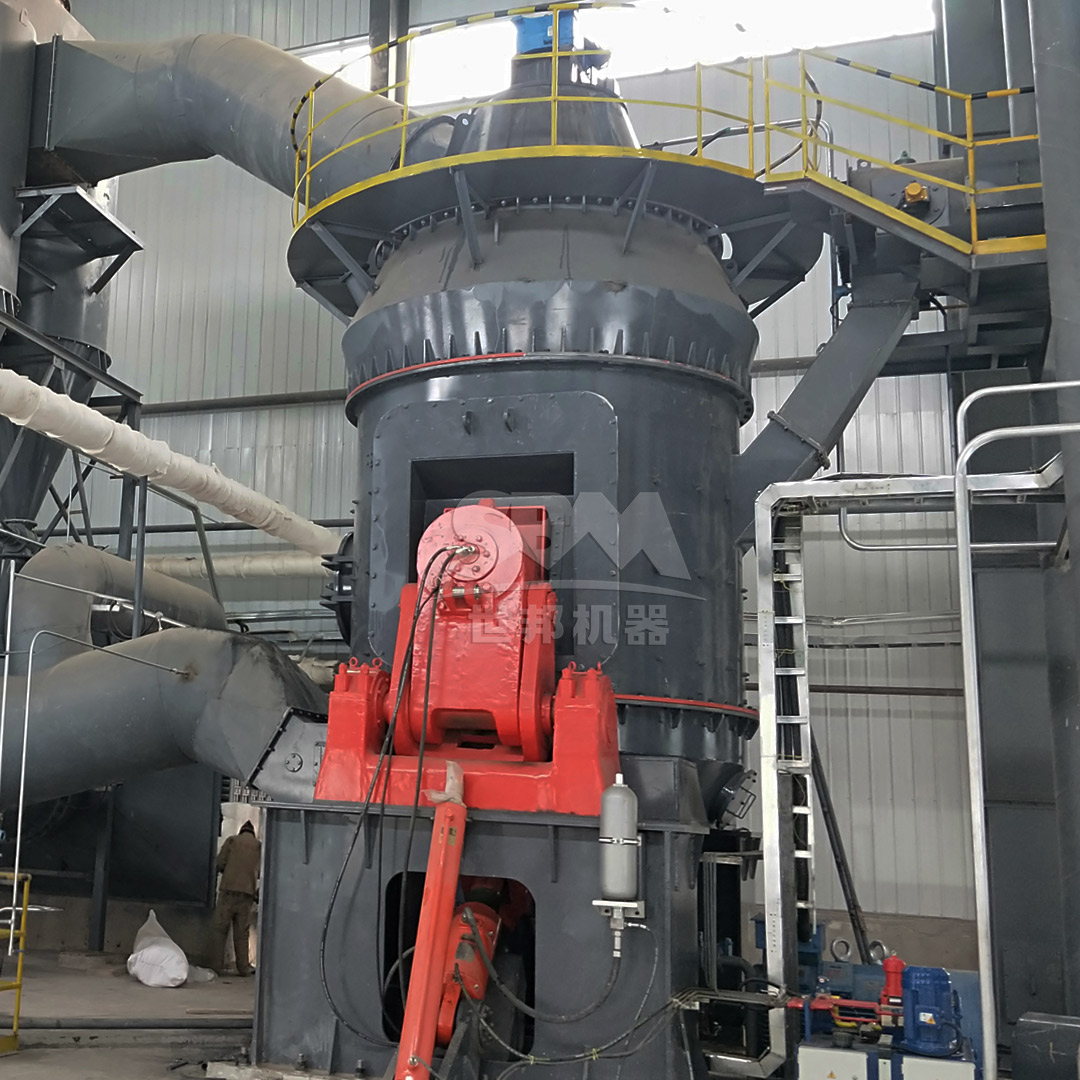
Recommended Equipment: LM Series Vertical Roller Mill
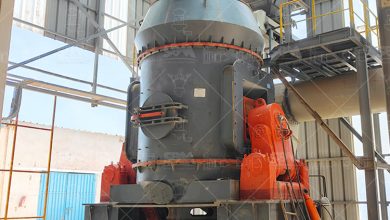
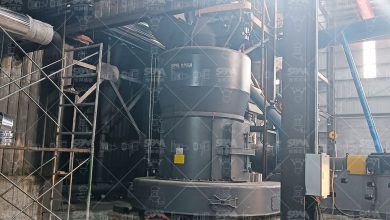
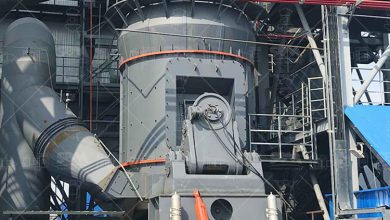
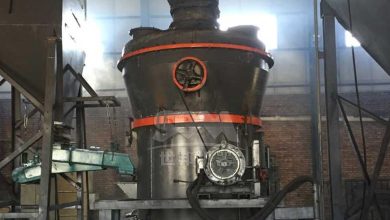
For large-scale water slag powder production facilities, our LM Series Vertical Roller Mill offers an integrated solution with outstanding efficiency. With a compact design that reduces footprint by 50% compared to traditional systems, this mill integrates crushing, grinding, and separation functions in a single unit.
The LM Series features a unique non-contact design between rollers and grinding table that extends wear part life up to three times while reducing energy consumption by 30-40% compared to ball mill systems. Its intelligent control system supports both remote and local operation with real-time monitoring of critical parameters.
Specific advantages for water slag applications include:
- Integrated drying capability for moist granulated slag
- Fully sealed negative pressure operation with dust emission <20mg/m³
- Operation noise below 80dB(A)
- Expert automatic control system reducing manual intervention
With models specifically designed for slag grinding (LM-N series) offering capacities from 4-6 t/h (LM130N) to 90-110 t/h (LM370N), these systems can be precisely matched to production requirements while ensuring consistent product quality with specific surface area ≥420m²/kg.
Environmental Considerations and Sustainability Benefits
Water slag powder production represents a prime example of industrial symbiosis, transforming a waste material into a valuable construction product. The process significantly reduces the environmental impact of both the iron/steel and cement industries by:
- Reducing landfill requirements for granulated slag
- Lowering CO2 emissions in cement production (each ton of slag powder replaces approximately one ton of Portland cement, reducing CO2 emissions by about 850 kg)
- Conserving natural resources by reducing limestone quarrying
- Decreasing energy consumption compared to Portland cement production
Modern production facilities implement comprehensive dust control measures, noise reduction technologies, and energy recovery systems to minimize their environmental footprint further. Many plants also utilize waste heat from adjacent processes for slag drying, enhancing overall energy efficiency.

Applications and Market Considerations
The finished water slag powder finds applications in various construction materials, primarily as a supplementary cementitious material in concrete. Typical application areas include:
- Ready-mixed concrete (replacement rates of 20-70% of Portland cement)
- Precast concrete elements
- Mass concrete structures (reducing heat of hydration)
- Marine and sulfate-resistant concrete
- High-performance and self-compacting concrete
Market considerations for slag powder production include proximity to raw material sources (iron and steel plants), transportation infrastructure, and regional demand patterns. Successful operations typically position themselves strategically to minimize logistics costs while serving growing construction markets.
Conclusion
The processing flow for water slag powder production has evolved significantly, with modern systems emphasizing energy efficiency, product quality, and environmental performance. From raw material preparation through drying, grinding, classification, and storage, each stage requires careful design and operation to produce a consistent, high-quality product. The selection of appropriate equipment, particularly grinding systems like the SCM Ultrafine Mill for specialized applications or LM Series Vertical Roller Mills for large-scale production, plays a crucial role in determining the economic and technical success of a slag powder production facility.
As sustainability concerns continue to drive the construction industry toward more environmentally friendly materials, the importance of efficient water slag powder production will only increase. By understanding and optimizing each step of the process, producers can contribute to a more sustainable built environment while creating value from industrial by-products.