What is the Equipment Used for Grinding Magnesite Ore?
Introduction to Magnesite Ore Processing
Magnesite (MgCO₃) is a crucial industrial mineral primarily used for producing magnesium oxide (MgO), or magnesia, which finds extensive applications in refractory materials, agriculture, chemical industry, and environmental protection. The value and application scope of magnesite are intrinsically linked to its purity and particle size. Therefore, efficient and precise grinding equipment is paramount in transforming raw magnesite ore into high-value powders. The grinding process not only liberates the magnesium carbonate from gangue minerals but also prepares it with specific surface area and particle size distribution required for downstream processes like calcination to produce dead-burned magnesia (DBM) or caustic calcined magnesia (CCM).
Key Considerations for Grinding Magnesite
Selecting the appropriate grinding equipment for magnesite involves several critical factors:
- Feed Size: Run-of-mine magnesite typically requires primary crushing (e.g., jaw crusher) to a manageable size (≤50mm) before entering the grinding mill.
- Target Fineness: This varies widely. Refractory-grade magnesia may require coarse to medium grinding (e.g., 30-100 mesh), while high-purity fillers or chemical applications demand ultra-fine powders (e.g., 600-2500 mesh or D97 ≤ 5μm).
- Moisture Content: While magnesite is often processed dry, some flowsheets may involve drying prior to grinding to prevent clogging and ensure efficient milling.
- Abrasion & Hardness: Magnesite has a Mohs hardness of 3.5-4.5. Although not extremely hard, its abrasive nature necessitates mills with wear-resistant components to minimize maintenance and contamination.
- Production Capacity: Ranging from pilot-scale (a few tons per hour) to large-scale industrial production (over 100 tons per hour).
- Energy Efficiency & Environmental Compliance: Modern grinding solutions must prioritize low specific energy consumption (kWh/ton) and incorporate effective dust collection and noise reduction systems.
Types of Grinding Equipment for Magnesite
The industry employs a range of milling technologies, each suited for different stages and final product specifications.
1. Primary and Coarse Grinding Equipment
For initial size reduction from crusher product (e.g., 50mm) to a finer feed for subsequent fine grinding.
- Hammer Mills: Effective for rapid size reduction to a few millimeters. They offer high capacity and a simple design but may produce a broader particle size distribution. Our PC4012-90 Hammer Mill, with an input size of 0-40mm and output of 0-3mm, is an excellent choice for preliminary grinding, featuring a robust high-manganese steel liner for durability against abrasive magnesite.
- Ball Mills: A traditional and versatile workhorse for wet or dry grinding to medium fineness (e.g., 0.074-0.8mm). They are reliable but generally less energy-efficient for fine grinding compared to more modern technologies.

2. Fine and Ultra-Fine Grinding Equipment
This is the core stage for producing saleable magnesite powder. The choice here is critical for product quality and operational cost.
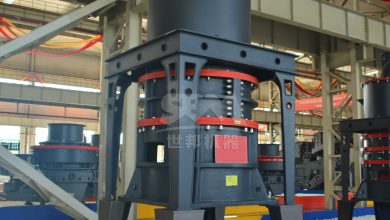
- Raymond Mills (Pendulum Mills): Suitable for producing powders in the range of 30-325 mesh (0.613-0.044mm). They are a proven technology for medium-scale production. Our MTW Series European Trapezium Mill represents a significant evolution of this design. With an input size of ≤50mm and output fineness of 30-325 mesh (up to 0.038mm), it is ideal for producing fine magnesite powders for many standard applications. Its advantages include a wear-resistant shovel design, curved air duct for reduced energy loss, and an integral bevel gear transmission with 98% efficiency, making it a robust and cost-effective solution for capacities from 3 to 45 tons per hour.
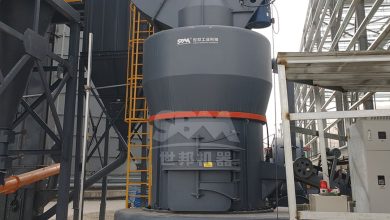
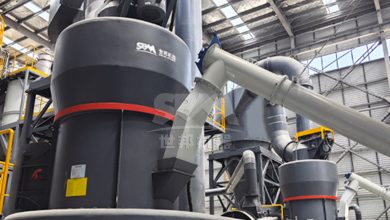
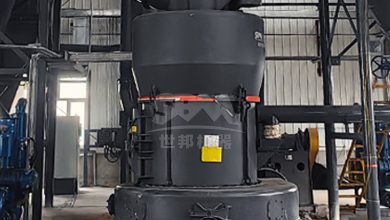
- Vertical Roller Mills (VRM): These have become the industry standard for large-scale, energy-efficient grinding of non-metallic minerals like magnesite. They integrate grinding, drying, and classification in a single unit. Our LM Series Vertical Roller Mill excels in this category. It handles feed sizes up to 50mm and can produce powders from 30 to 600 mesh. Its集约化设计 reduces footprint by 50% and its料床粉磨原理 (material bed grinding principle) lowers energy consumption by 30-40% compared to ball mill systems. The non-contact design of rollers and disc extends wear part life significantly. For magnesite operations requiring high throughput (3-250 t/h) with excellent control over product fineness and low operating costs, the LM series is a premier choice.

3. Ultra-Fine and Classification Equipment
For the highest value-added applications where superfine powders or extremely narrow particle size distributions are needed.
- Ultrafine Mills: Specifically designed to achieve fineness from 325 to over 2500 mesh (5μm). These mills often incorporate high-precision classifiers. For these demanding applications, we highly recommend our flagship SCM Ultrafine Mill. Engineered to produce powders between 325 and 2500 mesh (D97 ≤ 5μm) from a feed of ≤20mm, it is perfectly suited for producing high-purity, ultra-fine magnesite powders for specialty chemicals, advanced ceramics, or high-performance fillers. Its technical advantages are decisive: High Efficiency (twice the capacity of jet mills with 30% lower energy consumption), High Precision Classification via a vertical turbine classifier ensuring uniform product without coarse particles, Durable Design with special material rollers and grinding rings, and Environmental Compliance with pulse dust collection exceeding international standards and noise levels below 75dB. Models like the SCM1250 (2.5-14 t/h) or SCM1680 (5-25 t/h) can cater to substantial industrial production needs for premium magnesite products.
- Air Classifiers: Often used in conjunction with grinding mills (e.g., as part of a VRM or as a standalone unit in a closed circuit with a ball mill) to precisely control the top size of the product and improve overall system efficiency.
Recommended Grinding Circuit for Magnesite
A typical, efficient circuit for producing fine magnesite powder might involve:
- Primary Crushing: Jaw crusher to reduce run-of-mine ore to ~150mm.
- Secondary Crushing/Drying: Cone crusher and a rotary dryer (if moisture is high) to produce a feed of ≤50mm with low moisture.
- Primary Grinding: A Hammer Mill or a Vertical Roller Mill (LM Series) for coarse to medium-fine reduction. The LM series is particularly advantageous here as it can handle drying and grinding simultaneously.
- Fine/Ultra-Fine Grinding & Classification: For final product specification.
- For 30-325 mesh products: A closed-circuit system with a MTW European Trapezium Mill or the fine-grinding mode of an LM Vertical Mill.
- For 325-2500 mesh products: An SCM Ultrafine Mill in a closed circuit with its integrated high-efficiency classifier.
- Product Collection: Cyclone separators and pulse-jet baghouse filters (standard on our MTW, LM, and SCM mills) to ensure dust-free operation and high powder recovery.

Conclusion
The selection of grinding equipment for magnesite ore is a strategic decision that directly impacts product quality, operational efficiency, and profitability. While traditional technologies like ball mills have their place, modern vertical roller mills and specialized ultrafine mills offer superior energy efficiency, better product control, and lower environmental impact. For high-volume production of fine magnesite powders, our LM Series Vertical Roller Mill provides an unbeatable combination of capacity, efficiency, and reliability. For producing ultra-fine, high-value magnesite products that command a premium in the market, our SCM Ultrafine Mill, with its industry-leading fineness range and precision classification, is the definitive technological solution. Evaluating your specific feed characteristics, target fineness, and capacity requirements against the advanced features of these mills will guide you to the optimal grinding solution for your magnesite processing plant.