What is 400 Mesh Calcium Carbonate Powder Used For and How Much Does a 400 Mesh Grinding Mill Cost?
Introduction
Calcium carbonate (CaCO₃) powder is one of the most versatile and widely used industrial minerals globally. Its applications span from everyday products like paper and toothpaste to sophisticated industrial processes in plastics, paints, and construction. The performance of calcium carbonate in these applications is critically dependent on its particle size and particle size distribution. Among the various grades, 400 mesh powder (approximately 38 microns) represents a crucial mid-range fineness that balances performance, processing cost, and functionality. Producing this specific grade efficiently requires specialized grinding equipment. This article delves into the diverse uses of 400 mesh calcium carbonate and provides a comprehensive analysis of the factors influencing the cost of a suitable grinding mill, with specific equipment recommendations.
Understanding 400 Mesh Calcium Carbonate
The term “mesh” refers to the number of openings per linear inch in a sieve. A 400 mesh screen has 400 openings, meaning the powder particles are fine enough to pass through this sieve. In practical terms, 400 mesh corresponds to a particle size of about 38 microns (0.038 mm). This fineness offers an excellent balance: it is fine enough to provide good opacity, smooth surface finish, and reinforcement, yet not so fine that it becomes prohibitively expensive to produce or difficult to handle due to increased surface area and cohesiveness.
Primary Applications of 400 Mesh Calcium Carbonate Powder
1. Plastics and Polymers
In the plastics industry, 400 mesh calcium carbonate serves as a functional filler and extender. It improves stiffness (modulus), dimensional stability, and heat resistance in products like polypropylene (PP), polyethylene (PE), and polyvinyl chloride (PVC). At this fineness, it provides a good surface finish in molded parts and films without causing significant wear on processing equipment, which can be an issue with coarser grades.
2. Paints and Coatings
As an extender pigment in paints, 400 mesh CaCO₃ contributes to dry film hiding power, improves sheen uniformity, and enhances the durability of the coating. It is cost-effective for both interior and exterior architectural paints. Its particle size is ideal for balancing suspension properties and brushability.
3. Paper Industry
While finer grades (like 1250+ mesh) are used for coating high-quality paper, 400 mesh calcium carbonate is extensively used as a filler in the papermaking process. It is added to the pulp to improve paper brightness, opacity, and smoothness, while also reducing production costs by substituting for more expensive wood pulp.
4. Adhesives and Sealants
In adhesives like caulks and sealants, 400 mesh powder acts as a rheology modifier and filler. It helps control viscosity, provides reinforcement, and reduces raw material costs. The particle size is optimal for ensuring smooth application and good gap-filling properties.
5. Construction Materials
This grade is used in joint compounds, flooring compounds, and as a filler in various construction plastics and composites. It improves product consistency and performance.
Key Considerations for a 400 Mesh Grinding Mill
Selecting the right mill for producing 400 mesh calcium carbonate is not just about achieving the fineness. Several interrelated factors must be considered:
- Target Capacity (TPH): The required hourly output is the primary driver of mill size and cost.
- Energy Efficiency: Grinding is energy-intensive. Mills with higher grinding efficiency and lower specific energy consumption (kWh/ton) offer significant long-term savings.
- Product Quality Consistency: The mill must produce a tight particle size distribution with minimal oversize or undersize particles.
- System Integration & Footprint: Does the mill require extensive auxiliary equipment (crushers, classifiers, dust collectors)? What is the required floor space?
- Wear Part Life & Maintenance: The abrasiveness of CaCO₃ leads to wear on grinding elements. Mills with durable designs and easy maintenance reduce downtime and operating costs.
- Environmental Compliance: Modern mills must feature efficient dust collection systems to meet emission standards and ensure a clean working environment.
Grinding Mill Options for 400 Mesh Production
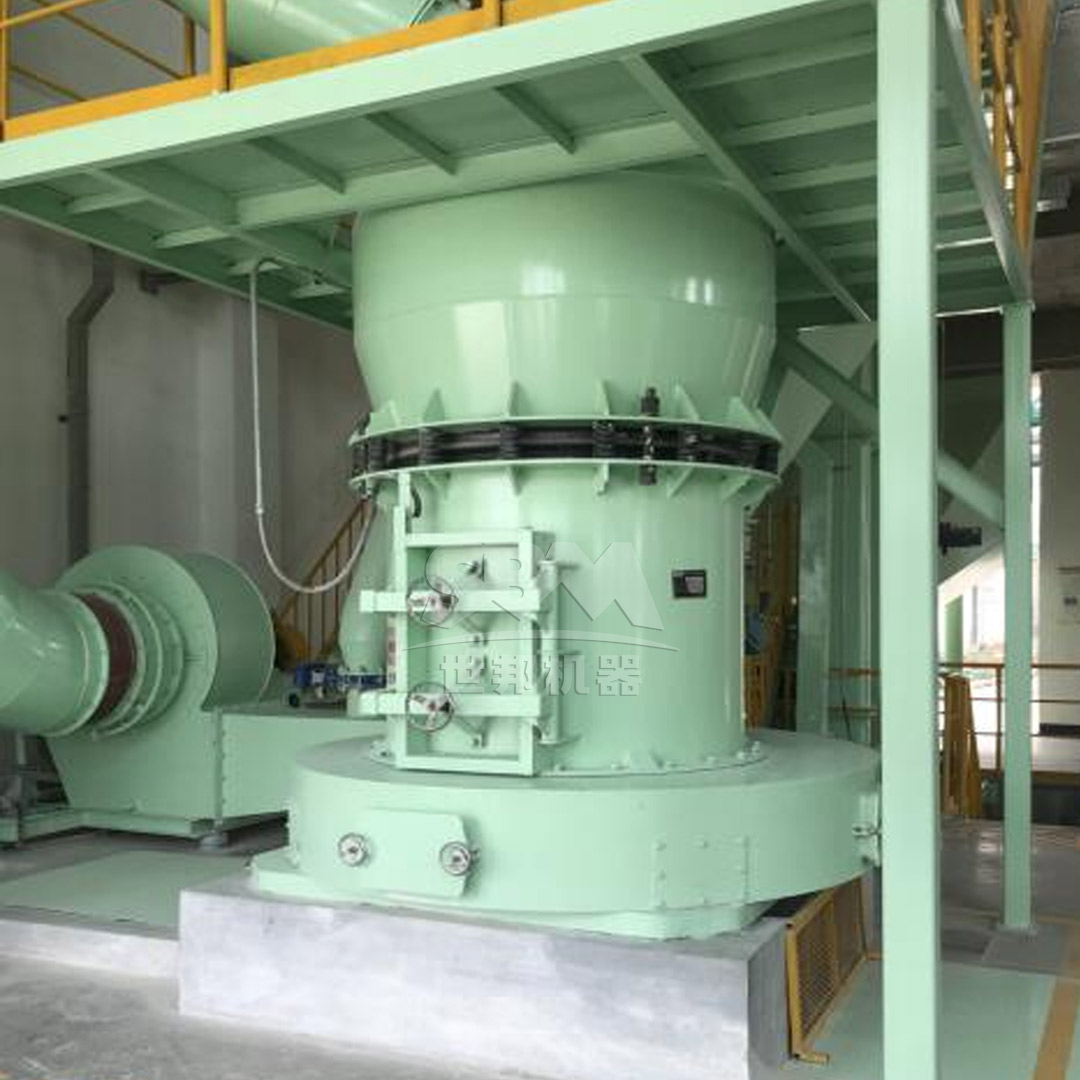
Several types of mills can achieve 400 mesh (38μm) fineness. The choice depends on capacity, capital budget, and desired product characteristics.
1. Raymond Mill (MTW Series European Trapezium Mill)
This is a classic and highly efficient choice for mid-range fineness (30-325 mesh). For dedicated 400 mesh production, it is a top contender due to its balance of cost, efficiency, and reliability.
Our Recommended Solution: MTW Series European Trapezium Mill
Our MTW Series mill is engineered for precisely this application range. It builds upon the traditional Raymond mill design with significant technological upgrades:
- High-Efficiency & Stable Operation: The integral bevel gear transmission achieves up to 98% drive efficiency, is more compact, and runs more smoothly than traditional worm gear systems.
- Advanced Classifier: The curved blade turbine classifier allows for precise adjustment of fineness between 30-325 mesh, ensuring your 400 mesh product is consistently on-spec.
- Durable Grinding Components: The anti-wear shovel design and wear-resistant volute structure are specifically optimized for abrasive materials like calcium carbonate, extending service life and reducing maintenance frequency.
- Eco-Friendly Design: It comes equipped with a high-efficiency pulse dust collector, ensuring dust emissions are well below national and international standards.
For a production line targeting 10-25 tons per hour of 400 mesh calcium carbonate, the MTW175G model would be an ideal fit, offering an excellent balance of capacity and operating economy.
2. Vertical Roller Mill (LM Series)
For larger-scale production (e.g., above 25 TPH), Vertical Roller Mills (VRMs) become increasingly attractive due to their superior energy efficiency and integrated drying capability if needed.
Our Recommended Solution: LM Series Vertical Roller Mill
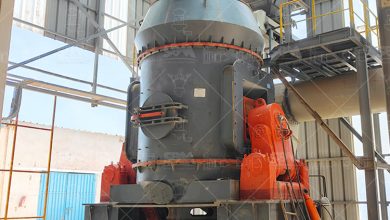
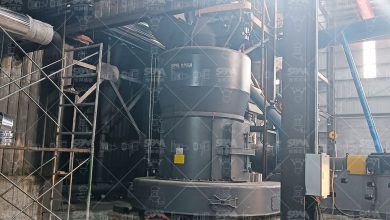
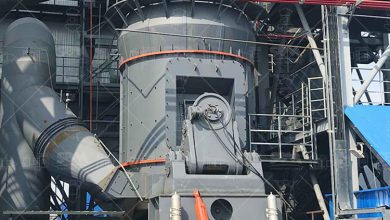
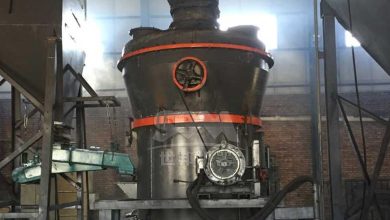
Our LM Vertical Roller Mill is a premier choice for high-capacity mineral grinding. Its advantages for large-scale CaCO₃ production are substantial:
- Exceptional Energy Savings: The bed grinding principle consumes 30-40% less energy than traditional ball mills for the same output, drastically reducing the largest portion of your operating cost.
- Integrated System: It integrates crushing, grinding, drying, classifying, and conveying in a single unit, reducing the plant footprint by approximately 50% and lowering civil engineering costs.
- Intelligent Control: The expert-level automatic control system allows for stable, optimized operation with minimal manual intervention, ensuring consistent product quality.
- Low Wear Rate: The non-contact design between rollers and the table, along with easily replaceable wear parts, ensures high availability and low maintenance costs.
For a mega-plant requiring 50-100+ tons per hour, the LM220K or LM280K model would provide unmatched efficiency and reliability.
3. Ball Mill
While capable, traditional ball mills are less energy-efficient for producing 400 mesh powder compared to the above options. They are often used in wet grinding processes or where the application specifically requires their grinding action.
How Much Does a 400 Mesh Grinding Mill Cost?
The cost is not a single figure but a range determined by multiple variables. A complete system price can vary from tens of thousands to several million US dollars.
Cost Breakdown & Influencing Factors:
- Mill Type and Model Size: A small MTW series mill for a 3 TPH line will cost significantly less than a large LM Vertical Mill for a 100 TPH line.
- System Configuration: Does the quote include just the main mill, or the complete system (jaw crusher for primary size reduction, bucket elevator, feeding system, mill main unit, classifier, cyclone collector, pulse dust collector, electrical control cabinet, piping)? A “turnkey” system price is higher but more accurate for budgeting.
- Automation Level: Basic PLC control vs. full SCADA system integration will affect the price.
- Material of Construction: Wear parts made from special alloys or with ceramic linings increase initial cost but lower long-term operating costs.
- Shipping and Installation: Costs vary by location, plant layout complexity, and local labor rates.
General Price Range Indication:
- For Small to Medium Scale (3-15 TPH): A complete system based on an MTW Series mill might range from approximately $100,000 to $500,000, depending on configuration and automation.
- For Large Scale (25-100+ TPH): A complete system based on an LM Vertical Roller Mill can range from approximately $1 million to $5+ million.
Important Note: These are broad estimates. The only way to get an accurate price is to consult with a professional equipment supplier, providing your specific raw material characteristics, desired capacity, final product specifications, and site conditions.
Conclusion
400 mesh calcium carbonate powder is a workhorse material in numerous industries, valued for its functional properties and cost-effectiveness. Investing in the right grinding technology is paramount to producing it profitably and competitively. While the upfront cost of a high-quality grinding mill is a major consideration, the total cost of ownership—dominated by energy consumption, maintenance, and production stability—is what truly defines a wise investment.
For most producers targeting 400 mesh fineness, our MTW Series European Trapezium Mill offers an optimal blend of precision, efficiency, and cost-effectiveness for capacities up to ~25 TPH. For those planning very large-scale production, our LM Series Vertical Roller Mill delivers unparalleled energy savings and operational simplicity. We recommend a detailed consultation with our engineering team to analyze your specific needs and provide a tailored solution and an accurate quotation, ensuring your calcium carbonate grinding operation is set up for long-term success.