What Are the Uses of Manganese Ore Powder and Which Grinding Mill is Best?
Introduction to Manganese Ore Powder
Manganese ore powder is a crucial industrial material derived from the grinding and processing of manganese ores. With its unique chemical and physical properties, manganese powder serves as an essential component in numerous industries, particularly in steel production, battery manufacturing, and chemical applications. The quality and fineness of manganese powder directly impact its performance in these applications, making the selection of appropriate grinding equipment a critical decision for producers.
Manganese, the 12th most abundant element in the Earth’s crust, exists primarily as oxide, carbonate, and silicate minerals. The most economically important manganese ores include pyrolusite (MnO₂), rhodochrosite (MnCO₃), and braunite (Mn²⁺Mn³⁺₆SiO₁₂). After mining and beneficiation, these ores require precise grinding to achieve the desired particle size distribution for various industrial applications.

Key Applications of Manganese Ore Powder
Steel Production and Alloy Manufacturing
Approximately 85-90% of global manganese consumption is dedicated to steel production, where it serves as both a desulfurizing and deoxidizing agent. Manganese powder is added during steelmaking to improve hardness, strength, and wear resistance. In alloy steel production, manganese content typically ranges from 0.5% to 2%, while high-manganese steels may contain up to 14% manganese for exceptional toughness and work-hardening properties.
The fineness requirements for manganese powder in steel applications vary significantly. Coarser powders (45-150 mesh) are suitable for basic steelmaking processes, while finer powders (200-325 mesh) are preferred for premium alloy production where rapid dissolution and homogeneous distribution are critical. The consistent particle size distribution achieved through proper grinding ensures predictable performance and optimal manganese yield in the final steel product.
Battery and Energy Storage Applications
Manganese dioxide powder is indispensable in the battery industry, particularly in the manufacturing of alkaline, zinc-carbon, and lithium-ion batteries. In alkaline batteries, electrolytic manganese dioxide (EMD) with precisely controlled particle size between 200-325 mesh provides the optimal surface area for electrochemical reactions, ensuring high energy density and extended shelf life.
For lithium-ion batteries, lithium manganese oxide (LMO) cathodes require ultra-fine manganese powder with particle sizes typically below 5μm (2500 mesh) to facilitate lithium-ion intercalation and deintercalation. The high purity and uniform morphology of properly ground manganese powder significantly impact battery performance, including cycle life, charge retention, and safety characteristics.
Chemical and Agricultural Industries
In the chemical sector, manganese compounds derived from finely ground ore powder serve as catalysts, pigments, and water treatment chemicals. Manganese sulfate, produced from manganese powder, is widely used as a micronutrient in fertilizers and animal feed. The agricultural industry relies on manganese powder with specific fineness (typically 100-200 mesh) to ensure proper absorption by plants and animals.
Water treatment applications utilize manganese greensand filters, where manganese oxide powder coatings help remove iron, hydrogen sulfide, and arsenic from water supplies. The effectiveness of these filtration systems depends heavily on the surface area and reactivity of the manganese powder, which are directly influenced by grinding precision.
Welding Industry Applications
Manganese powder is a critical component in welding electrode coatings and flux-cored wires. It acts as a deoxidizer, preventing porosity in welds, while also enhancing strength and toughness of the weld metal. Welding applications typically require manganese powder in the 100-325 mesh range, with strict control over contaminant levels to ensure weld quality and performance.
Critical Factors in Manganese Ore Grinding
Particle Size Distribution Requirements
The optimal particle size distribution for manganese powder varies significantly based on the intended application. Steel production typically requires broader distributions with D50 values between 45-150μm (100-325 mesh), while battery applications demand much finer powders with D90 values below 10μm (1250 mesh). Understanding these requirements is essential for selecting appropriate grinding equipment and operating parameters.
Narrow particle size distributions are particularly important for applications requiring consistent chemical reactivity or packing density. Modern grinding systems incorporate advanced classification technology to achieve these tight specifications, often producing powders with span values ((D90-D10)/D50) below 1.5.
Moisture Content and Drying Considerations
Manganese ores typically contain 3-8% moisture, which must be reduced before or during grinding to prevent agglomeration and ensure efficient operation. Some grinding systems integrate drying capabilities, using hot gas streams to simultaneously dry and transport material through the grinding circuit. The maximum acceptable moisture content varies by grinding technology, with vertical mills typically handling up to 15% moisture while ultra-fine grinding systems require below 2%.
Contamination Control
Maintaining product purity is crucial for many manganese applications, particularly in batteries and high-grade alloys. Grinding systems must be designed to minimize iron contamination from wear parts, often incorporating ceramic linings, high-chrome alloys, or other specialized materials in high-wear areas. Proper sealing systems and operational protocols further reduce the risk of external contamination.
Selecting the Optimal Grinding Mill for Manganese Ore
Production Capacity Requirements
The choice of grinding equipment must align with production targets, which can range from small-scale operations producing 1-5 tons per hour to large industrial plants requiring 50-100 tons per hour. Different grinding technologies offer varying scalability, with some systems better suited for consistent high-volume production while others provide flexibility for variable output requirements.
Energy Efficiency Considerations
Grinding operations typically account for 30-60% of total energy consumption in manganese processing plants. Modern grinding technologies offer significantly improved energy efficiency compared to traditional approaches, with specific energy consumption reductions of 20-40% achievable through proper equipment selection and system optimization. The energy requirement per ton of product varies from 15-40 kWh for coarse grinding to 60-150 kWh for ultra-fine applications.
Capital and Operational Costs
The total cost of ownership for grinding equipment includes initial investment, installation expenses, energy consumption, maintenance requirements, and replacement part costs. Different grinding technologies present varying cost profiles, with some offering lower capital costs but higher operational expenses, while others require greater initial investment but deliver superior long-term economics through reduced maintenance and energy requirements.
Recommended Grinding Solutions for Manganese Ore
SCM Ultrafine Mill for High-Precision Applications
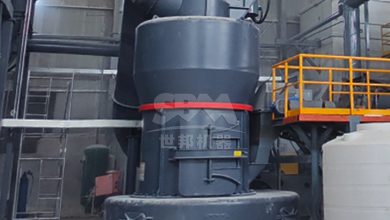
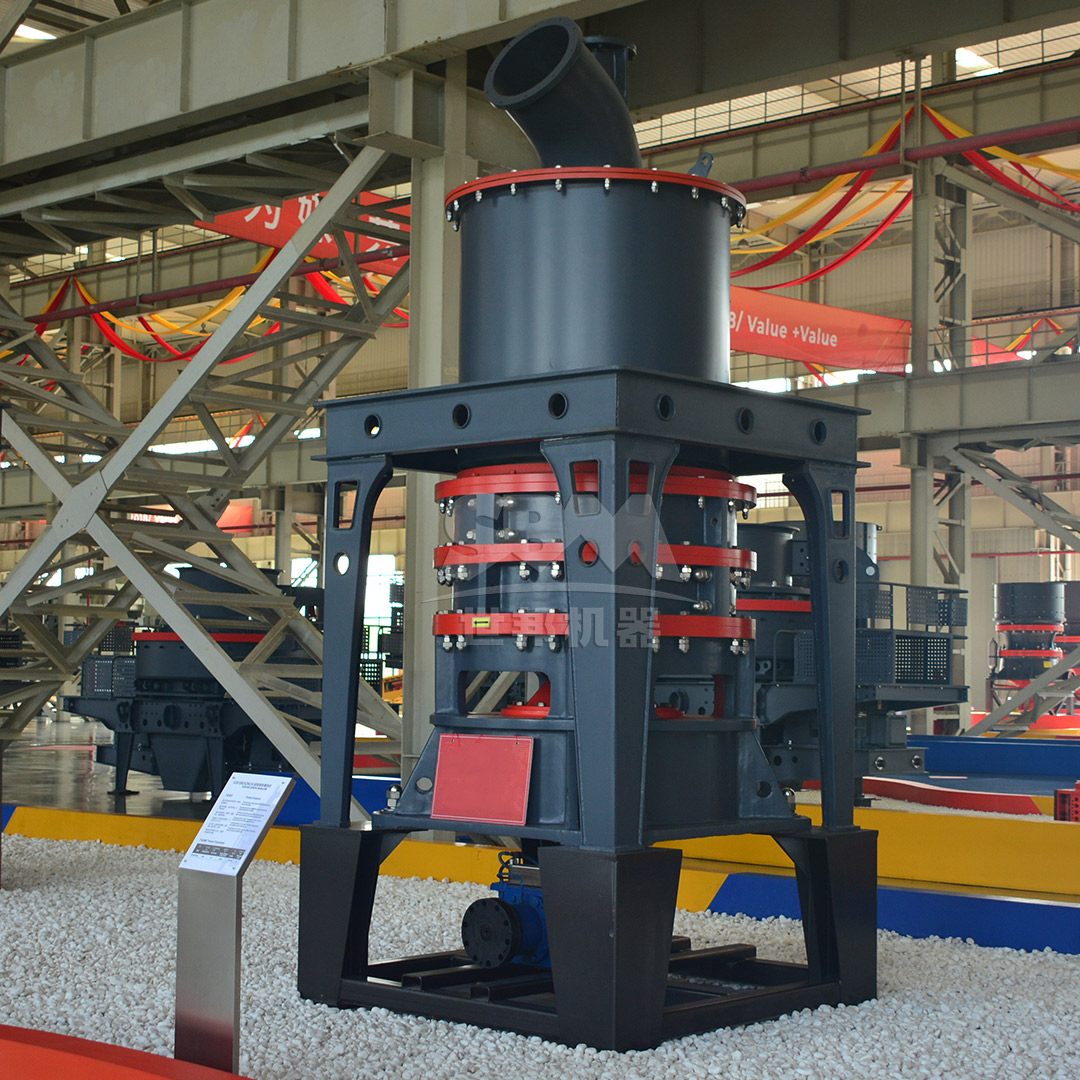
For applications requiring ultra-fine manganese powder with precise particle size control, we strongly recommend our SCM Ultrafine Mill. This advanced grinding system delivers exceptional performance for battery-grade manganese powders and other high-value applications where particle sizes below 10μm are required.
The SCM Ultrafine Mill operates with an input size of ≤20mm and produces powder with fineness ranging from 325 to 2500 mesh (D97≤5μm), making it ideal for the most demanding manganese applications. With capacity ranging from 0.5 to 25 tons per hour depending on model selection, this system provides the flexibility to meet various production requirements while maintaining consistent product quality.
Key advantages of the SCM Ultrafine Mill for manganese processing include:
- Superior Energy Efficiency: Operating at 30% lower energy consumption compared to conventional jet mills while delivering twice the production capacity
- Precision Classification: Vertical turbine classifiers ensure exact particle size cuts with no coarse powder contamination
- Enhanced Durability: Specially formulated roller and ring materials provide extended service life in abrasive manganese applications
- Environmental Compliance: Pulse dust collection efficiency exceeds international standards with operational noise below 75dB
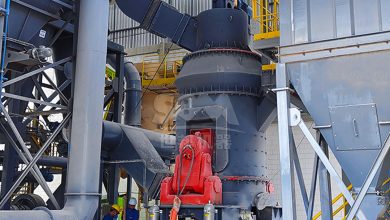
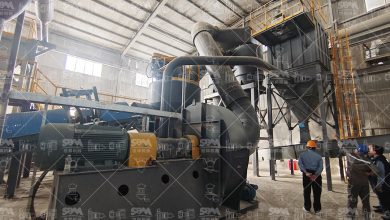
The grinding mechanism employs a main motor driving multiple grinding rings in layered configuration. Material is dispersed by centrifugal force into the grinding path, where it undergoes progressive compression and shearing forces. The optimized air flow system ensures efficient transport to cyclone collectors and pulse dust removal systems for final product collection.
With models ranging from the SCM800 (0.5-4.5 t/h, 75kW) to the high-capacity SCM1680 (5.0-25 t/h, 315kW), the SCM series offers a comprehensive solution for ultra-fine manganese powder production across various scale requirements.
MTW Series Trapezium Mill for General Applications
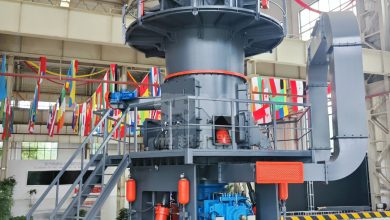
For standard manganese powder requirements in steel production, welding applications, and chemical uses, our MTW Series Trapezium Mill provides an excellent balance of performance, efficiency, and reliability. This robust grinding system handles feed sizes up to 50mm and produces powder with fineness from 30 to 325 mesh (up to 0.038mm), covering the majority of industrial manganese applications.
The MTW Series offers capacities from 3 to 45 tons per hour, making it suitable for medium to large-scale manganese processing operations. Its innovative design incorporates several technological advancements specifically beneficial for manganese ore grinding:
- Advanced Wear Protection: Combined shovel blade design reduces maintenance costs while curved surfaces extend roller service life
- Optimized Air Flow: Curved air channel design minimizes energy loss with high-strength protective plates
- Efficient Transmission: Cone gear integrated transmission achieves 98% efficiency with compact footprint
- Durable Housing: Wear-resistant volute structure with non-clogging design improves air classification efficiency
The operating principle involves the main motor driving grinding rollers that revolve around the central axis while simultaneously rotating to generate centrifugal force. Shovel blades feed material between the grinding ring and rollers, creating a material bed that undergoes compressive grinding forces. The integrated classification system provides precise control over final product fineness.
Available in multiple configurations including the MTW110 (3-9 t/h), MTW138Z (6-17 t/h), MTW175G (9.5-25 t/h), and high-capacity MTW215G (15-45 t/h), the MTW Series can be precisely matched to specific manganese processing requirements.
Operational Best Practices for Manganese Grinding
Feed Preparation and Optimization
Proper preparation of manganese ore before grinding significantly impacts mill performance and product quality. Optimal feed size should be maintained within equipment specifications through appropriate crushing circuits. Consistent moisture control through pre-drying systems prevents operational issues and ensures stable grinding conditions. Implementing automated feed control systems maintains steady mill operation and consistent product quality.
Maintenance Strategies for Maximum Uptime
Manganese ore’s abrasive nature necessitates proactive maintenance approaches to maximize equipment availability and service life. Regular inspection of wear components, including rollers, rings, and classifier elements, allows for planned replacement before failure occurs. Implementing condition monitoring through vibration analysis, thermal imaging, and lubricant analysis provides early detection of developing issues. Maintaining adequate inventories of critical wear parts minimizes production interruptions when replacements are required.
Quality Control and Process Optimization
Continuous monitoring of product quality through particle size analysis, chemical composition verification, and moisture content measurement ensures consistent compliance with specifications. Modern grinding systems incorporate automated control loops that adjust operational parameters in response to quality measurements, maintaining product consistency despite variations in feed characteristics. Regular calibration of monitoring equipment and implementation of statistical process control methodologies further enhance quality management.
Conclusion
The selection of appropriate grinding equipment for manganese ore powder production represents a critical decision that directly impacts product quality, operational efficiency, and economic viability. Understanding the specific requirements of target applications enables informed equipment selection, whether for coarse powders used in steel production or ultra-fine materials for battery applications.
Our recommended grinding solutions—the SCM Ultrafine Mill for high-precision requirements and the MTW Series Trapezium Mill for general applications—provide comprehensive technological advantages for manganese processing operations. These systems incorporate advanced features specifically designed to address the challenges of manganese ore grinding, delivering superior performance, reduced operating costs, and enhanced product quality across diverse application requirements.
By implementing these advanced grinding technologies alongside proper operational practices, manganese producers can optimize their processes to meet evolving market demands while maintaining competitive advantage through improved efficiency and product quality.