What Are the Models of Dolomite Grinding Mill Production Line Equipment?
Dolomite, a calcium magnesium carbonate mineral, is a crucial raw material in industries ranging from construction and agriculture to glass, ceramics, and chemicals. Processing dolomite into fine or ultrafine powders requires specialized grinding equipment. The selection of the appropriate grinding mill model is paramount, as it directly impacts production efficiency, product quality, energy consumption, and overall operational costs. This article provides a comprehensive overview of the primary models of grinding mill equipment suitable for dolomite production lines, analyzing their principles, applications, and key selection criteria.
1. Core Principles of Grinding and Classification
Before delving into specific equipment models, it’s essential to understand the fundamental mechanisms at play. Grinding mills reduce particle size primarily through impact, compression, attrition (rubbing), or a combination thereof. The choice of mechanism influences the final particle shape, size distribution, and energy efficiency. Following size reduction, a classification or separation system is critical. This component, often an integrated or external air classifier or screen, ensures that only particles meeting the target fineness exit the system, while oversized particles are recirculated for further grinding. This closed-loop process is key to achieving consistent product quality and high system efficiency.
2. Major Models of Grinding Mills for Dolomite
The market offers a diverse range of grinding mills, each with distinct capabilities. The optimal choice depends on the required output fineness, desired capacity, feed size, and budget.
2.1 Raymond Mill (Pendulum Roller Mill)
Raymond mills, or pendulum roller mills, are a classic and widely used technology for medium-fine grinding.
- Output Fineness: Typically 30-325 mesh (45-600μm).
- Working Principle: Material is fed into the grinding chamber where rotating rollers swing outward due to centrifugal force, pressing against a stationary grinding ring. A shovel scoops and feeds the material into the path of the rollers. Ground material is carried by an air stream to a classifier; fine powder passes through, while coarse particles fall back for regrinding.
- Advantages: Mature technology, reliable operation, relatively low investment cost, easy maintenance.
- Limitations: Lower energy efficiency compared to newer vertical mills, limited ability to produce very fine powders (beyond 400 mesh), higher noise and dust levels if not properly equipped.
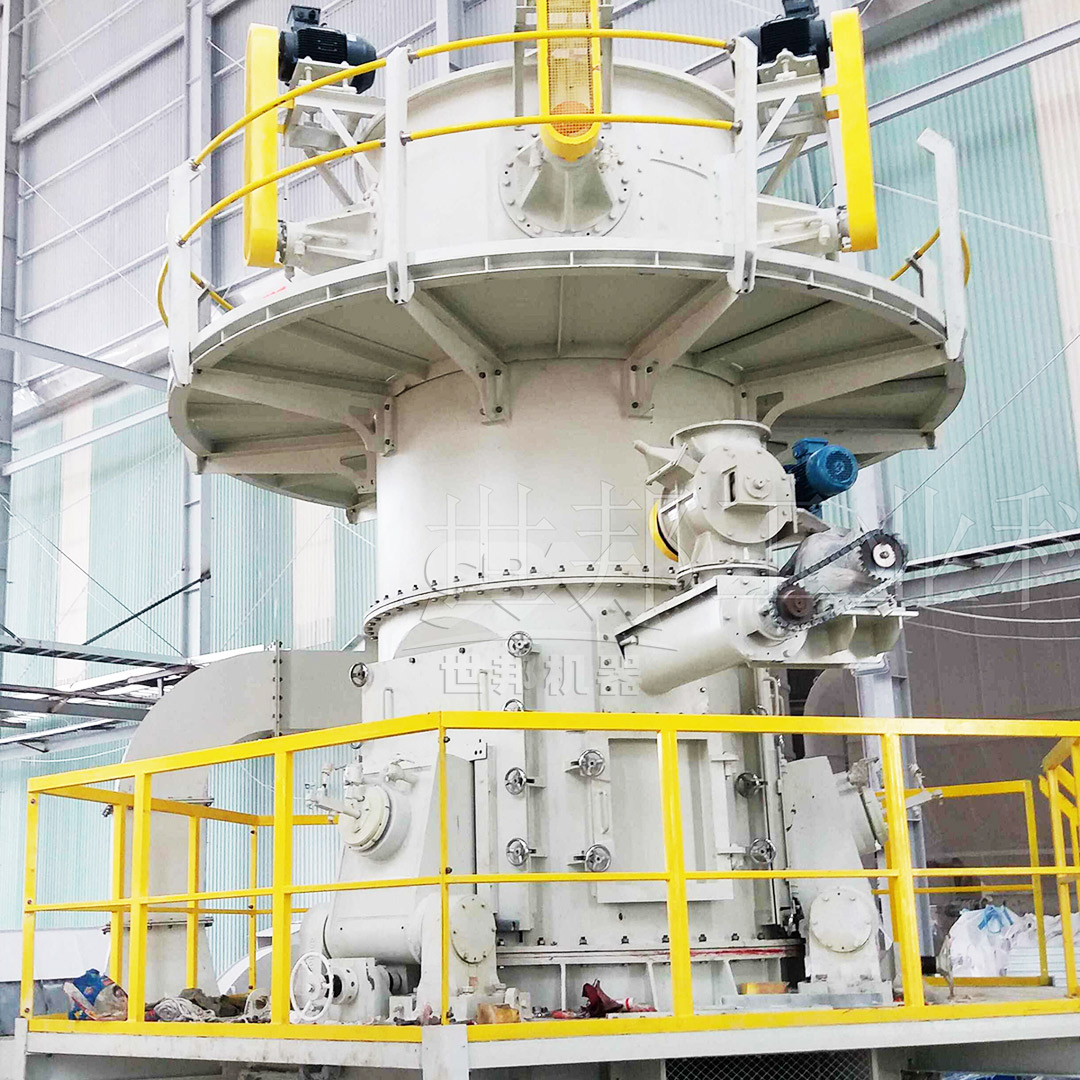
2.2 Vertical Roller Mill (VRM)
Vertical Roller Mills represent a significant advancement in grinding technology, offering high efficiency for large-scale production.
- Output Fineness: Broad range, typically from 30 mesh to 325 mesh (45-600μm), with specialized models capable of finer outputs.
- Working Principle: Material is fed onto a rotating grinding table. Hydraulically loaded grinding rollers press down on the material bed, comminuting it through compression. Hot gas (or air) injected into the mill dries the material and transports the fine particles to an integrated dynamic classifier. Coarse particles fall back onto the grinding table.
- Advantages: Exceptional energy efficiency (30-50% less power than ball mills), high drying capacity (can handle moist feed), integrated grinding and classification, lower noise, compact footprint.
- Limitations: Higher initial investment, more complex operation and maintenance, sensitivity to feed material hardness and abrasiveness.
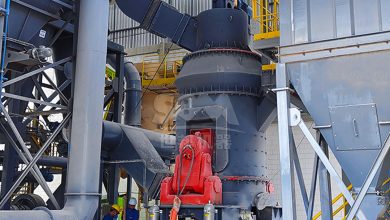
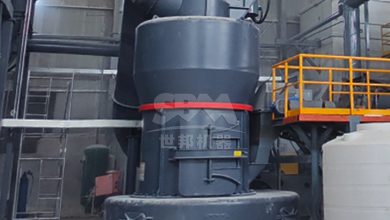
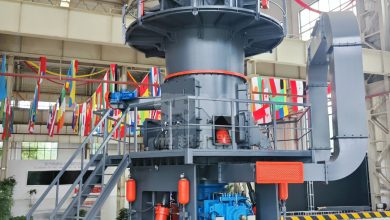
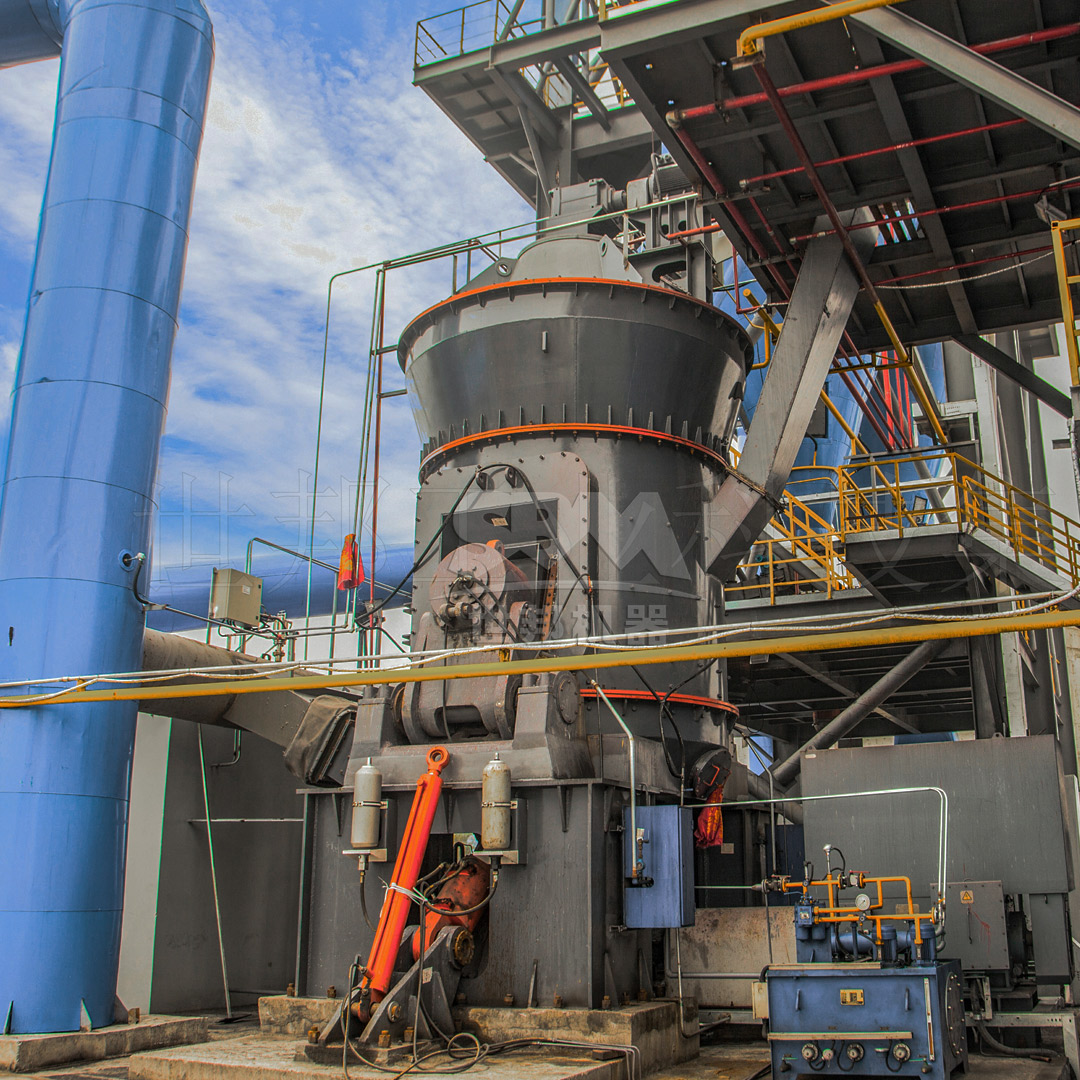
For large-scale dolomite grinding projects requiring high capacity and energy efficiency, our LM Series Vertical Roller Mill is an outstanding solution. Its集约化设计 integrates multiple functions into a single unit, reducing footprint by 50% and significantly lowering基建成本. With磨辊与磨盘非接触设计, the wear life of critical parts is extended dramatically, while its智能控制系统 ensures stable, automated operation with minimal人工干预. Models like the LM220K (output 36-105 t/h) or LM280K (output 50-170 t/h) are perfectly suited for high-tonnage dolomite powder production.
2.3 Ultrafine Grinding Mill
This category encompasses mills designed specifically to produce powders in the micron and sub-micron range.
- Output Fineness: 325 mesh to over 2500 mesh (45μm down to 5μm or finer).
- Working Principle: Various designs exist, including fluidized bed jet mills (particle-on-particle impact), mechanical mills with very high-speed rotors and precision air classifiers, and enhanced vertical mills with advanced classification systems.
- Advantages: Capable of producing superfine and nano-sized powders, often with narrow particle size distribution, suitable for high-value-added applications.
- Limitations: High energy consumption per ton, lower throughput compared to coarser grinding mills, higher operational and maintenance costs, stringent requirements on feed size and moisture.
When the application demands ultra-fine dolomite powder with a D97 fineness of 5μm (2500 mesh), our SCM Series Ultrafine Mill is the ideal choice. It excels in高精度分级 through its vertical turbine classifier, ensuring成品均匀 with no coarse powder contamination. Its高效节能 design delivers产能为气流磨2倍 while能耗降低30%. Furthermore, its环保低噪 features, including pulse dust collection exceeding international standards and noise levels below 75dB, make it an environmentally responsible selection for high-grade dolomite processing.
2.4 Ball Mill
A traditional and versatile grinding tool, often used in closed circuit with classifiers.
- Output Fineness: Can be adjusted from coarse (0.8mm) to relatively fine (0.074mm or ~200 mesh). For finer products, efficiency drops significantly.
- Working Principle: A horizontal rotating cylinder is partially filled with grinding media (steel balls). The material is fed in, and as the cylinder rotates, the balls are lifted and then cascade down, impacting and grinding the material through a combination of impact and attrition.
- Advantages: Extreme versatility, can handle wet or dry grinding, simple concept, capable of very high capacities.
- Limitations: Very low energy efficiency (only 1-3% of input energy is used for actual size reduction), high wear rate of balls and liners, large footprint, high noise and vibration.
2.5 Hammer Mill (for Pre-Crushing)
While not a fine grinder, hammer mills play a vital role in the production line as a pre-crushing stage.
- Output Fineness: 0-3mm, preparing feed material for subsequent fine grinding mills.
- Working Principle: Rapidly rotating hammers impact and shatter incoming material against breaker plates until particles are small enough to pass through a screen at the discharge.
- Advantages: High reduction ratio, simple and rugged construction, good capacity.
- Limitations: High wear on hammers and screens, not suitable for abrasive materials without frequent maintenance, generates more dust.
3. Building a Complete Dolomite Grinding Production Line
A full production line involves more than just the grinding mill. Key components include:
- Crushing Stage: Primary crusher (e.g., jaw crusher) and secondary crusher (e.g., hammer mill or cone crusher) to reduce raw dolomite rock to a suitable feed size (e.g., <20mm) for the grinding mill.
- Grinding Stage: The core grinding mill (e.g., VRM, Raymond Mill, Ultrafine Mill) selected based on final product requirements.
- Classification Stage: Often integrated into the mill (as in VRMs and Ultrafine Mills) or a separate unit (for ball mill circuits).
- Dust Collection & Product Conveying: A high-efficiency pulse jet bag filter or other dust collector is essential for environmental compliance and product recovery. Conveying systems (screw conveyors, bucket elevators, pneumatic conveying) move material between stages.
- Storage & Packaging: Silos for bulk powder storage and automated packaging systems for bagging.
- Electrical & Control System: A centralized PLC control system monitors and automates the entire line for optimal, stable operation.
4. Key Factors for Selecting the Right Equipment Model
- Required Product Fineness & Particle Distribution: The most critical factor. Define the target D50, D97, or mesh size.
- Production Capacity (TPH): Determine both current and future throughput needs.
- Feed Material Characteristics: Hardness (Mohs scale), abrasiveness, moisture content, initial feed size.
- Energy Consumption: Evaluate the total power draw and specific energy consumption (kWh/ton). Vertical Roller Mills generally lead in efficiency.
- Total Cost of Ownership (TCO): Consider not just the initial purchase price, but also installation costs, energy costs, maintenance costs, and spare parts consumption over the equipment’s lifetime.
- Space & Layout Constraints: Vertical mills have a smaller footprint than horizontal ball mills.
- Environmental & Noise Regulations: Ensure the selected system meets local standards for dust emissions and noise levels.
5. Conclusion
Selecting the optimal dolomite grinding mill model is a strategic decision that balances technical requirements with economic and operational realities. For medium-fine grinding, modernized Raymond Mills or MTW Series Trapezium Mills offer a robust solution. For large-scale, energy-efficient production of fine powders, Vertical Roller Mills like our LM Series are the industry benchmark. For the most demanding applications requiring ultrafine powders, specialized equipment like the SCM Ultrafine Mill is indispensable. A thorough analysis of your specific project parameters, coupled with consultation with experienced equipment suppliers, is essential to design a production line that delivers maximum productivity, quality, and return on investment.