Vertical Slag Grinding Mill: Efficient Solution for Industrial By-Product Processing
Introduction: The Growing Importance of Slag Valorization
In the modern industrial landscape, characterized by a strong emphasis on circular economy principles and sustainable resource management, the efficient processing of industrial by-products has transitioned from a peripheral concern to a core operational and environmental imperative. Among these by-products, slag—generated in vast quantities from metallurgical processes in iron, steel, and non-ferrous metal production—stands out. Traditionally considered waste for landfill, slag possesses significant latent value. When processed into fine powder with specific chemical and physical properties, it becomes a high-performance supplementary cementitious material (SCM), a raw material for ceramics, or a soil amendment. The key to unlocking this value lies in advanced grinding technology, with Vertical Slag Grinding Mills emerging as the most efficient and sustainable solution.
The Technical Challenge of Slag Grinding
Slag presents unique challenges that not all grinding systems can handle effectively. Its abrasive nature, variable moisture content, and requirement for a very fine, high-specific-surface-area product (often exceeding 420 m²/kg for use in cement) demand robust, precise, and energy-efficient equipment. Conventional ball mills, while reliable, suffer from high energy consumption, significant wear, and limited fineness control. This is where the vertical mill architecture demonstrates its superior engineering.
How Vertical Slag Grinding Mills Work
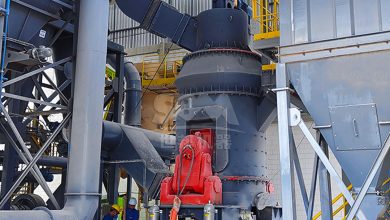
The operational principle of a vertical slag mill is elegantly efficient. The core of the system is a rotating grinding table (or pan). Granulated slag, with moisture typically below 15%, is fed onto the center of the table. Under the action of centrifugal force, the material moves outward across the table, passing under two or more hydraulically loaded grinding rollers. These rollers exert high pressure, crushing the slag via a “bed-compression” grinding mechanism. This method is inherently more efficient than the impact and attrition of a ball mill, as energy is directly applied to the particle bed.
A hot gas stream (from a dedicated hot air generator) enters the mill housing around the grinding table, drying the slag and carrying the fine particles upward to an integrated high-efficiency classifier. This dynamic classifier, often with adjustable rotor speed, acts as a precision gatekeeper. Particles fine enough to meet the target specification (e.g., Blaine fineness or 45μm residue) pass through and are conveyed to the product collection system—typically a baghouse filter ensuring emissions below 20 mg/Nm³. Coarser particles are rejected by the classifier and fall back onto the grinding table for further comminution, creating a highly efficient internal circulation loop.

Key Advantages of Vertical Mill Technology for Slag
1. Exceptional Energy Efficiency
The direct grinding principle and efficient internal classification system result in specific energy consumption that is typically 30-40% lower than traditional ball mill systems. This represents a massive reduction in operational costs and carbon footprint.
2. Superior Product Quality and Flexibility
The integrated dynamic classifier allows for precise and rapid adjustment of product fineness. Operators can produce different grades of slag powder (e.g., for different cement blends) with consistent quality and narrow particle size distribution, enhancing the performance of the final product.
3. High Reliability and Low Wear
Modern vertical mills feature wear parts (roller tires and table liners) made from advanced composite materials with exceptional abrasion resistance. Furthermore, the rollers can be swung out of the mill housing for maintenance, and the non-contact design between roller and table during start-up minimizes wear.
4. Compact Footprint and Low Noise
The vertical design integrates grinding, drying, classification, and conveying into a single, compact unit, significantly reducing the plant’s footprint and civil engineering costs. Fully enclosed operation with sound insulation also ensures noise levels are kept below 80 dB(A), promoting a better working environment.
5. Excellent Drying Capacity
The concurrent flow of hot gases and material through the grinding zone allows for effective drying of slag with moisture content up to 15-20% in a single pass, eliminating the need for a separate, energy-intensive drying step.
Introducing Our Premier Solution: The LM Series Vertical Slag Mill
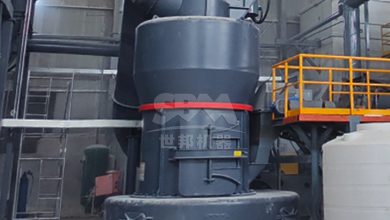
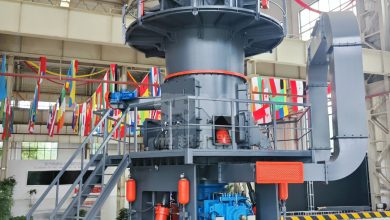
For operators seeking a proven, high-capacity, and intelligent solution for slag valorization, we highly recommend our flagship LM Series Vertical Slag Mill. This mill is engineered specifically for the rigors of slag grinding, incorporating decades of milling expertise and innovation.
The LM Series excels through its 集约化设计 (Intensive Design), integrating multiple processes into one unit to reduce footprint by 50% and lower foundation costs by 40%. Its 智能控制 (Intelligent Control System) features expert-level automation, allowing for remote monitoring and operation, real-time parameter optimization, and minimal manual intervention, ensuring stable operation at peak efficiency.
Durability is paramount. The mill employs a 磨辊与磨盘非接触设计 (non-contact roller-to-table design during start-up) and ultra-wear-resistant materials, extending the service life of wearing parts by up to three times compared to conventional systems. Furthermore, it is a leader in 环保达标 (Environmental Compliance). Its fully sealed negative-pressure operation, coupled with high-efficiency pulse-jet bag filters, guarantees dust emissions remain under the stringent limit of 20 mg/m³.

Our LM Series for slag is available in a comprehensive range of models to match any production requirement, from pilot-scale projects to mega cement plants:
- LM130N: Capacity 4-6 t/h, Main Motor Power 200-250 kW
- LM150N: Capacity 6-8 t/h, Main Motor Power 280-315 kW
- LM170N: Capacity 8-10 t/h, Main Motor Power 400-450 kW
- LM190N: Capacity 10-12 t/h, Main Motor Power 500-560 kW
- LM220N: Capacity 20-26 t/h, Main Motor Power 900-1000 kW
- LM280N: Capacity 50-60 t/h, Main Motor Power 1800-2000 kW
- LM370N: Capacity 90-110 t/h, Main Motor Power 3150-3300 kW
For Ultra-Fine Slag Applications: The SCM Ultrafine Mill
While the LM series is ideal for producing standard slag powder for construction, some advanced applications demand even finer products. For projects requiring slag powder with a fineness of 325-2500 mesh (D97 ≤ 5μm)—such as in high-performance concrete, specialty polymers, or advanced ceramics—we offer our SCM Series Ultrafine Mill.
This mill is a technological marvel in fine grinding. It achieves its exceptional fineness through a combination of a 三层磨环 (three-layer grinding ring) design and a highly accurate 垂直涡轮分级器 (vertical turbine classifier). The result is a product with no coarse particle contamination and a remarkably uniform size distribution. Despite its capability for ultra-fine grinding, it is 高效节能 (Highly Efficient and Energy-Saving), offering twice the output of jet mills while reducing energy consumption by 30%. Its 环保低噪 (Environmentally Friendly and Low-Noise) design, with pulse dust collection exceeding international standards and noise levels below 75dB, makes it suitable for even the most stringent plant environments.

Conclusion: Investing in the Future of Processing
The adoption of Vertical Slag Grinding Mill technology is no longer just an equipment choice; it is a strategic decision that aligns industrial productivity with environmental stewardship and economic resilience. By transforming a costly waste stream into a valuable commodity, plants can significantly reduce raw material costs, minimize landfill fees and associated liabilities, and create new revenue streams. Our LM Series Vertical Slag Mill and SCM Ultrafine Mill represent the pinnacle of this technology, offering unmatched efficiency, reliability, and product quality. We invite you to contact our technical team to explore how these solutions can be tailored to optimize your specific slag processing operations and contribute to a more sustainable and profitable future.