
Utilizing Water Slag Ultrafine Powder as Binder Substitute for High-Value-Added Building Materials Production
1. Introduction: The Rise of Supplementary Cementitious Materials (SCMs)
The global construction industry is undergoing a paradigm shift towards sustainability. With cement production accounting for approximately 7-8% of global CO2 emissions, the search for effective and high-performance alternatives to Portland cement clinker is more urgent than ever. Among the most promising solutions is the utilization of industrial by-products as Supplementary Cementitious Materials (SCMs). Granulated Blast Furnace Slag (GBFS), a by-product of iron production, has long been recognized for its latent hydraulic properties. However, its full potential is unlocked only when processed into ultrafine powder, transforming it from a low-value filler into a high-performance, high-value-added binder substitute.
This article explores the technical and economic rationale for utilizing water slag ultrafine powder in advanced building materials, detailing the production process, material performance benefits, and the critical role of advanced grinding technology in enabling this green transition.
2. From Waste to Resource: The Science Behind Slag Activation
Water-quenched granulated blast furnace slag is primarily composed of calcium-alumino-silicates in a glassy, amorphous state. This glassy structure possesses latent hydraulic activity, meaning it can react with water in the presence of an activator—typically calcium hydroxide (portlandite) produced during cement hydration. The pozzolanic and hydraulic reactions between the slag and portlandite form additional calcium silicate hydrate (C-S-H) gel, the primary strength-giving phase in concrete.
The reactivity of slag is directly proportional to its specific surface area (fineness) and glass content. Coarse slag particles react slowly and incompletely, contributing little to early strength. Ultrafine grinding, typically to a Blaine fineness exceeding 450 m²/kg or a particle size distribution where D97 ≤ 10μm, dramatically increases the surface area available for reaction. This not only accelerates the reaction kinetics but also allows for higher clinker substitution rates—often 50-70% in slag cement (CEM II/B-S and CEM III) and up to 95% in alkali-activated slag systems—without compromising, and often enhancing, the long-term performance.
3. Performance Advantages of Ultrafine Slag Powder in Building Materials
Incorporating ultrafine slag powder as a binder substitute confers a suite of superior properties to the final construction material, elevating it from standard to high-value-added status.
3.1 Enhanced Mechanical Properties and Durability
- Higher Later-Age Strength: While early strength may be slightly lower than pure OPC, the continued pozzolanic reaction leads to significant strength gain beyond 28 days, often surpassing the ultimate strength of reference OPC concrete.
- Improved Microstructure: The secondary C-S-H gel fills capillary pores and refines the pore structure, leading to dramatically lower permeability. This is the key to enhanced durability.
- Superior Chemical Resistance: The reduced calcium hydroxide content and denser matrix impart excellent resistance to sulfate attack, chloride ion penetration (corrosion protection for rebar), and alkali-silica reaction (ASR).
3.2 Sustainability and Economic Benefits
- Carbon Footprint Reduction: Each ton of clinker replaced by slag saves approximately 0.85-0.9 tons of CO2 emissions. High-volume slag concrete can reduce the carbon footprint by over 70%.
- Waste Valorization: Diverts industrial by-product from landfills, contributing to a circular economy.
- Life-Cycle Cost Savings: Although the grinding process adds cost, the extended service life of structures, reduced maintenance, and potential carbon tax savings provide compelling long-term economic advantages.
3.3 Improved Fresh and Hardened State Properties
- Workability: The smooth, glassy particles of slag can improve the rheology of concrete, reducing water demand for a given slump or allowing for water reducer dosage optimization.
- Heat of Hydration Reduction: Crucial for mass concrete pours, as it minimizes thermal cracking risk.
- Aesthetic Appeal: Produces a lighter, more consistent color in architectural concrete compared to fly ash or some cement blends.
4. The Core Enabler: Advanced Grinding Technology for Ultrafine Powder Production
The transformation of granular slag into a reactive ultrafine powder is the most critical and energy-intensive step in the value chain. The choice of grinding technology dictates the powder’s quality, production cost, and overall project viability. The system must achieve consistent ultra-high fineness, maintain high throughput, and operate with energy efficiency and reliability.
Traditional ball mills, while robust, are inefficient for achieving fineness beyond 400 m²/kg, with high energy consumption and limited particle size distribution control. Modern vertical roller mills and specialized ultrafine mills have become the industry standard.
4.1 Technology Requirements for Slag Grinding
A successful slag grinding system must address several challenges:
- Abrasive Feedstock: Slag is highly abrasive. Mill internals (rollers, table liners, classifier blades) must be made of advanced wear-resistant materials.
- Moisture Content: Slag often contains residual moisture (up to 15%). The mill system must handle this without clogging, often integrating drying capability with hot gas supply.
- Precise Classification: Achieving a steep particle size distribution curve is essential. An integrated, high-efficiency dynamic classifier is non-negotiable to separate and return coarse particles.
- Energy Efficiency: Grinding energy is the major operational cost. The system must optimize the energy applied per ton of product.
5. Recommended Grinding Solutions for High-Value Slag Powder Production
Based on the stringent requirements for producing consistent, high-quality ultrafine slag powder, we recommend two of our flagship grinding systems, each suited for different project scales and final product specifications.
5.1 For Large-Scale, High-Capacity Production: LM Series Vertical Slag Mill
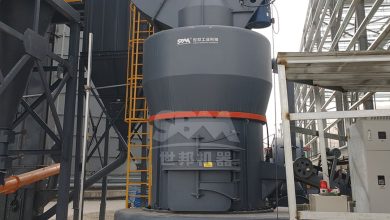
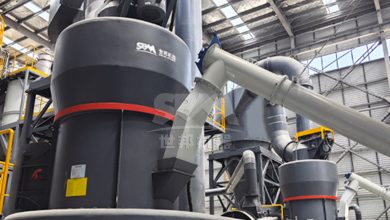
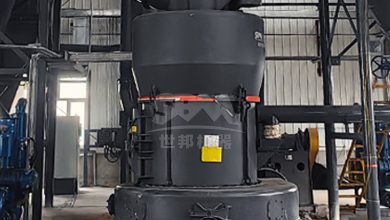
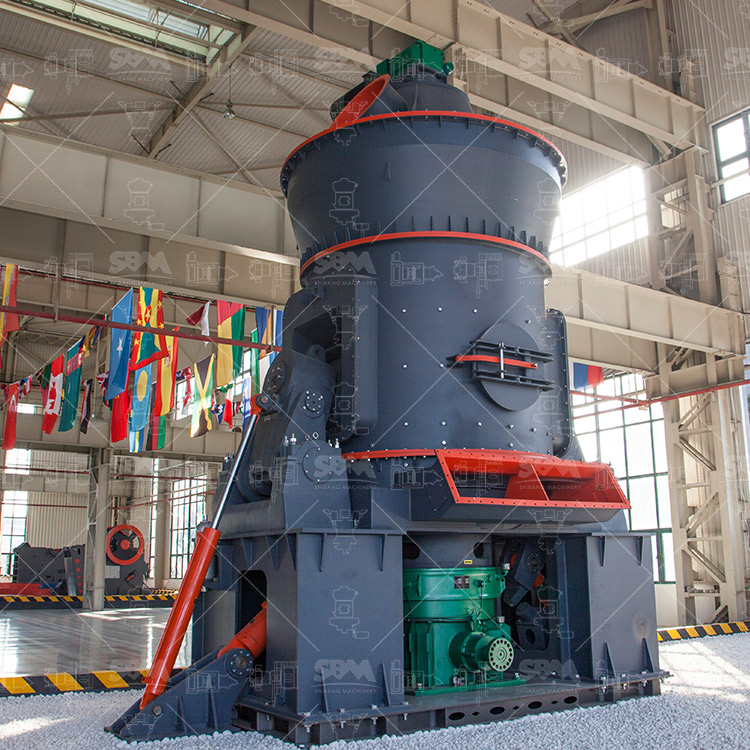
For integrated steel plants or dedicated slag processing facilities with large volumes, the LM Series Vertical Slag Mill (e.g., LM220N, LM280N) is the optimal choice. This system is engineered specifically for grinding granulated blast furnace slag to a specific surface area of ≥420 m²/kg.
Key Advantages for Slag Application:
- Integrated Drying & Grinding: Handles slag with moisture content <15% efficiently by utilizing hot gases, eliminating the need for a separate dryer.
- Exceptional Energy Efficiency: Employs the efficient “bed grinding” principle, consuming 30-40% less energy than traditional ball mill systems for the same output and fineness.
- High Reliability & Low Wear: Features a non-contact grinding design between rollers and the table, and uses specially hardened wear parts, extending service life by a factor of three.
- Turnkey System: Offers a compact, integrated design with crushing, grinding, drying, classifying, and conveying in one unit, significantly reducing plant footprint and civil costs.
For example, the LM280N model, with a grinding disc diameter of 2800mm and a main motor power of 900-1000kW, can reliably produce 20-26 tons per hour of ultrafine slag powder meeting the S95 or S105 grade standards. Its intelligent control system ensures stable operation and consistent product quality with minimal manual intervention.
5.2 For Superfine and Specialized Applications: SCM Series Ultrafine Mill
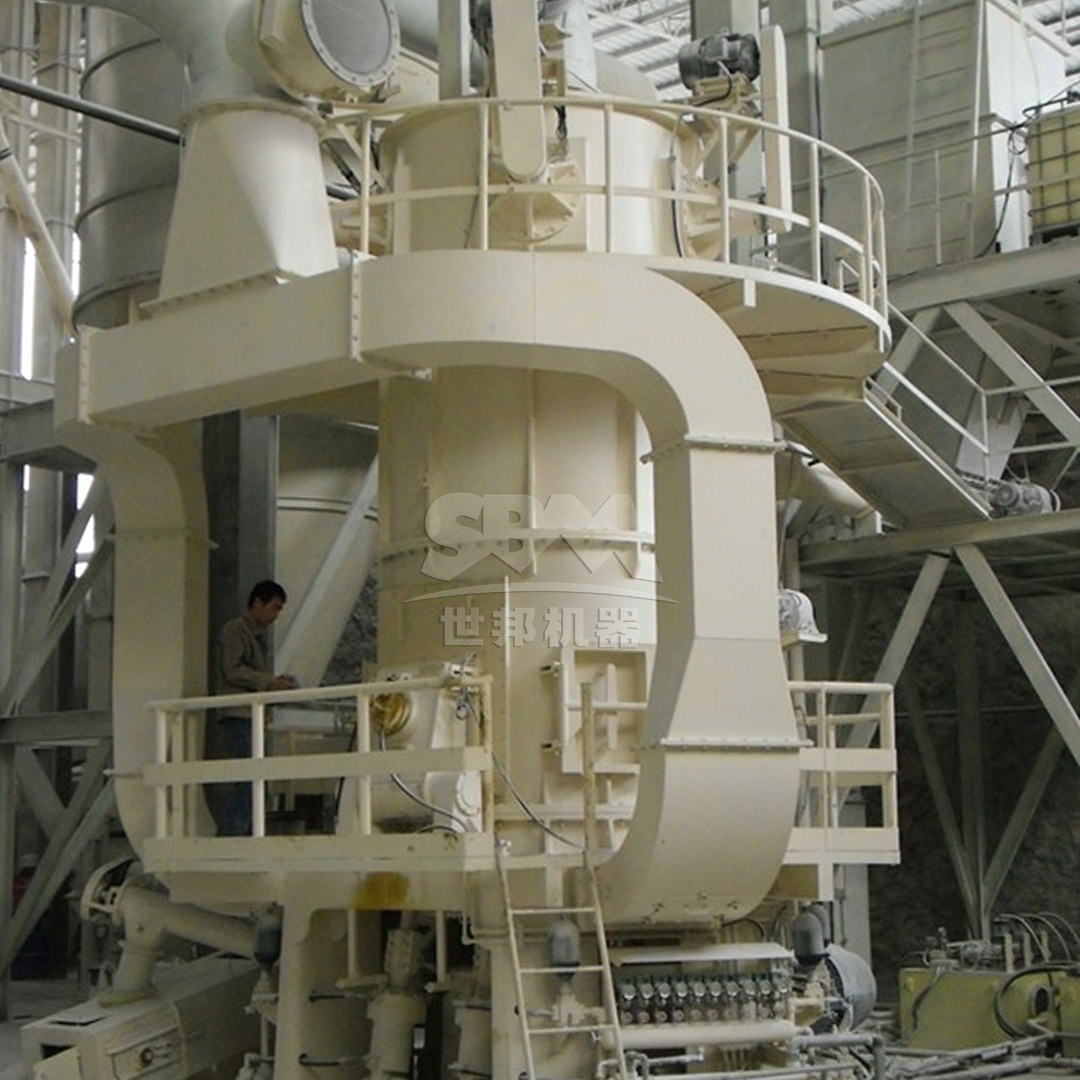
When the product specification calls for even finer powder, such as for ultra-high-performance concrete (UHPC), high-strength grouts, or specialty chemical applications where a D97 ≤ 5μm (2500 mesh) is required, the SCM Ultrafine Mill is the superior technology.
Key Advantages for Ultrafine Slag Production:
- Unmatched Fineness: Consistently produces powder in the range of 325-2500 mesh (45-5μm), unlocking the highest possible reactivity.
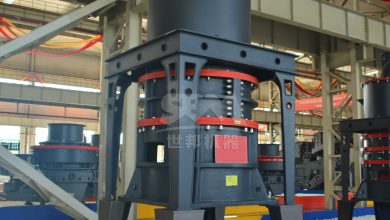
- High-Precision Classification: Equipped with a vertical turbo-classifier that ensures sharp particle size cuts. The final product has a narrow distribution with no coarse grit contamination, which is critical for rheology and packing density in advanced mixes.
- Efficient Grinding Mechanism: Its multi-layer grinding ring and roller design provides progressive comminution, achieving high fineness with better energy efficiency compared to jet mills (twice the capacity with 30% lower energy consumption).
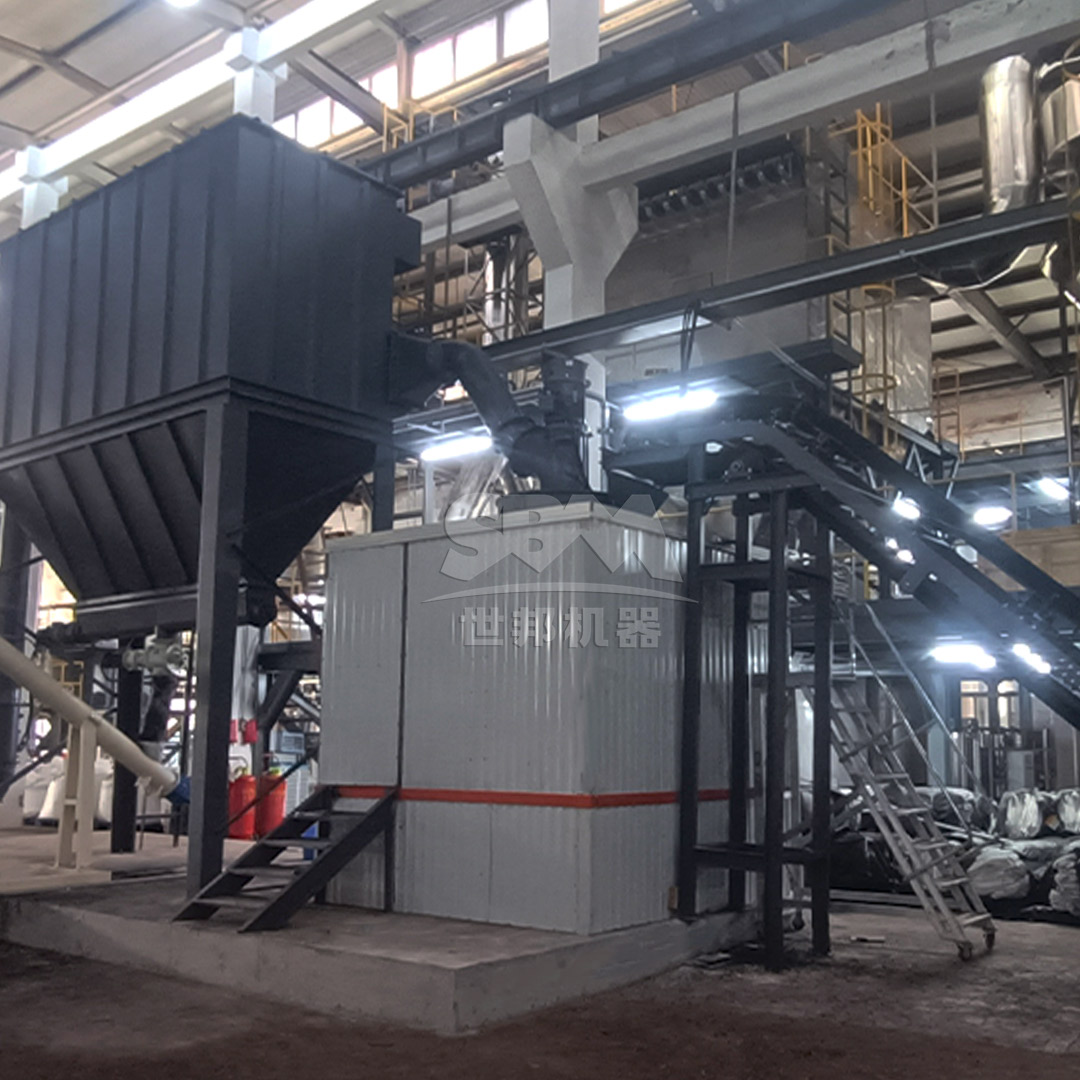
- Clean and Quiet Operation: The fully sealed system with pulse dust collector ensures dust emissions are far below international standards, while the soundproofing design maintains noise levels below 75dB.
The SCM1250 model, with a main motor power of 185kW, offers a flexible throughput of 2.5-14 tons per hour, making it ideal for dedicated lines producing premium-grade slag micro-powder. Its intelligent control system automatically adjusts operational parameters based on real-time feedback of product fineness.
6. Case Study and Implementation Pathway
A successful implementation involves more than just selecting the right mill. A holistic approach is necessary:
- Feedstock Analysis: Characterize the chemical composition, glass content, hardness (Bond Work Index), and moisture of the source slag.
- Product Specification: Define the target fineness (Blaine or particle size distribution), capacity, and final product standards (e.g., GB/T 18046, EN 15167-1).
- System Design: Based on steps 1 & 2, engineers can size the complete system, including feed hopper, conveyor, mill (LM or SCM), classifier, product collector, silo, and packing line. Drying requirements will also be determined.
- Economic Modeling: Calculate CAPEX, OPEX (primarily power consumption and wear parts), and ROI based on the value of the finished slag powder versus clinker or commercial SCM prices.
7. Conclusion: Building a Sustainable Future with Advanced Technology
The utilization of water slag ultrafine powder represents a cornerstone strategy for decarbonizing the construction industry while creating high-performance, durable building materials. The economic and environmental benefits are substantial and well-proven. However, the realization of this potential is entirely dependent on advanced, reliable, and efficient grinding technology.
By investing in purpose-engineered grinding systems like the LM Vertical Slag Mill for large-scale production or the SCM Ultrafine Mill for premium superfine products, producers can confidently enter the high-value-added SCM market. These technologies transform an industrial by-product into a consistent, high-quality commodity that not only commands a better price but also actively contributes to building a more sustainable and resilient infrastructure for the future. The synergy between material science and precision engineering paves the way for the next generation of green construction.