
Top 10 Raymond Mill Manufacturers in China: A Comprehensive Guide
Introduction
The grinding mill industry in China has witnessed phenomenal growth over the past few decades, evolving from basic manufacturing to a hub of technological innovation and high-precision engineering. Chinese manufacturers have not only mastered the production of traditional Raymond mills (pendulum roller mills) but have also pioneered advanced vertical roller mills, ultrafine grinding systems, and integrated powder processing solutions. This guide aims to provide a detailed overview of the top-tier manufacturers in this competitive landscape, highlighting their technological capabilities, product ranges, and market positioning. For businesses seeking reliable, efficient, and cost-effective grinding solutions, understanding the strengths of these leading players is crucial.
Key Selection Criteria for Raymond Mills
Choosing the right grinding mill is a critical decision that impacts operational efficiency, product quality, and long-term profitability. Beyond simply comparing price tags, savvy buyers should evaluate several core technical and operational factors.
1. Grinding Fineness and Particle Size Distribution
The primary function of any mill is to achieve the target particle size. Manufacturers differ in their ability to produce consistent, narrow particle size distributions. Look for mills with advanced integrated or external classifiers (like vertical turbine classifiers) that offer precise cut-point control. This is especially vital for applications in industries like coatings, plastics, and advanced ceramics where particle uniformity directly affects product performance.
2. Capacity and Throughput Efficiency
Rated capacity must be evaluated in the context of desired fineness. A mill that offers 10 tons per hour at 200 mesh might only achieve 2 tons per hour at 800 mesh. Leading manufacturers provide clear capacity curves across different fineness levels. Efficiency is also measured in specific energy consumption (kWh/ton). Modern designs, such as those employing layered grinding principles or optimized grinding curves, can offer significantly higher throughput with lower energy input compared to older models.
3. Durability and Maintenance Requirements
The wear life of grinding components—rollers, rings, liners—is a major determinant of operating costs. Top manufacturers use specialized alloy steels, ceramic composites, or hardfacing technologies to extend service life. Furthermore, designs that facilitate easy access and rapid replacement of wear parts (e.g., modular roller assemblies) drastically reduce maintenance downtime and labor costs.
4. Energy Consumption and Operational Costs
Energy can constitute over 50% of the total grinding cost. Innovative drive systems (like integral gearboxes with high transmission efficiency), optimized aerodynamic designs for internal airflow, and intelligent control systems that adjust parameters in real-time are hallmarks of energy-efficient mills from top suppliers.
5. Environmental Compliance (Dust & Noise)
Modern mills must operate within strict environmental regulations. Integrated pulse-jet baghouse dust collectors with filtration efficiency exceeding 99.9% are now standard. Advanced sealing technologies ensure the mill operates under negative pressure, preventing dust leakage. Noise reduction is achieved through soundproofing enclosures, vibration damping bases, and precision-engineered mechanical components, keeping noise levels typically below 75-80 dB(A).
Top 10 Raymond Mill Manufacturers in China
Based on market presence, technological innovation, product portfolio breadth, and after-sales service reputation, here is a curated list of leading manufacturers.
1. SBM Machinery
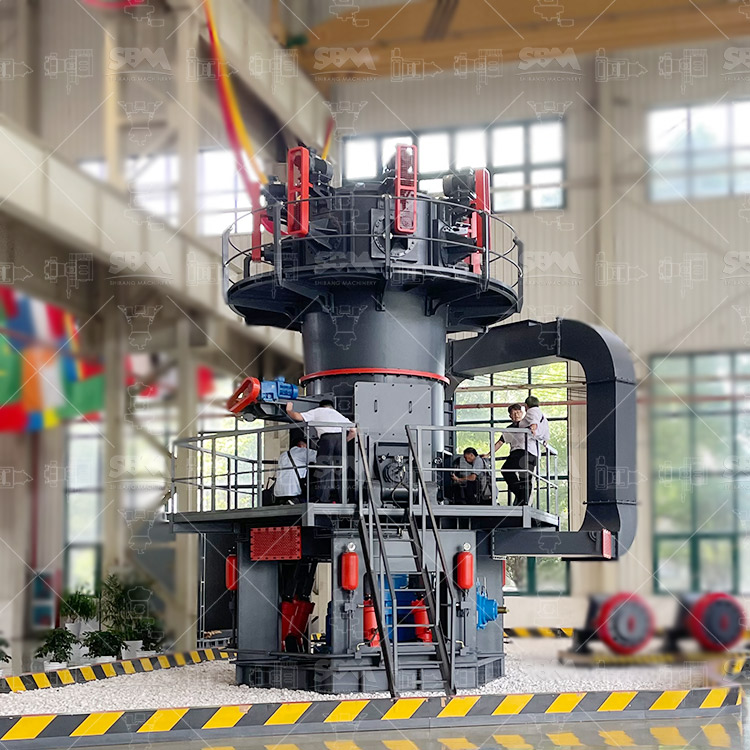
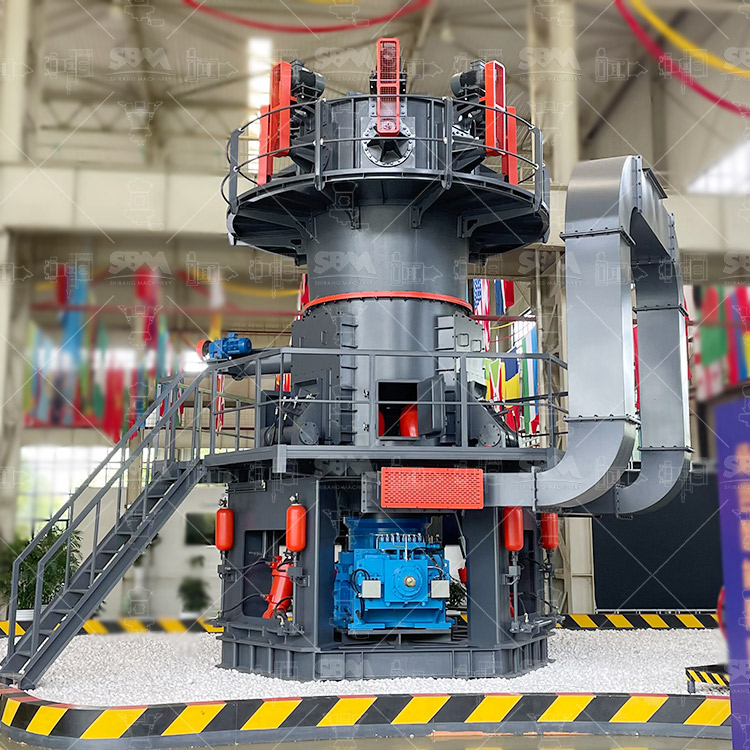
A behemoth in the mining machinery sector, SBM is renowned for its comprehensive R&D and global sales network. They offer a full spectrum of grinding equipment, from classic MTW series trapezium mills to cutting-edge LUM ultrafine vertical roller mills. Their strength lies in system integration, providing complete crushing and grinding plants.
2. Liming Heavy Industry (LM)
As a pioneer in vertical roller mill technology in China, Liming’s LM series vertical mills are industry benchmarks for raw material, coal, and slag grinding. They are particularly dominant in large-scale cement and power plant projects, offering mills with capacities exceeding 250 t/h. Their focus on large-scale, high-capacity grinding solutions is unmatched.
3. Fote Machinery (FTM)
FTM has carved a strong niche with reliable and cost-effective machinery. They provide robust Raymond mills, ball mills, and vertical roller mills suitable for small to medium-sized enterprises. Their value proposition centers on offering durable equipment with straightforward operation and maintenance, backed by responsive customer support.
4. Hongxing Group (HXJQ)
With a long history in crusher and mill manufacturing, Hongxing offers well-engineered Raymond mills and ball mills. They have a strong domestic distribution network and are known for the sturdy construction of their equipment, making them a popular choice for processing medium-hard materials like limestone and barite.
5. Clirik Machinery
Clirik has distinguished itself as a specialist in ultrafine and powder processing technology. Their HGM series micro powder grinding mills and CLUM series vertical mills are highly regarded for producing fine powders in the 5-45μm range. They excel in serving the chemical, pharmaceutical, and fine powder industries.
6. Vanguard Machinery
This manufacturer is known for incorporating advanced European technologies into its grinding mill designs. Their equipment often features high-efficiency classifiers and intelligent control systems. They provide tailored solutions and have a growing reputation in international markets for their technological sophistication.
7. Zenith Crusher
While famous for crushers, Zenith also manufactures high-quality grinding mills, including the MTM series trapezium mill. Their mills are known for precise engineering and smooth operation. They leverage their global brand presence to offer integrated mineral processing solutions.
8. Daswell Machinery
Daswell is a reliable manufacturer focusing on grinding mills for non-metallic minerals. Their machinery is often praised for its stability and consistent output quality. They provide excellent technical support for plant layout and process optimization, particularly for calcium carbonate and silica grinding lines.
9. Shanghai Jianye Heavy Industry
Jianye produces a wide array of grinding equipment, from high-pressure suspension grinders to ball mills. They are competitive in pricing and offer good after-sales service, making them a viable option for budget-conscious projects that do not compromise excessively on quality.
10. Henan Dewo Machinery
Dewo is a rising star, known for its modern manufacturing facilities and agile R&D. They offer updated versions of traditional Raymond mills with improved efficiency and durability. Their customer-centric approach and ability to provide quick, customized solutions have earned them a solid reputation in recent years.
Spotlight on Advanced Grinding Solutions
While traditional pendulum mills remain relevant, the industry is rapidly adopting more efficient and versatile technologies. Two product lines from leading manufacturers exemplify this trend and are worthy of special consideration for demanding applications.
Ultrafine Grinding for High-Value Products: The SCM Ultrafine Mill
For applications requiring extremely fine powders (325-2500 mesh, D97 ≤5μm), such as high-end coatings, advanced ceramics, pharmaceuticals, and functional fillers, the SCM Ultrafine Mill represents a technological leap. This mill moves beyond the limitations of conventional Raymond mills by integrating a high-precision vertical turbine classifier directly into its grinding chamber.
Key Advantages:
- Superior Energy Efficiency: Its layered grinding principle and optimized mechanical structure result in a capacity that can be twice that of a jet mill while reducing energy consumption by up to 30%.
- Exceptional Product Uniformity: The integrated classifier ensures precise particle size cuts, eliminating coarse particle contamination and delivering a consistently narrow particle size distribution.
- Enhanced Reliability: Key wear parts like rollers and rings are made from special composite materials, multiplying their service life. The innovative bearing-less screw design in the grinding chamber enhances operational stability.
- Eco-Friendly Operation: It comes standard with a high-efficiency pulse dust collector that exceeds international emission standards. The fully enclosed system with soundproofing maintains noise levels below 75dB.
Model Range: The SCM series offers scalable solutions, from the compact SCM800 (0.5-4.5 t/h, 75kW) for pilot plants or specialty chemical production to the industrial-scale SCM1680 (5-25 t/h, 315kW) designed for large-volume mineral processing. This flexibility makes it an ideal choice for businesses scaling up their ultrafine powder production.
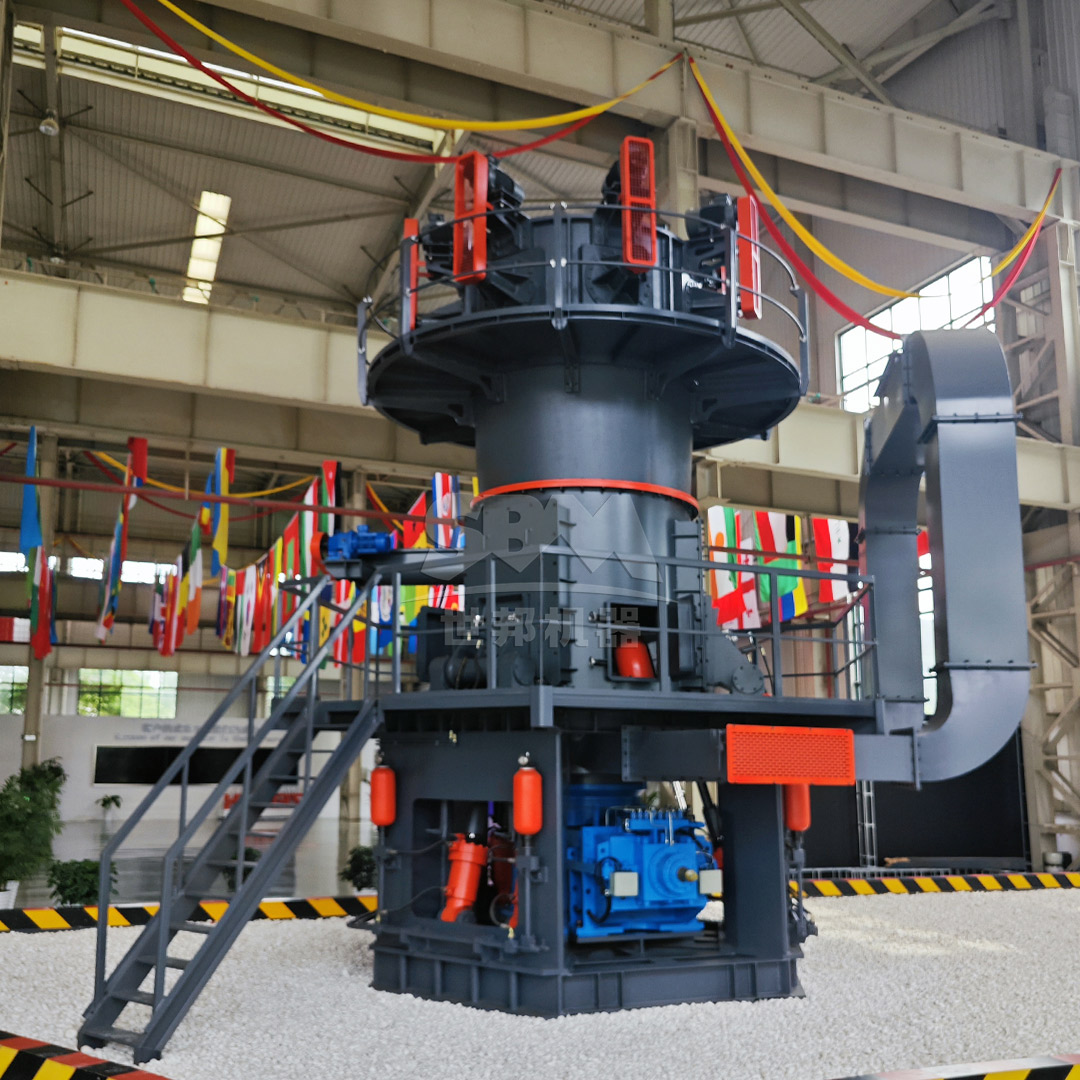
High-Capacity, Versatile Grinding: The MTW Series Trapezium Mill
When the requirement is for high-volume production in the coarse to medium-fine range (30-325 mesh), the MTW Series Trapezium Mill stands out. It is an evolution of the traditional Raymond mill, incorporating numerous European-style technological upgrades for heavy-duty, continuous operation in mining, construction material, and power generation industries.
Key Advantages:
- Durable, Low-Maintenance Design: Features like interchangeable shovel blades and curved air channels reduce wear part replacement costs and downtime. The conical gear integral transmission system boasts 98% efficiency and a compact, robust design.
- Optimized Airflow and High Yield: The curved duct design minimizes air resistance and pressure loss, enhancing material conveying efficiency and directly contributing to higher throughput.
- Advanced Technical Features: It incorporates proprietary technologies such as an internal thin-oil lubrication system, which is more reliable and cleaner than traditional grease lubrication, and international-standard pulse cleaning dust removal technology.
Model Range: The MTW series offers a wide capacity spectrum, from the MTW110 (3-10 t/h) suitable for small mining operations to the massive MRN218/MTW215G (15-45 t/h) models engineered for large-scale cement raw meal or coal powder preparation plants. This makes it a go-to solution for projects where reliability, capacity, and total cost of ownership are paramount.
Conclusion and Final Recommendations
The Chinese grinding mill market offers a diverse and competitive landscape. The choice of manufacturer and specific mill model should be a strategic decision aligned with your material characteristics, target fineness, required capacity, and long-term operational goals.
For investors and plant managers, we recommend a thorough due diligence process: request material test reports from shortlisted manufacturers, visit their operating customer sites if possible, and scrutinize the details of their after-sales service and spare parts supply chain. While established giants like SBM and Liming offer proven solutions for mega-projects, specialized firms like Clirik or agile innovators like Dewo might provide the perfect fit for niche or evolving production needs.
Technologically, the industry’s future lies in intelligence, ultra-fineness, and environmental sustainability. Mills like the highlighted SCM Ultrafine Mill and MTW Series Trapezium Mill embody these trends, offering a blend of precision, efficiency, and durability that can provide a significant competitive advantage. Ultimately, partnering with a manufacturer that demonstrates continuous innovation and a deep understanding of grinding science will be key to ensuring your processing plant remains productive and profitable for years to come.