Titanium Concentrate Grinding: Raymond Mill vs Air Swept Mill for Titanium Ore Processing Plant
Introduction
The selection of an optimal grinding system is a critical decision in the design and operation of a titanium ore processing plant. Titanium concentrates, primarily ilmenite and rutile, present unique challenges due to their abrasive nature, high specific gravity, and the stringent fineness requirements for downstream processes like chlorination or sulfate route pigment production. Two prevalent grinding technologies often considered are the traditional Raymond Mill (or pendulum roller mill) and the more modern Air Swept Mill (often a vertical roller mill variant). This article provides a detailed technical comparison of these two systems for titanium concentrate grinding, analyzing their principles, advantages, limitations, and suitability for different project scopes.
Understanding the Contenders: Core Principles
Raymond Mill (Pendulum Roller Mill)
The Raymond Mill operates on a pendulum principle. Multiple grinding rollers, suspended from a rotating central shaft, swing outward due to centrifugal force and roll against a stationary grinding ring. Feed material is scooped by a shovel and introduced into the grinding zone between the rollers and the ring. The material is crushed primarily by compression and attrition. Ground material is carried by the incoming air stream to an integrated classifier. Oversize particles are rejected and fall back for regrinding, while fines meeting the target size are conveyed to a cyclone collector and baghouse.
Air Swept Mill (Vertical Roller Mill – VRM)
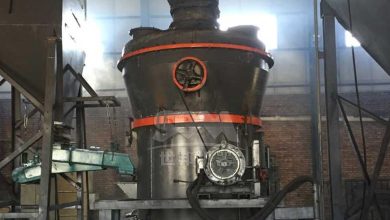
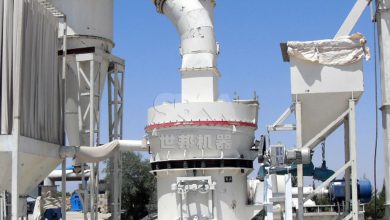
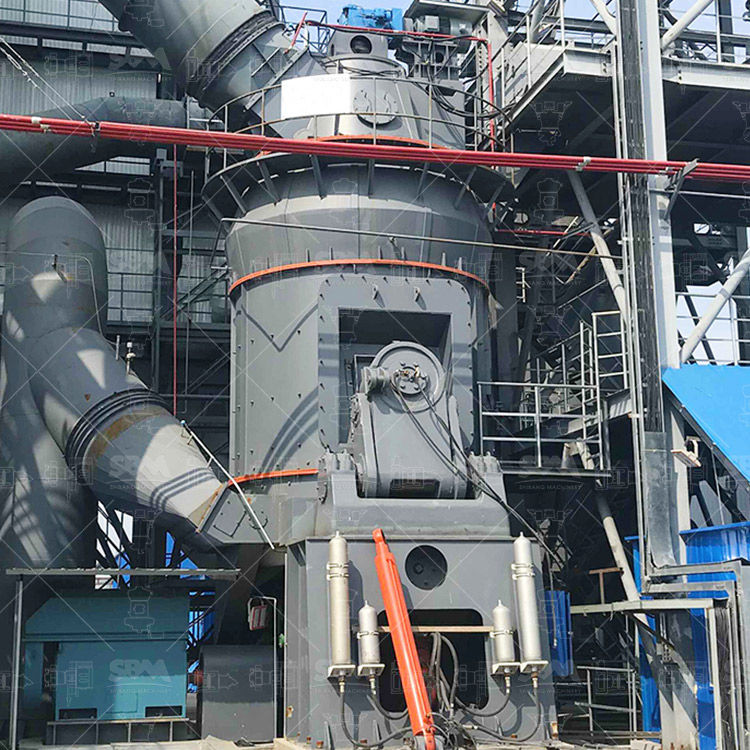
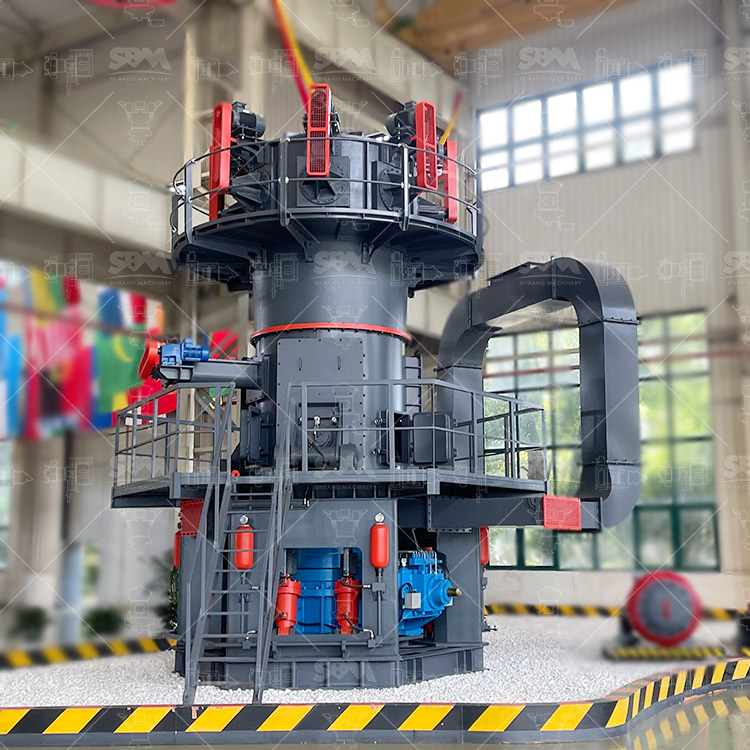
The Air Swept Mill, typically embodied as a Vertical Roller Mill (VRM), features a rotating grinding table upon which two to four hydraulically loaded grinding rollers press. Material is fed centrally onto the table and, under centrifugal force, moves outward under the rollers. Comminution occurs primarily by compression as the rollers crush the material bed against the table. A strong, upward air stream (the “sweeping” air) fluidizes and transports the ground particles to a high-efficiency classifier mounted directly atop the mill. Coarse particles are separated and returned to the grinding table, creating an internal circulation loop.
Comparative Analysis for Titanium Concentrate
1. Grinding Efficiency & Energy Consumption
This is often the most decisive factor. The Air Swept Mill/Vertical Roller Mill operates on a bed-compression principle, which is inherently more energy-efficient than the rolling-contact and attrition-based grinding of a Raymond Mill. For hard and abrasive materials like titanium concentrates, the VRM can achieve specific energy consumption reductions of 30-40% compared to traditional ball mill systems, and a significant advantage over older Raymond Mill designs. The integrated drying capability using hot air is also more efficient in an Air Swept system.
2. Product Fineness & Particle Size Distribution (PSD)
Both systems can achieve the fineness ranges required for titanium processing (typically from 45μm/325 mesh to as fine as 10μm). However, the MTW Series European Trapezium Mill, an advanced evolution of the Raymond Mill, incorporates a high-precision, forced turbine classifier. This allows for excellent control over the top particle size and a sharp cut, which is crucial for ensuring no coarse, unreacted particles proceed to downstream chemical processing. The internal classifier of a modern Air Swept Mill is equally capable. The key difference often lies in the shape of the PSD; VRM product may have a slightly narrower distribution.
3. Wear and Maintenance
Titanium minerals are highly abrasive. Wear part life and maintenance costs are paramount. In a Raymond Mill, wear occurs on the grinding rollers and the ring. In an Air Swept VRM, wear surfaces are the grinding rollers and the table liner. Modern designs for both employ highly wear-resistant alloys and hardfacing techniques. The MTW Series Mill features an innovative anti-wear shovel design and curved grinding rollers that extend service life. For large-scale plants, the modular design of VRM rollers, allowing for online turning or quick replacement, can offer operational advantages in managing maintenance downtime.
4. System Footprint & Capital Cost
The Air Swept Mill/Vertical Roller Mill is a highly integrated system. It combines grinding, drying, classification, and material conveyance into a single, vertical unit. This results in a significantly smaller footprint—often less than 50% of a Raymond Mill system with equivalent capacity, which requires separate crushers, elevators, mills, classifiers, and large baghouse filters. While the per-unit capital cost of a VRM may be higher, the reduced civil works and building requirements can lead to a competitive overall project cost for greenfield installations.
5. Drying Capacity
If the titanium concentrate feed has residual moisture, the ability to dry within the grinding circuit is vital. Both systems can incorporate hot air. However, the Air Swept Mill is explicitly designed for this purpose. The high gas flow through the grinding chamber provides excellent heat and mass transfer, enabling it to handle feeds with higher moisture content effectively. Raymond Mill systems can be configured for drying but may have more limited capacity in this regard.
Recommendation and Product Solutions
The choice between these technologies is not merely “old vs. new” but depends on specific plant parameters: required capacity, feed moisture, target fineness, capital budget, and available space.
For Large-Scale, Greenfield Plants Seeking Maximum Efficiency
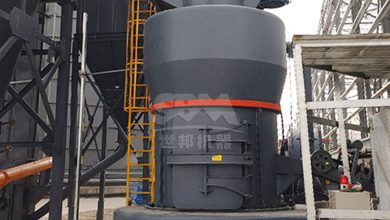
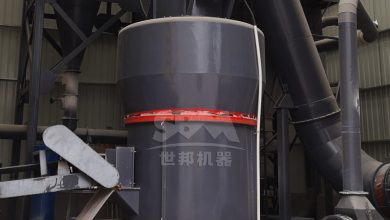
For new titanium processing plants with capacities exceeding 15-20 tons per hour, where minimizing lifetime operating cost (OPEX) is the priority, the LM Series Vertical Roller Mill is the superior choice. Its integrated design, outstanding energy efficiency (30-40% lower than ball mill systems), and large capacity range (up to 250 t/h) make it ideal for modern, large-scale mineral processing. The intelligent control system ensures stable operation and product quality, while its environmental compliance with fully sealed negative pressure operation meets stringent dust emission standards.
For Mid-Scale Plants or Modernization Projects Requiring Precision
For medium-capacity requirements (3-45 t/h), or for projects upgrading existing circuits where space and drying are not primary constraints, the advanced MTW Series European Trapezium Mill presents a compelling, high-performance solution. It retains the robustness and familiarity of the roller mill principle while integrating major technological advancements. Its integral bevel gear drive (98% transmission efficiency), optimized arc air duct, and wear-resistant volute structure directly address the challenges of grinding abrasive titanium concentrates. It offers exceptional product fineness control down to 325 mesh (0.045mm) with high uniformity, making it perfectly suited for producing titanium feedstocks for chemical processes.
Conclusion
In the context of titanium concentrate grinding, the Air Swept Mill, particularly in the form of a modern Vertical Roller Mill like the LM Series, represents the state-of-the-art for large-scale, energy-conscious operations. Its unparalleled efficiency and compactness are defining advantages. However, the advanced MTW Series European Trapezium Mill proves that the pendulum roller mill technology remains highly relevant, offering exceptional precision, reliability, and a lower entry point for mid-scale applications. Ultimately, a thorough analysis of the specific ore characteristics, production goals, and site conditions should guide the selection, with both technologies offering robust pathways to achieving optimal titanium grinding performance.