Titanium Concentrate Grinding Process: Complete Flow and Equipment Guide
Grinding is a critical stage in the processing of titanium concentrate, directly impacting the liberation of valuable titanium minerals (primarily ilmenite and rutile) from gangue, as well as the efficiency of subsequent separation and beneficiation stages. Achieving the optimal particle size distribution is paramount for maximizing recovery rates and product quality. This guide provides a comprehensive overview of the titanium concentrate grinding process, from primary crushing to ultra-fine milling, and highlights key equipment considerations.
1. Process Overview: From Run-of-Mine to Finished Product
The grinding circuit for titanium concentrate is typically multi-stage, designed to liberate titanium-bearing minerals efficiently while minimizing over-grinding, which wastes energy and can create problematic slimes. The general flow is as follows:
- Primary Crushing: Large run-of-mine ore is reduced to a manageable size (typically below 50mm) using jaw crushers or gyratory crushers.
- Secondary Crushing & Screening: Further size reduction via cone crushers or impact crushers, followed by screening to separate material ready for grinding from that requiring further crushing.
- Primary Grinding (Coarse Grinding): The first grinding stage aims to reduce material to a sand-like consistency (often 1-3mm). Ball mills or rod mills are commonly used here.
- Classification: A classifier (e.g., hydrocyclone or spiral classifier) separates the ground material. Coarse particles are returned to the primary mill for regrinding, while fine, liberated particles proceed.
- Secondary (Fine) Grinding: This stage further reduces the particle size of the middlings or concentrate to achieve complete mineral liberation, often targeting a fineness between 45 and 200 mesh (325 to 74 microns).
- Ultra-fine Grinding (If Required): For high-value applications requiring surface area enhancement or extremely fine powders (e.g., pigments, advanced ceramics), a dedicated ultra-fine grinding stage is necessary.
2. Key Equipment Selection for Each Stage
2.1 Primary and Secondary Crushing
Robust jaw crushers and cone crushers are standard. The focus is on high capacity, reliability, and wear resistance to handle abrasive titanium ores.
2.2 Primary (Coarse) Grinding: The Role of Ball Mills
Ball mills are the workhorses of the primary grinding stage. Their tumbling action of steel balls effectively breaks down coarse feed. For titanium concentrate, key considerations include:
- Liner and Ball Material: High-chrome or manganese steel is essential to withstand extreme abrasion.
- Drive System: Efficient girth gear and pinion or central drives to handle high torque.
- Capacity: Sizing must match the upstream crushing output and downstream requirements.
2.3 Fine Grinding: Advanced Mill Technologies
When moving beyond 200 mesh, energy efficiency and precise particle size control become critical. Traditional ball mills become less efficient due to higher energy consumption per ton of fine product. This is where advanced grinding technologies offer significant advantages.
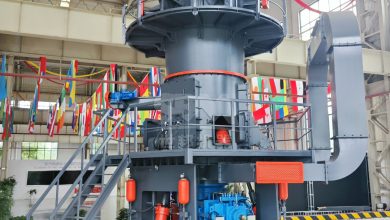
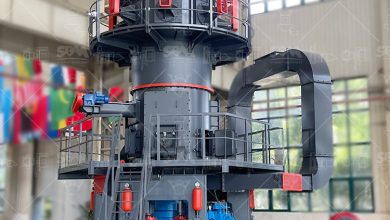
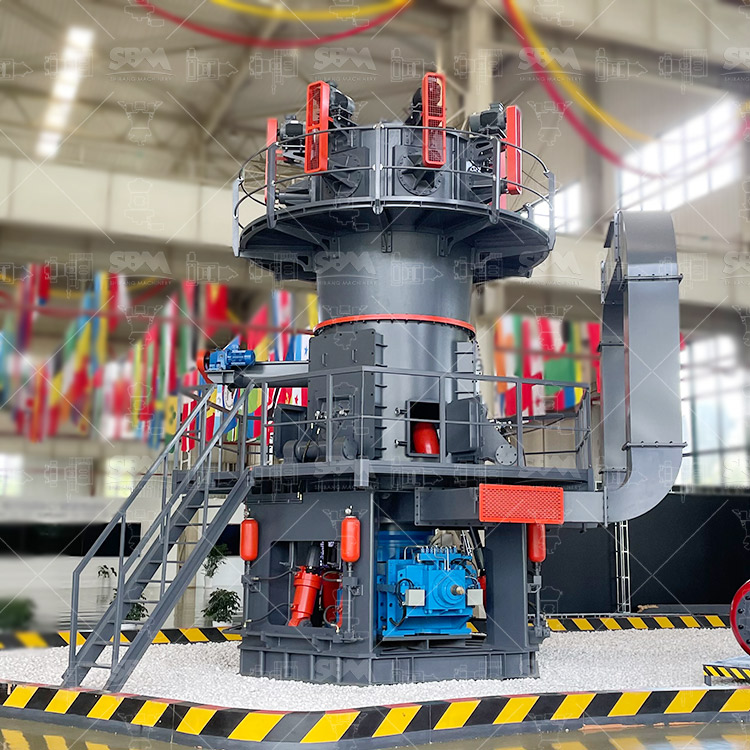
For fine grinding of titanium concentrate to a range of 30-325 mesh (600-45μm), the MTW Series European Trapezium Mill presents an outstanding solution. Its optimized arc air duct and integral bevel gear drive achieve transmission efficiencies up to 98%, directly translating to lower operational costs. The anti-wear shovel and curved roller design are specifically engineered to handle abrasive materials like titanium ores, drastically reducing maintenance frequency and cost. With capacities ranging from 3 to 45 tons per hour, it can be perfectly scaled for most titanium processing plants.
2.4 Ultra-fine Grinding: Achieving Micron-level Fineness
Applications requiring titanium dioxide (TiO2) feedstock for pigments or specialty chemicals often demand particle sizes in the micron or sub-micron range (e.g., 325-2500 mesh or 45-5μm). At this level, grinding shifts from pure impact to a combination of compression, shear, and attrition.
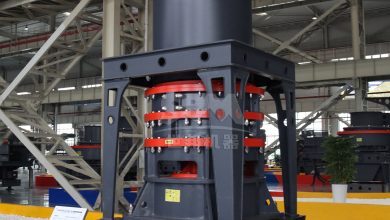
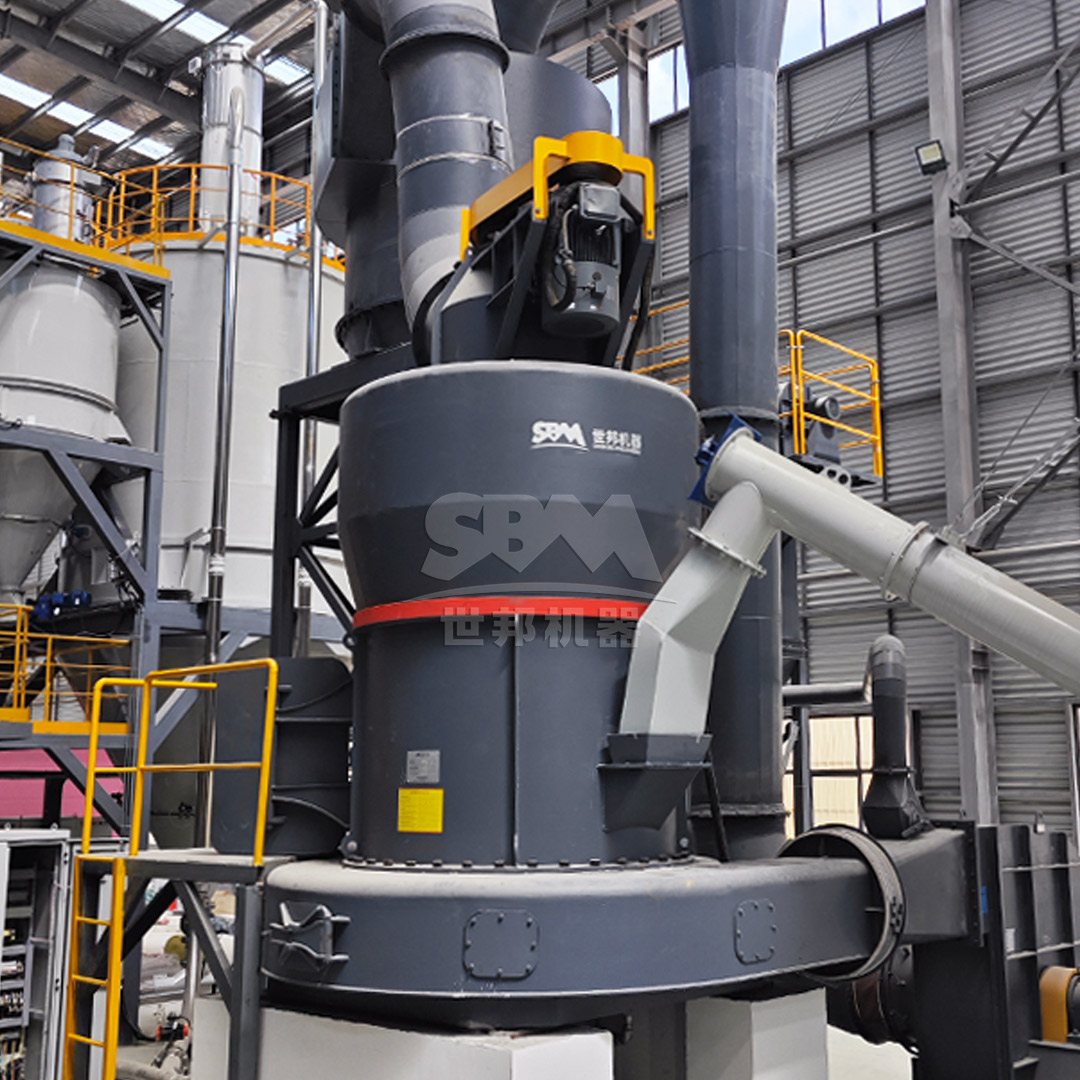
The SCM Series Ultrafine Mill is a technological leader in this domain. It utilizes a unique three-layer grinding ring and roller system to apply layered grinding pressure, efficiently achieving fineness up to 2500 mesh. Its high-precision vertical turbine classifier ensures a sharp particle size cut, eliminating coarse powder contamination and guaranteeing a uniform product—a critical factor for pigment quality. Furthermore, its intelligent control system with automatic granularity feedback ensures stable operation and consistent output. With energy consumption reportedly 30% lower than jet mills and capacities up to 25 t/h, it represents a highly efficient and economical choice for ultra-fine titanium processing.
3. Auxiliary Systems: Classification and Dust Collection
No grinding circuit is complete without efficient auxiliary systems.
- Classification: Dynamic classifiers integrated into mills like the SCM or MTW series provide internal, precise size control. For wet circuits, hydrocyclones are indispensable. Proper classification is the key to grinding circuit efficiency, preventing energy waste on already-liberated particles.
- Dust Collection: Dry grinding of fine powders, especially titanium, requires robust dust control. Modern mills incorporate high-efficiency pulse jet baghouse filters or cartridge collectors with efficiency exceeding 99.9%, ensuring a clean working environment and product recovery.
4. Operational Considerations and Best Practices
- Wear Monitoring: Implement regular inspection schedules for liners, grinding media, and classifier blades due to the highly abrasive nature of titanium.
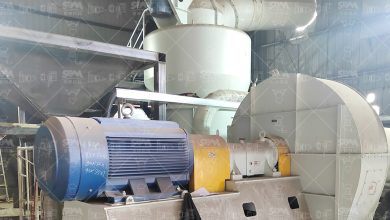
- Energy Optimization: Utilize variable frequency drives (VFDs) on mill motors and fans to match power consumption with feed rate and required fineness.
- Process Control: Automate the grinding-classification loop using particle size analyzers (PSDs) and density gauges to maintain optimal conditions and maximize throughput.
- Material Handling: Ensure feed to grinding mills is consistent in size and rate to prevent mill overload or starvation, which reduces efficiency.
5. Conclusion
Designing an efficient titanium concentrate grinding circuit requires a careful balance of liberation requirements, energy consumption, and capital cost. While robust ball mills remain suitable for primary grinding, adopting advanced fine and ultra-fine grinding technologies like the MTW Series European Trapezium Mill and the SCM Series Ultrafine Mill can lead to substantial gains in energy efficiency, product quality control, and overall operational cost savings. By integrating the right equipment for each stage with precise classification and dust collection, processors can optimize their titanium concentrate value chain from ore to premium product.