Steel Slag Superfine Powder Grinding Process Technology and Equipment
Introduction: The Challenge and Value of Steel Slag Utilization
Steel slag, a major by-product of the steelmaking industry, presents both a significant environmental challenge and a substantial resource opportunity. Traditionally considered waste, its disposal in landfills occupies valuable land and poses potential leaching risks. However, with advancements in processing technology, steel slag can be transformed into high-value superfine powder, finding applications in cement and concrete production, road construction, soil amendment, and as a raw material for various industrial processes. The key to unlocking this value lies in efficient, reliable, and precise grinding technology capable of handling the slag’s abrasive nature and variable composition to achieve the desired fineness and reactivity. This article explores the core process technologies and equipment essential for modern steel slag superfine powder production.
Grinding Process Technology for Steel Slag
The transformation of coarse steel slag into superfine powder (typically ranging from 325 mesh/45μm to 2500 mesh/5μm) requires a systematic approach. The process generally involves several key stages:
1. Pre-Treatment and Crushing
Raw steel slag from the steel plant undergoes initial processing, including magnetic separation to recover metallic iron, cooling, and primary crushing. Jaw crushers or hammer mills are commonly used to reduce the slag size to below 50mm, preparing it for the subsequent grinding circuit. Effective pre-treatment is crucial for protecting downstream grinding equipment from tramp metal and ensuring consistent feed size.
2. Drying
Steel slag often contains residual moisture. An efficient drying stage, often integrated with the grinding system using hot air, is necessary to prevent clogging, improve grinding efficiency, and ensure the final product’s quality. The drying process must be carefully controlled to avoid over-heating, which can affect the slag’s hydraulic properties.
3. Grinding and Classification
This is the heart of the superfine powder production line. The goal is to achieve a narrow particle size distribution with a high specific surface area. Modern systems employ a closed-circuit grinding principle: material is fed into a grinding mill, and the output is sent to a high-efficiency classifier. Particles meeting the target fineness are collected as the final product, while coarse particles are returned to the mill for further grinding. This loop ensures energy efficiency and precise control over product fineness.
4. Collection and Dust Control
Given the fine nature of the product, a robust dust collection system is mandatory. Pulse-jet baghouse filters or high-efficiency cyclone collectors, often in series, are used to achieve collection efficiencies exceeding 99.9%, ensuring environmental compliance and product recovery. The entire system typically operates under negative pressure to prevent dust leakage.

Critical Equipment for Superfine Grinding
Selecting the right grinding mill is paramount. The equipment must offer high grinding efficiency, wear resistance against abrasive materials, precise classification, low energy consumption, and operational stability. Several mill types are employed in the industry, each with its advantages.
Vertical Roller Mills (VRM)
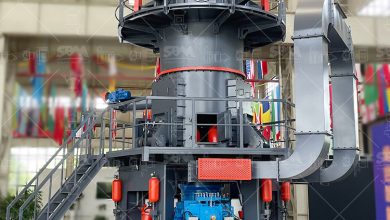
VRMs have become a preferred choice for large-scale slag grinding. They integrate crushing, grinding, drying, and classification in a single compact unit. Material is ground between rollers and a rotating table, with hot air providing drying and transporting the fines to an integrated classifier. Their high energy efficiency (30-40% lower than traditional ball mills) and large capacity make them suitable for major production lines.
Ball Mills
A traditional and proven technology, ball mills grind material using steel balls in a rotating cylinder. They are reliable and can handle a wide range of materials and fineness requirements. However, for producing superfine powder, they are generally less energy-efficient than VRMs and require a separate classification system, making the circuit more complex.
Ultrafine Grinding Mills
For producing powder in the very fine range (above 800 mesh), specialized ultrafine mills are required. These mills often utilize a combination of grinding mechanisms—such as roller pressure, impact, and attrition—coupled with ultra-high-precision turbine classifiers to achieve cuts in the micron and sub-micron range.
Recommended Equipment for Steel Slag Superfine Powder Production
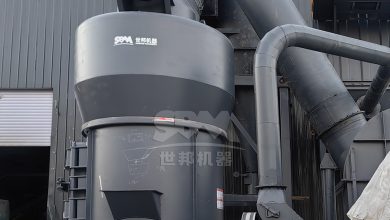
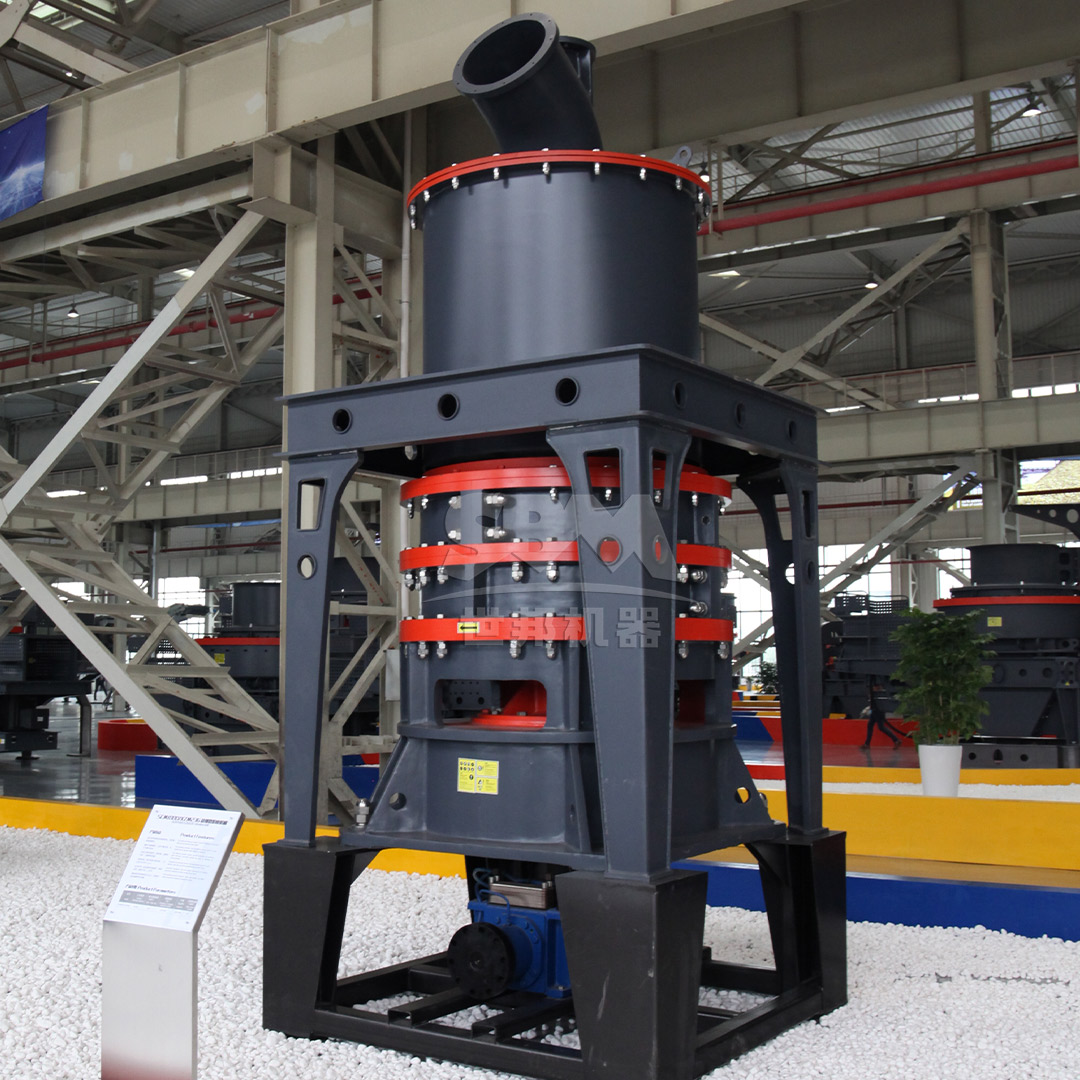
Based on the demanding requirements of steel slag processing—high abrasiveness, need for precise fineness control, and economic viability—we highly recommend our SCM Series Ultrafine Mill and LM Series Vertical Roller Mill as optimal solutions for different production scales and fineness targets.
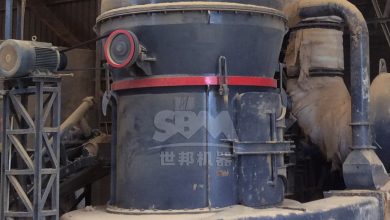
1. SCM Series Ultrafine Mill (For High-Fineness Applications: 325-2500 mesh / 45-5μm)
When the end product requires exceptional fineness for high-value applications such as high-performance concrete or specialty composites, the SCM Series Ultrafine Mill is the ideal choice.
- Core Advantage: Its vertical turbine classifier provides high-precision classification, ensuring no coarse powder mixes into the final product, resulting in a uniform and consistently fine powder crucial for reactivity and performance.
- Efficiency: It offers high efficiency and energy savings, with a capacity approximately twice that of jet mills while consuming 30% less energy. Intelligent control systems with automatic granularity feedback further optimize operation.
- Durability: Designed for tough materials, it features special alloy rollers and grinding rings that extend service life several times over compared to conventional components, directly reducing operating costs when processing abrasive steel slag.
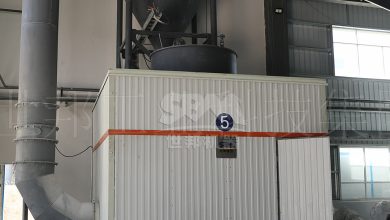
- Environmental Design: The mill operates with a pulse dust collection system exceeding international standards and a soundproof room design, making it an eco-friendly and low-noise solution.
With models like the SCM1000 (1.0-8.5 t/h, 132kW) or the larger SCM1680 (5.0-25 t/h, 315kW), it can be scaled to meet specific production needs for premium slag powder.
2. LM Series Vertical Roller Mill (For High-Capacity Production: 30-325 mesh / 600-45μm)
For large-volume production of steel slag powder used in standard cement blending or construction applications, the LM Series Vertical Roller Mill offers unmatched economic and operational benefits.
- Integrated System: Its integrated design combines crushing, grinding, drying, and classification, reducing the plant footprint by up to 50% and cutting civil engineering costs by 40%. This makes greenfield project deployment faster and more cost-effective.
- Low Operating Cost: The non-contact design between rollers and the grinding table, along with wear-resistant materials, increases wear part life by 3 times. Most importantly, its grinding principle consumes 30-40% less energy than a traditional ball mill system, offering massive savings in continuous operation.
- Intelligence & Stability: An expert-level automatic control system allows for remote monitoring and adjustment, ensuring stable operation and reducing manual intervention.
- Proven for Slag: Specifically, the LM Vertical Slag Mill series (e.g., LM130N to LM370N) is engineered for slag grinding, handling moisture and achieving the required specific surface area with capacities ranging from 4 to 110 t/h.
This mill is the workhorse for turning large quantities of steel slag into a commercially viable product with excellent efficiency and reliability.
Conclusion
The successful production of steel slag superfine powder hinges on a deep understanding of process technology and the selection of robust, efficient, and precise equipment. Moving away from wasteful disposal to value-added utilization is not only an environmental imperative but also an economic opportunity. Technologies like the SCM Ultrafine Mill for premium products and the LM Vertical Roller Mill for high-volume applications represent the forefront of grinding innovation. By leveraging such advanced equipment, producers can ensure consistent product quality, optimize energy consumption, minimize environmental impact, and build a profitable business around sustainable industrial symbiosis.