Small Granite Ultrafine Grinding Mill: Key Functions and Applications
Introduction to Granite Ultrafine Grinding Technology
The processing of granite into ultrafine powders represents one of the most demanding applications in mineral grinding technology. Granite’s inherent hardness, abrasiveness, and complex mineral composition require specialized milling equipment capable of delivering precise particle size distributions while maintaining operational efficiency and durability. Small granite ultrafine grinding mills have emerged as critical solutions for industries requiring high-purity granite powders with controlled particle characteristics.
Modern granite grinding applications span diverse sectors including construction materials, composite manufacturing, coatings, and advanced ceramics. The transition toward finer granite powders has been driven by enhanced material properties such as improved dispersion, increased surface area, and superior mechanical characteristics in final products. This article examines the core functions, technological advancements, and industrial applications of small granite ultrafine grinding mills, with particular focus on optimized solutions for granite processing.
Technical Challenges in Granite Ultrafine Grinding
Material Characteristics and Processing Difficulties
Granite presents unique challenges in ultrafine grinding due to its composition of quartz, feldspar, and mica minerals. Quartz, with Mohs hardness of 7, is particularly abrasive and accelerates wear on grinding components. The varying hardness within granite’s mineral constituents creates difficulties in achieving uniform particle size distribution, while the presence of micaceous minerals can lead to platy particle morphologies that complicate classification.
Additional challenges include:
- High energy consumption due to granite’s compressive strength (150-300 MPa)
- Temperature sensitivity that can affect final product properties
- Contamination risks from grinding media wear
- Dust control requirements for worker safety and environmental compliance
Particle Size Requirements for Different Applications
The target fineness for granite powders varies significantly across applications. Construction adhesives and sealants typically require 200-400 mesh (74-37μm) powders, while polymer composites and functional fillers demand 800-1250 mesh (15-10μm) ranges. The most demanding applications in electronics and specialty coatings necessitate ultrafine powders reaching 2500 mesh (5μm) and below, where precise particle size control becomes critical for performance characteristics.
Key Functions of Modern Granite Ultrafine Grinding Systems
Precision Size Reduction Mechanisms
Contemporary granite grinding mills employ multiple comminution principles to achieve ultrafine results. The primary grinding stage typically utilizes compression and impact forces to reduce raw granite (≤20mm) to intermediate sizes, while secondary and tertiary stages focus on shearing and attrition for fine and ultrafine grinding. Advanced systems integrate multiple grinding mechanisms within a single unit, optimizing energy efficiency while maintaining precise control over particle size distribution.
The most effective systems feature graduated grinding zones where material progresses through increasingly intensive size reduction stages. This approach minimizes overgrinding of softer components while ensuring complete reduction of harder minerals, resulting in superior product uniformity.
Advanced Classification Technology
High-efficiency classification represents the cornerstone of modern ultrafine grinding systems. For granite applications requiring D97 ≤ 5μm fineness, precision air classifiers with vertical turbine designs provide the necessary cut-point accuracy. These systems employ centrifugal and aerodynamic forces to separate particles based on mass and aerodynamic diameter, enabling tight control over the top-size of finished products.
Modern classifiers feature dynamic adjustment capabilities that allow operators to modify cut points during operation, providing flexibility to produce multiple product grades from a single grinding system. The integration of intelligent control systems further enhances classification efficiency by automatically compensating for variations in feed material characteristics.
Wear Protection and Durability Enhancements
Given granite’s abrasive nature, wear protection constitutes a critical design consideration. Leading grinding mills incorporate specialized materials in high-wear components, including tungsten carbide overlays, high-chromium iron alloys, and ceramic composites. These materials demonstrate 3-5 times longer service life compared to conventional steel components in granite grinding applications.
Innovative design approaches further enhance durability. Modular component designs facilitate rapid replacement of wear parts, while specialized grinding geometries optimize material flow to minimize abrasive wear. Advanced lubrication systems ensure continuous protection of bearings and other critical components, extending maintenance intervals and improving operational reliability.
SCM Ultrafine Mill: Optimized Solution for Granite Processing
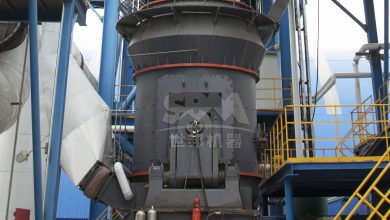
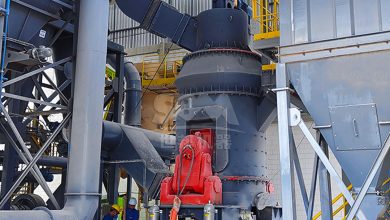
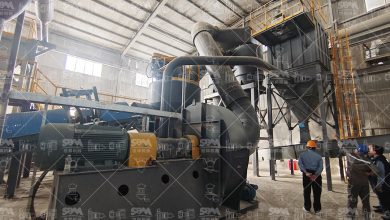
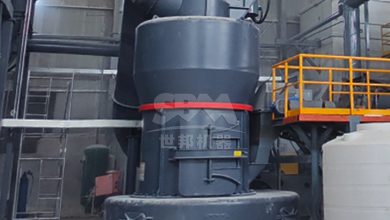
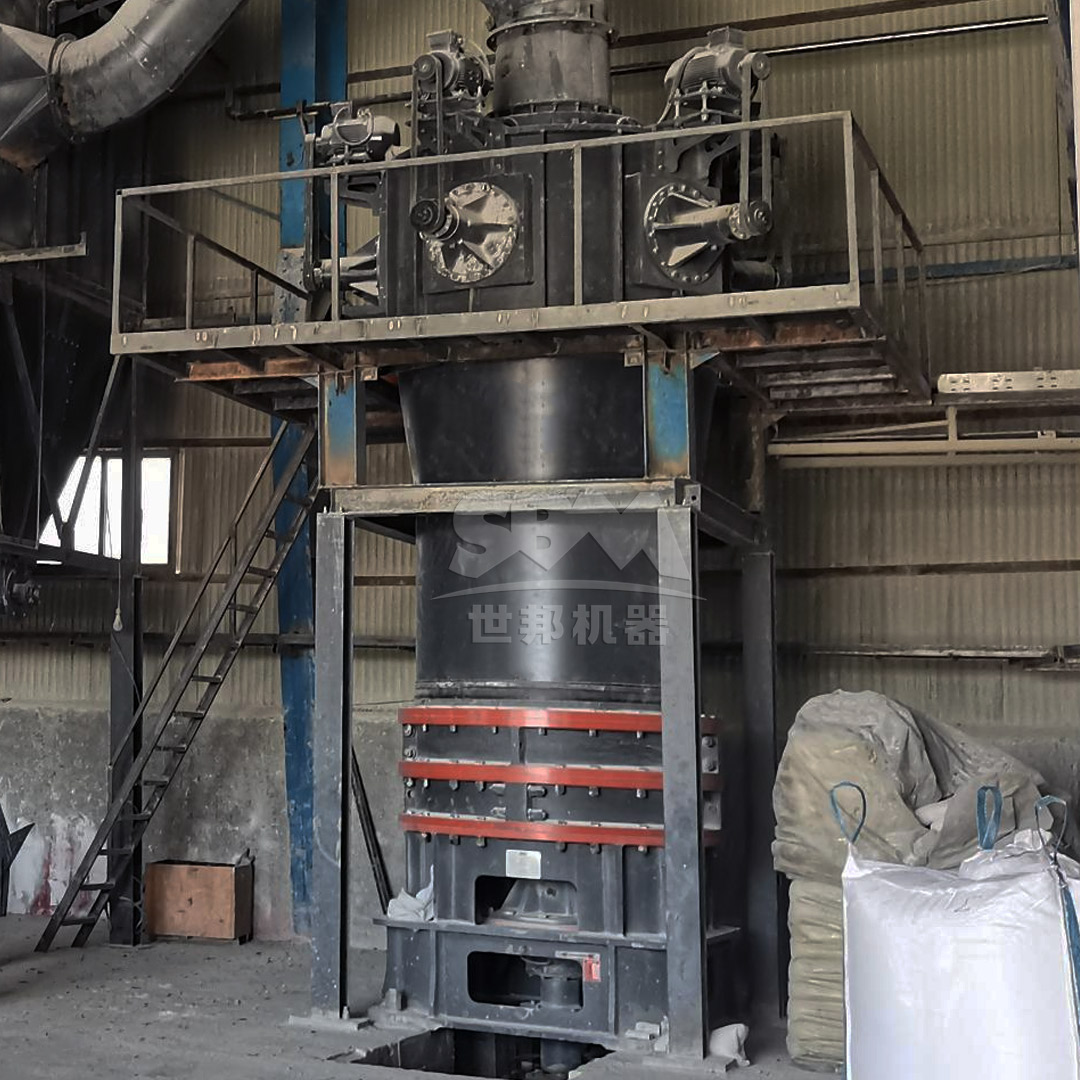
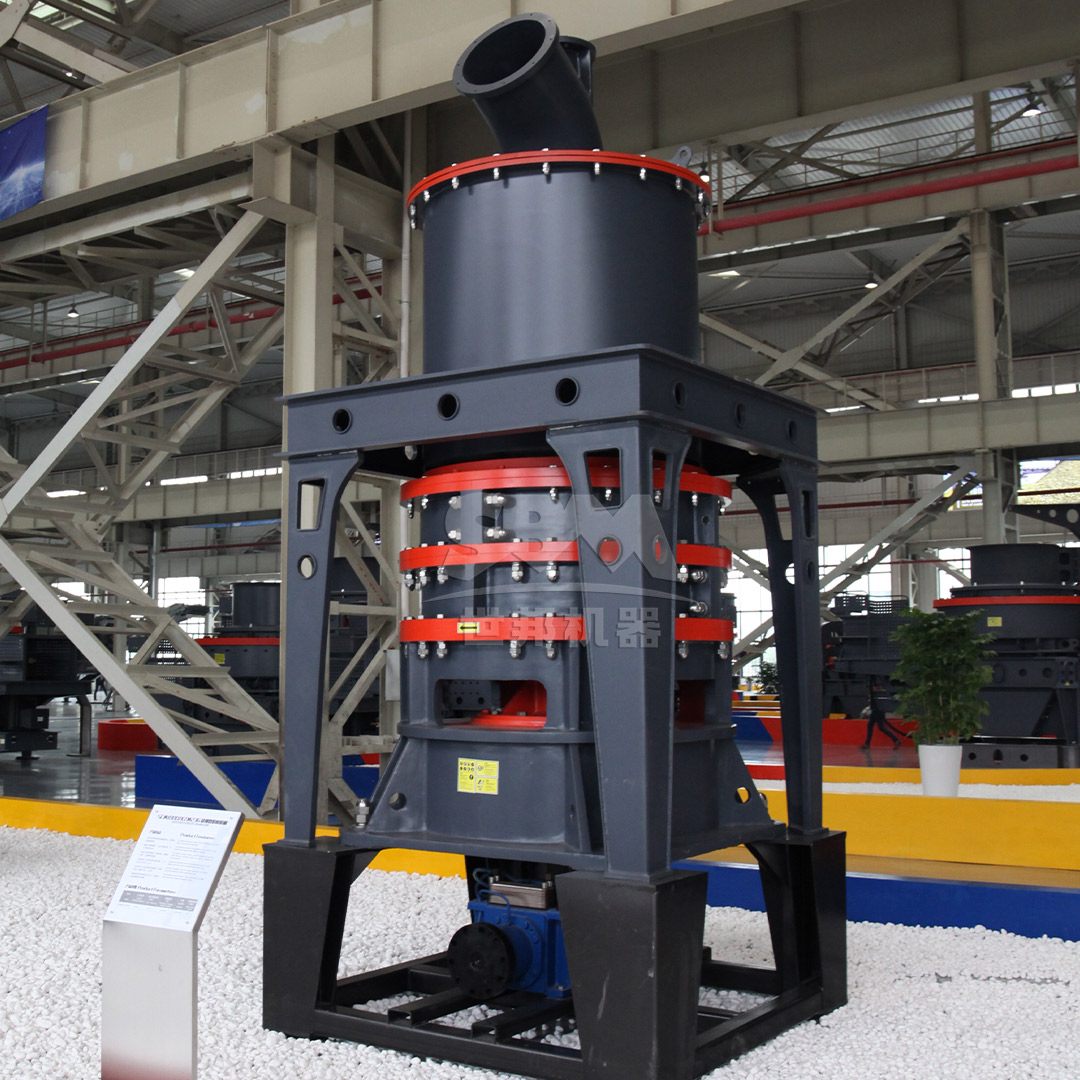
For demanding granite grinding applications requiring fineness between 325-2500 mesh (45-5μm), the SCM Ultrafine Mill represents an industry-leading solution. This specialized grinding system incorporates technological advancements specifically engineered to address the challenges of granite processing while delivering exceptional operational efficiency.
Technical Specifications and Performance Characteristics
The SCM series achieves remarkable performance metrics through its innovative design. With input size capability of ≤20mm and output fineness adjustable from 325 to 2500 mesh (D97 ≤ 5μm), this mill covers the complete range of granite powder requirements. Processing capacity ranges from 0.5 to 25 tons per hour across different models, providing scalability for various production volumes.
Key technological advantages include:
- High Efficiency and Energy Savings: Delivering twice the capacity of jet mills with 30% reduced energy consumption through optimized grinding mechanics and intelligent control systems that automatically maintain target fineness.
- Precision Classification: Vertical turbine classifiers ensure accurate particle size cuts with no coarse powder contamination, guaranteeing uniform product quality.
- Enhanced Durability: Special material formulations for grinding rollers and rings extend service life multiple times compared to conventional components, while bearing-free screw grinding chambers ensure stable operation.
- Environmental Compliance: Pulse dust collection systems exceed international standards with efficiency rates above 99.9%, while soundproofing chambers maintain noise levels below 75dB.
Application-Specific Configuration Options
The SCM series offers multiple models tailored to different production requirements. The SCM800 model (0.5-4.5 t/h, 75kW) serves smaller operations and pilot plants, while the SCM1680 model (5.0-25 t/h, 315kW) supports large-scale industrial production. This scalability ensures optimal matching of equipment capacity to specific operational needs without compromising grinding efficiency or product quality.
For granite processors requiring intermediate capacity with superior fineness control, the SCM1250 model (2.5-14 t/h, 185kW) provides an excellent balance of production volume and energy efficiency. All models maintain the same output fineness range, enabling consistent product quality regardless of production scale.
MTW Series Trapezium Mill: Versatile Solution for Coarser Granite Applications
For applications requiring slightly coarser granite powders in the 30-325 mesh range (600-45μm), the MTW Series Trapezium Mill offers exceptional versatility and reliability. This robust grinding system combines European technological innovations with practical design enhancements specifically suited for granite processing operations.
Advanced Design Features
The MTW series incorporates multiple proprietary technologies that optimize performance in granite grinding applications. Curved air duct designs minimize airflow resistance and energy consumption, while wear-resistant volute structures enhance operational longevity. The integrated cone gear transmission system achieves remarkable 98% transmission efficiency, reducing power requirements and installation costs.
Specialized wear protection includes innovative shovel blade designs that significantly reduce maintenance requirements. Combined curved surface grinding rollers and segmented wear plates extend component life while maintaining consistent grinding performance throughout the maintenance cycle.
Operational Flexibility and Efficiency
With capacity ranging from 3 to 45 tons per hour across different models and input size capability up to 50mm, the MTW series accommodates diverse granite processing requirements. The MTW215G model represents the flagship option with 15-45 t/h capacity and 280kW main motor power, capable of supporting large-scale production facilities.
Smaller operations benefit from the MTW110 model (3-9 t/h, 55kW), which maintains the same technological advantages in a compact footprint. All models feature the same output fineness range, ensuring consistent product quality while providing the flexibility to adjust production volume according to market demands.

Industrial Applications of Granite Ultrafine Powders
Construction and Building Materials
Ultrafine granite powders significantly enhance performance characteristics in construction applications. In polymer-modified cement systems, these powders act as functional fillers that improve compressive strength, reduce permeability, and enhance durability. The controlled particle size distribution ensures optimal packing density, reducing resin demand in composite materials while maintaining mechanical properties.
Advanced applications include self-compacting concrete formulations where ultrafine granite powders improve flow characteristics without segregation, and architectural coatings where they provide enhanced weatherability and stain resistance. The availability of precisely controlled particle sizes enables formulators to optimize product performance for specific application requirements.
Advanced Composite Materials
The use of granite powders in composite materials leverages their mineral composition to enhance mechanical, thermal, and aesthetic properties. In engineered stone products, ultrafine granite powders provide the mineral foundation that determines visual characteristics while contributing to structural integrity. The platy morphology of micaceous components can be exploited to create barrier effects in polymer composites, improving resistance to moisture penetration.
Specialty applications include electromagnetic shielding composites where granite’s mineral composition provides specific dielectric properties, and friction materials where the hardness gradient within granite particles creates controlled wear characteristics. The ability to produce tightly controlled particle size distributions enables composite manufacturers to precisely engineer material properties for demanding applications.
Functional Fillers and Specialty Applications
Beyond traditional uses, ultrafine granite powders serve increasingly sophisticated applications across multiple industries. In the coatings sector, they function as extenders that enhance durability while reducing formulation costs. The development of surface-modified granite powders has expanded applications into polymer systems where improved interfacial adhesion enables higher loading levels without compromising mechanical properties.
Emerging applications include catalytic supports where the mineral surface provides active sites for chemical reactions, filtration media with controlled pore structures, and advanced ceramics where granite powders serve as cost-effective alternatives to pure mineral precursors. The continuing refinement of grinding and classification technologies enables production of increasingly specialized granite powders tailored to these sophisticated applications.
Operational Considerations and Best Practices
System Optimization for Granite Processing
Maximizing the performance of granite ultrafine grinding systems requires attention to multiple operational parameters. Feed material preparation significantly influences grinding efficiency, with optimal moisture content typically below 2% to prevent agglomeration and classification issues. Pre-crushing to the mill’s maximum feed size ensures consistent grinding chamber loading and stable operation.
Operational parameters requiring careful optimization include classifier speed, grinding pressure, and airflow rates. These variables interact complexly, necessitating systematic approach to parameter optimization. Modern grinding systems with automated control capabilities simplify this process by continuously adjusting operational parameters to maintain target product characteristics despite variations in feed material properties.
Maintenance Strategies for Abrasive Applications
The abrasive nature of granite necessitates specialized maintenance approaches to maximize equipment longevity. Progressive wear monitoring through regular thickness measurements of critical components enables predictive maintenance scheduling, minimizing unplanned downtime. Component rotation strategies, where wear parts are repositioned to distribute wear more evenly, can extend service intervals by 30-40%.
Advanced maintenance practices include:
- Laser alignment of grinding elements to ensure optimal contact patterns
- Vibration analysis for early detection of component degradation
- Wear pattern documentation to identify opportunities for design improvements
- Spare parts inventory optimization based on historical wear rates
Future Trends in Granite Ultrafine Grinding Technology
The evolution of granite ultrafine grinding technology continues to focus on enhanced efficiency, improved product quality, and reduced environmental impact. Emerging trends include the integration of artificial intelligence for real-time process optimization, development of novel wear-resistant materials through advanced metallurgy, and hybrid grinding systems that combine multiple comminution principles for specific mineral components within granite.
Sustainability considerations are driving innovations in energy recovery systems, water-free processing methods, and circular economy approaches that utilize grinding waste streams. The ongoing digitalization of grinding operations enables unprecedented levels of process transparency and control, facilitating the production of consistently high-quality granite powders for increasingly demanding applications.
As market requirements continue to evolve toward tighter particle size distributions, customized surface properties, and enhanced performance characteristics, granite ultrafine grinding technology will remain at the forefront of mineral processing innovation. The continuing refinement of mills like the SCM Ultrafine Mill and MTW Series Trapezium Mill ensures that processors will have access to the advanced technology needed to meet these challenges while maintaining operational efficiency and economic viability.