Project Case: Utilizing Coal Gangue to Produce FCC Catalyst Precursor in Shuozhou, Shanxi
1. Introduction: Turning Waste into Value in Shuozhou
Shuozhou, a major coal-producing city in Shanxi Province, China, faces significant environmental and economic challenges associated with coal gangue, a by-product of coal mining and washing. Traditionally stockpiled in massive waste dumps, coal gangue not only occupies valuable land but also poses risks of spontaneous combustion, dust pollution, and heavy metal leaching. However, this industrial solid waste contains valuable components, primarily kaolinite and residual carbon, which can be transformed into high-value products. This project case study explores a pioneering initiative in Shuozhou to process coal gangue into a high-quality precursor for Fluid Catalytic Cracking (FCC) catalysts, a critical component in modern petroleum refining. The success of this project hinges on advanced grinding and classification technology to achieve the precise particle size and purity required for catalyst synthesis.
2. Project Overview and Technical Requirements
The core objective is to convert raw coal gangue into a finely ground, thermally activated metakaolin powder suitable as a matrix component for FCC catalysts. The process involves several key stages: primary crushing, magnetic separation to remove iron impurities, thermal activation (calcination) to convert kaolinite to reactive metakaolin, and finally, ultra-fine grinding and classification. The final product specifications are stringent: a D97 particle size of ≤ 5μm (approximately 2500 mesh) with a narrow size distribution, high whiteness, and controlled residual carbon content. The grinding system must handle the abrasive nature of calcined gangue, ensure consistent product quality, and operate with high energy efficiency and low environmental impact to make the process economically viable.
3. Grinding Technology Selection: The Heart of the Process
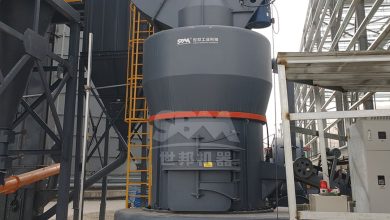
Selecting the appropriate grinding equipment is paramount. Traditional ball mills are often inefficient for achieving such fine sizes and have high energy consumption. For the primary and secondary grinding stages to a medium fineness (e.g., 30-325 mesh), robust and efficient mills are required. For the final, ultra-fine grinding stage to 5μm, specialized technology is non-negotiable. After a comprehensive technical and economic evaluation, the project selected a two-stage milling process. The first stage employs an MTW Series Trapezium Mill for intermediate grinding after calcination. Its advantages for this duty include high handling capacity (3-45 t/h), ability to process feed sizes up to 50mm, and reliable performance with moderately abrasive materials. The curved air duct and efficient transmission system contribute to lower energy consumption, a critical factor for overall project economics.
The final and most critical stage requires grinding the metakaolin to D97 ≤ 5μm. For this, the project integrated the SCM Series Ultrafine Mill. This mill is specifically engineered for producing micron and sub-micron sized powders. Its vertical turbine classifier provides precise particle size切割, ensuring no coarse particles contaminate the final product—a vital requirement for catalyst precursor uniformity. With an output fineness range of 325-2500 mesh and a capacity of 0.5-25 t/h, the SCM mill perfectly matches the project’s scale. Furthermore, its energy efficiency, being 30% more efficient than jet mills, and its环保低噪 design with pulse dust collection (>99.9% efficiency) and noise levels below 75dB, align perfectly with the project’s sustainability goals.
4. Process Flow and Equipment Integration
The complete production line is designed as follows:
- Pre-treatment: Raw coal gangue is initially crushed by a jaw crusher and then processed through a hammer mill (e.g., PC4012-90) to achieve a uniform size of 0-3mm, facilitating subsequent magnetic separation.
- Beneficiation & Calcination: The crushed material undergoes magnetic separation to remove iron-bearing minerals. The purified gangue is then fed into a rotary kiln for calcination at 600-750°C, transforming kaolinite into reactive metakaolin.
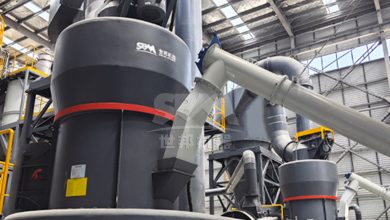
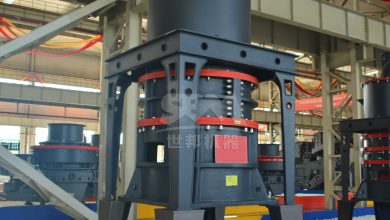
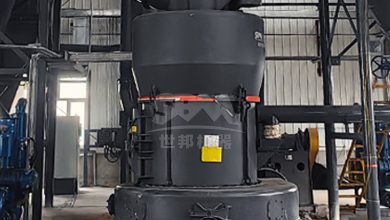
- Intermediate Grinding (Stage 1): The calcined clinker is fed into an MTW175G Trapezium Mill. This mill reduces the material to a base fineness of around 100-200 mesh. Its wear-resistant design, featuring combined shovel blades and high-strength磨辊, ensures low maintenance costs when processing the abrasive metakaolin.
- Ultra-fine Grinding (Stage 2): The product from the MTW mill is transported to the SCM1250 Ultrafine Mill system. Here, the material is ground to the target D97 ≤ 5μm. The mill’s multi-layer grinding principle and advanced classifier guarantee the required particle size distribution. The integrated pulse dust collector ensures a clean working environment and maximizes product yield.
- Packaging: The final ultra-fine metakaolin powder is conveyed to silos and packaged for shipment to the catalyst manufacturer.
5. Technical and Economic Benefits Realized
The implementation of this tailored grinding solution delivered substantial benefits:
- Product Quality: The consistent production of high-purity, ultra-fine metakaolin with precise particle size control met all specifications for FCC catalyst precursor, enabling downstream manufacturers to produce high-performance catalysts.
- Energy Efficiency: The combined efficiency of the MTW and SCM mills resulted in overall grinding energy savings exceeding 35% compared to conventional ball mill systems, dramatically reducing operational costs.
- Environmental Performance: The project successfully diverted a substantial volume of coal gangue from waste dumps. The enclosed milling systems with high-efficiency dust collectors ensured dust emissions were kept well below national standards (<20mg/m³). The low-noise operation minimized impact on the surrounding area.
- Economic Viability: By transforming a zero-cost waste material into a high-value chemical feedstock, the project achieved an attractive return on investment. The reliability and low maintenance of the selected grinding equipment further contributed to high plant availability and low operating expenses.
6. Conclusion and Industry Implications
The Shuozhou coal gangue to FCC catalyst precursor project stands as a exemplary model of circular economy and industrial upgrading in the resource sector. Its success demonstrates that with the right technology, particularly in critical size reduction processes, industrial waste can be converted into sophisticated, high-demand materials. The strategic selection of the MTW Series Trapezium Mill for robust intermediate grinding and the SCM Series Ultrafine Mill for precision final grinding was instrumental in meeting the stringent technical requirements while ensuring economic and environmental sustainability. This project provides a scalable blueprint for other coal-rich regions globally, offering a pathway to reduce environmental liabilities, create new industries, and contribute to a more sustainable materials economy.