Processing and Utilization of Perlite Ore: Insights from a Vertical Mill Manufacturer
Introduction to Perlite Ore Processing
Perlite, a naturally occurring volcanic glass, undergoes significant expansion when heated, making it a valuable industrial mineral with applications spanning construction, horticulture, filtration, and fillers. The processing of raw perlite ore into usable products involves several critical stages, with comminution being paramount. Efficient grinding is essential to liberate the bound water and prepare the material for expansion. This article explores the technical aspects of perlite ore processing, with a specific focus on the role of advanced vertical milling technology in achieving optimal product quality and operational efficiency.
Key Stages in Perlite Ore Processing
1. Crushing and Primary Size Reduction
Raw perlite ore, typically extracted with a size up to several hundred millimeters, first undergoes primary and secondary crushing. Jaw crushers and cone crushers are commonly employed to reduce the ore to a manageable size, often below 50mm, suitable for feed into fine grinding mills. The goal is to achieve a consistent feed size that optimizes the subsequent milling process.
2. Drying
Perlite ore often contains surface moisture, which can adversely affect grinding efficiency and lead to clogging in the mill. Rotary dryers are frequently used to reduce the moisture content to an optimal level, typically below 1-2%, ensuring smooth operation in the downstream grinding circuit.
3. Fine Grinding: The Heart of the Process
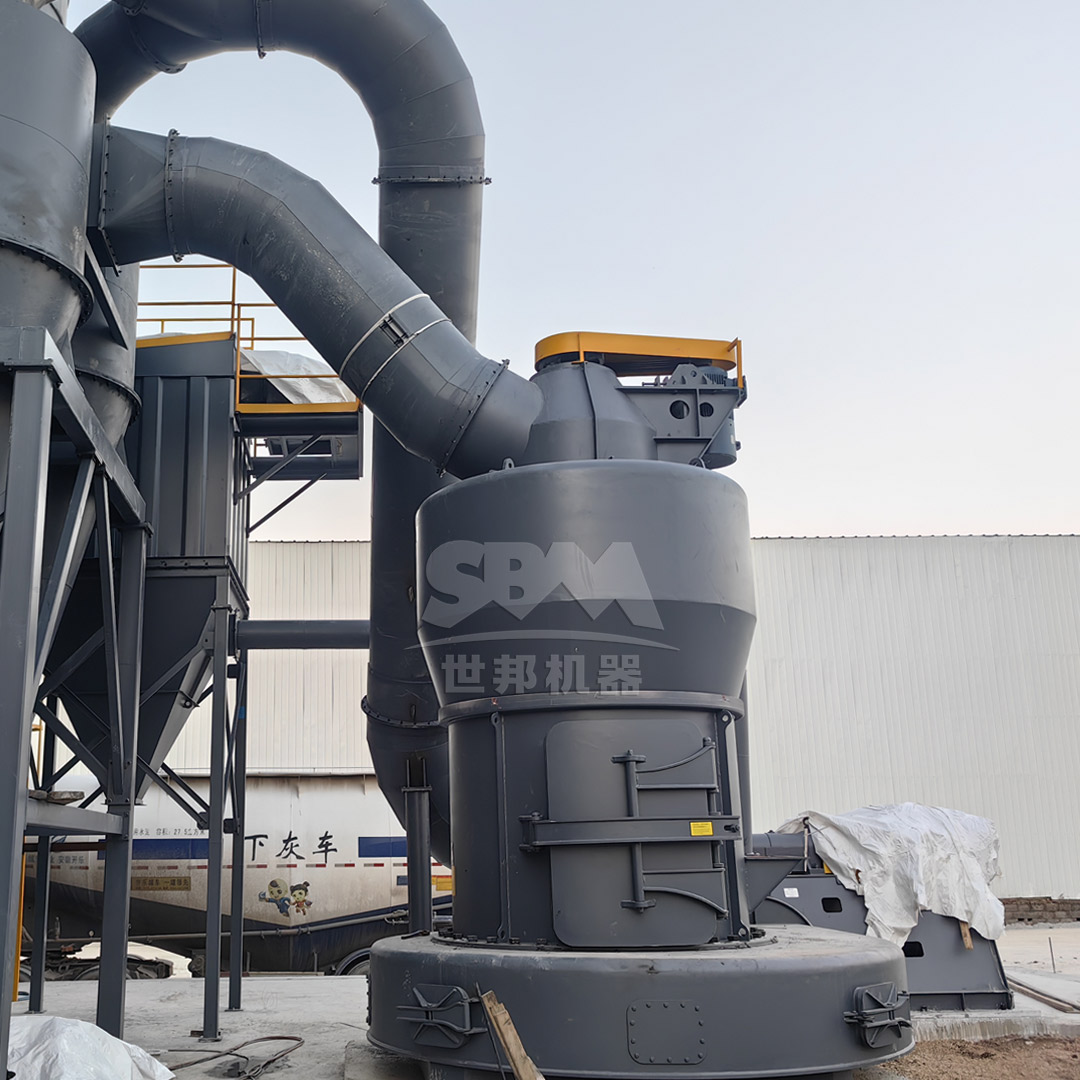
The most critical step in preparing perlite for expansion is fine grinding. The objective is to produce a powder with a specific particle size distribution that will yield a uniform, high-quality expanded product. The choice of grinding equipment directly impacts the final product’s properties, energy consumption, and overall production cost. Traditional ball mills have been used, but modern vertical roller mills offer significant advantages.
The Superiority of Vertical Roller Mills for Perlite Grinding
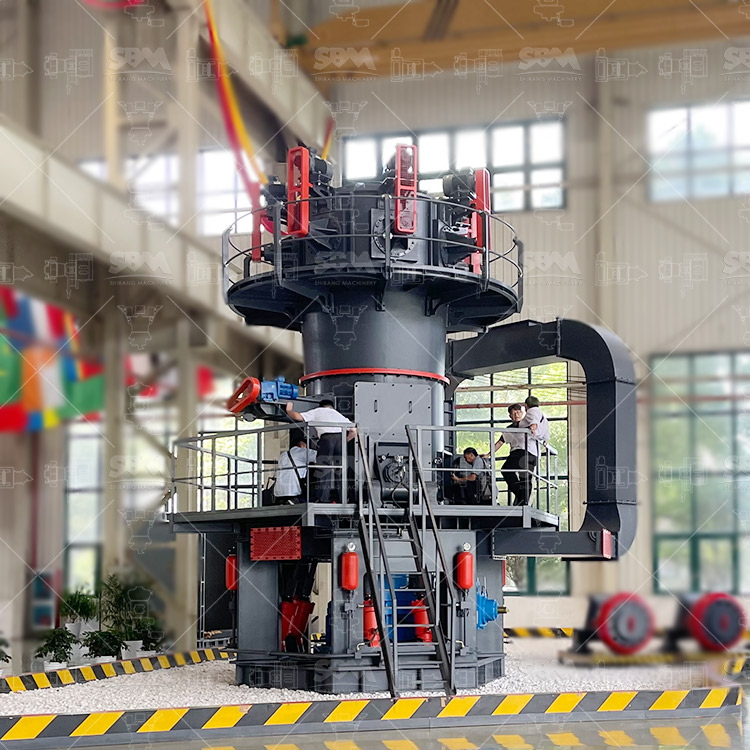
Vertical Roller Mills (VRMs) have revolutionized the mineral processing industry, and their application in perlite grinding is particularly beneficial. Unlike ball mills, which rely on impact and attrition from tumbling media, VRMs utilize a bed-compaction principle where material is ground between a rotating table and stationary or rotating rollers.
Technical Advantages for Perlite Applications
- High Grinding Efficiency: The direct application of force onto the material bed results in less energy waste as heat and noise compared to ball mills. This leads to a 30-50% reduction in specific energy consumption.
- Precise Particle Size Control: Integrated dynamic classifiers allow for real-time adjustment of the product fineness. This is crucial for perlite, where the expansion ratio and product density are highly dependent on the feed powder’s particle size.
- Compact Design and Small Footprint: The integrated grinding and classification system within a single machine makes VRMs significantly more space-efficient than traditional ball mill circuits.
- Excellent Drying Capability: Hot gas can be introduced directly into the mill chamber, simultaneously grinding and drying the material. This is a major advantage for maintaining low moisture levels in the perlite feed.
- Low Wear and Maintenance: While wear parts like rollers and table liners are subject to abrasion, their design and material composition ensure long service life. Furthermore, the ability to swing the roller out of the mill for maintenance simplifies servicing.
Recommended Milling Solutions for Perlite
Selecting the right mill depends on the required product fineness and production capacity. For high-volume production of standard-grade expanded perlite (typically requiring a fineness of 30-200 mesh), robust and efficient solutions are paramount.
Primary Recommendation: MTW Series Trapezium Mill
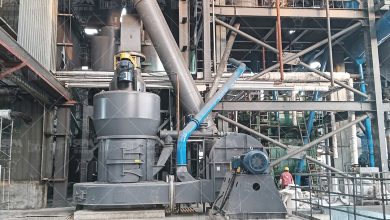
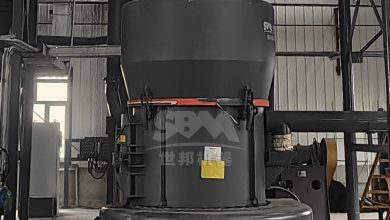
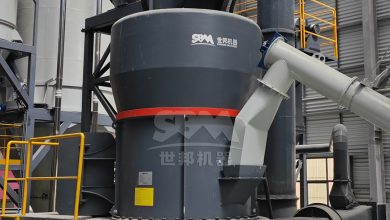
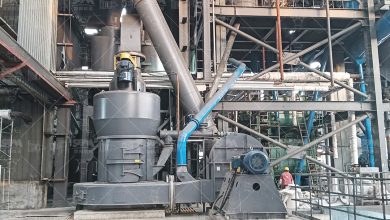
For most perlite processing plants seeking an optimal balance between capacity, fineness, and operational cost, the MTW Series Trapezium Mill is an exemplary choice. Its design incorporates several advanced features that directly benefit perlite grinding.
- High Capacity: With models offering processing capacities from 3 to 45 tons per hour, the MTW series can meet the demands of large-scale perlite operations.
- Ideal Fineness Range: It produces powders in the range of 30-325 mesh (0-0.038mm), perfectly suited for the feed stock of expansion furnaces.
- Key Technical Superiority:
- Anti-Wear Shovel Design: The modular shovel blades and curved surface design reduce maintenance costs and extend the life of grinding components, a critical factor when processing abrasive materials like perlite.
- Arc Air Channel: This optimized design minimizes air resistance and pressure loss, enhancing overall system efficiency and reducing fan power consumption.
- Integral Cone Gear Transmission: This robust transmission system achieves up to 98% efficiency, ensuring stable and reliable power delivery while saving installation space.
The working principle of the MTW Mill—where the grinding roller rotates around the central axis while also rotating on its own—creates a centrifugal force that effectively compresses the material layer between the roller and grinding ring, resulting in highly efficient comminution.

Alternative for Ultra-Fine Applications: SCM Ultrafine Mill
For specialized applications requiring ultra-fine perlite powder (e.g., certain filter aids or functional fillers where a fineness of 325-2500 mesh (D97 ≤ 5μm) is needed), the SCM Ultrafine Mill is the ideal technology.
- Ultra-Fine Grinding Capability: It is specifically engineered to achieve fineness levels that are unattainable for conventional mills.
- High-Efficiency Classification: Equipped with a vertical turbine classifier, it ensures precise particle size cuts with no coarse powder contamination, guaranteeing a uniform and high-value product.
- Energy Efficient: Despite its fine grinding capability, its design offers 30% lower energy consumption compared to jet mills of similar capacity.
Conclusion
The processing of perlite ore is a sophisticated operation where the selection of grinding technology is a decisive factor for profitability and product quality. Vertical Roller Mills, particularly the MTW Series Trapezium Mill for standard grades and the SCM Ultrafine Mill for high-value specialty products, represent the pinnacle of modern comminution technology. Their superior energy efficiency, precise particle size control, and robust design make them the most rational and economical choice for perlite processors aiming to optimize their operations and enhance their market competitiveness. Investing in such advanced milling solutions is not merely an equipment purchase but a strategic move towards sustainable and efficient mineral processing.