Price of White Clay Grinding Mill and Eco-Friendly Milling Equipment in Guangxi
Introduction: The Guangxi White Clay Industry and Its Demands
Guangxi Zhuang Autonomous Region, renowned for its rich mineral resources, is a significant hub for non-metallic mineral processing in China. Among its valuable resources, white clay (often kaolin) stands out for its extensive applications in ceramics, paper, paint, rubber, and plastics. The processing of white clay into fine powders is a critical step that determines the quality and value of the final product. Consequently, selecting the right grinding mill is paramount for producers in Guangxi. This article delves into the factors influencing the price of white clay grinding equipment and explores the technological advancements driving the adoption of eco-friendly milling solutions in the region.
Key Factors Influencing Grinding Mill Prices
The price of a grinding mill for white clay is not a single figure but a spectrum determined by a confluence of technical and commercial factors.
1. Technical Specifications and Capacity
The most direct price determinants are the machine’s core capabilities. Higher throughput capacity (tons per hour) and finer output fineness (measured in mesh or microns) command a higher price. For instance, a mill capable of producing 10 tons per hour of 1250-mesh powder will be significantly more expensive than one producing 2 tons per hour of 325-mesh powder. The required particle size distribution (PSD) consistency also plays a role; equipment with advanced, precise classification systems costs more.
2. Technology Level and Innovation
Mills incorporating patented technologies for energy efficiency, wear resistance, and intelligent control carry a premium. Features like automatic pressure regulation, advanced material science for grinding components (e.g., special alloy rollers and rings), and integrated PLC control systems enhance performance and reliability, reflecting in the price.
3. System Complexity and Degree of Automation
A standalone mill is less expensive than a complete turnkey system. A full production line includes auxiliary equipment like feeders, classifiers, dust collectors, silos, and packing machines. The level of automation—from basic manual control to fully automated, remotely monitored systems—significantly impacts the total investment.
4. Brand, Service, and After-Sales Support
Established brands with proven track records in the mineral processing industry often price their equipment higher, justified by reliability, performance consistency, and comprehensive after-sales service (installation, commissioning, training, spare parts availability).
5. Raw Material and Manufacturing Costs
Fluctuations in the cost of steel, castings, electrical components, and advanced wear-resistant materials directly affect the final price of the milling equipment.
The Imperative for Eco-Friendly Milling in Guangxi
With increasingly stringent environmental regulations and a global shift towards sustainable manufacturing, eco-friendly milling is no longer an option but a necessity for Guangxi’s mineral processors.
1. Dust Emission Control
Traditional milling can generate significant dust, posing health risks and environmental pollution. Modern mills must integrate high-efficiency pulse jet bag filter dust collectors, achieving emission levels well below national standards (e.g., <20 mg/m³). A sealed, negative-pressure operation is crucial to prevent leakage.
2. Energy Efficiency
Grinding is an energy-intensive process. Eco-friendly equipment focuses on reducing specific energy consumption (kWh/ton). Advanced designs utilizing grinding principles like material-bed comminution (in vertical roller mills) are far more efficient than traditional ball mills, offering energy savings of 30-50%.
3. Noise Reduction
Noise pollution is a critical workplace and environmental concern. Modern mills incorporate sound-dampening enclosures, resilient foundations, and optimized mechanical designs to operate at noise levels below 75-80 dB(A).
4. Low Waste and High Reliability
Eco-friendliness also encompasses resource efficiency. Equipment with longer-lasting wear parts (3-4 times longer life) reduces the waste generated from frequent replacements. High reliability minimizes unplanned downtime and wasteful energy consumption.
Recommended Equipment for Guangxi White Clay Processing
Selecting the optimal mill requires matching the equipment’s strength to the material’s properties (hardness, moisture, desired fineness) and production goals. For the high-value, fine grinding of white clay common in Guangxi, two series of equipment stand out.
1. For Ultra-Fine Grinding (2500-325 mesh / D97 ≤ 5μm): SCM Ultrafine Mill
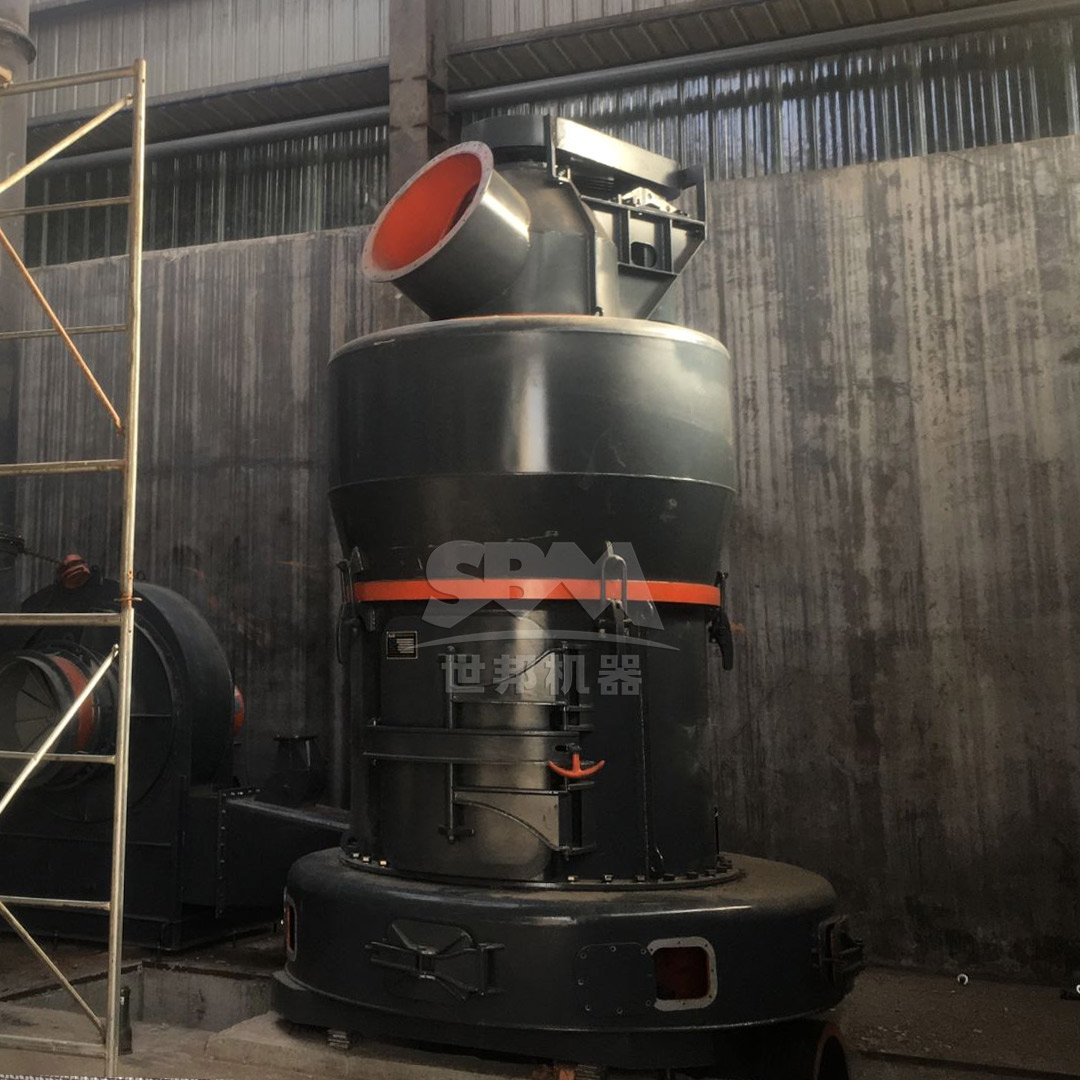
When the application demands exceptionally high fineness and narrow particle size distribution for premium products, the SCM Ultrafine Mill is the ideal choice. This mill is engineered specifically for the most challenging fine and ultra-fine grinding tasks.
Why it’s suited for Guangxi’s white clay:
- Precision Fineness: It reliably produces powder in the range of 325 to 2500 mesh (45-5μm), meeting the stringent requirements of high-end ceramics, specialty paints, and advanced filler applications.
- Superior Energy Efficiency: Compared to traditional jet mills, it offers double the capacity while reducing energy consumption by approximately 30%, directly lowering operational costs for Guangxi producers.
- Exceptional Product Quality: Its vertical turbine classifier ensures precise cut-points, resulting in a uniform product with no coarse grit contamination. This consistency is vital for product performance.
- Eco-Friendly Design: The mill features a high-efficiency pulse dust collector that exceeds international standards and a soundproofing chamber design that keeps noise levels at or below 75dB, ensuring a clean and compliant workshop environment.
Technical Highlight: The SCM series utilizes a unique three-ring medium-speed micro-grinding principle. Material is fed into the grinding chamber and pulverized by rollers under centrifugal force against multiple grinding rings, achieving progressive refinement. Models like the SCM1000 (1.0-8.5 ton/h, 132kW) offer an excellent balance of capacity and fineness for mid-sized operations, while the SCM1680 (5.0-25 ton/h, 315kW) caters to large-scale production needs.

2. For High-Capacity Fine Grinding (325-30 mesh): MTW Series Trapezium Mill
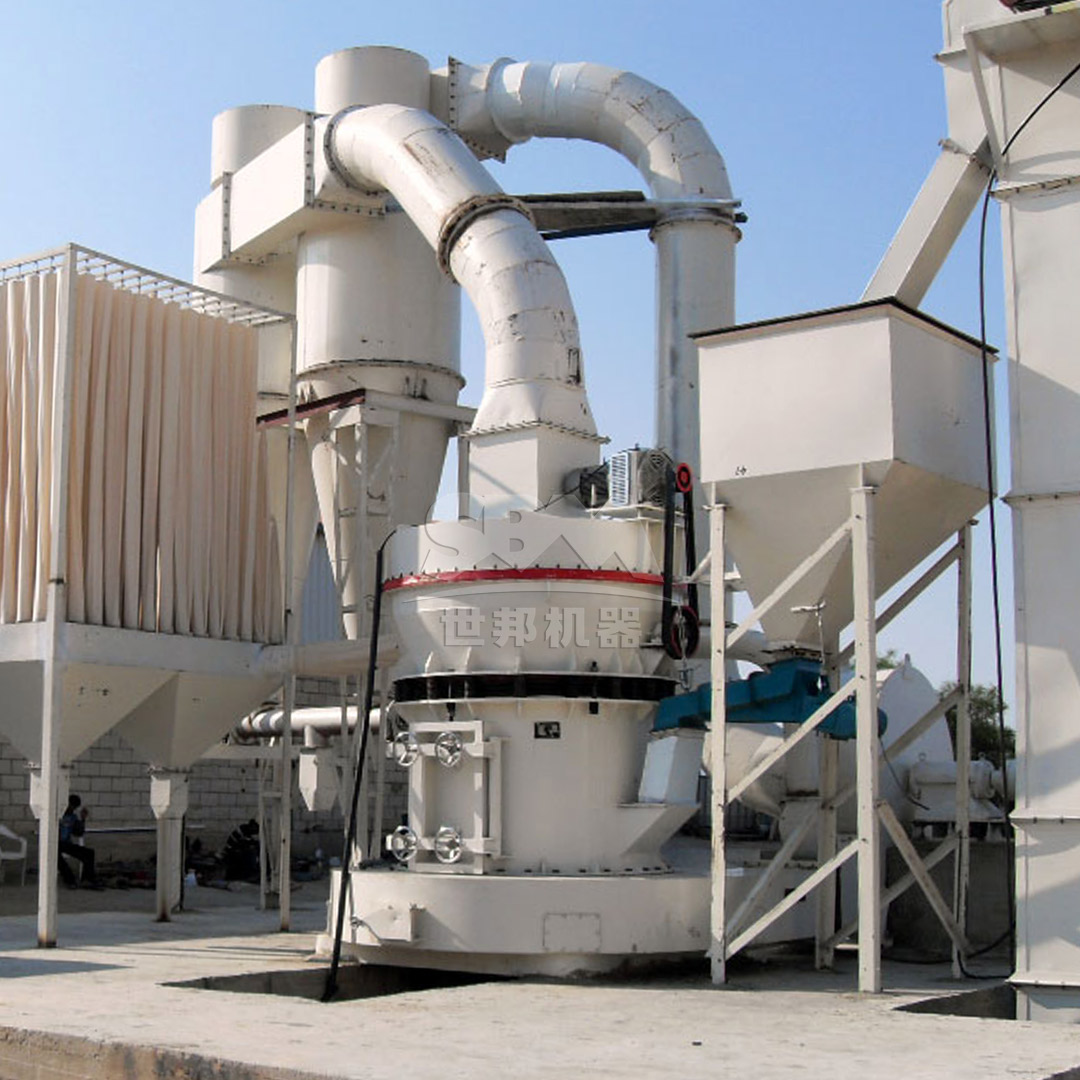
For projects requiring high-volume production of fine white clay powder for applications like paper coating, rubber, or mid-grade ceramics, the MTW Series Trapezium Mill offers an unbeatable combination of capacity, efficiency, and durability.
Why it’s a robust solution for Guangxi:
- High Throughput: With capacities ranging from 3 to 45 tons per hour across its model range, it is designed for large-scale, continuous production lines.
- Advanced Wear Protection: Its curved air duct and wear-resistant volute structure minimize resistance and abrasion, reducing maintenance frequency and cost by up to 30%. The modular shovel design allows for easy replacement of worn parts.
- Efficient Transmission: The integrated bevel gear transmission system boasts 98% efficiency, saving space, reducing installation complexity, and ensuring stable, powerful operation.
- Proven Eco-Performance: The system is designed to work seamlessly with advanced pulse dust collection technology, ensuring emissions control. Its solid construction also contributes to lower vibration and noise.
Technical Highlight: The MTW mill employs a conical gear-driven central shaft that rotates the grinding roller assembly. Material is scooped by shovels into the grinding zone formed by the roller and ring, where it is crushed by rolling pressure. A dynamic classifier ensures precise particle size control. A model like the MTW175G (9.5-25 ton/h, 160kW) is a powerhouse suitable for significant white clay processing plants in Guangxi.
Conclusion: Investing in Value and Sustainability
The price of white clay grinding equipment in Guangxi is an investment in production capability, product quality, and operational sustainability. While initial capital outlay is important, the total cost of ownership—encompassing energy consumption, maintenance, downtime, and environmental compliance—is the true metric for evaluation. Equipment like the SCM Ultrafine Mill and the MTW Series Trapezium Mill represent the forefront of milling technology, offering Guangxi producers a path to not only meet today’s market demands for fine white clay powders but also to do so in an energy-efficient, environmentally responsible, and cost-effective manner. By choosing advanced, eco-friendly milling solutions, Guangxi’s mineral industry can secure its competitiveness and ensure its growth aligns with the principles of sustainable development.