Is Producing Nepheline Syenite Powder Profitable?
Introduction
The global market for nepheline syenite powder has experienced significant growth in recent years, driven by its versatile applications in ceramics, glass manufacturing, paints, plastics, and construction materials. As industries increasingly seek sustainable alternatives to traditional materials, nepheline syenite has emerged as a valuable mineral resource with substantial commercial potential. This comprehensive analysis examines the profitability factors, market dynamics, and operational considerations for establishing a successful nepheline syenite powder production facility.
Market Overview and Demand Analysis
Nepheline syenite, an igneous rock composed primarily of nepheline, feldspar, and other minerals, has become increasingly valuable in industrial applications due to its low melting point, high alumina and alkali content, and absence of free silica. The global market for nepheline syenite was valued at approximately USD 250 million in 2022 and is projected to reach USD 350 million by 2028, growing at a CAGR of 5.8%.
The primary demand drivers include:
- Ceramics Industry: Accounting for 45% of global consumption, nepheline syenite serves as an excellent fluxing agent, reducing firing temperatures and improving mechanical strength
- Glass Manufacturing: Representing 30% of demand, it acts as a source of alumina, enhancing chemical durability and resistance to scratching
- Paints and Coatings: Contributing 15% to market share, it provides excellent suspension properties and corrosion resistance
- Polymer Composites: Growing at 7.2% annually, used as functional fillers to improve dimensional stability
Regional market analysis indicates North America and Europe as mature markets with steady growth, while Asia-Pacific demonstrates the highest growth potential, particularly in China, India, and Southeast Asian countries experiencing rapid industrialization.
Profitability Analysis: Cost Structure and Revenue Potential
Capital Investment Requirements
Establishing a nepheline syenite powder production facility requires substantial capital investment, typically ranging from $2-10 million depending on production capacity and technology sophistication. The major capital expenditure components include:
- Land acquisition and site development: 15-20%
- Processing equipment and machinery: 45-55%
- Infrastructure and utilities: 10-15%
- Environmental compliance systems: 8-12%
- Working capital and pre-operational expenses: 10-15%
Operational Cost Breakdown
The operational costs for nepheline syenite powder production vary significantly based on plant capacity, raw material quality, and energy efficiency. A typical cost structure includes:
- Raw material acquisition and transportation: 25-35%
- Energy consumption: 20-30%
- Labor and maintenance: 15-20%
- Packaging and logistics: 10-15%
- Administrative and overhead costs: 8-12%
Revenue Potential and Pricing Dynamics
Nepheline syenite powder pricing varies significantly based on purity, particle size distribution, and application-specific specifications:
- Standard grade (200-325 mesh): $80-120 per ton
- Fine grade (400-600 mesh): $150-220 per ton
- Ultrafine grade (800-2500 mesh): $300-600 per ton
- Surface-treated specialty grades: $800-1,200 per ton
With optimized operations and proper market positioning, profit margins typically range from 25-40% for standard grades and 40-60% for specialty ultrafine products.
Critical Success Factors in Production Technology
The profitability of nepheline syenite powder production heavily depends on selecting appropriate grinding technology that balances capital investment, operational costs, and product quality. The key technological considerations include:
Particle Size Control and Distribution
Different applications require specific particle size distributions. Ceramics typically need 200-400 mesh products, while high-performance composites demand ultrafine powders below 10μm. The ability to consistently produce narrow particle size distributions significantly enhances product value and marketability.

Energy Efficiency Considerations
Grinding operations typically account for 60-70% of total energy consumption in mineral processing. Advanced grinding technologies can reduce specific energy consumption by 30-50% compared to conventional methods, directly impacting operational costs and environmental compliance.
Contamination Control
Maintaining product purity is essential for high-value applications. Iron contamination from grinding media must be minimized through proper equipment selection and lining materials. Advanced grinding systems with ceramic or special alloy components can reduce iron contamination to below 0.01%.
Equipment Selection: Maximizing Profitability Through Technology
The choice of grinding equipment represents one of the most critical decisions affecting both capital efficiency and long-term operational profitability. Modern grinding technologies offer varying advantages for nepheline syenite processing:
Ultrafine Grinding Solutions
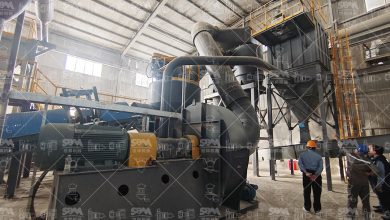
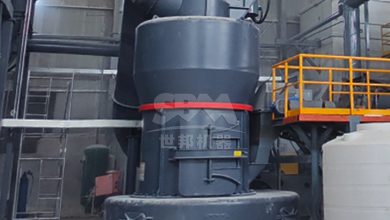
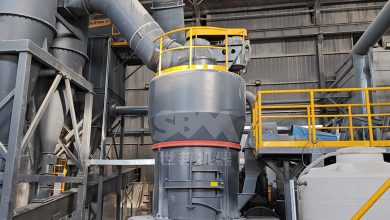
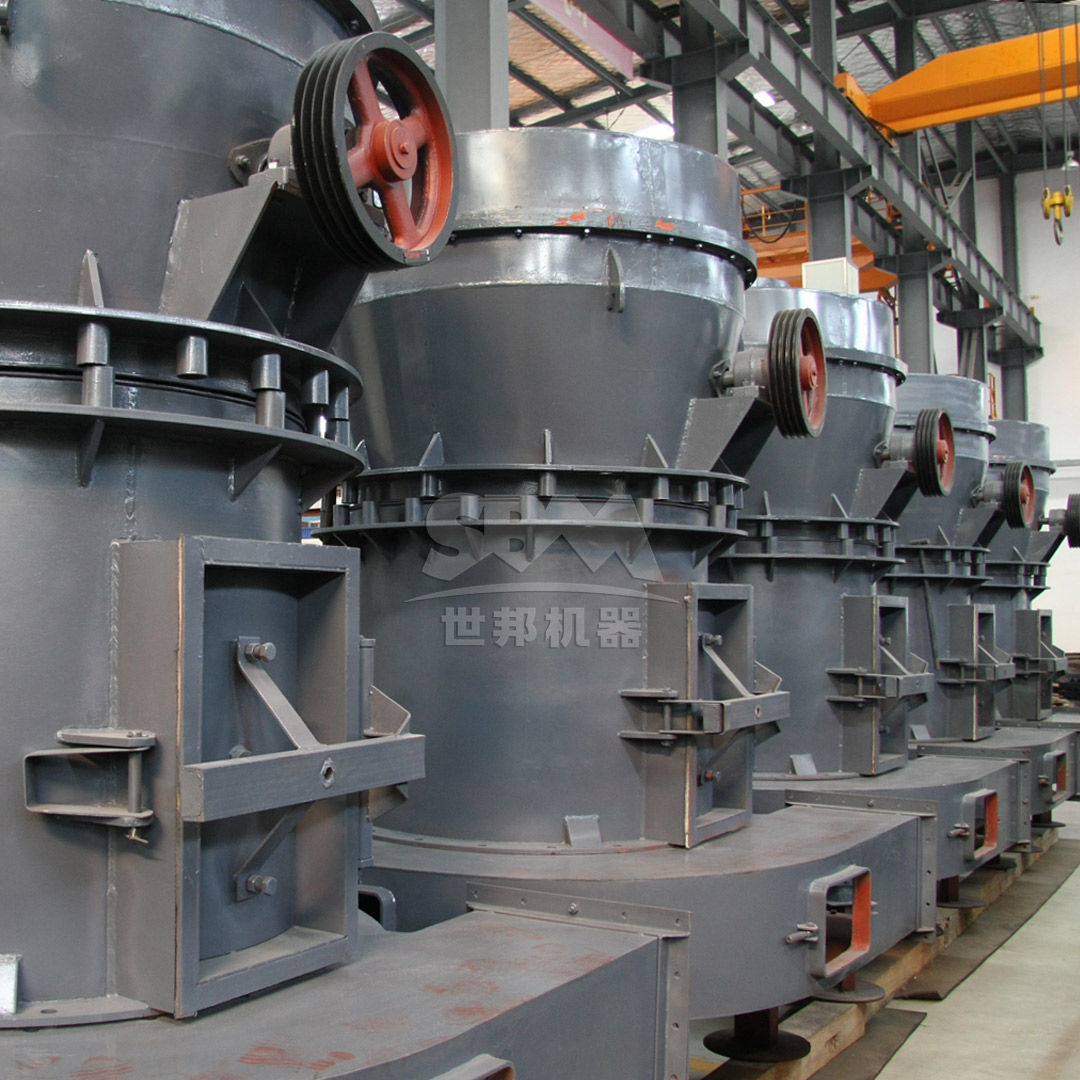
For producers targeting high-value markets requiring ultrafine powders (45-5μm), the SCM Series Ultrafine Mill represents an optimal solution. This advanced grinding system offers exceptional performance characteristics specifically suited for nepheline syenite processing:
- High Precision Classification: Vertical turbine classifiers enable precise particle size control from 325-2500 mesh (D97≤5μm), ensuring consistent product quality for premium applications
- Superior Energy Efficiency: With capacity doubling that of jet mills and energy consumption reduced by 30%, the SCM series significantly lowers operational costs while maintaining product quality
- Enhanced Durability: Special material rollers and grinding rings extend service life by several times, reducing maintenance costs and production downtime
- Environmental Compliance: Pulse dust collection efficiency exceeds international standards, while noise levels remain below 75dB
The SCM series, available in models from SCM800 to SCM1680 with capacities ranging from 0.5-25 ton/h, provides scalability for operations of various sizes while maintaining consistent product quality across the production range.

High-Capacity Production Systems
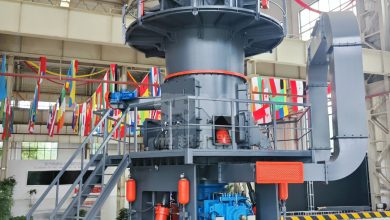
For large-scale operations targeting standard and fine grade markets, the MTW Series Trapezium Mill offers compelling advantages:
- Optimized Wear Protection: Combined shovel blades and curved design extend roller service life, reducing maintenance frequency and costs
- Advanced Transmission System: Bevel gear overall transmission achieves 98% efficiency, saving space and installation costs
- Enhanced Airflow Design: Curved duct design reduces air resistance and improves transmission efficiency
- Comprehensive Model Range: With capacities from 3-45 ton/h and output fineness from 30-325 mesh, the MTW series supports diverse production requirements
Operational Best Practices for Enhanced Profitability
Raw Material Selection and Preparation
Optimal raw material selection significantly impacts processing efficiency and product quality. Key considerations include:
- Source nepheline syenite with consistent mineralogical composition
- Implement pre-crushing to optimal feed size (typically ≤20mm for ultrafine grinding)
- Employ magnetic separation to reduce iron content before fine grinding
- Monitor moisture content to optimize grinding efficiency
Process Optimization Strategies
Advanced process control systems can enhance profitability through:
- Real-time monitoring of grinding parameters and product quality
- Automated adjustment of classifier speed for precise particle size control
- Optimization of feed rates based on power consumption and product fineness
- Integration of energy recovery systems where feasible
Quality Management and Certification
Implementing robust quality management systems and obtaining relevant certifications (ISO 9001, ISO 14001) enables access to premium markets and justifies price premiums of 15-25% over non-certified competitors.
Market Development and Value-Added Strategies
Product Differentiation
Successful producers implement strategies to differentiate their products and capture higher margins:
- Develop application-specific formulations for ceramics, glass, and polymers
- Implement surface modification technologies to enhance performance in composite materials
- Offer customized particle size distributions for specific customer requirements
- Provide technical support and application development services
Supply Chain Optimization
Strategic positioning within the value chain significantly impacts profitability:
- Establish long-term contracts with raw material suppliers to secure consistent quality and pricing
- Develop strategic partnerships with key customers in target industries
- Optimize logistics networks to minimize transportation costs
- Implement just-in-time production and inventory management systems
Environmental and Regulatory Considerations
Modern nepheline syenite processing facilities must address several environmental and regulatory aspects:
Emissions Control
Advanced dust collection systems, such as the pulse jet baghouses integrated with modern grinding equipment, can achieve collection efficiencies exceeding 99.9%, ensuring compliance with stringent air quality standards.
Water Management
While nepheline syenite processing typically involves dry grinding, water may be used in dust suppression and cooling systems. Closed-loop water recycling minimizes consumption and discharge.
Noise Control
Modern grinding equipment incorporates comprehensive noise reduction technologies, with sound levels typically below 75-80dB, ensuring worker safety and community acceptance.
Financial Analysis and Return on Investment
A comprehensive financial analysis for a medium-scale nepheline syenite powder production facility (annual capacity: 30,000 tons) typically demonstrates:
- Capital investment: $4-6 million
- Payback period: 3-5 years
- Internal rate of return (IRR): 25-35%
- Net present value (NPV): $2-4 million (10-year projection)
The most significant variables affecting financial performance include plant capacity utilization, product mix between standard and premium grades, energy efficiency, and raw material costs.
Conclusion
Producing nepheline syenite powder represents a profitable venture when supported by appropriate technology selection, market-focused strategy, and operational excellence. The growing demand across multiple industrial sectors, coupled with the availability of advanced processing technologies like the SCM Series Ultrafine Mill and MTW Series Trapezium Mill, creates significant opportunities for well-positioned producers.
Success in this market requires careful attention to product quality consistency, energy efficiency, and environmental compliance. Producers who invest in advanced grinding technology, develop specialized products for high-value applications, and establish strong customer relationships are well-positioned to achieve sustainable profitability in this growing market.
The continuous innovation in grinding technology, particularly in ultrafine processing and classification systems, continues to enhance the economic viability of nepheline syenite powder production, making it an increasingly attractive opportunity for mineral processors and investors alike.