How to Grind Dry Clay for Pottery and Ceramics
Introduction to Clay Grinding
Dry clay grinding is a fundamental process in pottery and ceramics manufacturing that transforms raw clay materials into fine powders suitable for forming and firing. The quality of clay powder directly impacts the workability, strength, and final appearance of ceramic products. This comprehensive guide explores the technical aspects of dry clay grinding, from material preparation to equipment selection and process optimization.
Clay minerals, primarily composed of kaolinite, illite, and montmorillonite, require specific grinding approaches to preserve their crystalline structure while achieving the desired particle size distribution. The grinding process must balance efficiency with material preservation, as excessive heat or mechanical stress can alter clay properties and affect final product quality.
Understanding Clay Properties and Grinding Requirements
Clay Mineralogy and Grinding Behavior
Different clay types exhibit distinct grinding characteristics. Kaolin clays, being relatively soft and platy, grind easily but require careful handling to prevent delamination. Ball clays, with higher organic content, may require pre-drying to optimize grinding efficiency. Stoneware clays containing grog or sand particles present additional challenges for grinding equipment.
The moisture content of raw clay significantly impacts grinding efficiency. While this article focuses on dry grinding, it’s essential to note that most natural clays contain 5-15% inherent moisture. For optimal dry grinding performance, additional drying may be necessary to reduce moisture below 2%.
Particle Size Requirements for Ceramic Applications
Ceramic applications demand specific particle size distributions:
- Pottery throwing clay: 100-200 mesh (149-74μm)
- Slip casting: 200-325 mesh (74-44μm)
- Porcelain and fine ceramics: 325-1250 mesh (44-10μm)
- Specialty technical ceramics: Up to 2500 mesh (5μm)
The particle size distribution affects casting rate, drying behavior, green strength, and fired density. Narrow distributions generally produce more predictable ceramic behavior.
Clay Preparation for Grinding
Drying and Pre-processing
Before grinding, clay must be properly prepared. Natural clay typically contains 15-25% moisture when mined and must be dried to below 2% for efficient dry grinding. Drying can be accomplished through:
- Natural air drying (time-consuming but energy-efficient)
- Rotary dryers (for large-scale operations)
- Flash dryers (integrated with grinding systems)
- Fluidized bed dryers (for precise moisture control)
After drying, clay often requires primary crushing to reduce lump size to manageable dimensions for the grinding equipment. Jaw crushers, hammer mills, or impact crushers are commonly used for this stage.
Contamination Control
Maintaining clay purity is critical in ceramics production. Iron contamination from grinding media or equipment wear can cause discoloration in fired pieces. Non-metallic liners, ceramic grinding media, or equipment with minimal metal-to-clay contact should be employed when processing white-firing clays.
Grinding Equipment Selection for Clay Processing
Hammer Mills for Primary Size Reduction
Hammer mills serve as excellent primary grinding equipment for dry clay processing. Their high-impact action efficiently breaks down clay lumps while handling the moderate abrasiveness of most clay minerals. The Hammer Mill series offers robust construction with high manganese steel components that withstand the abrasive nature of clay minerals.
Key advantages for clay processing include:
- High capacity (8-70 tons/hour depending on model)
- Ability to handle clay with residual moisture up to 5%
- Minimal heat generation during operation
- Easy maintenance and wear part replacement
For operations requiring initial size reduction from 40mm down to 3mm, the PC4012-90 model provides an optimal balance of capacity (15-40 t/h) and power efficiency (90kW).
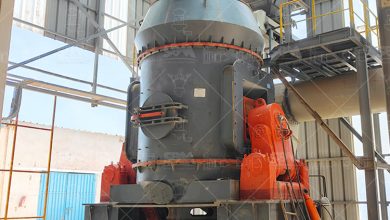
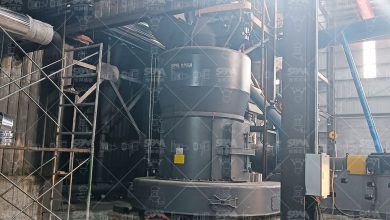
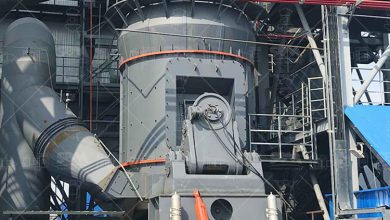
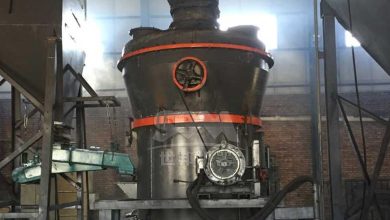
Vertical Roller Mills for Intermediate Grinding
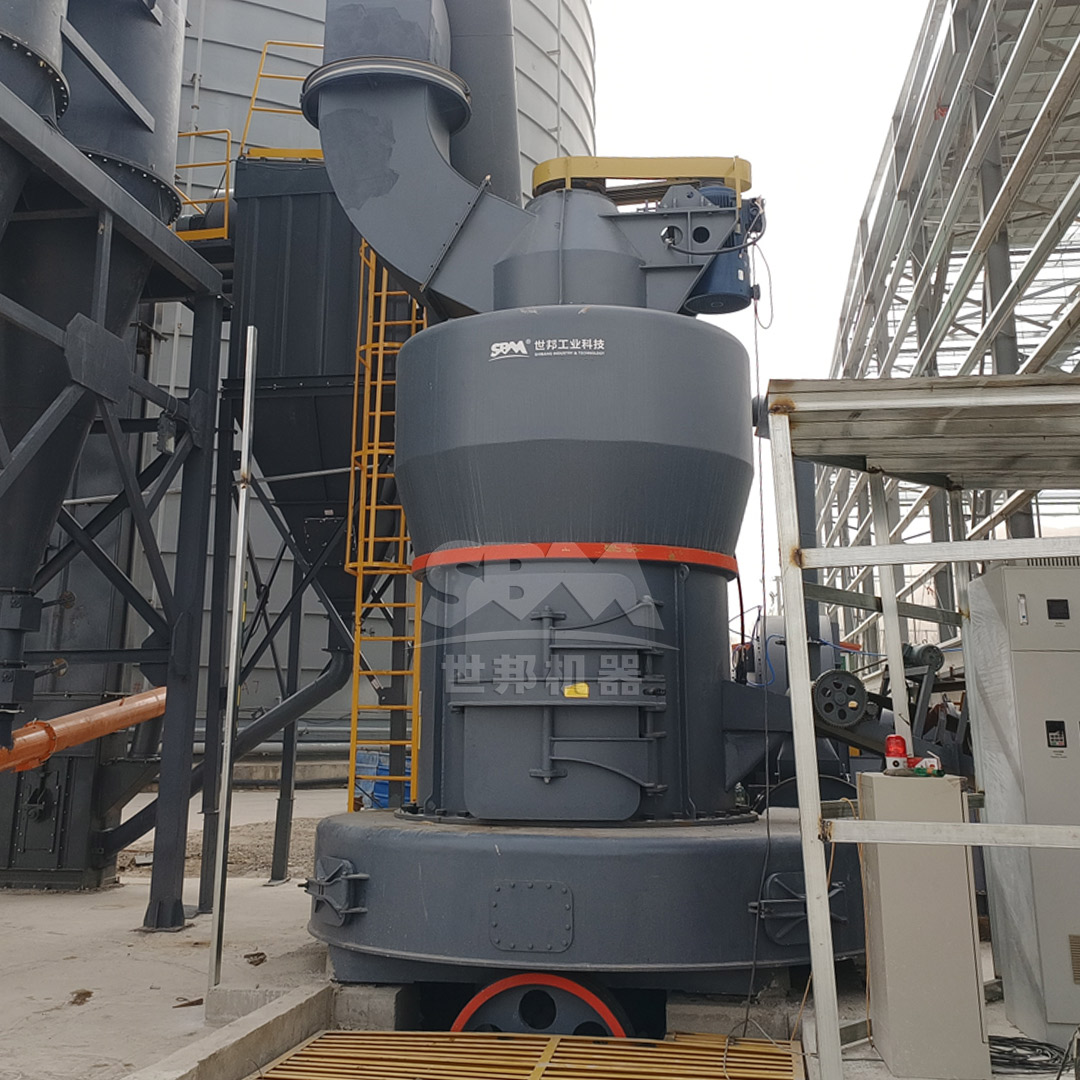
For medium-fine grinding applications (30-325 mesh), vertical roller mills offer superior efficiency and control. The LM Series Vertical Roller Mill employs a bed-compression grinding principle that minimizes overgrinding and reduces energy consumption by 30-40% compared to traditional ball mills.
Technical advantages for clay processing include:
- Integrated drying capability using waste heat
- Precise particle size control through dynamic classifiers
- Low wear rates due to minimal metal-to-material contact
- Compact design reducing footprint by 50%
The LM190K model, with its 1900mm grinding table and 500kW power, efficiently processes 23-68 t/h of clay to fineness between 170-40μm (80-400 mesh), making it ideal for medium-scale ceramic production facilities.
Ultrafine Grinding Systems
For high-value ceramic applications requiring sub-10μm particles, specialized ultrafine grinding equipment is essential. The SCM Ultrafine Mill series represents the pinnacle of fine grinding technology, capable of producing clay powders with D97 ≤ 5μm (2500 mesh).
This equipment incorporates several advanced features specifically beneficial for clay processing:
- Vertical turbine classification system ensuring precise cut points
- Multi-layer grinding mechanism for progressive size reduction
- Pulse dust collection with >99.9% efficiency
- Low noise operation (<75dB) suitable for indoor installation
The SCM1000 model, with 132kW power and 1.0-8.5 t/h capacity, provides an excellent solution for specialty ceramic manufacturers requiring consistent ultrafine clay powders. Its intelligent control system automatically maintains target fineness despite variations in feed material characteristics.
Grinding Process Optimization
Energy Efficiency Considerations
Clay grinding is energy-intensive, with comminution accounting for 60-70% of total energy consumption in ceramic powder preparation. Several strategies can optimize energy usage:
- Implement pre-crushing to reduce feed size before fine grinding
- Utilize classifier systems to prevent overgrinding
- Employ variable frequency drives to match power consumption to processing requirements
- Consider waste heat recovery for drying operations
Modern grinding systems like the MTW Series Trapezium Mill incorporate curved air channels and high-efficiency impellers that reduce airflow resistance and lower energy consumption by 15-20% compared to conventional designs.
Dust Control and Working Environment
Clay dust presents significant respiratory hazards and explosion risks when airborne. Effective dust control measures include:
- Pulse-jet baghouse filters with automatic cleaning cycles
- Wet dust suppression systems at transfer points
- Proper equipment sealing and negative pressure operation
- Explosion venting and suppression systems for fine powder handling
The integrated pulse dust collection systems in both SCM Ultrafine Mills and MTW Trapezium Mills exceed international emission standards, maintaining workplace dust concentrations below 20mg/m³.
Quality Control in Clay Grinding
Particle Size Analysis
Regular monitoring of ground clay particle size distribution ensures consistent ceramic performance. Laser diffraction analyzers provide rapid, accurate measurements across the relevant size range. Key parameters to track include:
- D50 (median particle size)
- D97 (97% of particles finer than this size)
- Specific surface area (BET method)
- Particle shape characteristics
Modern grinding systems can integrate particle size analyzers for real-time feedback control, automatically adjusting classifier speed or grinding pressure to maintain target specifications.
Contamination Monitoring
Regular testing for iron contamination through magnetic separation and chemical analysis prevents discoloration issues in finished ceramics. For sensitive applications, non-metallic grinding systems or equipment with ceramic liners may be necessary.
Troubleshooting Common Grinding Issues
Equipment Wear and Maintenance
Clay’s abrasive nature accelerates wear on grinding components. Implementing a proactive maintenance program includes:
- Regular inspection of grinding elements (rolls, rings, hammers)
- Monitoring power consumption for early detection of efficiency loss
- Systematic replacement of wear parts before failure
- Proper alignment of dynamic components
The combination of special alloy grinding rolls and innovative design in the MTM Series Medium Speed Trapezium Mill extends component life by 30% compared to conventional designs, significantly reducing maintenance costs and downtime.
Process Inconsistencies
Variations in ground clay quality often stem from:
- Fluctuations in feed material characteristics
- Classifier wear or misadjustment
- Inconsistent moisture content
- Airflow variations in pneumatic systems
Automated control systems in modern grinding equipment like the LUM Ultra-fine Vertical Mill continuously monitor and adjust critical parameters, maintaining consistent product quality despite minor feed variations.
Advanced Grinding Solutions for Specialty Ceramics
Nano-particle Production
Advanced technical ceramics increasingly require clay powders with particle sizes below 1μm. Achieving this fineness demands specialized equipment like the SCM Ultrafine Mill with enhanced classification systems. These systems employ multiple classification stages and precise cut-point control to produce narrow distributions of ultrafine particles.
Surface Modification During Grinding
Some advanced ceramic processes benefit from surface-modified clay particles. Certain grinding systems can integrate surface treatment during the comminution process, creating functionalized powders with enhanced dispersion or reactivity characteristics.
Conclusion
Dry clay grinding represents a critical unit operation in ceramics manufacturing that significantly influences final product quality and production economics. Proper equipment selection, process optimization, and quality control ensure consistent production of clay powders meeting specific ceramic application requirements.
Modern grinding technologies like the SCM Ultrafine Mill and MTW Trapezium Mill offer ceramic producers unprecedented control over particle characteristics while reducing energy consumption and environmental impact. As ceramic applications continue to evolve toward higher performance requirements, advanced grinding solutions will play an increasingly vital role in enabling new material capabilities.
By understanding the fundamental principles outlined in this guide and leveraging appropriate grinding technologies, ceramics manufacturers can optimize their powder preparation processes for enhanced product quality and manufacturing efficiency.