How to Grind Aluminum Powder: A Complete Guide
Introduction
Aluminum powder is a versatile material with applications ranging from pyrotechnics and explosives to paints, coatings, and additive manufacturing. The quality of the final product is critically dependent on the grinding process, which determines particle size, shape, and distribution. This guide provides a comprehensive overview of the methods, equipment, and best practices for producing high-quality aluminum powder.
Understanding Aluminum Powder Specifications
Before selecting a grinding method, it’s essential to define the target specifications. Key parameters include:
- Particle Size (Fineness): Typically measured in mesh (e.g., 325 mesh, 1000 mesh) or micrometers (μm). Pyrotechnics often require fine powders (20-50 μm), while coatings may use coarser grades.
- Particle Size Distribution (PSD): A narrow PSD ensures consistency in reactivity and application performance.
- Particle Shape: Flake powders (for pigments) require different processing than spherical powders (for 3D printing).
- Purity and Oxide Content: Grinding can increase surface area and potentially oxide formation, affecting properties like reactivity and flowability.
Safety First: Critical Precautions
Grinding aluminum is a high-risk operation due to its explosive and flammable nature. NEVER ATTEMPT THIS WITHOUT PROPER PROFESSIONAL EQUIPMENT AND CONTROLS.
- Explosion Hazard: Fine aluminum dust suspended in air can form explosive mixtures. Equipment must be explosion-proof (ATEX rated).
- Fire Hazard: Aluminum powder is highly flammable. Processes must be conducted under inert atmospheres (e.g., Nitrogen, Argon) to prevent ignition.
- Health Hazard: Inhalation of aluminum dust is harmful. Full containment and high-efficiency dust collection systems are mandatory.
- Static Electricity: All equipment must be properly grounded to prevent static discharge sparks.
Grinding Methods and Equipment Selection
The choice of grinding mill depends on the desired output fineness, capacity, and particle morphology.
1. For Coarse to Medium Grinding (45-325 mesh / 600-45μm)
This range is suitable for initial size reduction or applications like solid rocket fuels.
- Ball Mills: A traditional method using rotating cylinders with grinding media. Effective but can be inefficient and generate heat. Suitable for wet grinding under inert liquid to mitigate explosion risk.
- Hammer Mills: Useful for preliminary crushing of aluminum scraps or granules down to a few millimeters.
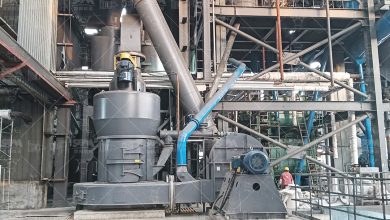
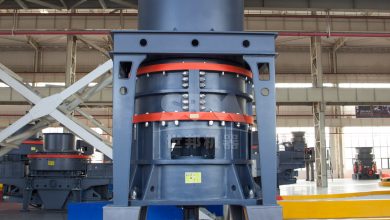
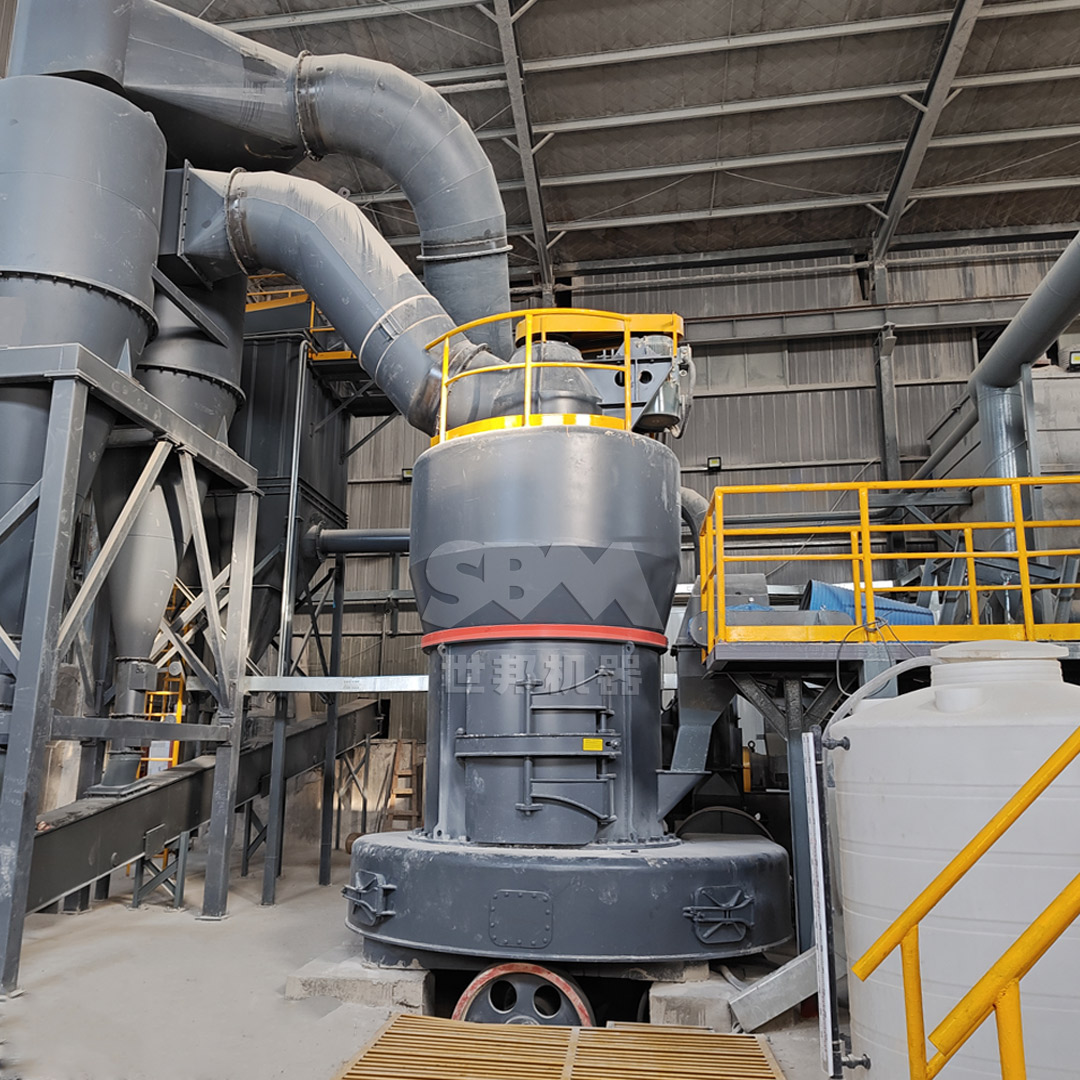
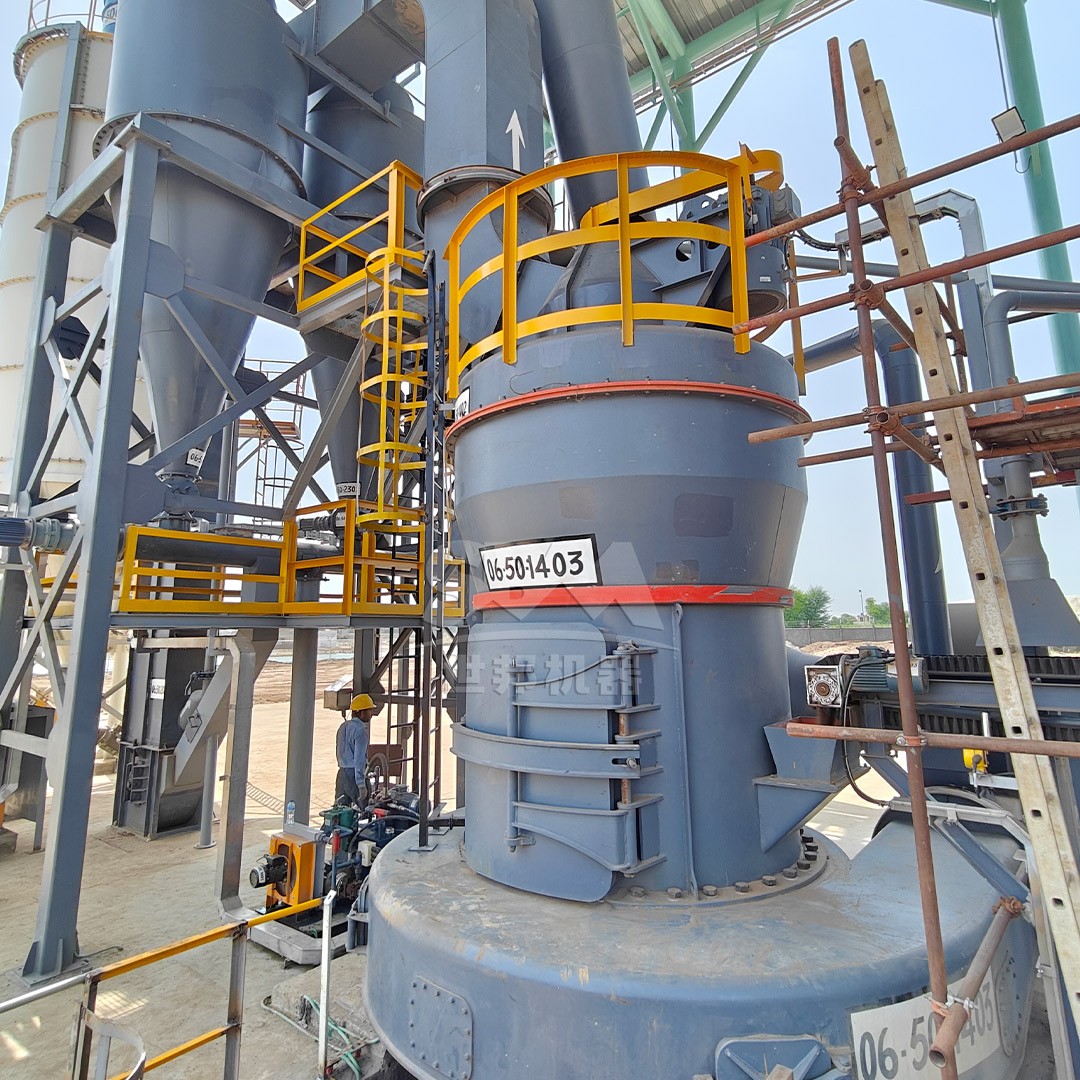
- MTW Series Trapezium Mill: For efficient, high-capacity grinding in this range, the MTW Series Trapezium Mill is an excellent choice. Its advanced features include a curved air duct for reduced flow resistance and high transmission efficiency, and a conical gear overall drive system with 98% efficiency. It is designed for durability with wear-resistant components and operates with low noise and high dust collection efficiency, making it a robust solution for processing aluminum and other non-flammable minerals to medium fineness. With capacities from 3 to 45 tons per hour, it handles input sizes up to 50mm.
2. For Fine to Ultra-Fine Grinding (325-2500 mesh / 45-5μm)
This is the critical range for most advanced applications, requiring precise control.
- Jet Mills (Fluidized Bed Jet Mills): The industry standard for pyrotechnic-grade aluminum. Particles are ground by collisions in a high-velocity stream of inert gas (N2). This method produces very fine, spherical powders with minimal oxide contamination and excellent control over PSD. It is a closed, inert system, addressing key safety concerns.
- Attritors & Stirred Media Mills: Use a stirred chamber with small grinding media. Effective for wet grinding to sub-micron levels under inert conditions.
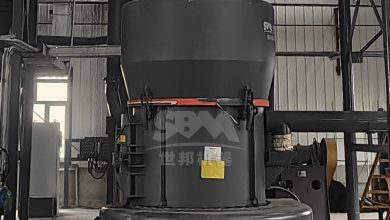
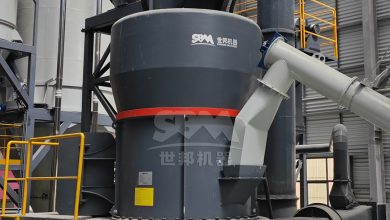
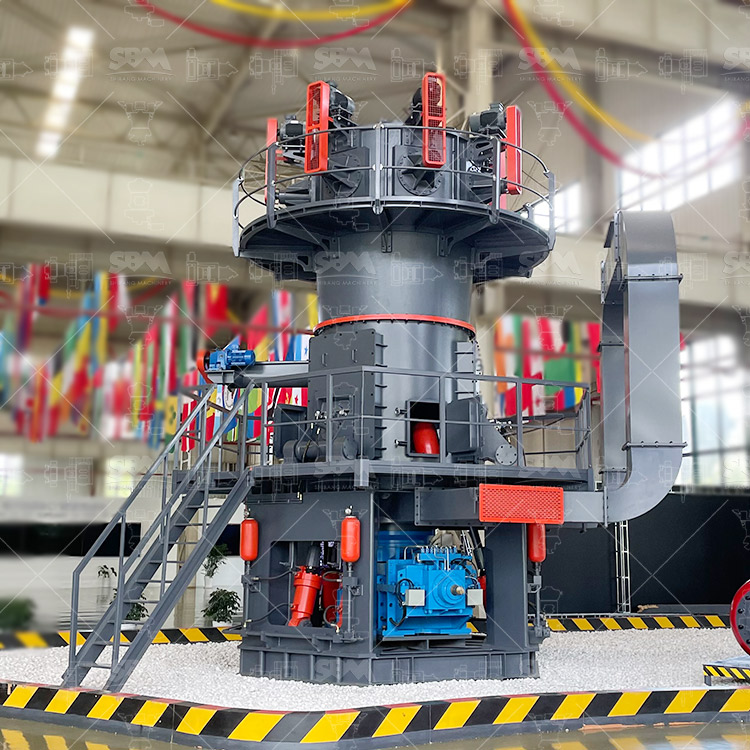
- SCM Ultrafine Mill: For dry processing needs where an inert gas jet mill may not be feasible for all materials, the SCM Ultrafine Mill represents the pinnacle of mechanical grinding technology for ultra-fine outputs. It is engineered to achieve an impressive output fineness ranging from 325 to 2500 mesh (D97 ≤ 5μm). Its core advantage lies in its high-precision vertical turbine classifier, which ensures accurate particle size cuts and a uniform product without coarse grain contamination. For aluminum powder production in a controlled, inert environment, its efficient and stable grinding mechanism, coupled with a pulse dust collector exceeding international standards, provides a reliable and productive solution. Models like the SCM1000 offer a capacity of 1.0-8.5 tons per hour, making it suitable for industrial-scale fine powder production.
The Production Process: A Step-by-Step Overview
- Feedstock Preparation: Start with clean aluminum ingots, granules, or foil. Remove any contaminants. Preliminary crushing may be needed.
- Primary Grinding (if needed): Use a hammer mill or jaw crusher to reduce material to a size suitable for the fine grinding mill inlet (e.g., <20mm).
- Fine/Ultra-Fine Grinding (Inert Atmosphere): This is the core step. Feed the pre-crushed material into the chosen mill (e.g., Jet Mill, SCM Mill) operating under a pure nitrogen or argon atmosphere. The oxygen level must be continuously monitored and kept below the safety threshold (typically <5%).
- Classification: Integrated or external classifiers (e.g., in the SCM or MTW mills) separate particles by size. Oversize particles are recirculated for further grinding.
- Collection: The finished powder is collected in sealed containers or drums via cyclone separators and baghouse filters. All collection points must be inerted.
- Post-Processing: This may include sieving, blending with additives (e.g., stearic acid for lubrication), or packaging under inert gas.
Quality Control and Testing
Consistent quality is non-negotiable. Implement rigorous testing:
- Laser Diffraction: For accurate particle size distribution analysis.
- Microscopy (SEM): To analyze particle shape and surface morphology.
- Chemical Analysis: To determine aluminum content and oxide layer thickness.
- Apparent Density and Flow Rate: Crucial for downstream manufacturing processes.
Conclusion
Grinding aluminum powder is a sophisticated engineering challenge that balances product specifications with paramount safety requirements. The selection of the correct grinding technology—whether it’s a jet mill for the finest spherical powders or a high-performance mechanical mill like the SCM Ultrafine Mill for precise dry grinding—is the most critical decision. Success depends on a fully integrated system designed for inert operation, from feeding to collection, backed by stringent process controls and quality assurance protocols. Always consult with equipment manufacturers and safety experts to design a system tailored to your specific production goals and regulatory environment.