How to Choose the Right Equipment for a Limestone Quarry
Introduction
Selecting the appropriate equipment for a limestone quarry operation is a critical decision that directly impacts productivity, operational costs, and product quality. Limestone processing involves multiple stages, from primary crushing to final grinding, with each stage requiring specialized machinery tailored to specific requirements. This comprehensive guide examines the key factors to consider when choosing limestone processing equipment and provides detailed insights into optimal machinery selection.
Understanding Limestone Processing Requirements
Before selecting equipment, operators must thoroughly analyze their specific limestone processing needs. Key considerations include the geological characteristics of the deposit, required production capacity, target product specifications, and environmental regulations. Limestone varies significantly in hardness, abrasiveness, and chemical composition, which directly influences equipment selection and performance.
The typical limestone processing circuit includes primary crushing, secondary crushing, screening, and grinding stages. Each stage serves a distinct purpose and requires equipment specifically designed for that function. Understanding the complete processing flow is essential for making informed equipment decisions.
Primary Crushing Equipment Selection
Primary crushers represent the first stage in limestone processing and must handle large, raw quarry material efficiently. Jaw crushers and gyratory crushers are the most common choices for primary crushing applications. The selection depends on factors such as feed size, required reduction ratio, and production capacity.
Jaw crushers excel in handling large, blocky limestone with high compressive strength. Their simple design and robust construction make them ideal for tough quarry conditions. Gyratory crushers, while more complex, offer higher capacity and are better suited for large-scale operations with continuous feeding requirements.
Key selection criteria for primary crushers include:
- Maximum feed size capacity
- Required throughput capacity
- Power consumption and efficiency
- Maintenance requirements and accessibility
- Wear part replacement costs and frequency
Secondary and Tertiary Crushing Solutions
Secondary crushing equipment further reduces limestone size after primary crushing, while tertiary crushers produce the final product size before grinding. Cone crushers and impact crushers are commonly used in these applications, each offering distinct advantages depending on the specific requirements.
Cone crushers provide excellent particle shape and are highly efficient for hard, abrasive limestone. Modern cone crushers feature advanced hydraulic systems for setting adjustment and overload protection, ensuring consistent product quality and equipment protection.
Impact crushers, including horizontal shaft impactors (HSI) and vertical shaft impactors (VSI), excel in producing cubical product shapes and are particularly effective for softer limestone varieties. Their high reduction ratios make them suitable for applications requiring significant size reduction in a single stage.
Grinding Equipment for Limestone Powder Production
Grinding represents the final stage in limestone processing and is crucial for achieving the desired product specifications. The choice of grinding equipment depends primarily on the required product fineness, production capacity, and energy efficiency requirements.
Coarse to Medium Fine Grinding Solutions
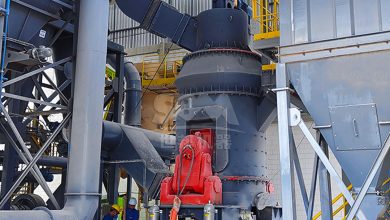
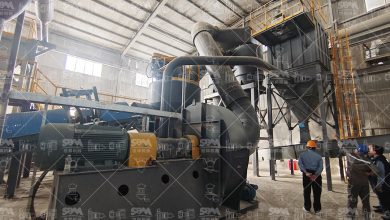
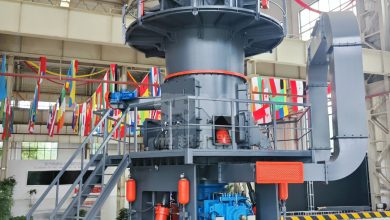
For applications requiring product fineness in the range of 30-325 mesh (600-45μm), the MTW Series Trapezium Mill offers an optimal solution. This advanced grinding system combines high efficiency with robust construction, making it ideal for medium to large-scale limestone processing operations.
The MTW Series features several technological advantages specifically beneficial for limestone grinding:
- Anti-wear shovel blade design with combined shoveling plates reduces maintenance costs
- Curved air channel optimization minimizes air flow energy loss and improves transmission efficiency
- Bevel gear integral transmission achieves up to 98% transmission efficiency
- Wear-resistant volute structure with non-blocking design enhances air classification efficiency
With multiple models available, from MTW110 with 3-9 ton/hour capacity to MTW215G handling 15-45 tons per hour, operators can select the perfect configuration for their specific production requirements. The mill’s ability to process feed material up to 50mm in size reduces the need for extensive pre-crushing, streamlining the overall processing circuit.

Ultra-Fine Grinding Applications
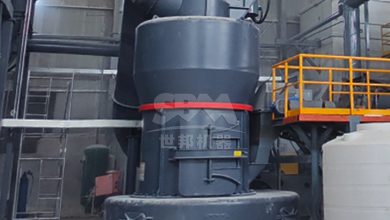
For applications requiring ultra-fine limestone powder in the range of 325-2500 mesh (45-5μm), the SCM Ultrafine Mill represents the industry benchmark. This advanced grinding system delivers exceptional precision and efficiency for high-value limestone products used in specialized applications.
The SCM Ultrafine Mill incorporates several innovative features that make it particularly suitable for premium limestone products:
- High-efficiency energy savings with capacity twice that of jet mills and 30% lower energy consumption
- High-precision classification through vertical turbine classifiers ensuring precise particle size control
- Durable design with special material rollers and grinding rings extending service life multiple times
- Environmental compliance with pulse dust collection efficiency exceeding international standards and noise levels below 75dB
The mill’s working principle involves main motor-driven multi-layer grinding ring rotation, where material is dispersed to the grinding path by centrifugal force, undergoes roller pressing and layered grinding, with final powder collection through cyclone collector and pulse dust removal systems.
Available in multiple configurations from SCM800 (0.5-4.5 ton/hour) to SCM1680 (5.0-25 ton/hour), the SCM series provides scalable solutions for operations of all sizes. The intelligent control system with automatic feedback on finished product granularity ensures consistent quality with minimal operator intervention.

Key Selection Criteria for Limestone Grinding Equipment
When evaluating grinding equipment for limestone applications, several critical factors must be considered to ensure optimal performance and return on investment.
Production Capacity and Scalability
Equipment selection must align with both current and projected production requirements. Consider not only the immediate throughput needs but also future expansion plans. Modular systems that allow for capacity upgrades without complete system replacement offer significant long-term advantages.
Energy Efficiency and Operating Costs
Grinding operations typically account for a substantial portion of total processing energy consumption. Advanced grinding systems with optimized energy utilization can significantly reduce operating costs while maintaining production quality. Look for equipment with proven energy-saving technologies and efficient drive systems.
Product Quality and Consistency
The ability to consistently produce limestone powder meeting precise specifications is crucial for market acceptance. Modern grinding systems with advanced classification technology and automated control systems ensure product consistency and reduce quality variations.
Maintenance Requirements and Service Life
Equipment durability and maintenance needs directly impact operational reliability and total cost of ownership. Systems with extended wear part life, easy access for maintenance, and comprehensive technical support minimize downtime and maintenance expenses.
Environmental Considerations and Compliance
Modern limestone processing operations must address increasingly stringent environmental regulations. Equipment selection should prioritize systems with integrated dust collection, noise reduction features, and energy-efficient operation.
Advanced grinding systems now incorporate comprehensive environmental protection measures, including:
- High-efficiency pulse dust collectors with filtration efficiency exceeding 99.9%
- Acoustic insulation designs maintaining noise levels below regulatory limits
- Closed-system operation preventing dust emission
- Energy recovery systems minimizing overall energy consumption
Economic Analysis and Return on Investment
Equipment selection should include thorough economic analysis considering both capital investment and operating costs. While advanced grinding systems may require higher initial investment, their superior efficiency, lower energy consumption, and reduced maintenance requirements often deliver faster return on investment through operational savings.
Key economic factors to evaluate include:
- Capital equipment costs and installation expenses
- Energy consumption per ton of processed material
- Wear part consumption and replacement costs
- Maintenance labor requirements and associated costs
- Expected equipment service life and residual value
Case Study: Optimizing Limestone Processing with Advanced Grinding Technology
A recent installation at a major limestone processing facility demonstrates the benefits of proper equipment selection. The operation previously used conventional ball mills for fine grinding, experiencing high energy consumption, significant wear part costs, and inconsistent product quality.
After thorough evaluation, the facility implemented an MTW215G Trapezium Mill for medium-fine grinding applications and an SCM1250 Ultrafine Mill for premium products. The results included:
- 38% reduction in specific energy consumption
- 45% decrease in wear part costs
- Product quality consistency improvement of 67%
- Noise reduction from 95dB to 75dB
- Dust emissions reduced to undetectable levels
The installation paid for itself in under 18 months through operational savings and premium product pricing enabled by the superior product quality.

Future Trends in Limestone Processing Equipment
The limestone processing industry continues to evolve, with several emerging trends influencing equipment design and selection:
Digitalization and Smart Technology
Modern grinding systems increasingly incorporate IoT connectivity, remote monitoring, and predictive maintenance capabilities. These technologies enable real-time performance optimization, reduce unplanned downtime, and extend equipment life.
Sustainability and Circular Economy
Equipment manufacturers are focusing on sustainable design principles, including energy recovery systems, water recycling capabilities, and designs facilitating component reuse and recycling.
Modular and Scalable Solutions
Modular equipment designs allow for phased capacity expansion and easier relocation, providing operational flexibility and reducing capital risk.
Conclusion
Selecting the right equipment for limestone quarry operations requires careful consideration of multiple factors, including geological characteristics, production requirements, product specifications, and economic objectives. Advanced grinding systems like the MTW Series Trapezium Mill and SCM Ultrafine Mill offer sophisticated solutions tailored to specific application needs, combining high efficiency, product quality, and environmental compliance.
By understanding the complete processing circuit and evaluating equipment based on comprehensive technical and economic criteria, operators can optimize their operations for long-term success in the competitive limestone products market.